

TL;DR
- Separate normal lock operation from the control function used to release an interchangeable core.
- Check the key’s authorised reference and the installed core identity before judging the mechanism.
- Record exactly where the process stops: insertion, control movement or withdrawal.
- Escalate a persistent restriction to the authorised locksmith; preserve the core, housing and service records.
Quick Answer
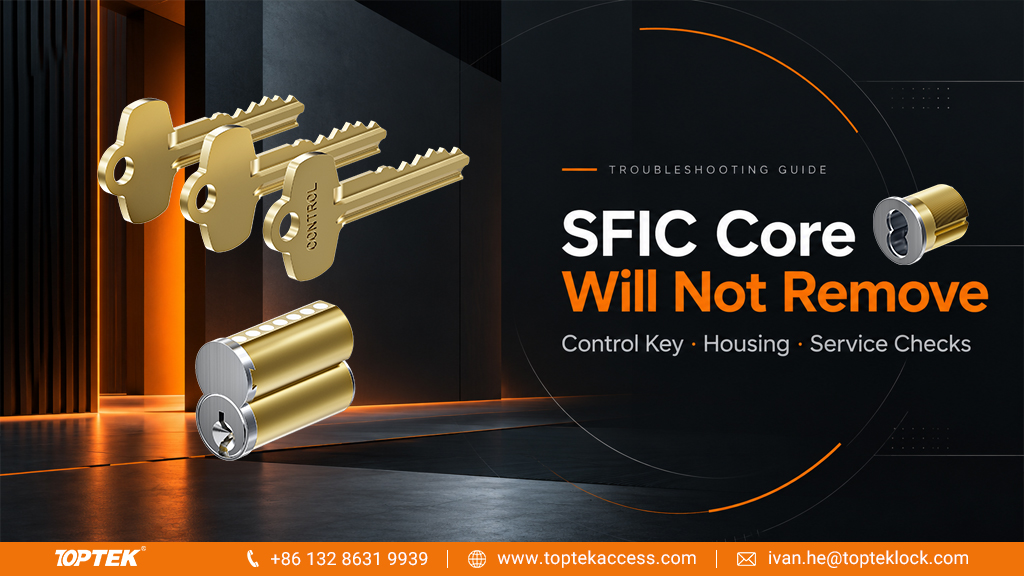
Why will an SFIC core not remove? Possible causes include an incorrect control key, a key or core identification error, contamination or damage, or interference involving the core and housing. Normal door operation alone does not identify the cause. Keep the opening under authorised control, confirm the product and key records, and follow the instructions for that specific core. If the correct control procedure does not release it normally, stop and obtain qualified service. A useful fault report separates what the key does from what the core does.
Review the TOPTEK construction cylinder range when identifying the product family. Send photographs of the cylinder face and hardware reference, but keep key cuts and confidential keying records within the authorised service channel.
Operating keys and control keys do different jobs
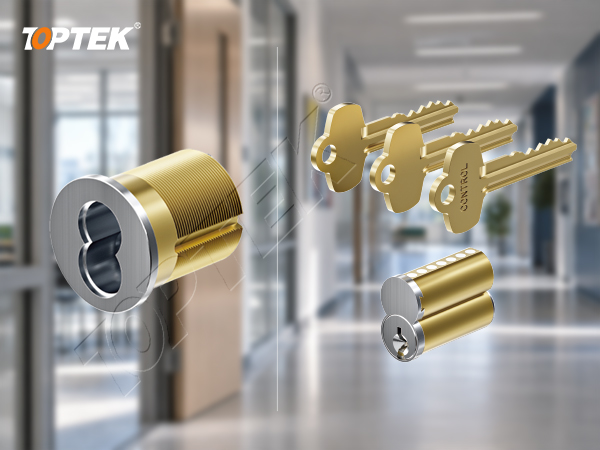
An operating key is used for normal lock operation. A control key operates the retention function that permits a compatible interchangeable core to be installed or removed. The fact that a master key opens many doors does not establish that it can release their cores. Access authority and core-service authority should be treated as separate permissions.
TOPTEK’s 2026 catalogue presents the SFIC core and the SFIC mortise housing separately and identifies control and operating keys as different items. This distinction is also reflected in Falcon’s official interchangeable-core explanation, which describes the control key’s role in releasing and installing its cores. Product-specific instructions and compatibility still govern each installation.
A handwritten label is useful only when it matches a controlled record. A key found in a maintenance drawer may belong to a previous construction phase or a different core group. Verify its reference with the responsible key custodian. Do not test an assortment of unrelated keys as a substitute for identifying the installed system.
Describe where the removal process stops
A report saying “the cylinder is stuck” leaves several distinct problems unresolved. Establish whether the key enters normally, whether the authorised control movement is available, and whether the core can move as specified after that movement. Record observations without forcing the mechanism or attempting an undocumented method.
| Observed condition | Information to confirm | Next service decision |
|---|---|---|
| Key will not enter normally | Keyway identity, key condition and visible obstruction | Stop forcing insertion and verify the key/core match |
| Operating key works, control action does not | Correct control-key reference and core group | Check records before diagnosing internal damage |
| Control action appears available, core remains restricted | Exact housing, installation history and visible interference | Ask an authorised locksmith to inspect the assembly |
| Replacement core does not seat normally | Core format, housing compatibility and rear interface | Resolve the part mismatch before closing the opening |
Include when the issue began. A core that has never been removed after installation suggests a different service history from a core that stopped releasing after a recent hardware change. Document whether the problem affects one opening or a group from the same installation phase. These observations guide investigation without claiming a diagnosis from a photograph.
Identify the core and the housing separately
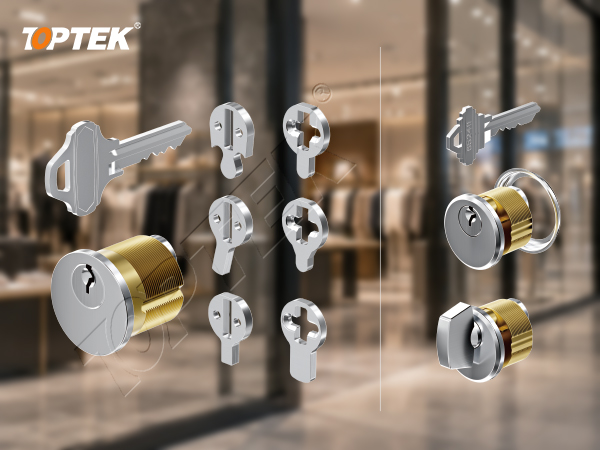
SFIC describes an interchangeable-core format, not the complete lock assembly. The housing receives the core and connects to the surrounding hardware. A mortise housing, a rim application and a lever application may require different parts behind the core even when the visible face looks familiar. A core purchase therefore needs more than a front-face photograph.
Record the manufacturer and product reference of the installed lock, the housing type and the core platform. Confirm whether the service requirement is for a bare core, an empty housing or a complete assembly. If the rear interface must be inspected, have the authorised service provider document it during the controlled work rather than asking an untrained user to dismantle the lock.
Use the TOPTEK SFIC mortise cylinder page to identify the relevant product family. Match the current drawing to the actual housing and core before ordering. Do not assume that a compatible keyway proves compatible dimensions, retention geometry or lock actuation.
Check records before replacing hardware
Begin with the door number, installation date and the most recent authorised core-change record. Compare the installed reference with the schedule and the key custodian’s records. Renovation projects may retain old labels even after a core has changed. Correct the record only after the installed item has been positively identified.
Check whether the opening still uses a construction core or has moved to permanent keying. A service kit prepared for an earlier phase can contain the wrong authorised control key for the present core. The broader SFIC project planning guide explains the core, housing and handover relationships that should be established before installation.
Record key damage or unusual operating resistance as observations, not as proof of a particular internal fault. A bent or damaged key should be assessed by the authorised locksmith. Lubrication is also product-specific: use the manufacturer’s prescribed maintenance method rather than adding an unspecified oil to make a difficult removal appear easier.
Keep a restricted core under controlled service
Plan the service window with the person responsible for the opening. Maintain required access, security and escape arrangements while work is carried out. Keep replacement parts, keys and the recovery plan ready before beginning a change. The job should not leave an occupied area dependent on an incomplete cylinder assembly.
If the correct key and documented procedure do not give normal release, stop. Increasing pulling force, altering the housing or using an improvised extraction technique can create additional damage and destroy evidence of the original problem. Ask the service provider to identify whether the restriction is associated with the key, core, housing or surrounding lock installation.
Preserve any removed components with the door reference and observed condition. Do not mix a suspect core with unused stock. A labelled return sample can help the supplier compare dimensions and component condition against the agreed configuration. Any destructive investigation should be a separately authorised service decision with a replacement and security plan.
Accept the replacement as a complete service result
A replacement core must be compatible with the installed housing and the intended keying arrangement. Confirm the supplied reference before installation, and follow the manufacturer’s seating and retention checks. Normal key operation should be verified with the opening controlled before returning the door to routine use.
The authorised service person should check both normal operation and the specified core-retention behaviour. The acceptance record should identify the keys used by their controlled references, without exposing their cuts. Where several operating levels are intended, test the agreed permissions and restrictions against the approved schedule rather than relying on one successful key.
Return the control key to its named custodian and account for removed cores and temporary keys. Record the date, service provider, replacement reference and any change to the keying schedule. The project risks include an incorrectly retained core, lost service authority, incompatible replacement parts and inaccurate asset records. A completed service report addresses all four.
TOPTEK evidence and the service RFQ pack
Why TOPTEK for replacement planning? The cylinder range includes SFIC mortise assemblies alongside conventional mortise and other cylinder formats. That product distinction helps buyers specify the scope of supply instead of ordering an unspecified “replacement cylinder.” The catalogue’s separate core and housing illustrations provide a starting point for the technical enquiry.
Ask how the proposed configuration will be checked through the TOPTEK quality-management process. A service enquiry should identify the parts and observations needed for review, while a larger commercial door hardware order should also define spares, packaging and traceability requirements.
- Door number, lock reference, housing type and installed core identification.
- Whether normal operation works and where the authorised removal process stops.
- Current construction or permanent keying phase and the responsible key custodian.
- Photographs of the assembly and visible damage, excluding confidential key cuts.
- Required supply scope: core, housing, compatible rear components or complete assembly.
- Quantity, service timing, applicable drawings and replacement acceptance requirements.
Do not send full key-system information to an open distribution list. Establish the authorised technical contact first, then exchange only the records needed to confirm the specific replacement. The supplier and the site’s locksmith should agree which party is responsible for keying, installation and final acceptance.
Frequently asked questions
Why can my operating key open the door but not remove the SFIC core?
Normal lock operation and core release are different functions. Confirm the correct authorised control key for the installed core.
Is a master key automatically a control key?
No. Master-key access does not establish authority or mechanical compatibility for releasing an interchangeable core.
Can every SFIC core fit every SFIC housing?
Do not assume universal compatibility. Confirm the core platform, housing, retention arrangement and lock interface for the exact products.
What if the correct control key still does not release the core?
Stop forcing the assembly, record the symptoms and ask the authorised locksmith to inspect it using the applicable product instructions.
What should be recorded after a core replacement?
Record the door number, installed part reference, date, service provider, functional acceptance and the return of controlled keys and removed components.
Conclusion and request a replacement review
When an SFIC core will not remove, the most useful first step is precise identification. Separate the operating key from the control key, the core from the housing, and an observed restriction from an assumed diagnosis. A controlled service process can then establish the correct replacement scope and restore a clear maintenance record.
For an initial enquiry, send TOPTEK the lock and housing references with a short symptom description. For a formal quotation, add quantities, the agreed core configuration, authorised keying contact and sample acceptance requirements. TOPTEK is your Commercial Door Hardware Reliability Solution.