

SFIC Cylinder Guide for Commercial Projects: Core, Housing, Keyway and Handover Planning
Focus: SFIC cylinder for commercial projects
Construction Cylinder Buyer Guide | 19 August 2026
Author: Ivan He, TOPTEK | Technical review status: final engineering sign-off required before publication.
TL;DR
- SFIC is a removable keyed core system; the core, housing and lock interface are separate approval items.
- Define whether the supplier scope includes cores, housings, cams or tailpieces, operating keys and control keys.
- Freeze the 6- or 7-pin platform and keyway before building the access hierarchy.
- Control keys can remove cores and therefore require named custody, issue logs and restricted handover.
- When construction cores are used, document the temporary-to-permanent changeover, recovery and acceptance process.
Quick Answer
How should buyers plan an SFIC cylinder for commercial projects? Start with each lock and its compatible housing, then select the approved SFIC core platform and keyway. Separate operating-key permissions from control-key authority. If temporary construction cores are required, schedule their installation and replacement with permanent cores, record every issued key and core, and complete a door-by-door functional and custody handover.
Why SFIC Is a Project Workflow, Not Only a Cylinder
Small Format Interchangeable Core is valuable because an authorized person can remove the keyed core from a compatible housing with a specialized control key. The lock or housing can remain installed while the core changes. That can support construction access, tenant turnover, maintenance and phased commissioning across many doors.
The advantage depends on planning. A request for “SFIC cylinders” leaves unanswered whether the order is for bare cores, housings or complete assemblies; which locks must accept them; whether the platform is 6-pin or 7-pin; which keyway is approved; how the master-key hierarchy works; and who may possess the control keys.
This page has a specific intent: core, housing, keyway and handover planning. It does not repeat the broader hierarchy design covered in TOPTEK’s Project Cylinders and Master Key Systems guide, nor the cross-format comparison in the commercial cylinder-types guide.
SFIC Project Decision Map
| Decision | Buyer must provide | Approval output |
|---|---|---|
| Lock interface | Exact lockset, trim and door preparation | Compatible housing and cam/tailpiece |
| Core platform | 6- or 7-pin requirement and reference system | Approved core/housing combination |
| Keyway | Specified keyway, ownership and duplication policy | Frozen keyway and blank-control scope |
| Hierarchy | Door groups, users and access levels | Approved keying schedule |
| Construction phase | Temporary access groups and changeover milestone | Construction/permanent core plan |
| Handover | Authorized custodians and acceptance procedure | Counted cores, keys, records and signatures |
1. Separate the Core from the Housing
The core contains the keyed mechanism
The removable SFIC core carries the plug and pinning that respond to operating keys and the control key. Operating keys turn the lock according to their authorization. The control key moves the core-retaining element so the entire core can be withdrawn from or installed in its housing.
That distinction must appear in the bill of materials. A door may need one housing installed in the lock and one permanent core, while the project may also require temporary construction cores, spare permanent cores and different key quantities. Ordering “one SFIC per door” can hide these separate deliverables.
The housing connects the core to the lock
The housing is the physical interface between the SFIC core and the lockset, mortise cylinder position, rim device or other compatible hardware. It must provide the correct retention, length and operating connection. The cam or tailpiece must suit the lock function. A compatible core cannot correct an incorrect housing or actuator.
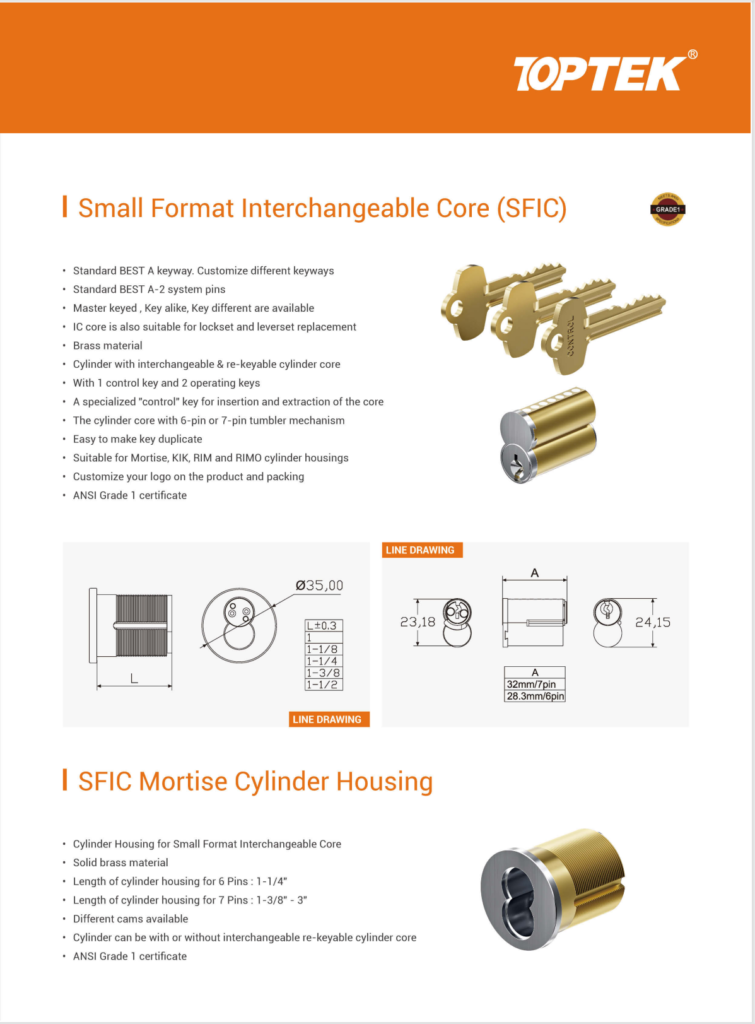
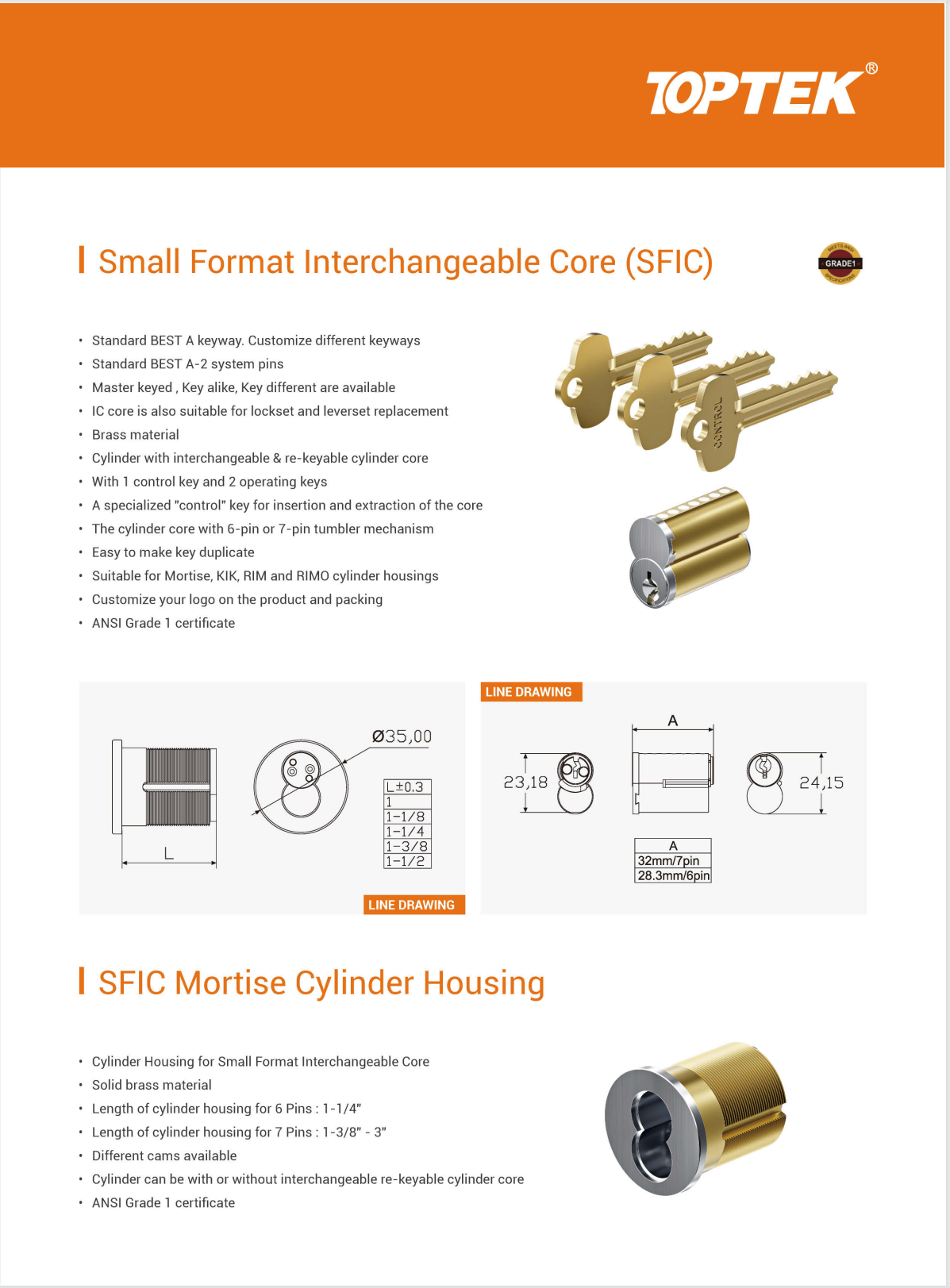
TOPTEK’s verified SFIC Mortise Cylinder page describes 6- or 7-pin core options, control and operating keys, and housings for mortise, KIK, rim and related applications. It also lists different housing lengths and cam options. Treat each statement as model- and configuration-specific, and confirm the exact scope on the approved drawing.
2. Freeze the 6- or 7-Pin Platform and Keyway
Pin count is not a casual late-stage choice. It affects the core length/platform, compatible housing, key blank and keying design. The project schedule should state the selected platform consistently for cores, housings, samples, spares and replacement orders.
The keyway defines the physical key profile accepted by the core. TOPTEK’s product page identifies BEST A as its standard reference and states that different keyways may be customized. A buyer should not translate that into universal keyway compatibility. State the required keyway, key ownership or restriction expectations, blank supply, duplication process and long-term replacement route.
Keyway and hierarchy are different decisions
The keyway controls which blank can enter the core. The hierarchy controls which correctly cut keys operate which cores. A project can use keyed-different, keyed-alike or master-keyed arrangements, but the complete chart must be reviewed for system capacity, future expansion and authorization boundaries.
3. Operating, Master and Control Keys Need Separate Custody
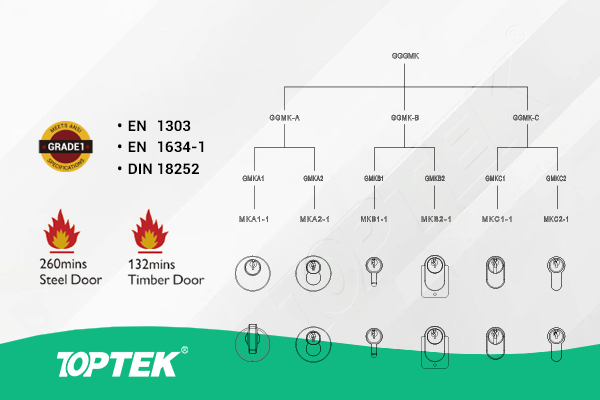
An operating key unlocks the assigned doors. A master or grand master key may unlock a broader group defined by the approved hierarchy. A control key has a different purpose: it authorizes removal or insertion of the SFIC core. Possession of a control key can enable rapid system changes, so its custody should be narrower than routine operating-key custody.
Create a key register that identifies key reference, function, quantity, recipient, issue date, return status and authorization. Avoid ambiguous labels such as “master” when a key is actually a control key. Package and mark them separately, and do not leave control keys in general site key rings.
For replacement work, require two-person verification or another project-approved control for core removal where security policy calls for it. Record the removed core serial or schedule reference, the replacement core, the door number, date and responsible personnel.
4. Plan Construction Cores and Permanent Handover
Temporary construction cores can allow contractors to access defined areas without distributing permanent operating keys. The benefit is strongest when the project defines the boundary before site work starts. List which doors receive temporary cores, which personnel receive construction keys and which secure areas remain outside the temporary system.
Freeze the changeover trigger
The changeover might follow practical completion, owner acceptance, tenant handover or another controlled milestone. Name the person authorized to release permanent cores and control keys. Coordinate the sequence so doors are not left unsecured and permanent keys are not distributed before their cores are installed.
Recover or invalidate temporary access
After changeover, count removed construction cores and returned construction keys. Follow the owner’s policy for storage, repinning, destruction or future reuse. Do not assume removal alone closes every risk if construction keys or unrecorded duplicate keys remain in circulation.
Complete door-by-door acceptance
For every opening, verify core seating, retention, operating-key function, control-key removal, latch or bolt operation and key withdrawal. Record exceptions and close them before final acceptance. The permanent handover pack should include the as-built door/core schedule, key hierarchy, key counts, custody receipts, spare-core list and approved change log.
5. Housing and Lock Compatibility Checklist
- Exact lockset, trim or device model
- Required housing type: mortise, KIK, rim or other approved interface
- 6- or 7-pin core platform
- Housing length and finished trim relationship
- Cam or tailpiece drawing and required rotation
- Core insertion/removal clearance
- Keyway and approved key blank
- Operating, master and control-key functions
- Finish, marking and packaging reference
- Production-intent fitted sample and signed revision
Buyers can review the broader TOPTEK Construction Cylinder range and coordinate SFIC with the specified ANSI lock hardware. A master-key requirement does not make a Euro, conventional mortise or bored cylinder physically interchangeable with SFIC.
6. Common SFIC Planning Mistakes
- Quoting cores without identifying compatible housings.
- Mixing 6- and 7-pin assumptions between drawings and purchase orders.
- Specifying a keyway name without defining blank and duplication controls.
- Counting operating keys but omitting control keys.
- Giving control keys to general site users.
- Installing permanent cores before the authorized changeover milestone.
- Failing to recover temporary cores or construction keys.
- Approving a loose core instead of the fitted lock/housing assembly.
- Applying one certificate statement to configurations outside its documented scope.
7. Project Risks and Approval Controls
| Risk | Likely result | Control |
|---|---|---|
| Wrong housing | Core will not fit or lock will not operate | Interface drawing and fitted sample |
| Control-key leakage | Unauthorized core removal | Restricted issue, register and custody receipt |
| Uncontrolled changeover | Doors contain mixed temporary/permanent cores | Door-by-door installation and sign-off |
| Key schedule mismatch | Users gain too much or too little access | Approved hierarchy and functional audit |
| Unverified evidence | Unsupported project claim | Check exact model, document, revision and scope in the resource centre |
8. TOPTEK Evidence and Product Boundary
TOPTEK’s current SFIC product information states brass core and housing construction, 6- or 7-pin options in the product description, a standard BEST A keyway reference, customizable keyways, keyed-different/keyed-alike/master-key availability, control-key operation and different compatible housing/actuator options. The technical table and descriptive bullets are not perfectly identical on pin count, so the purchase drawing must state the selected configuration rather than relying on a generic page label.
TOPTEK uses precision machining and internal inspection/testing resources to control components and assemblies. Internal verification must not be presented as third-party certification. Request the exact certificate or report when required, confirm that its model and configuration scope matches the order, and retain it with the approved submittal.
9. SFIC RFQ and Handover Checklist
- Project market, building, door groups and quantities
- Lockset/trim/device models and housing interfaces
- Core-only, housing-only or complete-cylinder scope
- 6- or 7-pin platform
- Housing length, cam or tailpiece
- Keyway and blank-control requirements
- KD, KA, master and higher-level hierarchy
- Operating, master and control-key quantities
- Temporary construction-core quantities and doors
- Permanent-core quantities and spare strategy
- Changeover milestone and authorized personnel
- Marking, packaging, finish and door references
- Required certificates, reports and model scope
- Fitted-sample test and approval revision
- As-built schedule, key register and custody receipts
- Temporary-core/key recovery or disposition record
10. Why TOPTEK for SFIC Project Coordination
TOPTEK can coordinate SFIC cores, compatible housing options, cams or tailpieces, keying choices and project documentation within its Construction Cylinder range. The most useful result is a repeatable schedule that connects each door to its physical interface and authorized keys.
The boundary is clear: feasibility depends on the actual lock, housing, keyway and hierarchy. TOPTEK should not promise universal interchangeability, undocumented restricted-key rights or certificate coverage beyond the reviewed evidence. Early drawings and a controlled sample make the commercial offer more reliable.
Frequently Asked Questions
What is an SFIC cylinder system?
SFIC means Small Format Interchangeable Core. The keyed core can be removed from a compatible housing with an authorized control key, allowing controlled core changes without removing the complete lock or housing.
Are all SFIC cores compatible with all SFIC housings?
Do not assume so. Confirm the core format, 6- or 7-pin platform, keyway, housing, cam or tailpiece, lock interface and supplier system. Physical insertion alone does not prove correct lock operation or key control.
What is the difference between an operating key and a control key?
An operating key unlocks the door according to the approved access hierarchy. A control key releases the SFIC core from its compatible housing for authorized removal or installation. Control keys require stricter custody.
Should a project use temporary construction cores?
Temporary construction cores can separate site access from the permanent key system when the project plan supports them. Define who receives them, when they are installed, the changeover date, recovery or destruction controls and the permanent-core acceptance record.
How should buyers choose between 6-pin and 7-pin SFIC?
Choose the platform from the approved system architecture, housing compatibility, keyway, key hierarchy and supplier engineering review. Do not mix platforms or order only by visible core shape.
What should an SFIC RFQ include?
Include lock and housing types, core quantities, 6- or 7-pin platform, keyway, cams or tailpieces, keyed-different/keyed-alike/master-key hierarchy, operating/control/master keys, temporary and permanent core scope, door schedule, sample plan and handover controls.
Conclusion
An SFIC system succeeds when the removable core, compatible housing, keyway and handover process are approved together. Freeze the physical platform before the hierarchy, restrict control-key custody and close the construction-to-permanent changeover with a door-by-door record.