
EN 1634-1 Fire Door Mortise Lock: Evidence, Scope and Buyer Review
Understand how doorset fire-test evidence relates to EN 12209 lock performance, model identification, door construction and approval controls.
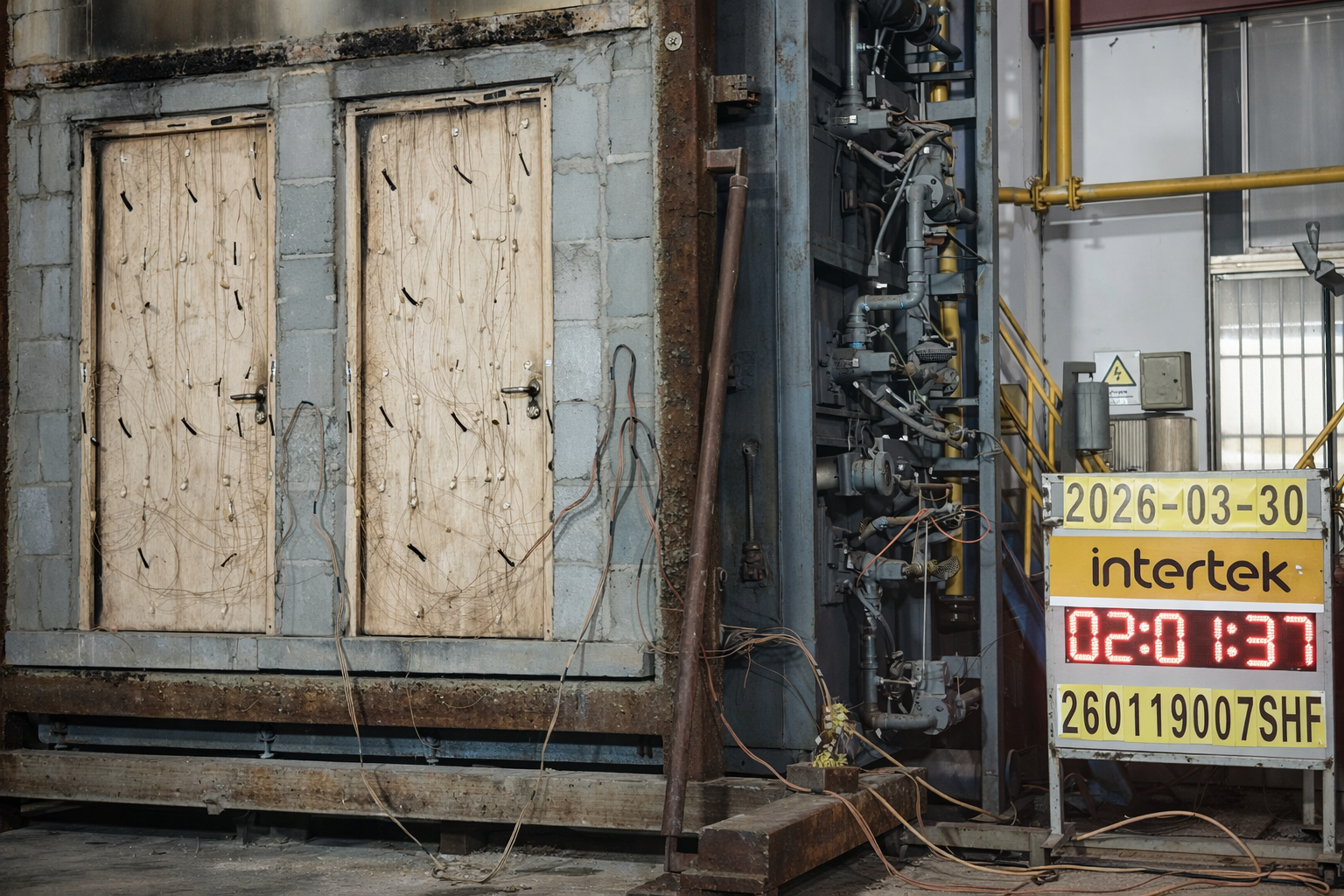
What does EN 1634-1 tell a lock buyer?
EN 1634-1 evaluates fire resistance for door and shutter assemblies and openable windows under specified test conditions. A mortise lock included in a documented test assembly must be reviewed within that assembly’s described scope.
The report does not automatically approve every lock in a range or every door construction. Buyers should match the proposed model, function, door material, dimensions, fittings and installation details with the current evidence and project requirements.
Buyer decision
Use EN 1634-1 evidence to answer “what happened in the defined fire-test assembly?” Use the lock’s EN 12209 classification and product documentation to answer “how does the lock perform as a mechanical lock?” Then confirm project acceptance.
Explore EN 12209 mortise locks →Read four layers together
Separating these layers prevents buyers from treating a fire test, lock classification and CE-related documentation as interchangeable.
Doorset fire-test evidence
Identify door construction, orientation, dimensions, hardware schedule, supporting construction, duration and the exact report scope.
Lock performance classification
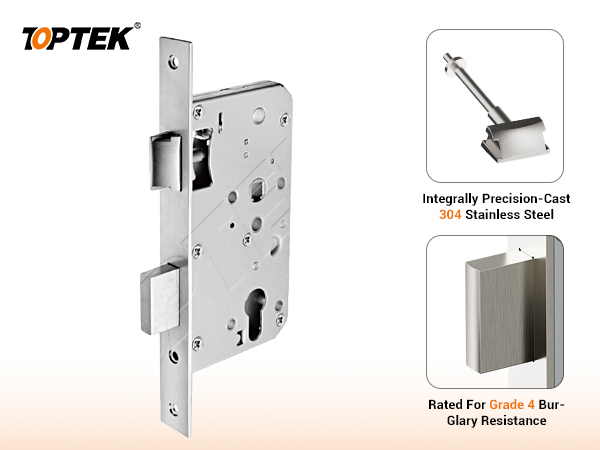
Review the applicable EN 12209 classification, function, durability, door mass, corrosion and other declared characteristics for the precise lock.
Regulatory and project route
Confirm the target market, product and doorset responsibilities, required declarations or marking, and the consultant or authority’s acceptance criteria.
Production configuration
Freeze model code, forend, strike, latch, deadbolt, cylinder, spindle, trim, fasteners and any permitted intumescent protection.
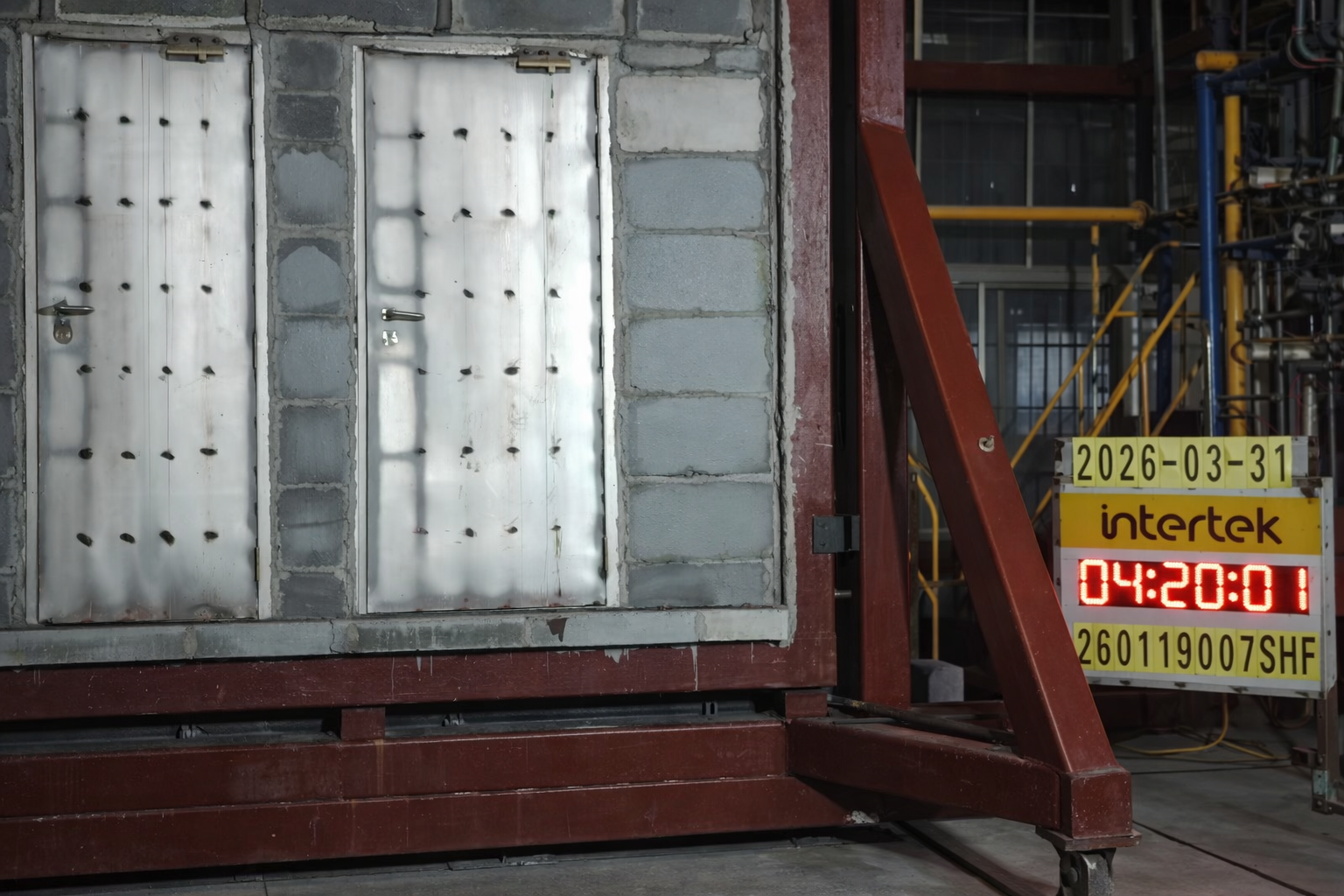
Steel and timber evidence are not interchangeable
Door leaf materials, core, facing, frame, clearances, edge preparation, seals and hardware fixing can influence fire performance. A lock used in a steel test assembly should not be assumed acceptable for a timber composite door without supporting evidence.
Compare Timber vs Steel Evidence →Match the proposed lock to the report
| Review item | What to compare | Why it matters |
|---|---|---|
| Model and function | Report schedule, quotation code, latch/deadbolt operation and handing | Similar cases may have different internal or functional configurations. |
| Door construction | Steel or timber composite leaf, frame, thickness and supporting construction | Evidence belongs to the described assembly. |
| Forend and strike | Dimensions, material, fixing locations and preparation | Door-edge preparation is part of the installed condition. |
| Cylinder and spindle | Profile, length, cam, spindle section and projection | Interfaces affect installation and operation. |
| Protection details | Permitted intumescent kit, fasteners and installation instructions | Unapproved additions or omissions can change the configuration. |
| Document revision | Current report, classification or approval issue | Outdated evidence may not describe the offered product. |
Keep the evidence boundary visible
Family-level assumptions
Treating one tested model as proof for every backset, function or accessory.
Standard substitution
Presenting EN 12209 classification as a replacement for doorset fire-test evidence.
Door-type transfer
Applying steel-door results to timber doors or the reverse without documentation.
Uncontrolled change
Changing forend, strike, cylinder, spindle or protection after sample approval.
Approval sequence
- 1. Define: market, rating, door and lock function.
- 2. Trace: exact model against current evidence.
- 3. Coordinate: interfaces with the doorset and trim.
- 4. Approve: drawing, sample and documents.
- 5. Control: production revision and permitted changes.
Product engineering tied to evidence review
TOPTEK has manufactured commercial door hardware since 1991. Our team reviews model schedules, dimensions, samples and available test evidence before commercial release. Supporting EN 1634-1 reports cover defined lock configurations in specified doorsets; they are not presented as blanket approval.
View Manufacturing Capabilities →Manufacturing since
R&D personnel
Japanese CNC machines
9001, 14001 and 45001
EN 1634-1 sourcing questions
Does an EN 1634-1 report approve every mortise lock in a series?+
No. Buyers must confirm the exact lock models, functions, dimensions, accessories and doorset conditions described by the report or related approval documentation.
Is EN 12209 the same as EN 1634-1?+
No. EN 12209 addresses mechanically operated locks and latches, while EN 1634-1 is a fire-resistance test for door and shutter assemblies and openable windows.
Can steel-door test evidence be used for timber doors?+
Not automatically. Door construction and installation details are part of the evidence scope, so a timber application needs relevant supporting documentation.
What lock dimensions should be frozen at approval?+
Freeze the case, backset, centres, forend, strike, cylinder or key interface, spindle, fasteners and any specified protective materials.
What should an RFQ include?+
Include the market, required rating and standards, door and frame construction, opening schedule, lock function, dimensions, trim and cylinder interfaces, evidence requirements, sample plan and approval responsibilities.
Review your EN fire-door mortise lock configuration
Send the doorset, lock function and required approval route so TOPTEK can check the model, interfaces and available evidence.