

Euro Profile Cylinder Compatibility Guide: Cam, Key/Thumbturn Function and Lock Interface
Focus: Euro profile cylinder compatibility
Construction Cylinder Buyer Guide | 18 August 2026
Author: Ivan He, TOPTEK | Technical review status: final engineering sign-off required before publication.
TL;DR
- A Euro-shaped opening proves only the basic profile; it does not prove complete compatibility.
- Freeze the cam geometry, home position and rotation against the exact lock case.
- Select double, key-and-thumbturn or half-cylinder function from the door operation and project requirements.
- Record A/B length, inside/outside orientation, fixing alignment and finished trim even when sizing is not the main topic.
- Approve a production-intent cylinder in the actual lock, trim and door preparation before bulk release.
Quick Answer
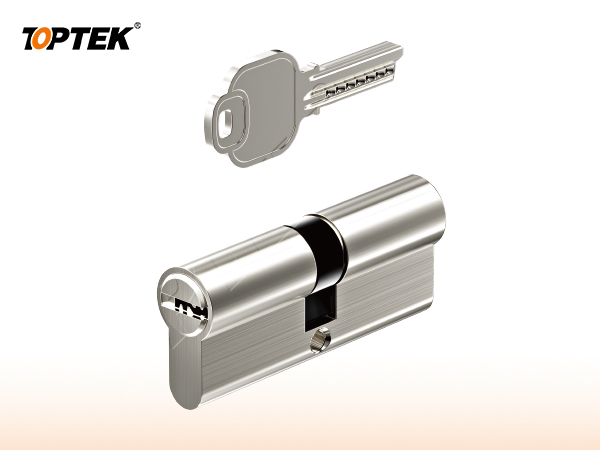
How do buyers confirm Euro profile cylinder compatibility? Match five interfaces: the external profile, fixing-screw centre, operating cam, cylinder function and finished door/trim stack. The cam must engage the correct lock component through the required rotation; the double, thumbturn or half-cylinder arrangement must provide the intended operation; and a fitted sample must complete every lock cycle without binding, over-travel or unwanted key-removal positions.
Compatibility Is More Than the Euro Profile Shape
Buyers often begin with a reasonable observation: the lock has a Euro-profile cut-out, so a Euro profile cylinder should fit. That observation opens the selection process; it does not finish it. The familiar external outline must still be coordinated with the central fixing screw, the cam inside the lock case, the selected operating function, the finished trim and the key-control plan.
A cylinder can slide into the preparation and still fail in service. The cam may miss the lock lever, start at the wrong angle, rotate too far, bind against the case or allow the key to withdraw in an unintended position. A thumbturn may be installed on the wrong side. A correct total length may be offset incorrectly between the two faces. Compatibility is therefore an assembled-door decision rather than a catalogue-label decision.
This guide focuses on cam, key/thumbturn function and lock interface. It intentionally does not repeat the step-by-step sizing intent of TOPTEK’s Euro profile cylinder measurement guide. Use that guide when the main question is A/B measurement.
Euro Profile Cylinder Compatibility Map
| Checkpoint | Evidence to request | Failure if assumed |
|---|---|---|
| Profile and fixing | Lock interface drawing and fixing-screw centre | Cylinder does not seat or cannot be retained |
| Cam geometry | Dimensioned cam drawing or approved physical reference | Cam misses, binds or incompletely operates the lock |
| Cam position/rotation | Home angle, rotation direction and operating sequence | Wrong key-removal position or incomplete bolt travel |
| Operating function | Double, key/thumbturn or half; inside/outside marked | Door cannot be operated as intended |
| A/B length and trim | Finished door section with both centre-to-face values | Excessive projection, recess or trim clash |
| Key system | Keyway, KD/KA/master-key schedule and handover controls | Physical fit succeeds but access permissions fail |
1. Cam Geometry Is the Critical Lock Interface
Ask what the cam must move
The cylinder plug turns the cam; the cam then transfers that rotation to the lock case. Depending on the lock function, it may retract or project a deadbolt, interact with a latch mechanism or drive another internal component. The buyer should identify the exact lock model and intended operating sequence before approving the cylinder.
“Standard cam” is not a sufficient RFQ description when the project outcome depends on an exact interface. A useful drawing states cam width, thickness, radial projection, shape, home angle and the relevant centre references. It should also state the permitted rotation and whether the key must be removable in one or more positions.
Home position matters
The home position is the cam’s resting orientation when the key is withdrawn. If it does not correspond with the lock design, the cylinder may be difficult to insert, the cam may obstruct removal, or the key may stop at an unintended point. A product photo cannot reliably show the required angular relationship.
Rotation must be tested through the complete cycle
During sample approval, operate the cylinder slowly and under normal use speed. Check initial pickup, smooth travel, full latch or bolt movement, return to the key-removal position and repeat operation from every required side. Test with the finished strike and door alignment because load at the bolt can expose an interface problem that a loose bench sample does not show.
2. Choose Double, Key-and-Thumbturn or Half-Cylinder Function
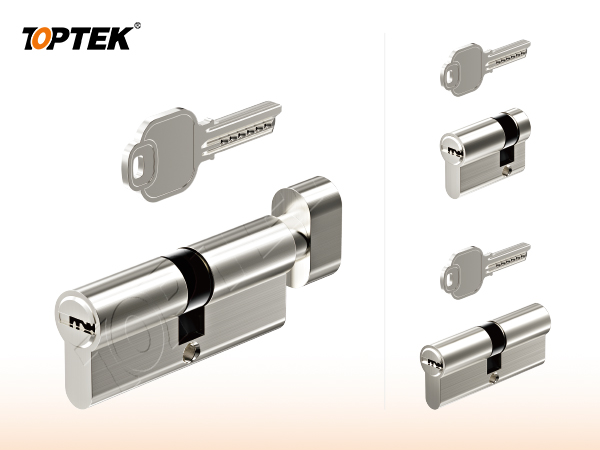
Double cylinder
A double cylinder is key-operated from both sides. It may suit a project that requires controlled key operation at each face, but the selection must also comply with the door’s life-safety strategy and applicable project requirements. Never infer that a double cylinder is acceptable for an escape route merely because it physically fits.
Key-and-thumbturn cylinder
A key-and-thumbturn cylinder uses a key on one face and a thumbturn or knob on the other. The RFQ must label the inside and outside A/B orientation. This is especially important for asymmetric lengths, finishes, controlled external sides and packaged door sets. Confirm knob clearance from the lever, rose and adjacent hardware across the full rotation.
Half cylinder
A half cylinder serves a compatible one-sided application. Its body, fixing relationship and operating side should be shown on the drawing. It is not simply “half of any double cylinder,” and it should not be substituted without reviewing the lock and trim.
Function is not decided by convenience alone
Door use, egress, accessibility, security policy, locking function and local project rules shape the decision. TOPTEK can manufacture to an approved product specification, but the project designer or responsible authority must establish which function is permitted at each opening.
3. TOPTEK Euro Profile Product References
TOPTEK’s EPCHK7P product page lists brass housing and plug construction, a seven-pin arrangement, horizontal keyway, and double, knob and half-cylinder length ranges. The separate EPCVK6P product page provides another Euro profile reference. Product-page ranges are useful for early selection; they do not replace a project-specific drawing, sample and evidence review.
Buyers comparing formats can browse the Construction Cylinder product hub. Keep the approval record at model level: exact cylinder, cam, length, function, finish and key plan. Do not transfer a material, test or compliance statement from one model to another unless the supporting document expressly covers both.
4. Length and Trim Still Control the Installed Interface
Even though this page is not a measuring tutorial, A/B orientation remains part of compatibility. Measure from the cylinder fixing-screw centre to each finished face, including escutcheons, roses or protectors. A single total length can conceal an incorrect offset. For example, two cylinders may share the same overall length while projecting differently on the secure and non-secure faces.
Check that the cylinder is neither excessively proud nor too deeply recessed for reliable key or thumbturn use. Confirm clearance around protective furniture and ensure the fixing screw aligns without forcing the cylinder or lock case. If the door or trim changes after approval, reopen the cylinder check rather than relying on the earlier sample.
5. A Six-Step Buyer Approval Process
- Identify the exact lock: state manufacturer/interface reference, function, backset and centres where relevant.
- Submit the interface: provide the lock-case drawing, cam requirement and fixing-screw position.
- Define cylinder operation: choose double, key/thumbturn or half and mark inside/outside orientation.
- Complete the door stack: provide A/B values and finished trim or protector details.
- Coordinate the keys: define keyway, keyed different, keyed alike or master-key scope, quantities and handover.
- Approve the assembled sample: fit production-intent parts to the actual lock and representative door, test, sign and freeze the revision.
6. Common Compatibility Mistakes
- Ordering “Euro cylinder” without naming the lock model or cam.
- Approving the outline but ignoring cam home position and rotation.
- Using total length without separate A/B dimensions.
- Failing to mark which side receives the thumbturn.
- Assuming a half cylinder is a direct substitute for a double cylinder.
- Testing the loose cylinder but not the fitted lock, trim and strike.
- Using one model’s certificate or test statement as evidence for a different model.
- Freezing the master-key chart before confirming all physical interfaces.
7. Project Risks and Controls
| Risk | Project consequence | Control |
|---|---|---|
| Wrong cam | Lock will not complete the required cycle | Dimensioned interface drawing plus fitted test |
| Wrong orientation | Thumbturn or controlled side is reversed | Mark inside/outside and A/B on schedule and sample |
| Trim changed late | Cylinder projects, recesses or clashes | Recalculate A/B from final approved trim |
| Uncontrolled sample revision | Bulk goods differ from accepted assembly | Signed sample, drawing revision and change control |
| Evidence overreach | Unsupported compliance claim | Request exact model/document/scope from the resource centre |
8. TOPTEK Evidence and Approval Boundaries
TOPTEK’s internal product material supports a Construction Cylinder range that includes Euro profile variants and project key-management options. The current EPCHK7P data identifies its material and component configuration, stated length ranges and model-specific test references. These statements should be checked against the latest technical sheet and the exact order configuration before publication or purchase approval.
TOPTEK also uses internal inspection and testing resources during product development and quality control. Internal testing must be described as internal verification, not third-party certification. Where a project requires certificates, test reports or declarations, request the exact document, model coverage, revision and validity. The TOPTEK laboratory page provides context on verification capability, while project evidence remains document-specific.
9. Euro Profile Cylinder RFQ Checklist
- Project, market, door numbers and quantities
- Exact lock-case model and interface drawing
- Double, key/thumbturn or half-cylinder function
- Inside/outside orientation and handing notes
- A/B centre-to-finished-face dimensions
- Cam geometry, home angle, rotation and key-removal position
- Fixing-screw location and required screw
- Door, trim, escutcheon and protector drawings
- Keyway and KD, KA or master-key hierarchy
- Operating, control and master-key quantities as applicable
- Finish, packaging, marking and schedule references
- Required technical documents and model scope
- Production-intent sample and fitted approval method
- Drawing revision, change-control owner and bulk-release signature
10. Why TOPTEK for Project Cylinder Coordination
TOPTEK approaches the cylinder as part of the door-hardware interface. The useful deliverable is not only a cylinder quotation; it is a reviewable package connecting the selected model, cam, function, dimensions, key schedule, evidence and approved sample. This is particularly important when a project combines different lock platforms or regional formats.
The boundary is equally important: TOPTEK should not guess an undocumented cam, declare universal interchangeability or make a project compliance decision without the responsible project evidence. Clear inputs make a faster and more repeatable approval process.
Frequently Asked Questions
Are all Euro profile cylinders compatible with every Euro-profile lock?
No. The outer profile may fit the opening, but the cam geometry, cam home position, rotation, fixing-screw alignment, operating function, effective length and trim interaction must also match the lock and door assembly.
How do I choose the correct cam for a Euro profile cylinder?
Use the lock manufacturer’s interface drawing or an approved reference sample. Confirm cam width, projection, home angle, rotation direction and the movement needed to operate the latch or deadbolt. Do not select a cam only from a photograph.
Should I specify a double cylinder or a key-and-thumbturn cylinder?
Choose from the door function, egress strategy, security policy and applicable project requirements. A double cylinder uses keys on both sides; a key-and-thumbturn cylinder provides key operation on one side and a knob on the other. The inside and outside orientation must be stated.
Can a half cylinder replace one side of a double cylinder?
Not automatically. A half cylinder is intended for a compatible one-sided application and has a different body arrangement. Confirm the lock function, fixing, cam, required operating side and trim before substitution.
Does the total cylinder length prove compatibility?
No. Total length does not show the two centre-to-face dimensions or orientation. Use A/B dimensions from the fixing-screw centre and include the finished escutcheons or protectors. Follow the separate TOPTEK measurement guide for the full sizing method.
What should a Euro cylinder compatibility RFQ include?
Include the exact lock model, door and trim drawings, cylinder function, A/B length, cam drawing, fixing position, inside/outside orientation, keyway and key plan, finish, quantities, evidence requirements and a fitted-sample approval plan.
Conclusion
Reliable Euro profile cylinder compatibility comes from matching the cylinder to the complete lock interface. Freeze the cam, function, fixing, orientation and finished assembly; then prove the result in a production-intent fitted sample. That discipline prevents a profile that merely fits the opening from becoming a cylinder that fails to operate the door.