

TL;DR
- Match the hinge leaf corner to the actual mortise in both the door and frame.
- Square and radius corners describe outline geometry, not hinge strength or service grade.
- Record height, open width, thickness, screw pattern and corner shape as separate dimensions.
- Review any proposed preparation change before ordering, especially for rated doorsets.
Quick answer: square corner vs radius corner hinges
Square corner hinges have approximately right-angle leaf corners; radius corner hinges have curved corners defined by a radius. Choose the corner shape that matches the specified door and frame preparation. A hinge with the correct height and width can still fail to seat properly if its corners do not match the mortise. Corner shape does not determine load capacity, bearing arrangement or certification. For replacement work, compare the existing preparation with the proposed hinge drawing and approve any required repair or machining before releasing the order.
Understand what the corner shape changes
A full mortise hinge sits in recesses prepared in the door and frame. The leaf outline and the recess outline must be compatible so the leaf can seat as intended. The corner is one part of that outline. It should be checked alongside the straight edges and the depth of the preparation.
A square leaf offered to a recess with rounded corners may meet material at the corners before it seats fully. A rounded leaf placed in a square recess may leave visible space at the corners. Neither situation should be dismissed simply because the overall hinge height and width appear correct.
Start with the TOPTEK hinge and door power transfer range to identify the product family. For a mechanical hinge replacement, focus the comparison on the hinge and door interfaces. Do not select an electrical variant unless the project also requires and specifies its electrical function.
Identify a radius from a drawing or a measured template
The radius describes the curvature at the corner. It is not the hinge width or a measurement taken diagonally across the leaf. If the existing product can be identified, its drawing is a useful starting point. Confirm that the installed preparation still matches that drawing, especially on doors that have already been repaired.
Where identification is missing, use a suitable radius gauge or a measured template and record the result with photographs. Include a scale and show the full leaf outline as well as a close-up. A photograph taken at an angle can distort the apparent corner shape, so it should support the measurement rather than replace it.
As a manufacturer-specific example, Hager identifies RCBB1741 as a quarter-inch radius hinge. This demonstrates that radius is a stated product dimension. It is a residential product example, not a recommendation for a commercial opening or evidence of a TOPTEK radius option.
Avoid relying on coin comparisons or an informal description such as small rounded corner for a purchase order. Ask for a dimensioned outline when the fit matters. Keep the original unit and any conversion clearly identified so a rounded metric value is not mistaken for an exact manufacturing dimension.
Survey both the door leaf and the frame
The preparation on the frame may differ from the preparation on the door. Replaced door leaves, repaired frames or earlier hardware changes can create mixed conditions. Inspect both sides of every representative hinge position and record any difference.
| Measurement | What to record | Why it matters |
|---|---|---|
| Corner outline | Square or measured radius on each leaf and recess | Determines whether the leaf outline can seat in the mortise |
| Height and open width | Drawing dimensions and measured existing preparation | Checks the overall footprint |
| Leaf thickness and recess depth | Measure separately from paint or surface buildup | Affects seating and door clearance |
| Screw pattern | Hole positions, countersinks and fixing specification | Prevents reliance on incompatible existing holes |
| Hinge position and condition | Door reference, position, damage and prior repairs | Separates repeatable openings from exceptions |
Support the door and follow the responsible installer’s procedure during inspection. Do not remove multiple hinges from an unsupported door to obtain measurements. Where a hinge cannot be removed during the survey, record the measurement limitation and arrange a controlled sample inspection before committing to a bulk order.
Choose a replacement that preserves the intended preparation
When the existing mortises are sound, a replacement with matching geometry is the first configuration to evaluate. Matching the corner shape can reduce the need for preparation changes, but it does not resolve differences in leaf thickness, screw locations or hinge axis position.
If no direct match is available, obtain a documented proposal for the affected door and frame. The proposal should identify the work required, who is responsible and how the finished assembly will be checked. Do not assume that a corner can be cut away or filled without affecting the intended installation.
For a rated doorset, the door manufacturer’s instructions, applicable listing or test scope and project requirements govern permitted work. A general hinge outline comparison cannot authorise a field modification. Keep the exact hinge selection and preparation proposal together for review by the responsible parties.
Purchasing teams should separate a geometry change from a performance change. A request to replace a square corner hinge with a radius corner version should not silently change the bearing arrangement, material, finish or required service classification at the same time.
Check the TOPTEK model beyond its corner outline
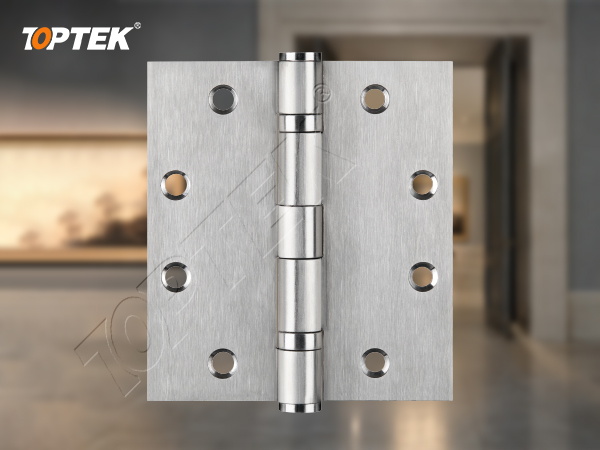
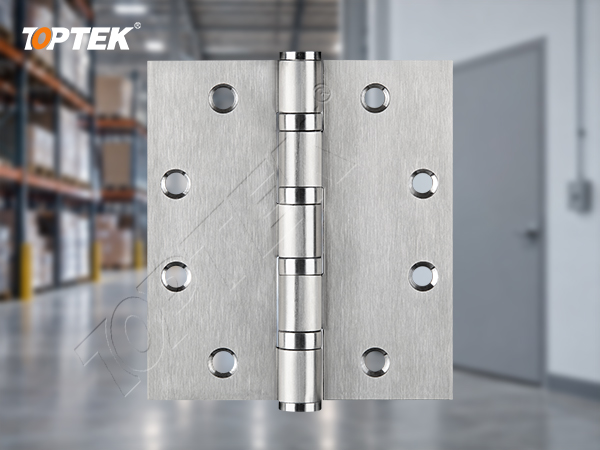
The TOPTEK 2026 catalogue illustrates mechanical 2BB and 4BB full mortise hinge families with square corner outlines. Their tables contain different sizes and thicknesses, so a family name alone is insufficient for ordering. Confirm the particular model, dimensions and fasteners on the approved drawing.
The TOPTEK 4BB full mortise hinge page is a starting point for a model enquiry. The catalogue illustration supports the square corner configuration shown; it does not establish that a radius corner variant is available. If a project requires a radius, request written confirmation and the corresponding drawing before treating it as an offered option.
Use the commercial hinge and power transfer guide for wider product selection. Keep the present corner-fit decision tied to the actual door preparation and selected hinge, rather than transferring a dimension or claim from another family.
Validate seating before approving the replacement batch
Use a sample hinge that represents the intended production configuration. A similar size taken from existing stock may have a different thickness or screw pattern. Record the sample reference and compare it with the supplier’s drawing before the installation trial.
- Inspect the mortise outline and support condition on both the door and frame.
- Check that the leaf seats as intended without being held proud by the corners.
- Confirm the fixing locations and fasteners match the approved arrangement.
- Install according to the applicable instructions without forcing the leaf into the recess.
- Check the door through its operating movement for binding and inspect the resulting clearances.
- Record the outcome and any approved preparation changes against the door group.
A successful trial should document more than the statement that the door closes. Include clear photographs of the seated leaves and the measured configuration. Where the project has specific clearance or operating requirements, use those defined acceptance criteria instead of inventing a universal allowance.
Common mistakes and their project consequences
One common error is treating all rounded corners as equivalent. Two hinges may share the same nominal size but have different corner radii. The difference can prevent seating or leave an unacceptable outline after installation. State the radius explicitly in the request for quotation.
Another error is assuming that a square corner hinge is automatically stronger. Corner shape describes the leaf outline. Performance depends on the complete hinge design, the door application and the documented evidence. Do not use a corner photograph as proof of a duty rating.
Using the screws to pull a poorly seated hinge into place can hide the mismatch temporarily while leaving an unsuitable installation. Investigate the preparation and correct the approved interface instead. Similarly, filling a visible corner gap without identifying the cause may conceal a wider mismatch in leaf size or mortise depth.
On larger projects, record exceptions by door number. If only a few frames have a different preparation, a separate replacement group may be more practical than changing the entire order. The survey should make those exceptions visible before the installer receives the hardware.
RFQ checklist and why TOPTEK
- Door and frame material, door dimensions, application and project performance requirements.
- Existing hinge reference, quantity per opening and replacement quantities.
- Leaf height, open width, thickness and corner shape or measured radius.
- Mortise outline and depth on both the door and frame.
- Screw pattern, fastener requirements and photographs of any damaged preparation.
- Required finish, sample trial, drawing revision and agreed acceptance criteria.
- Any proposed preparation change and the party responsible for approving it.
TOPTEK provides full mortise hinge families that can be compared against a project schedule. Request the exact drawing and relevant configuration records through the quality management enquiry. Keep certificate and test requests specific to the model and application; a catalogue family illustration does not establish the scope of a certificate.
For a wider commercial door hardware procurement package, coordinate hinge selection with the door manufacturer and installation team. An agreed drawing, representative sample and clear exception list provide a more useful purchasing basis than nominal dimensions alone.
Frequently asked questions
Can a square corner hinge fit a radius mortise?
It may be prevented from seating by the rounded recess corners. Compare the outlines and obtain approval for any required preparation change before installation.
Can a radius corner hinge replace a square corner hinge?
It may leave spaces at the corners, and other dimensions may also differ. Confirm the complete geometry and whether the resulting installation is acceptable for the door assembly.
Does corner shape indicate hinge strength?
No. Corner shape describes the leaf outline. Select performance using the complete hinge specification and evidence relevant to the door application.
Is a photograph enough to identify the corner radius?
No. Use a dimensioned drawing, radius gauge or measured template. Photographs with a scale support the record but can distort the apparent outline.
What should be checked besides the corner?
Check height, open width, thickness, screw pattern, recess depth and the intended hinge position. Confirm the resulting door movement and project clearances on a sample.
Request a hinge preparation review
Choose square corner vs radius corner hinges by matching the complete preparation, then verify the required performance separately. Send measurements and photographs to request a hinge preparation review. Once the model, sample and any permitted preparation changes are agreed, provide quantities and delivery dates for a formal quotation.