

TL;DR
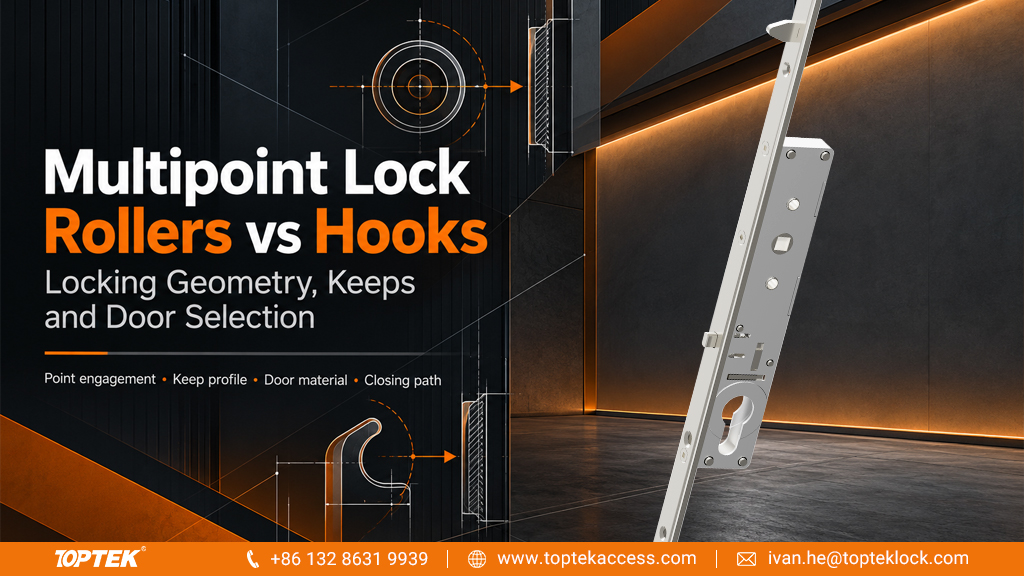
- Roller cams and hook bolts describe locking-point geometry; they do not identify the complete lock function.
- Compare each point together with its matching keep, frame support and operating travel.
- Do not rank security, weather performance or durability by the number or shape of visible points alone.
- For replacement work, record every point and its position before requesting a matched assembly.
Quick Answer: Multipoint Lock Rollers vs Hooks
Multipoint lock rollers are cam-shaped points that engage their matching keeps as the locking mechanism moves. Hook bolts project into a receiver and engage behind its retaining geometry. Both must be assessed as parts of a complete door system, including the frame, keeps, fixing and operating mechanism. A hook shape does not establish a security rating, and a roller does not establish a weather-sealing result. Some systems combine different point types. Select the documented arrangement that fits the door profile, required operation and evidence for the project, rather than choosing from the visible shape alone.
Identify the Points Before Comparing the Locks
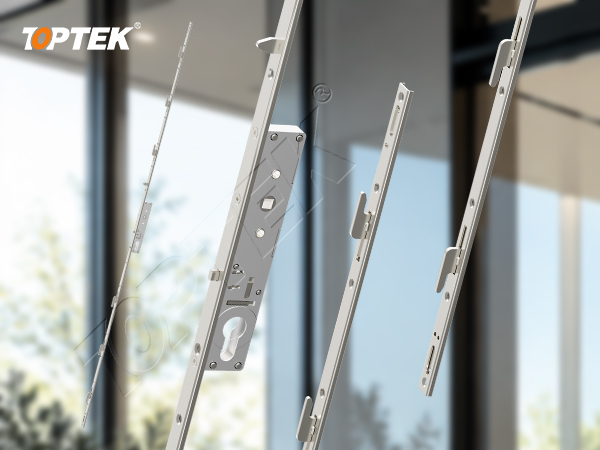
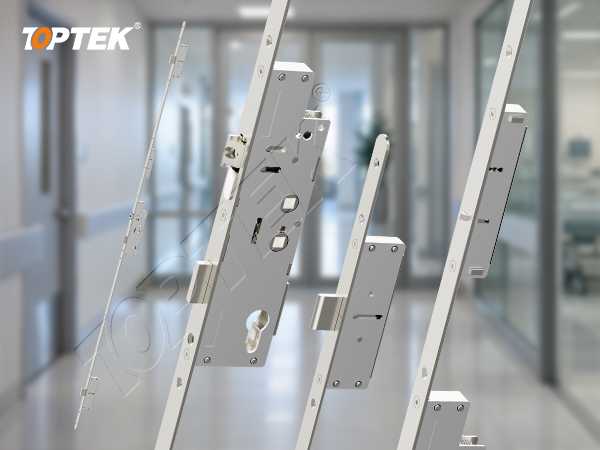
A long faceplate can carry a central latch and deadbolt plus several secondary points. These parts do not all perform the same job. A spring latch may retain the closed leaf during normal use, while other points engage during the locking sequence. Count and name the components separately so a quotation does not confuse a latch with an additional locking point.
Photograph the entire strip, then take close views of each point and each frame keep. Include a scale and a consistent reference edge. Record the position in the unlocked condition and, only where the operating instructions permit a safe demonstration, the locked condition. Never force an automatic trigger or an unsupported mechanism simply to obtain a photograph.
Begin with the TOPTEK multipoint locking systems range, then specify the point arrangement you need reviewed. A category name cannot establish that a particular roller, hook or mixed configuration is available for your dimensions.
Understand the Geometry at the Frame
A roller or cam arrangement follows the path defined by its mechanism and receiver. The keep must meet the moving point at the correct location and provide the intended engagement. A hook arrangement needs a receiver that accommodates the hook’s projection and retaining shape. The opening in the keep and the space behind it are therefore part of the selection, not incidental installation details.
Rounded appearance is not enough to identify a roller. A round bolt, mushroom cam and roller cam can have different engagement requirements. Use the manufacturer’s drawing or part designation. Where names vary between suppliers, a dimensioned section is more reliable than a translated label.
As an industry example, FUHR’s multisafe 859 documentation lists roller, hook and combined arrangements within one product platform. This demonstrates why the configuration must be specified. Its dimensions, grades and product codes apply to FUHR’s documented system and are not specifications for a TOPTEK assembly.
Compare the Complete Arrangements
| Item to compare | Roller or cam arrangement | Hook arrangement |
|---|---|---|
| Point identification | Confirm cam shape, travel and any permitted adjustment. | Confirm hook direction, projection and movement envelope. |
| Frame interface | Match the keep profile to the moving cam. | Match receiver opening, retaining geometry and available depth. |
| Door fit | Check engagement through the intended closing and locking sequence. | Check that the hook enters and clears without striking the frame. |
| Evidence | Require results for the complete specified configuration. | Require results for the complete specified configuration. |
| Mixed configurations | Record roller positions separately from bolts and hooks. | Record hook positions and associated keep references separately. |
This comparison should produce a drawing and a function description, not a universal winner. A correctly matched assembly is the objective. If two proposed locks use different keeps or need different frame preparation, include those changes in the cost and installation comparison.
For procurement, ask suppliers to mark each offered point on the same door elevation. This helps expose differences hidden by a single overall photograph. It also gives the door factory a common reference when reviewing preparation, packaging and installation instructions.
Separate Locking-Point Shape from Operation
Automatic, lift-lever and key-operated describe how the mechanism is driven. Roller and hook describe components within that mechanism. These two classifications should appear in separate fields on the schedule. You cannot determine the complete user sequence simply by seeing hooks along the door edge.
TOPTEK’s multipoint product information distinguishes different operating approaches. For an Auto Lock enquiry, ask for the exact trigger, locking and release sequence of the offered version. Do not assume it behaves like a lift-lever assembly with similar-looking secondary points.
Record the handle, spindle and cylinder requirements as well. The cylinder and handle compatibility guide explains the interfaces that need coordination. Changing the strip while retaining unsuitable operating hardware can leave a door difficult to lock even when the new point locations appear correct.
Check the Door Profile, Keeps and Seal Together
The door leaf and frame must provide room for the selected components and their movement. Confirm faceplate width and section, backset, case depth, centre distance and point positions. On the frame side, check receiver depth, fixing access and reinforcement where required by the door design. A keep that fits on the surface may still lack the necessary space behind it.
Seal compression is a separate acceptance question. Record the intended seal arrangement and check the complete closing sequence. Do not keep increasing adjustment or handle effort to compensate for an unsuitable gasket, distorted leaf or misplaced receiver. Any adjustment should stay within the documented range of the selected hardware.
Where multiple keeps are fitted, examine their relationship along the full door height. Correct engagement at the central case does not prove the upper and lower points are correctly positioned. Use a consistent datum for the measurements so manufacturing and site teams are comparing the same locations.
Ask for Evidence That Matches the Door
More locking points do not automatically mean a higher security classification. Performance depends on the assembly and the scope of its supporting evidence. Ask which lock version, keeps, fixings, door construction and test conditions are covered. A report for one arrangement must not be extended to a different combination by visual comparison.
The same discipline applies to weather performance and corrosion claims. A locking arrangement may help the door maintain its intended closing geometry, but a lock photograph cannot establish a tested air or water performance. Surface appearance cannot establish a corrosion-test result. Use the relevant documents and their stated application limits.
TOPTEK’s quality-management overview provides context for discussing verification and traceability. For a particular multipoint order, request the model-specific drawings and applicable records. Internal checks and third-party certification are different forms of evidence and should be identified accurately.
Handle Replacement and Mixed Points Carefully
A replacement assessment needs more than overall length. Record the position and type of every point, the central case dimensions, spindle and cylinder centres, screw locations and the keep references. Also document how the current door is operated. These details help distinguish a genuinely compatible replacement from a strip that merely fits the routing.
Do not retain existing keeps solely because the new hook or roller appears to enter them. Engagement depth, movement and release clearance still need confirmation. If the replacement changes the point type, require a documented matched solution and review the frame work involved before ordering.
For a system containing hooks and rollers together, keep the configuration intact unless the manufacturer approves a change. Removing one type to simplify fitting can change the assembly’s behaviour and evidence scope. A service decision should be based on the documented system, not on whichever point is easiest to reach.
Common Mistakes and a Useful Sample Trial
Common mistakes include treating all round points as rollers, assuming all hooks are interchangeable, and describing a lock as “three point” without identifying what the three points are. Another is comparing a bare lock on a bench with a competitor’s complete tested doorset. The two observations answer different questions.
Before committing to a batch, agree a sample configuration with the actual door profile and keeps. Observe normal closing, locking, unlocking and opening. Check that each point reaches its intended position without visible interference. Record the documents, sample identity and configuration so the result can be traced to later production.
- Confirm every point and keep against the approved drawing.
- Observe the required user sequence without excessive force.
- Check engagement and release at the top, middle and bottom of the leaf.
- Record any adjustment within the manufacturer’s permitted range.
- Repeat the complete sequence after correcting a fitting issue.
A trial establishes behaviour for that sample and configuration. It does not create a security, fire or weather certification. Keep those acceptance requirements linked to the appropriate evidence and project review.
RFQ Checklist and Working with TOPTEK
Send the door material and profile sections, opening direction, complete lock dimensions, required operating sequence, point layout, keep drawings, finish requirements and quantities. Include the destination market and any applicable project evidence requirements. For replacement work, add photographs and readable identification from both the lock and its keeps.
Why TOPTEK? The available range gives door manufacturers a starting point for discussing multipoint configurations, while a drawing-led enquiry lets the team review the requested fit and supply scope. Ask the quotation to identify the exact version, included frame components, sample arrangement and documents. This makes omissions easier to resolve before manufacturing or installation.
Frequently Asked Questions
Are hook bolts always more secure than rollers?
Shape alone does not establish security performance. Compare evidence for the complete lock, keeps, fixings and door configuration required by the project.
Does every round locking point count as a roller?
No. Roller cams, mushroom cams and round bolts can have different functions and engagement geometry. Confirm the part description and drawing.
Can hooks and rollers appear on the same strip?
Some documented multipoint platforms offer combined arrangements. Confirm the exact configuration and matching keeps rather than assuming all versions are interchangeable.
Can existing keeps be retained during replacement?
Only when the replacement documentation or supplier confirms the complete interface. Similar appearance and initial engagement are not sufficient compatibility checks.
Does a hook lock necessarily operate automatically?
No. Hook shape and operating method are separate characteristics. Confirm whether the selected assembly is automatic, lift-lever or key-operated.
Request a Multipoint Configuration Comparison
Choose the complete engagement geometry and operating sequence, then verify the door fit and evidence. Send TOPTEK photographs and a point-location drawing for an initial comparison. For a formal offer, provide quantities, the matched keep requirements and sample acceptance criteria through the commercial door hardware enquiry page.