

TL;DR
- Choose the assembly route before finalising procurement responsibilities and acceptance records.
- Factory assembly needs an approved key chart and clear change control before production.
- Local assembly needs authorised personnel, compatible components, controlled records and an agreed test process.
- Keep cylinder format, key-system design and assembly location as separate decisions.
- Compare the complete delivered cost and support arrangement, not just the component price.
Quick Answer
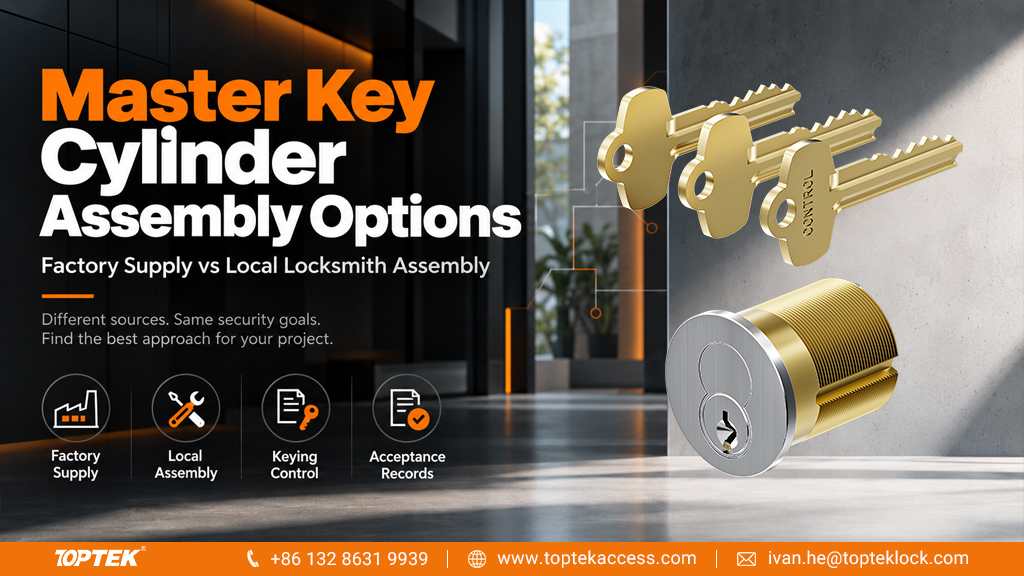
The main master key cylinder assembly options are a factory-assembled system and component supply for assembly by an authorised local locksmith. Factory assembly concentrates configuration, testing and labelling at the supplier, using the buyer’s approved key chart. Local assembly moves the final configuration work closer to the project and requires local capability, suitable equipment, secure records and defined acceptance responsibility. Neither route automatically establishes compatibility, security performance or project readiness. Specify the cylinder interfaces, access relationships, testing evidence and handover responsibilities before selecting the supply method.
For an early configuration review, send the cylinder formats and describe your local assembly resources to ivan.he@toptekaccess.com. Ask TOPTEK to identify the information needed for a configuration-specific proposal.
Distinguish the access design from the supply route
A keying design defines which authorised keys operate which cylinders. The assembly route defines where the selected components are configured, checked and prepared for delivery. Changing the place of assembly does not remove the need for an approved design. Both routes must deliver the same agreed access relationships and compatible mechanical interfaces.
Industry terminology is useful here. The ASSA ABLOY glossary distinguishes keyed-alike arrangements from master-key relationships. These definitions describe access relationships, not a promise that products from different manufacturers can share components or keys. Keep the required relationship explicit even when a quotation uses familiar abbreviations.
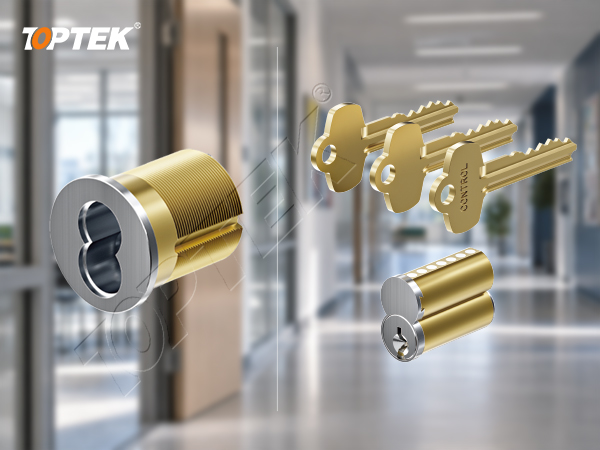
Begin with the TOPTEK construction cylinder range and list the physical formats involved. Euro profile, American mortise and interchangeable-core arrangements require their own interface checks. The team choosing the assembly location should receive the same current cylinder schedule as the team choosing the lock hardware.
What factory assembly requires from the buyer
Factory assembly starts with a stable input package. The supplier needs the approved key chart, cylinder references, quantities, key quantities, labelling rules and packaging sequence. If those inputs remain fluid, the buyer should identify which decisions can still change and when the supplier must stop for a revised approval.
TOPTEK’s catalogue describes a factory-assembled master key system prepared against an approved key chart, with assembly, testing, labels and packaging organised around the key hierarchy. For the actual purchase, specify the records to be supplied and the checks required for the exact configuration. Catalogue process descriptions should lead to an order-specific acceptance agreement.
This route may suit buyers without a local assembly operation or projects requiring a completed package for controlled installation. It still needs local receiving checks and a handover owner. A factory label can identify the cylinder, but the installer must match that label to the correct opening. Separate the responsibility for manufacturing the assembly from the responsibility for placing it in the building.
What component supply requires locally
Component supply places more of the final assembly responsibility with the local partner. TOPTEK’s catalogue describes supplying pre-machined cylinder components, key blanks and pins for local locksmith assembly against the project key chart. Confirm the exact scope in the quotation: the term “components” alone does not identify whether all required housings, actuators, service parts or packaging are included.
The local organisation needs an authorised person to control technical information, receive the components, maintain suitable stock and approve assembled units. Before choosing this route, ask the locksmith partner to confirm capability for the specified system and identify the procedures and equipment needed. General locksmith experience does not automatically demonstrate familiarity with every proposed platform.
Local assembly can support project changes close to the installation team when the required components and approvals are available. It does not guarantee a shorter lead time. Component availability, local workload, training, testing and record reconciliation can all affect delivery. Ask for a plan tied to the actual project instead of treating geographical proximity as a delivery commitment.
Compare responsibility across the two routes
| Decision | Factory assembly | Local locksmith assembly |
|---|---|---|
| Final configuration | Supplier works to approved project inputs | Authorised local partner works to the same inputs |
| Technical readiness | Confirm supplier’s exact assembled scope | Confirm local system capability and component completeness |
| Change requests | Route through supplier production control | Route through local control and supplier compatibility review |
| Testing records | Agree factory evidence and receiving checks | Agree local evidence and release authority |
| Inventory | Manage completed cylinder and key sets | Manage components, assemblies and unfinished work separately |
| Support boundary | Define factory and installation responsibilities | Define supplier, assembler and installer responsibilities |
Make this comparison with the people who will perform the work. Purchasing can negotiate supply terms, but the system owner must approve access relationships and the technical team must confirm interfaces. An assembly route is workable only when those responsibilities connect without gaps.
For example, consider an illustrative office refurbishment where room allocations change late. Local assembly may be useful if the authorised locksmith already supports the proposed platform and has the correct stock. If the partner lacks that capability, a factory route with a controlled final release may be more dependable. This is a planning example, not a TOPTEK customer case or a universal recommendation.
Keep approvals and acceptance tests controlled
Give each approved chart and cylinder list a revision reference. Record the person authorised to change the design, the items affected and the date of release. Avoid sending working manufacturing details through general project mailing lists. The installation team usually needs opening references and handling instructions; sensitive system information should follow the owner’s access policy.
Agree a verification plan that checks both intended operation and the absence of unintended access according to the approved system design. Ask the responsible specialist to define the test coverage and documentation. Do not equate one successful master-key demonstration with acceptance of an entire system. Retain enough traceability to connect the tested assembly to the delivered item.
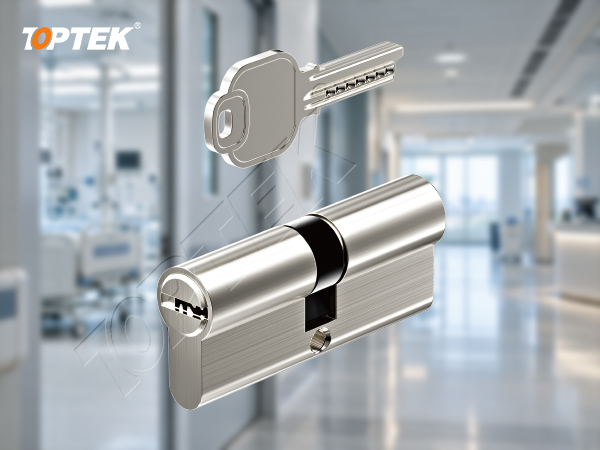
The EPCHK7P cylinder page provides a concrete product reference for a Euro profile discussion. Confirm dimensions, actuator, function and the approved system components for the order. Assembly at a different location cannot correct an incorrectly selected cylinder interface.
Account for cost, changes and service support
Compare the complete cost of making the system ready for installation. Include assembly labour, equipment or training, stockholding, functional verification, packaging, record preparation, shipping and service support. A lower component price can coexist with a higher local workload. Conversely, a completed assembly price may include activities the buyer would otherwise need to arrange.
Identify the point at which a late change becomes rework. A room renumbering may require a label update; a revised access relationship may require a technical reassessment. These changes should not be handled as if they were equivalent. The buyer needs a clear route for requesting the change, approving its effect and reconciling the final delivered records.
Service planning should specify who can order replacement components, who can carry out authorised work and how support enquiries identify the system. Do not assume a local assembly arrangement transfers every warranty obligation to the component supplier. Agree the boundary in the purchase documents, including investigation steps when installation, assembly and product issues are difficult to distinguish.
RFQ checklist and TOPTEK evidence
TOPTEK’s catalogue presents both component supply for local assembly and a factory-assembled route. This gives distributors and project buyers a concrete starting point for comparing responsibilities. The quality management information supports discussion of inspection and records; request the actual acceptance evidence required for the quoted order.
- Identify the building type, market, project owner and authorised key-system decision maker.
- Provide cylinder formats, lock interfaces, quantities and current drawing references.
- State the desired supply route and the local partner’s role and capability.
- Provide the approved access chart through a controlled channel.
- Define supplied components, assembled items, keys, labels and packaging.
- Agree testing coverage, acceptance records and receiving inspection.
- Set the change-approval process, delivery stages and service responsibilities.
- Request a quotation that separates assumptions, exclusions and project-specific commitments.
Why TOPTEK? The product scope spans several cylinder formats, while the catalogue explicitly addresses two assembly arrangements. Buyers can therefore discuss both physical configuration and delivery responsibility in one enquiry. This does not mean every component or third-party key system is interchangeable. Each proposal must identify its approved platform and boundaries.
For an initial review, send a format list and explain whether you have an authorised local assembly partner. For a formal proposal, provide the controlled project requirements to the TOPTEK project hardware team. Broader access planning is covered in the project cylinders and master key systems guide.
Frequently asked questions
What are the main master key cylinder assembly options?
The two routes discussed here are factory assembly against an approved project chart and component supply for assembly by an authorised local locksmith.
Does component supply always reduce lead time?
No. Delivery depends on compatible stock, local capability, workload, approvals and testing. Request a schedule for the actual project and supply scope.
Who approves the key chart?
The project owner should designate an authorised system decision maker. The supplier and local assembler must work from the approved revision and use the agreed change process.
Can components from different platforms be mixed?
Only where the system supplier has confirmed the specific combination. Similar cylinder shapes or key appearances do not establish component compatibility.
Does factory assembly remove site checks?
No. Receiving and installation teams still need to reconcile item references, quantities, opening assignments and the agreed handover records.
Conclusion
Select the assembly route by matching project needs to actual capability and controlled responsibility. Factory assembly and local locksmith assembly both require accurate inputs, defined verification and traceable handover. A clear supply agreement makes those requirements visible before cylinders and keys reach the building.