
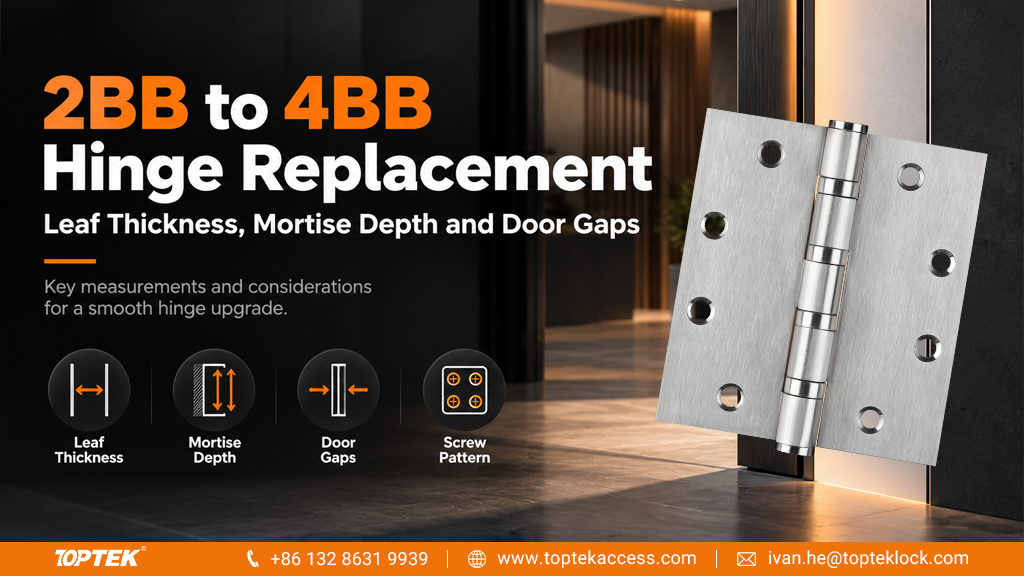

TL;DR
- Compare complete hinge drawings; nominal height and width do not establish interchangeability.
- Check leaf thickness against the existing door and frame mortises before approving a substitution.
- Confirm hole positions, screw type, reinforcement and hinge-axis location.
- Review door weight, usage, closer and the manufacturer’s selection evidence together.
- For a fire-rated opening, obtain the required doorset approval before changing hardware or preparation.
Quick Answer
Before a 2BB to 4BB hinge replacement, measure the existing hinge and both mortises, then compare them with the exact replacement drawing. A thicker leaf can alter how the hinge seats and change the door’s relationship to the frame. Matching the visible outline is therefore insufficient. Check screw centres, countersinks, knuckle clearance and the documented suitability for the door. If preparation must change, obtain approval from the responsible door or frame supplier. Do not assume that adding bearings automatically increases the permitted door weight or preserves a fire-rated assembly.
For an early configuration review, send the existing hinge measurements and door preparation photographs to ivan.he@toptekaccess.com. Ask TOPTEK to identify the information needed for a configuration-specific proposal.
Identify why the hinge is being replaced
Start with the observed problem. Is the door sagging, binding, scraping the floor or becoming difficult to close? Is a bearing damaged, a screw loose or the frame moving? Record the symptoms and their location before removing hardware. A replacement decision based only on “more heavy duty” can leave the original cause unresolved.
A hinge supports the door through its leaves, knuckle, pin and fixing connections. Its performance depends on the complete installation, including the door and frame construction. If the fixing substrate is damaged, changing the bearing arrangement will not by itself restore a secure connection. The responsible installer should assess the opening and identify any repair needed before ordering parts.
The TOPTEK hinge and door power transfer range includes different mechanical and electrical configurations. First identify whether the existing hinge has an electrical function. Replacing an electrical hinge with a mechanical one would introduce a separate wiring problem, even if the visible dimensions appeared similar.
Compare leaf thickness and mortise depth
Leaf thickness is a critical replacement dimension because a full mortise hinge sits in recesses in the door and frame. When a replacement leaf is thicker than the recess prepared for it, the leaf may sit proud. When it is thinner, its seating relationship may also change. Either condition deserves review against the intended door clearances and hinge position.
TOPTEK’s 2026 catalogue lists 2BB and 4BB hinges on separate pages with different thickness entries. The 2BB page also contains more than one thickness for some nominal sizes. This is a practical reason to request the full model and drawing revision rather than ordering only by bearing count and nominal dimensions. The catalogue does not establish a universal replacement allowance.
A manufacturer example reinforces the point: Allegion identifies a material-thickness difference between its 5BB1 and 5BB1HW hinges. Those dimensions belong to those Ives products. Use the TOPTEK drawing for a TOPTEK substitution, and measure the installed hardware rather than transferring another manufacturer’s values.
Use a complete replacement measurement record
| Item | Existing opening record | Replacement check |
|---|---|---|
| Hinge outline | Height, open width and corner shape | Compare the exact drawing, not just the nominal label |
| Leaf seating | Leaf thickness and both recess depths | Confirm the intended seated position |
| Fixing pattern | Hole centres, screw type and countersinks | Check the supplied fasteners and reinforcement |
| Knuckle and axis | Barrel position and nearby clearances | Confirm swing and frame clearance |
| Door duty | Door construction, dimensions, weight and usage | Request configuration-specific selection evidence |
| Special requirements | Fire, security or electrical function | Check the applicable assembly and installation restrictions |
Photograph the hinge in position, the door edge and the frame preparation. Include a scale where useful, but keep measured values in a written record. Perspective can make photographs misleading when judging small offsets. If a preparation is damaged or distorted, describe that condition separately rather than recording it as the intended design.
For doors with multiple hinges, check whether all installed hinges have the same reference and whether their axes are aligned. An isolated measurement of one hinge may miss a prior repair or mixed hardware. Plan the comparison around the complete hinge set and the opening, with a qualified installer responsible for supporting and handling the door.
Check fixings and preparation before substitution
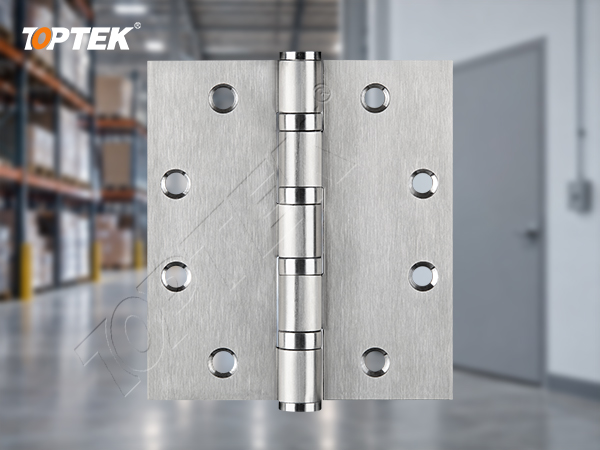
Matching hole count does not prove that the fixing pattern is the same. Compare hole centres and countersink geometry, then confirm the screw specification for the actual door and frame material. A screw that appears to enter an existing hole may still be unsuitable for the receiving reinforcement or may not seat correctly in the replacement leaf.
Do not treat slotting holes, forcing screws or removing additional material as routine adjustment. These actions can change the connection and may affect an assessed doorset. Ask the responsible supplier for a documented solution when the new hinge cannot use the approved preparation. The procurement record should identify whether the proposal is a direct replacement, an approved preparation change or a different repair strategy.
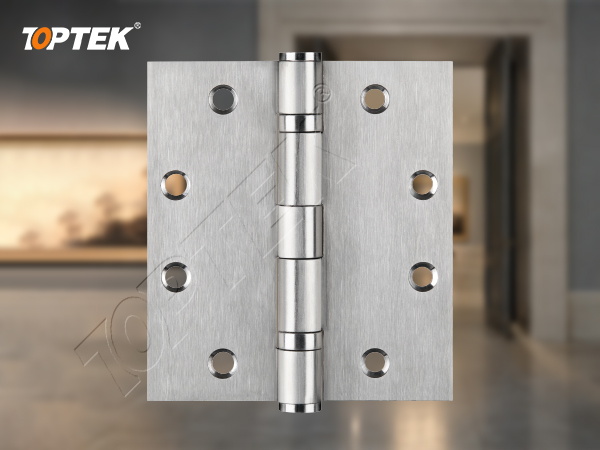
Use the TOPTEK 4BB full mortise hinge page as a product starting point and obtain the exact configuration drawing. It should identify the leaf geometry and relevant options. Finish and security-pin requirements also need to be carried into the replacement order; they should not disappear when the main discussion focuses on thickness.
Review door duty and special requirements
More bearings are not a standalone load rating. Door width, weight, height, frequency of use, closer forces and installation details all belong in the selection discussion. Request the manufacturer’s recommendation for the complete proposed hinge arrangement. Do not multiply a component figure by the number of hinges or assume that a larger bearing count produces a proportional increase in capacity.
For fire-rated doors, check the applicable listing, assessment or doorset evidence and the manufacturer’s installation requirements before substituting hinges or changing recesses. The project authority must determine whether the proposed change remains acceptable. A catalogue fire symbol, material description or general product-family claim cannot substitute for the relevant assembly evidence.
For a security-sensitive outward-opening door, preserve the required pin and security features. For an access-controlled opening, identify any conductors passing through the existing hinge and their service requirements. These checks are specific to the opening; a purely mechanical replacement should not be assumed suitable for an electrical transfer position.
Approve a representative installation
After the technical comparison, arrange a representative installation under the responsible installer and project approval process. Inspect seating, screw-head position, door gaps and free swing. Check the full intended opening movement and confirm that the door closes and latches as required without rubbing or unusual resistance.
Record the condition before and after the work. If the door was misaligned before replacement, distinguish the repair result from the hinge substitution itself. A successful sample should identify the hinge references, preparation, fasteners, door construction and any approved change. That record helps the buyer decide whether the same configuration can be applied to other openings.
TOPTEK’s quality management information provides a basis for discussing dimensional inspection and production records. Ask for evidence tied to the ordered configuration. Internal inspection supports manufacturing control but should not be presented as an independent certification for a different door assembly.
RFQ checklist and common ordering mistakes
The main ordering risks are incomplete model references, assumed interchangeability, unrecorded preparation changes and omitted special functions. These can lead to additional machining, incompatible fasteners or a door that no longer aligns correctly. A clear survey is usually more useful than an urgent order based only on a photograph of the hinge barrel.
- Provide opening numbers, door and frame material, dimensions, weight and usage.
- Identify the existing 2BB hinge reference and the proposed 4BB configuration.
- Include height, open width, leaf thickness, corner shape and hole-pattern measurements.
- Record both mortise depths, reinforcement condition and existing fasteners.
- State closer, security, electrical and fire-door requirements where applicable.
- Describe the fault being corrected and any previous repair.
- Identify the approval owner for preparation changes and representative installation.
- State quantities, finish, packaging and the records needed for repeat replacements.
Why TOPTEK? The range contains both 2BB and 4BB full mortise configurations, allowing the discussion to begin with actual product families. The hinge and power transfer guide explains their place in the wider opening. Selection still depends on the specific drawing and documented application.
For an initial review, send the existing hinge photographs and measurement record. For a formal quotation, submit the accepted replacement configuration, preparation requirements and installation acceptance criteria to the TOPTEK commercial door hardware team. Ask the response to identify any dimensional exceptions before purchase.
Frequently asked questions
Can a 4BB hinge directly replace a 2BB hinge of the same size?
Not automatically. Compare leaf thickness, mortise depth, hole pattern, knuckle geometry and the exact application requirements before approving the replacement.
Does adding bearings guarantee a higher door-weight capacity?
No. Capacity depends on the specific hinge design, quantity, fixing arrangement and door conditions. Obtain the manufacturer’s selection evidence for the proposed configuration.
Why must both mortise depths be checked?
The hinge seats in the door and frame. A mismatch on either side can affect seating, clearances and the position of the door relative to the frame.
Can the installer deepen a fire-door mortise to fit a thicker hinge?
Any preparation change must follow the applicable doorset evidence, manufacturer instructions and project approval process. Do not assume that additional machining is permitted.
What should accompany a replacement enquiry?
Provide the existing model, photographs, complete measurements, door and frame details, fault description, special requirements and proposed acceptance process.
Conclusion
A sound 2BB to 4BB hinge replacement begins with the existing opening and an exact drawing comparison. Confirm seating, fixings, duty and special requirements, then approve a representative installation. Bearing count helps identify a configuration; the complete installation determines whether it is the right replacement.