


TL;DR
- Separate the lock case, cylinder, trim and surrounding door hardware in the maintenance record.
- Use cleaning and lubrication instructions for the exact component and finish.
- Record changes in operation before treating them as a lubrication problem.
- Assign responsibility for routine care, specialist service and replacement approval.
Quick Answer: Euro Mortise Lock Maintenance
Euro mortise lock maintenance should combine component-specific care instructions with a clear record of operation and service. Identify the case, cylinder, trim and other relevant hardware; establish the permitted cleaning products, lubrication points and inspection arrangements for each. Do not apply one lubricant or cleaning method to the whole opening. If operation changes, record the symptom and arrange the appropriate assessment instead of repeatedly adding product. For procurement, request the maintenance documents with the selected assembly so facilities staff receive usable instructions and an identifiable route for parts or service.
Build a component record before choosing maintenance products
A door opening contains several components that may come from different suppliers. Even when they share a visual finish, they do not necessarily share a maintenance method. Create one opening record that identifies the Euro mortise case, cylinder where fitted, lever furniture, strike and relevant surrounding hardware. Include the door ID, model references, installation date and the party responsible for service.
The maintenance plan should distinguish an accessible surface-cleaning task from work on an operating mechanism. It should also identify which instructions govern a particular component. Where the cylinder was supplied separately, attach its own documentation rather than relying on the lock-case leaflet. If trim or finish changes during procurement, revisit the care record as part of that change.
| Component | Information to obtain | What to record after service |
|---|---|---|
| Mortise lock case | Exact model, permitted care points and service instructions. | Observed operation and work completed by the responsible person. |
| Key cylinder | Cylinder supplier, model and its own care guidance. | Approved product used, if applicable, and any key-operation concern. |
| Lever furniture | Material or finish reference and permitted surface care. | Condition, cleaning action and any looseness referred for assessment. |
| Door and frame interface | Applicable inspection responsibility and installation records. | Changed contact, clearance or closing observations. |
Keep the manufacturer’s instructions accessible to the people doing the work. A purchase-order archive that facilities staff cannot access is less useful than a concise opening register linked to the relevant document revision.
Choose cleaning methods by surface and finish
Ask the supplier to identify the permitted cleaning method for the specified finish. The visible lever, forend, strike and other exposed surfaces may require different treatment. Do not assume that a cleaning product used on the surrounding door or floor is suitable for the hardware. Record restrictions on application, residue removal and any exposure that needs to be avoided.
Cleaning arrangements should explain how the cleaner is applied and which areas are excluded, using the applicable product instructions. Avoid turning a general housekeeping request into unsupervised treatment of the mechanism. Where the method is unknown, obtain the correct guidance before introducing a chemical or abrasive process.
For a repeated project, retain the finish reference in the maintenance register. A generic description such as “silver handle” does not identify the coating or surface specification. If the building changes its cleaning contractor or chemical supply, check the proposed method against the hardware instructions. That simple document check is easier to manage than trying to reconstruct exposure after a finish or operating problem appears.
Separate lubrication decisions by component
Lubrication is not one task applied indiscriminately to the complete door. Ask where the exact component may be lubricated, which product is permitted and who is qualified to perform the work. An instruction for a lock case does not automatically apply to a cylinder, and a product suitable for one cylinder family may not be appropriate for another.
ASSA ABLOY’s regional lock-maintenance guidance illustrates why this distinction matters: it separates care for lock housings, cylinders and hinges rather than prescribing one treatment for all of them. Use the instructions for the products actually installed; another manufacturer’s product or interval should not be adopted as a TOPTEK maintenance specification.
Record the permitted product by a clear reference, not simply as “oil” or “spray.” Where the approved method includes a quantity or application point, keep that instruction with the work order. The service record should show what was applied and why. Repeated applications without a record can make it harder for the next technician to understand the component’s condition.
If operation becomes unreliable, stop treating lubrication as an automatic cure. The observation may involve the door, trim, cylinder or lock case, and the responsible technician needs to identify the cause. Do not open or alter a case unless the applicable service instructions and authorised scope permit that work.
Inspect operation and record changes clearly
Routine observations should be tied to the intended function. Record what normal authorised operation should do from each side, then describe any difference in plain language. “Key operation feels different from the previous inspection” or “lever movement has changed” provides a useful starting record without pretending to identify a failed component.
Keep visual observations separate from conclusions. If the door shows new rubbing marks, record the location and date. If a fixing appears loose, refer it through the agreed service process. Do not simply tighten or adjust unfamiliar parts without the relevant procedure. A maintenance record should make the next decision easier, not conceal an undocumented intervention.
For an opening that is unreliable or affects safe access, arrange a competent assessment promptly through the site’s procedures. Do not close a questionable door merely to reproduce a symptom. Maintenance planning should preserve usable access while the responsible person determines the appropriate action.
| Observation | Useful record | Next responsibility |
|---|---|---|
| Changed key operation | Operating side, key identity within the site’s controls, date and symptom. | Cylinder or lock specialist according to the installed assembly. |
| Changed lever response | Side used, expected action and actual movement. | Competent hardware service provider. |
| New door contact | Visible location, recent work and available photographs. | Responsible door or installation specialist. |
| Surface deterioration | Component, finish record and cleaning history. | Supplier and facilities team for an evidence-based review. |
Set a review schedule that matches the installation
Start with the applicable manufacturer and project instructions, then have the responsible facilities team establish the inspection and service schedule. Usage, environment and documented observations may affect how the opening is managed. Do not substitute an arbitrary universal interval for those instructions. Where a supplier recommends a frequency, retain the model and conditions to which that recommendation applies.
Include events that trigger an additional review: a change of cleaning method, building work near the opening, replacement of a component or a reported change in operation. These events should not automatically trigger the same maintenance treatment. They should trigger the appropriate assessment and an update to the opening record.
Construction-related contamination deserves its own controls. TOPTEK’s Euro mortise lock dust-protection guide addresses that installation-stage question. Ongoing maintenance begins with the actual installed condition and the agreed care instructions; it should not be used to compensate indefinitely for unresolved installation problems.
Keep service records useful for the next person
A concise record can be more useful than a long narrative. Include the opening ID, date, person or contractor, observed condition, applicable instruction, work performed and result. Link photographs and supplier correspondence where they clarify the decision. If a component is replaced, record both the removed reference and the new installed reference.
Preserve the difference between observation, action and acceptance. For example, the cleaner may report a condition; a technician may investigate it; a project or facilities representative may accept the completed work. Those are distinct responsibilities. Name the responsible roles in the process so a report cannot be mistaken for completed corrective work.
Use the service history when reviewing recurring problems. Repeated calls for the same opening warrant a review of the assembly and conditions rather than an endless series of identical treatments. The history can also improve purchasing: a future replacement enquiry will have identifiable components, known service needs and the relevant documentation already attached.
Common maintenance mistakes to avoid
Using one spray on every component. Obtain the applicable component instructions and record the permitted product. Similar appearance does not establish identical internal care requirements.
Keeping only a model-family name. The exact cylinder, trim finish and installed function may be needed to answer a service question. Retain the configured assembly record.
Recording “serviced” without the work performed. State the observation, action and result. This helps another technician distinguish a completed correction from a condition that still needs investigation.
Ignoring changes outside the lock case. Door contact, nearby building work and cleaning changes can be relevant to a service enquiry. Record them without assuming they prove the cause.
Buying replacement parts by appearance. Ask for the compatible supply scope and current documentation before accepting a substitution. A visually similar item is not a complete compatibility assessment.
TOPTEK model references and a maintenance-ready RFQ
The TOPTEK Euro mortise lock range includes EN72SL sash and EN72LL passage references for product discussion. Identify the intended function and the complete assembly when requesting maintenance documents. The EN72SL model reference is a useful starting point; confirm the supplied components and instructions for your order.
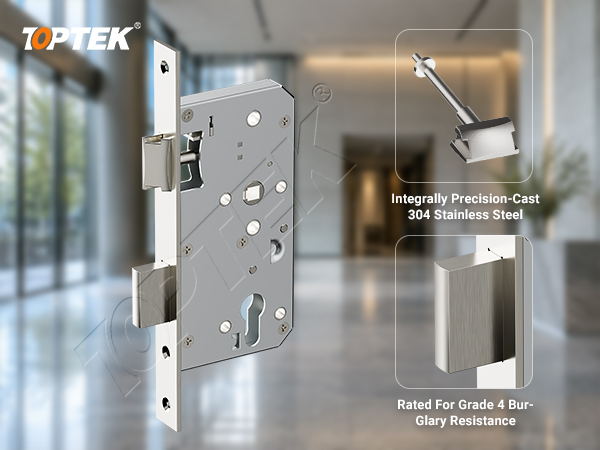
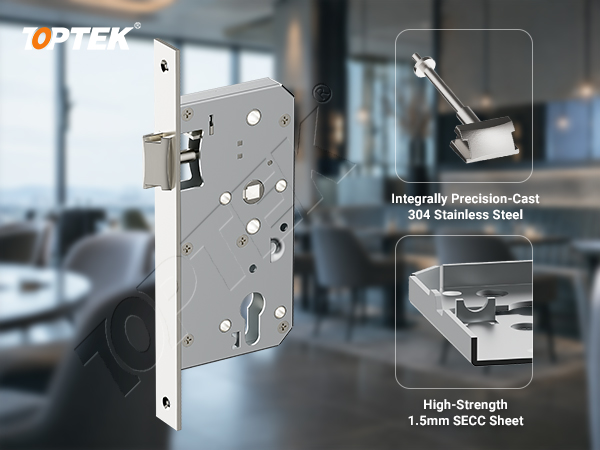
Why TOPTEK? A model-linked enquiry lets the supplier connect product selection, order records and requested service information. TOPTEK’s quality-management information describes inspection activities that can inform questions about supplied-product records. It does not replace the care instructions for a particular case, cylinder or finish.
For a broader package, review the commercial door hardware manufacturing information and specify the documents required at handover. Add the following items to the RFQ:
- Door IDs, model and function schedule, quantities and component supply boundaries.
- Trim and exposed-component finish references.
- Installation environment and planned cleaning arrangements.
- Component-specific maintenance documents and any relevant restrictions.
- Inspection and service responsibility, including escalation contacts.
- Replacement-part identification and the documents supplied with substitutions.
- Required handover format and the person who will maintain the opening register.
Frequently asked questions
Should the same lubricant be used on the lock case and cylinder?
Only if the applicable instructions for both components permit it. Obtain the exact component guidance and keep the permitted product and application method in the maintenance record.
How often should a Euro mortise lock be serviced?
Use the relevant manufacturer and project instructions, with a schedule established for the installation by the responsible facilities team. Do not assume that one interval applies to every model, environment or usage pattern.
Does difficult operation always mean the lock needs lubrication?
No. Record the symptom and arrange the appropriate assessment. Door contact, cylinder operation, trim and the lock case may require different checks and different corrective work.
What should a service record contain?
Record the opening ID, date, responsible person, observation, applicable instruction, work performed and result. Include replacement references and supporting photographs or correspondence where useful.
What maintenance information should be requested with an EN72SL order?
Request the instructions for the supplied case and other included components, finish-care guidance, service responsibilities and replacement identification. Confirm separately supplied cylinder or trim documentation with its supplier.
Request maintenance documents and an order quotation
A workable maintenance plan begins before handover. Identify the components, obtain the appropriate care instructions and assign responsibility for recording changes. This gives facilities staff a practical basis for routine work and a clearer route when specialist service is needed.
Send your model and component schedule to discuss maintenance documentation. For an order, request a quotation with quantities, finish references and handover requirements.