

TL;DR
- Compare complete locksets: “mortise cylinder” and “mortise lock” describe different purchasing items.
- Identify the existing pocket, bores and door construction before selecting a replacement type.
- Price the complete opening work, including trim coverage, door repair and installation.
- Approve the proposed assembly against the door drawing and required function before ordering repeated quantities.
Quick Answer: ANSI Mortise Lock vs Cylindrical Lock
An ANSI mortise lock vs cylindrical lock comparison should begin with the door preparation and required operation. A mortise lock case sits in a pocket cut into the door edge; a cylindrical lock uses a different arrangement of face and edge preparation. Neither label establishes that a particular replacement will fit, provide the intended function or satisfy a project requirement. For an existing opening, identify the installed construction, compare the proposed manufacturer’s preparation drawing and review any modification with the responsible door specialist. Then compare the complete installed scope, rather than the lock price alone.
Compare lock constructions, not cylinder names
A lockset and its key cylinder are not interchangeable terms. The lockset is the assembly that performs the required door operation. Its cylinder provides a key-operated input where the configuration includes one. A purchasing request for a “mortise cylinder” may therefore concern a component of a mortise lock, while a request for a “mortise lock” concerns a much broader assembly. Clarifying that distinction prevents quotations for products that cannot be compared on the same basis.
In its commercial lock construction overview, Schlage distinguishes the recessed pocket used for a mortise case from the cross-bore and edge-latch arrangement of cylindrical construction. That is a useful starting distinction, not a universal preparation template. The dimensions, fixing points and permitted configurations still come from the exact product’s documentation.
Request photographs of both door faces and the edge, together with the existing model record if available. Do not identify the construction from the lever shape alone: similar-looking trim can conceal different operating assemblies. If records are missing, arrange a competent inspection rather than describing the hardware solely as a “commercial lever lock.” The inspection result should identify what is present and what can reasonably remain in service.
Make the existing preparation the first comparison
Record the door material, thickness and construction alongside the opening ID. Note the visible edge preparation, face openings and fixing locations. Where a pocket or reinforcement cannot be inspected safely, record the missing information and ask the door manufacturer or installer to establish it. A photograph is useful context, but perspective and trim coverage make it a poor substitute for an approved dimensional drawing.
| Question | Mortise proposal | Cylindrical proposal | Decision record |
|---|---|---|---|
| Where is the main mechanism housed? | Check the case pocket against the proposed template. | Check the face and edge preparation against the proposed template. | Existing and proposed drawings with matching reference points. |
| What remains visible? | Review the case forend, trim and unused openings. | Review rose or escutcheon coverage and unused openings. | Both-face and door-edge coverage assessment. |
| What supports the assembly? | Confirm applicable case and trim fixing support. | Confirm applicable chassis, latch and trim fixing support. | Door construction and approved fixing details. |
| What changes at the frame? | Check the specified strike and operating clearance. | Check the specified strike and operating clearance. | Frame preparation and strike reference. |
Keep measured observations separate from assumptions. For example, “existing edge plate photographed” is an observation; “new case will fit behind it” is a conclusion that needs dimensions. TOPTEK’s ANSI mortise lock door preparation checklist can help organise the mortise side of this record. Use the selected manufacturer’s current template for the actual installation.
Review conversion as door work as well as hardware work
A change of construction can leave unused preparation or require additional machining. Before choosing that route, establish who will assess the door, who will perform the work and which repair method is acceptable. A cover plate may conceal an opening, but concealment does not establish adequate fixing support, appearance on both faces or acceptance for the particular doorset. Treat those as separate questions.
For a rated or otherwise controlled doorset, submit the proposed modification to the responsible manufacturer or project specialist with the relevant evidence. Do not assume that a lock’s performance classification automatically authorises alteration of the door. The assembly, installation details and project requirements must remain connected. If the required approval cannot be obtained, compare a compatible replacement within the existing construction or an appropriately specified replacement door.
Conversion is also a coordination decision. Door preparation, finishing and hardware installation may be supplied by different parties. Put their responsibilities in the quotation rather than expecting the installer to resolve unknowns after delivery. Where many similar openings are involved, review one representative assembly first, while identifying any door types that differ from that sample.
Write the required function before comparing models
Describe the intended operation from each side in ordinary language. State which side allows entry, when a key or other authorised input is required, and what the user should be able to do when leaving. Record any privacy, access-control or facility requirements separately. A function name is useful only when the supplier confirms what it means for the quoted assembly.
Do not use the construction type as a shortcut for function. Nor should “Grade 1” by itself stand in for a complete specification: obtain the applicable documentation for the actual model, configuration and requirement being discussed. If both proposals satisfy the operational brief, the remaining comparison can focus on preparation, installation scope, evidence and future service.
For an access-controlled opening, add the intended interaction between the lock, other door hardware and the access system. Ask the relevant suppliers to identify the proposed configuration and interfaces. Avoid assuming that an electrical option can be added to any mechanically similar lock. This article’s construction comparison does not establish compatibility between specific electrical components.
Compare the total installed scope
Ask both suppliers to quote against the same list of included work. An inexpensive lock quotation can become a costly project if it excludes necessary door repair, replacement trim or frame work. Conversely, retaining a workable preparation can be valuable when the compatible assembly meets the required function and evidence requirements. The appropriate choice depends on the opening, not on a blanket rule that one construction is always cheaper or stronger.
| Cost or responsibility line | What to include in each proposal |
|---|---|
| Hardware | Case or chassis, latch components, cylinder where required, trim, strike and specified fixings. |
| Door and frame work | Inspection, machining, reinforcement assessment, repair, coverage and finishing. |
| Installation | Labour scope, site coordination, operating checks and records. |
| Evidence | Applicable model documents and any required doorset or project acceptance. |
| Service | Replacement scope, available documentation, spare-part identification and responsibility. |
Also compare exclusions explicitly. A quotation that states “hardware only” should not be evaluated as though it includes preparation and commissioning. Record the party responsible for each omitted line before selecting the supplier. When scheduling work, account for occupied-building access and the need to leave each opening in an acceptable operational condition.
Common comparison mistakes and project risks
Ordering by trim appearance. A matching lever does not identify the mechanism or preparation behind it. Obtain the assembly reference before treating appearance as evidence of interchangeability.
Assuming one template covers every mortise lock. The construction category does not fix all dimensions or fixing points. Compare the actual proposed drawing with the opening record.
Using a cylinder quotation as a complete lock quotation. List the supply scope so the case, trim, strike and other required components are visible. Identify parts that will remain installed.
Approving coverage without reviewing support. An escutcheon may hide an existing hole while leaving a fixing problem unresolved. Ask the responsible specialist to assess both the visible result and the supported installation.
Extending a sample decision to unlike doors. Different door constructions, functions or preparation revisions need their own review. Group genuinely equivalent openings and preserve the exceptions in the schedule.
TOPTEK mortise options and purchasing evidence
The TOPTEK ANSI mortise lock range provides a starting point for the mortise proposal. TKAMRR9200 round rose and TKAMEC9200 escutcheon references help identify trim arrangements for discussion. Confirm the complete case, function, cylinder, strike and trim configuration for the opening; a trim-family reference alone is not a finished order specification.
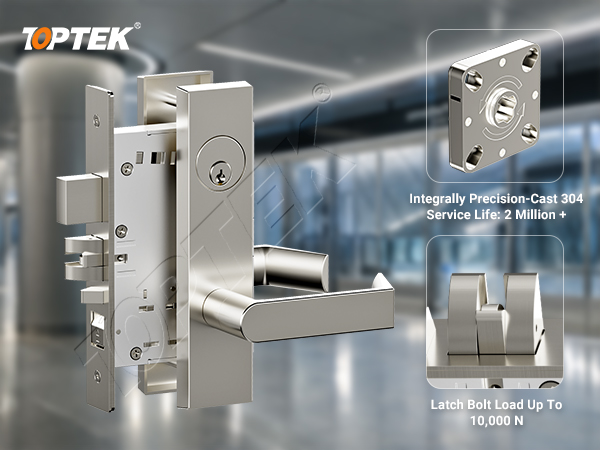
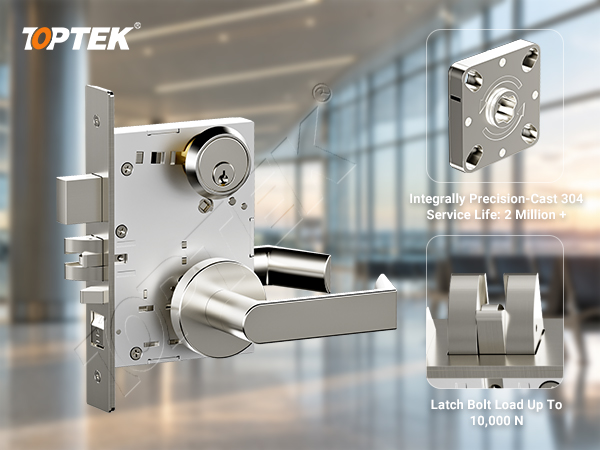
The TKAMRR9200 product reference can anchor an enquiry, while TOPTEK’s quality-management information supports questions about inspection and order records. TOPTEK describes first-article and in-process inspection activities. Ask which drawing revision, sample and inspection records will apply to your particular order rather than treating general process information as a project-specific certificate.
Prepare a comparable RFQ and sample decision
Use the following information to request a meaningful comparison:
- Opening IDs, quantities and door construction records.
- Existing assembly photographs and measured preparation drawing.
- Required operation on each side and any access-system interface.
- Proposed trim style, finish and visible coverage requirements.
- Parts to retain, parts to replace and any proposed repair work.
- Applicable evidence requirements and the party responsible for acceptance.
- A clear division of hardware, door work, installation and service responsibilities.
Ask for a proposed assembly code and drawing revision with the quotation. A sample review should check the agreed preparation, assembly identity, appearance and intended operation under the responsible specialist’s procedure. Retain the resulting record with the purchase order so that later substitutions trigger a deliberate comparison rather than an informal assumption.
Why discuss the project with TOPTEK? A model-linked mortise enquiry gives purchasing a concrete route from trim preference to configuration, sample and quotation. For broader sourcing needs, review TOPTEK’s commercial door hardware manufacturing information and identify which parts of the opening package you want included.
Frequently asked questions
Is a mortise cylinder the same as a mortise lock?
No. A mortise cylinder is a key-operated component; a mortise lock is a broader operating assembly. State the required supply scope so quotations include the correct case, trim, strike and other components.
Can a cylindrical lock replace a mortise lock without changing the door?
Do not assume so. Compare the existing preparation with the exact proposed template, including unused openings, fixing support, trim coverage and any project restrictions.
Does a larger escutcheon make a conversion acceptable?
Coverage is only one consideration. The responsible specialist must also review the door construction, fixing support, operating arrangement and any applicable doorset requirements.
Which construction should be selected for a retrofit?
Select the assembly that meets the required function and evidence requirements with an acceptable door-work and service scope. Compare complete installed proposals rather than construction labels or hardware price alone.
What should accompany a TOPTEK mortise lock enquiry?
Provide opening IDs, the existing preparation, door construction, intended operation, trim preference and required documentation. Ask for a confirmed assembly reference and an itemised supply scope.
Request a retrofit review or formal quotation
The practical decision is whether a documented assembly can meet the opening’s requirements with an acceptable installation scope. Establish the preparation first, agree the operating function and compare the full work package. This makes the choice understandable to purchasing, installers and the people responsible for maintaining the door.
For an initial product discussion, send the opening drawing and existing hardware photographs. When the configuration and responsibilities are defined, request a formal quotation with quantities, finish and documentation requirements.