

TL;DR
- Separate cylinder profile, actuator interface and required lock function in the order record.
- A cylinder that fits physically is not automatically compatible with the lock’s operation.
- Request the exact case-and-cylinder combination, applicable drawing and configured order reference.
- Use the agreed assembly and function record to review samples, substitutions and deliveries.
Quick Answer: Australian Mortice Lock Cylinder Cam Compatibility
Australian mortice lock cylinder cam compatibility depends on the exact cylinder, lock case and required function. The cylinder’s external profile addresses physical fit, while its actuator must interact correctly with the intended lock arrangement. A key turning in the cylinder does not, by itself, establish the expected locking operation. Ask the supplier to confirm the complete combination against the applicable drawings and function record. Retain that confirmation with the sample and purchase order, and review any substitution before accepting it as equivalent.
Separate profile, actuator and function
Three different questions often become compressed into the phrase “oval cylinder compatibility.” First, does the cylinder have the physical form and mounting arrangement required by the case? Second, is the actuator interface appropriate for that lock arrangement? Third, does the configured assembly provide the operation required on each side of the door? Each question needs its own answer.
The keying arrangement is another separate issue. A key system can meet a site’s access plan while the proposed cylinder remains unsuitable for the intended lock case or function. Equally, an apparently suitable mechanical interface does not establish that the key system has been specified correctly. Keep the key plan and mechanical compatibility records connected, but do not treat one as proof of the other.
| Decision layer | Question for the supplier | Useful evidence |
|---|---|---|
| Physical profile | Is this exact cylinder form and mounting arrangement suitable for the case? | Identified cylinder and case drawings. |
| Actuator interface | Which actuator configuration is required for this combination? | Applicable component reference and supplier confirmation. |
| Lock function | What should key and lever inputs do on each side? | Written operation schedule for the configured assembly. |
| Keying | Does the key arrangement match the authorised access plan? | Controlled keying schedule and supply responsibilities. |
This guide focuses on the lock-side order checks. For a broader comparison of regional cylinder forms, see the Australian and Scandinavian oval cylinder guide. A regional format description should not replace confirmation of the specific assembly being purchased.
Identify the complete installed or proposed assembly
Start with the door ID and the lock-case model. Add the cylinder supplier and model, trim arrangement, intended function and any actuation configuration. Where you are replacing an existing cylinder, record what will remain installed. Where the whole assembly is new, identify which supplier is responsible for checking the case-and-cylinder combination.
Photographs can help identify markings and visible arrangements, but they should support the record rather than substitute for it. Do not remove unfamiliar components merely to obtain a photograph. Ask a competent installer or service provider to identify the assembly under the applicable procedure when the required information is not available from records.
Keep the case revision and component references where the supplier provides them. A project may contain similar-looking openings installed at different times, with differences that matter to replacement. Avoid grouping them under one informal description until their assembly records have been checked. The quotation should identify which opening groups the proposed supply actually covers.
Describe the required operation in a function schedule
Write what the authorised user should experience from each side of the door. State the required entry condition, the intended key action and the permitted lever response. Identify any change of state that the project requires. Use ordinary operational language first, then ask the supplier to map that requirement to the correct product function and order designation.
Do not infer the function from a cylinder profile, trim style or a familiar abbreviation alone. Different suppliers may organise their product options differently. A supplier’s confirmation should connect the written requirement to the exact assembly rather than merely repeating the buyer’s short description.
For a platform with mechanical and actuated options, state which configuration the enquiry concerns. If an access system is involved, keep its required interaction in the project record. Do not assume that the same cylinder arrangement or mechanical behaviour applies across every version of a product family. Obtain the applicable model documentation for the selected configuration.
| Schedule field | What to write |
|---|---|
| Opening and operating side | Door ID and clearly named inside/outside locations. |
| Normal entry requirement | The authorised action required to enter. |
| Key-operated requirement | The expected change or permitted operation, described without guessing an internal setting. |
| Lever requirement | The intended response from each side for the selected function. |
| Special project condition | Relevant access-system or doorset requirements and the responsible reviewer. |
| Supplier confirmation | Confirmed assembly designation, documents and any exclusions. |
Use model-specific evidence for the cam question
Actuator compatibility is a reason to ask a precise supplier question, not a reason to copy another manufacturer’s internal settings. In its commercial mortice lock FAQ, Lockwood identifies cam and hub configuration as relevant to a particular key-operation question for its 3572 and 3582 products. That example shows why the exact model and function matter; it does not establish the correct configuration for a TOPTEK lock.
For a TOPTEK enquiry, request the required cylinder and actuator reference for the stated case and function. Ask the supplier to identify the drawing or instruction that supports the combination. If a component comes from a separate supplier, establish who will review the interface and who will resolve any mismatch before production or installation.
A compatibility statement should be specific enough to use at receiving. “Suitable for Australian mortice locks” is too broad to identify the approved combination. Prefer a record that names the case, cylinder, applicable configuration and agreed function. Retain any conditions or exclusions with that record so they do not disappear when the order is shortened to a stock code.
Review an assembled sample before repeated orders
Where the project requires a sample, label it with the same references used in the quotation. The sample review should be performed by the responsible competent person using the applicable product instructions. Its purpose is to confirm the identified assembly and required operation, not to improvise internal adjustments until something appears to work.
Compare the sample identity with the schedule, then record the observed authorised operation against the agreed requirements. Include both operating sides and the relevant project conditions. If the outcome differs, retain the observations and obtain a corrected supplier proposal. Do not approve a large order simply because the cylinder can be inserted or the key can rotate.
Record the accepted configuration and document revision with the sample result. If a case, cylinder, actuator, function or relevant assembly option changes later, ask whether the previous confirmation still applies. A substitution should come with a traceable explanation and the appropriate review, rather than a verbal assurance that the replacement is “the same type.”
Keep key control separate from compatibility checks
Compatibility review does not require placing sensitive key-system information into every general RFQ attachment. Provide the mechanical identification and required operation needed for the assembly discussion, while sharing controlled keying details through the project’s authorised process. Purchasing, the key-system provider and the hardware supplier should know which information each party is responsible for confirming.
For an existing site, identify whether the cylinder is intended to join an established system or be supplied independently. That decision affects the keying discussion, but it should not bypass the case-and-actuator review. A replacement that meets one requirement while missing the other is not a complete solution.
At handover, retain the mechanical assembly reference with the door record and the keying information in the appropriate controlled register. This separation helps future service staff request the correct hardware without unnecessarily circulating access-control details.
Common ordering mistakes and their consequences
Approving by physical fit alone. Insertion into the case does not establish the intended operating result. Require confirmation of the complete combination and function.
Copying another brand’s cam description. An actuator code or troubleshooting note belongs to its stated product scope. Ask for the applicable TOPTEK reference rather than translating a competitor’s configuration into an order.
Confusing a keying decision with a mechanical decision. The key plan and the lock interface both need confirmation. Keep their responsibilities visible in the procurement record.
Using trim style as the function identifier. Round rose or escutcheon appearance does not define the cylinder interaction or the installed function. Add the case and configuration records.
Accepting a substitution without updating the schedule. A changed component can make the original sample record difficult to apply. Ask the supplier to confirm the revised combination and retain the updated references.
Sending an incomplete service enquiry. If an existing assembly behaves differently from the requirement, record the model, side used, expected operation and actual observation. Let the responsible specialist determine the applicable checks; do not infer a repair from a generic compatibility article.
TOPTEK product scope and an interface RFQ checklist
The TOPTEK Australian mortice lock range includes TKAU6400EC escutcheon and TKAU6400RR round rose references. TOPTEK’s Australian platform includes mechanical, motorised and solenoid configurations, so an enquiry should identify the intended version as well as the trim. These family references are a starting point for a confirmed assembly, not a universal cylinder compatibility statement.
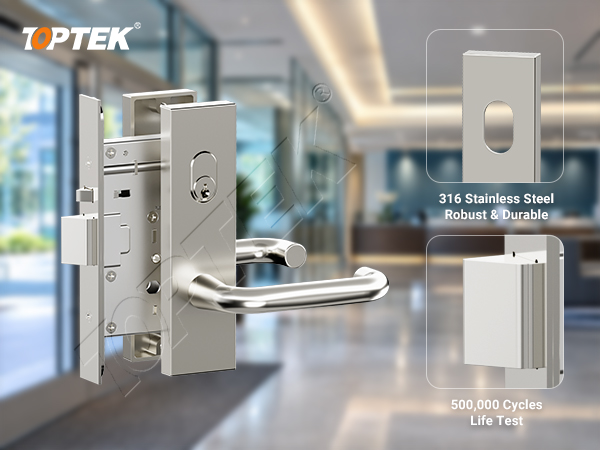
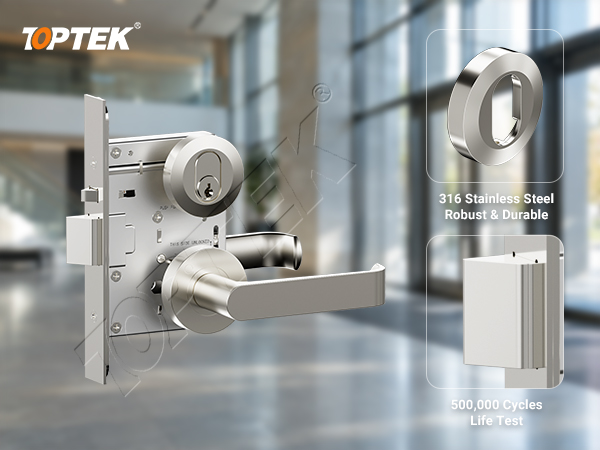
Use the TKAU6400RR product reference where relevant and include the following RFQ information:
- Door IDs, quantities and the installed or proposed lock-case references.
- Cylinder supplier, model and applicable interface drawings.
- Required operation on each side and the intended assembly configuration.
- Trim reference, finish and the boundary between retained and new components.
- The supplier responsible for confirming the complete combination.
- Sample requirements and the proposed function-review record.
- Relevant project documentation and acceptance responsibilities.
- Substitution controls, receiving identification and handover documents.
Why TOPTEK? A specific configuration enquiry gives the supplier a practical basis for product discussion, sample coordination and quotation. Review TOPTEK’s quality-management information when requesting order-linked inspection records. For a wider sourcing package, use its commercial door hardware manufacturing information to define the components and documentation you want included. Neither general process information nor trim appearance replaces the exact interface confirmation.
Frequently asked questions
Does an Australian oval cylinder fit every Australian mortice lock?
Do not assume universal compatibility. Confirm the exact cylinder profile, mounting arrangement, actuator interface and required function with the supplier of the proposed assembly.
Does a turning key prove that the cam is compatible?
No. Key rotation alone does not establish the expected lock operation. The complete configured assembly must be checked against the agreed function and applicable product instructions.
Can another brand’s cam code be used to specify a TOPTEK lock?
Only a specific supplier confirmation can establish the applicable combination. Another brand’s code or troubleshooting guidance should not be treated as a TOPTEK configuration instruction.
What should be checked when a cylinder is substituted?
Review the new cylinder reference, physical and actuator interfaces, required operation and any effect on the keying plan. Retain the supplier’s confirmation and update the assembly record.
What information makes an interface enquiry useful?
Provide the lock-case and cylinder references, relevant drawings, trim arrangement, intended configuration and operation on each side. Identify which parts remain installed and who is responsible for confirming the combination.
Request a configuration review and formal quotation
A reliable order connects the physical interface to the function the opening needs. Keep profile, actuator, operation and keying decisions visible, then retain the supplier’s confirmed combination with the sample and purchase order. This gives future receiving and service enquiries a clear reference.
Send the case and cylinder references for a configuration discussion. When the combination is defined, request a formal quotation with quantities, function schedule and documentation requirements.