

TL;DR
- Specify which lock parts need a coordinated appearance: forend, strike, visible bolt surfaces and associated furniture.
- Use physical production-representative samples to agree colour, sheen and texture.
- Keep material, finish process and corrosion evidence as separate specification fields.
- Retain the accepted sample and component schedule for production, replacement orders and future phases.
Quick Answer
Euro mortise lock finish matching means coordinating the appearance of the lock’s visible components with the surrounding door hardware. Start with an exact model and a component-by-component finish schedule, then compare physical samples under agreed lighting. A shared colour name or screen image is insufficient to define the result. Confirm the substrate, finish process, surface texture, sheen and available treatment for each component. Keep appearance acceptance separate from mechanical function, corrosion performance and any project-specific compliance requirements.
For buyers of the TOPTEK European mortise lock range, this approach turns a request such as matching black hardware into an assessable enquiry. It also identifies components that need a different finish treatment or a separate decision.
List the surfaces the user will actually see
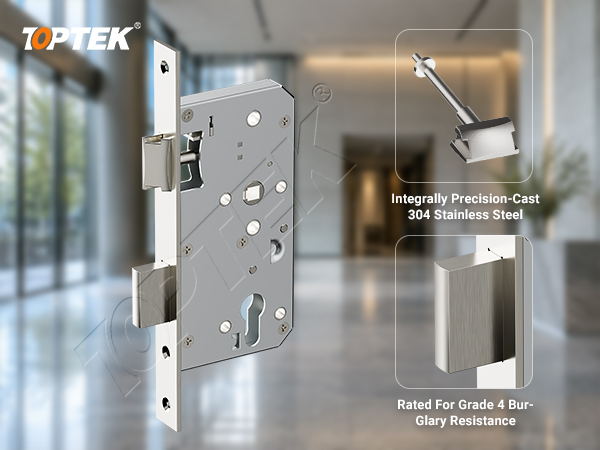
The door face draws most attention when closed, but the edge and frame become visible as the door opens. A coordinated hardware package can therefore involve the lock forend, strike plate, latch, deadbolt, fixing heads, lever furniture and cylinder surround. Do not assume that one finish selection automatically covers every item.
Define the viewing condition before discussing appearance. Is the objective to match the lever and plate at close range, coordinate the edge hardware when open, or keep a consistent overall appearance across a corridor? These are related but different acceptance questions. A clear description helps the supplier select meaningful sample pieces.
Identify whether a visible part also has a working contact surface. The supplier should confirm which surfaces receive the proposed treatment and how the finish is controlled around functional interfaces. Do not request field painting of moving parts as a substitute for an agreed production specification.
Separate colour, texture, material and finish process
Words such as satin, brushed, polished or black describe only part of a finish requirement. Two items may carry a similar colour name while their surface texture or gloss produces a visibly different result. Ask the supplier to describe the complete finish designation used for the specific component.
The base material belongs in a separate field. A colour description cannot prove a stainless steel grade, and a stainless steel grade cannot define a decorative colour. Likewise, a statement about appearance should not be used to claim a salt-spray result or a service life. Request the relevant evidence when those properties are purchasing requirements.
TOPTEK’s European lock information describes colour options for the forend, strike, latch and deadbolt. Treat that as the starting point for a model-specific enquiry: identify the parts, proposed colour and intended environment, then obtain confirmation of the available treatment and sample scope. Do not assume every finish is available on every lock function or component.
| Specification field | What to write | What it does not establish |
|---|---|---|
| Model and component | Exact lock reference and named visible part | Availability on another model |
| Base material | Agreed material specification for that part | Colour or sheen |
| Finish designation | Supplier code and descriptive finish name | Universal equivalence across brands |
| Appearance reference | Physical sample ID, texture and viewing conditions | Corrosion performance |
| Performance requirement | Required method, configuration and supporting document | Appearance acceptance |
| Care instructions | Applicable cleaning and protection guidance | Permission to use an arbitrary chemical |
Build a component finish schedule
Give each component its own row and mark whether the requirement is an exact agreed match, a coordinated appearance or an accepted contrast. This avoids an ambiguous all parts same colour note. Add the component supplier when the lock, lever and cylinder come from different sources.
For an EN72SL sash configuration, identify the forend and the relevant visible latch and deadbolt surfaces. For an EN72LL passage configuration, use the components present in that assembly. A template should not demand a deadbolt finish for a product that does not include that part.
The EN72SL sash mortise lock reference can anchor the model selection. Attach the selected configuration drawing and sample reference to the finish schedule. If the project later changes lock function, review the component rows rather than simply copying the previous finish code.
Include exposed fixing heads where they contribute to the intended appearance. Also state whether the receiving strike is supplied with the lock or by another party. A well-defined lock finish cannot ensure a coordinated frame detail if the strike is left outside the purchasing scope.
Approve physical samples under agreed conditions
Photographs are useful for identifying an item and discussing an obvious difference. They are a weak sole basis for final colour acceptance because lighting, camera settings and displays affect the image. Compare physical samples together and agree the relevant lighting and viewing orientation.
ASSA ABLOY’s Lockwood plate furniture catalogue makes a similar distinction for its own finishes: catalogue colour is indicative, and production-prepared samples are used for final approval. That reference does not define TOPTEK finish availability or tolerances; obtain those from the proposed TOPTEK configuration.
Arrange the sample parts as they will be viewed together. A small loose coupon can help agree colour direction, but a formed forend, broad escutcheon and curved lever may present the finish differently. Where appearance is critical, ask for representative finished components rather than relying only on a flat sample.
Record who accepted the sample, its identifier, date, viewing conditions and any agreed exception. Retain a protected reference sample with the purchasing record. If the buyer and supplier each keep a sample, identify the paired references so later comparisons use the same acceptance basis.
Keep appearance and operating acceptance separate
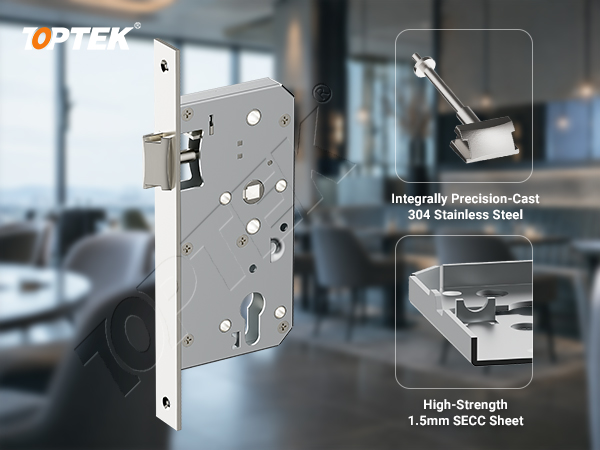
An attractive sample still needs the intended operating checks. Fit the selected lock with its specified furniture and receiving components, using the applicable instructions. Record whether the mechanism operates correctly and whether the visible surfaces match the accepted sample. One observation does not replace the other.
Ask how the proposed finish is applied to working and nonworking surfaces. Where a component slides, rotates or contacts another part, its treatment needs to suit that function. Leave the detailed production method to the manufacturer and request confirmation of the configuration, rather than prescribing an unverified coating thickness.
For corrosion or environmental requirements, provide the intended exposure and required evidence. An indoor colour approval is not a corrosion test. Avoid translating a generic test-hour statement into a promised period of outdoor service. The evidence should identify the tested component, treatment, method and result within its documented scope.
If the hardware forms part of a door assembly with specific performance requirements, review finish or material substitutions through the applicable project process. A decorative change is still a change to the supplied configuration and should remain traceable.
Manage production batches and later replacements
Keep the finish designation, accepted sample and component list linked to the purchase order. Separate samples used to explore colour alternatives from the sample finally accepted for production. Otherwise, a supplier or distributor may reproduce an earlier option accurately while the project expects a later one.
For staged deliveries, tell the supplier which phases must be viewed together and which parts are being purchased elsewhere. Agree the acceptance method and how differences will be handled. Do not impose an invented universal colour tolerance; use the project requirement and a method the parties can apply consistently.
Plan replacement requirements before the first order. A replacement part will be compared with hardware already exposed to use and cleaning, which may differ from the retained unused reference. Keep both the original specification and a record of the installed condition when requesting a replacement match.
TOPTEK’s company information describes inspection of returned plated parts for finish quality and colour consistency. The quality management page provides process context. Ask the quotation to identify the sample reference and inspection criteria for your particular finish package.
Common mistakes and a practical buyer checklist
Common mistakes include ordering by a colour word alone, approving one part and extending that approval to every component, or comparing photographs taken under different lighting. Another frequent specification gap is treating the lock and lever as one finish scope while the strike and cylinder are ordered independently.
- Confirm the exact lock function and all visible components.
- Identify each component’s supplier and finish designation.
- Request representative samples for the surfaces that will be compared.
- Agree appearance conditions and retain the accepted reference.
- Keep material and performance requirements separate from colour.
- Check function with the final proposed component combination.
- Record production, phased-delivery and replacement requirements.
For a preliminary discussion, send the model list and finish reference to TOPTEK. Ask which components can be sampled and which require a separate finish decision. This is more actionable than asking whether every item can be made to look exactly like a screen image.
Why TOPTEK and what the finish RFQ should contain
TOPTEK offers European mortise lock functions including sash and passage configurations, with source information identifying finish discussions for visible lock components. A useful RFQ connects those actual models to the buyer’s appearance and operating requirements. It should not treat an entire catalogue as one interchangeable finish system.
Include the component schedule, finish reference, required quantities by model, intended environment, sample acceptance method, project phase quantities and documentation needs. State whether matching furniture comes from TOPTEK or another supplier. Ask for the proposed finish description, included sample pieces and any limitations in the quotation.
The broader CE mortise lock RFQ checklist covers the surrounding product enquiry. For a coordinated commercial door hardware package, keep the finish schedule alongside dimensions, function and evidence requirements so one purchasing decision does not hide another.
Frequently asked questions
Does the same finish name guarantee the same appearance?
No. Confirm the supplier’s finish designation, base material, texture and sheen, then compare representative physical samples under agreed conditions.
Can the forend and strike be specified separately?
Yes, list them separately in the enquiry and confirm the available treatment for each selected component. Also identify who supplies the strike.
Is a product photograph suitable for final colour approval?
Use it as an identification or discussion aid. Final appearance acceptance should use the agreed physical sample and viewing conditions.
Does a colour approval prove corrosion resistance?
No. Appearance and corrosion performance are separate requirements. Request evidence identifying the relevant component, finish, method and result.
What should be retained for replacement orders?
Keep the model, component list, finish designation, accepted sample ID and original order reference. Add photographs of the installed condition when discussing a later match.
Request a finish sample and quotation
A useful finish specification is precise enough to compare, inspect and reorder. Define the components first, agree the physical reference and retain the operating requirements. Send TOPTEK your finish schedule and quantities to request a proposed sample package and quotation for the chosen European mortise lock configurations.