
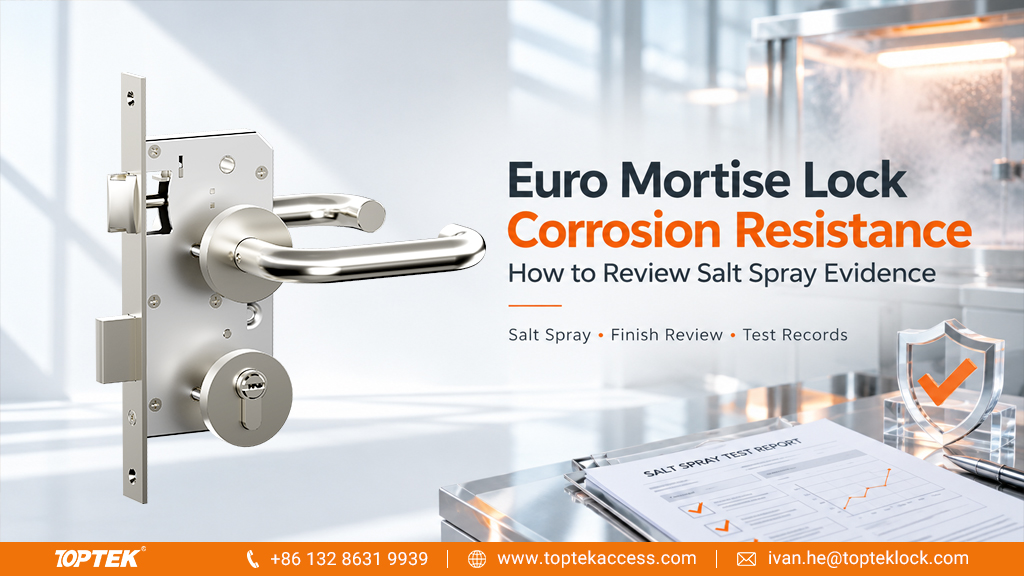

TL;DR: review the evidence behind the finish
- Connect the report specimen to the exact lock configuration and exposed components.
- Check the method, exposure conditions, observations and acceptance criteria together.
- Keep coating appearance, corrosion evidence and operating performance as separate requirements.
- Describe the installation environment and cleaning exposure before requesting a recommendation.
Quick Answer: how should buyers assess Euro mortise lock corrosion resistance?
Assess Euro mortise lock corrosion resistance by matching a complete test report to the proposed model, component materials and finish specification. Check what was tested, how it was exposed, what was assessed and which result supports the purchase requirement. Then compare that evidence with the intended environment and maintenance arrangements. A product photograph, finish name or isolated salt spray duration cannot establish suitability by itself. Ask the supplier to explain the relationship between the tested specimen and the actual supplied assembly, including any substitutions.
1. Start with the installation environment
Before comparing reports, describe where the door will operate. An interior office, sheltered entrance and frequently cleaned service area present different questions. Record whether exposed trim and edge components may encounter moisture, cleaning chemicals or airborne contaminants, and identify which surfaces will actually face those conditions.
This is a specification exercise rather than an opportunity to invent a universal “coastal” or “indoor” grade. Tell the supplier the site conditions and ask for a documented recommendation for the proposed assembly. Where the project has a formal environmental requirement, include its exact wording and the party responsible for assessing conformity.
Also describe storage and construction conditions. Hardware may arrive before the building is enclosed or before wet trades are complete. Agree on protection, packaging and storage instructions so the delivered product is not evaluated as though the completed building were its only exposure.
For the product starting point, use the TOPTEK Euro mortise lock range. Select the intended function and model before discussing a finish or report; the family heading alone does not identify the specimen in a test document.
2. Understand what the test method can tell you
ISO 9227:2022 describes equipment, reagents and procedures for neutral salt spray, acetic acid salt spray and copper-accelerated acetic acid salt spray testing. Its published scope does not set product-specific exposure periods or interpret results, and cautions against using these tests to predict long-term corrosion resistance or rank different materials.
Keep three document roles separate: the test method, the product requirement and the supplier’s report. The method explains how an exposure is conducted. The purchase specification or applicable product requirement must explain what evidence the buyer needs. The report records what happened to the identified specimen under the stated conditions.
A quotation that provides only a duration leaves those roles unresolved. Ask for the report and the requirement against which it is being evaluated. Avoid constructing a conversion from laboratory hours to years of service; instead obtain a suitability statement tied to the actual product and intended application.
Check the edition recorded in the report. The ISO page also lists an amendment to the 2022 edition. Whether a particular report satisfies a project’s document requirements must be assessed against the specified method and contractual requirements, rather than inferred from a familiar standard number.
3. Map the specimen to the lock you are buying
For a mortise lock, “tested finish” can refer to different things. The report might identify a complete assembly, selected components or a prepared coupon. Each can support a different conclusion. Start by recording the specimen description exactly, including photographs, markings and supplier references where available.
| Evidence field | Buyer check | Unresolved risk |
|---|---|---|
| Model and revision | Match the sample to the quoted product | A similar model may have a different component specification |
| Tested item | Identify assembly, part or coupon | One surface may be mistaken for the complete lock |
| Material and coating | Compare with the ordered component record | A finish name can conceal a changed substrate or process |
| Sample condition | Read preparation and handling details | The tested condition may differ from the supplied condition |
| Traceability | Connect report number, sample ID and supplier declaration | The report cannot be tied to the quotation |
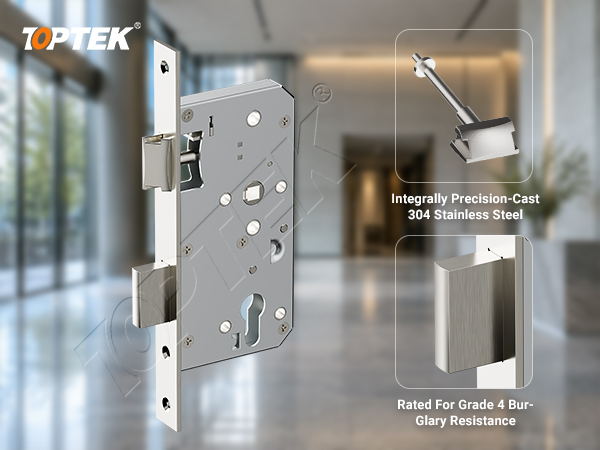
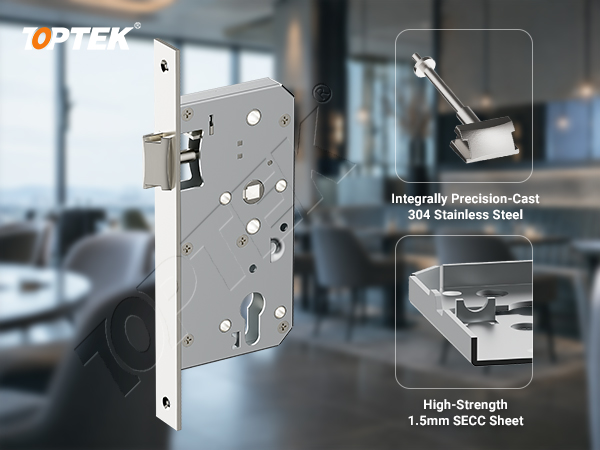
Ask specifically which exposed surfaces are covered: forend, strike, latch, deadbolt where present, and separately supplied trim. Do not assume evidence for one item extends to every other item with the same colour. A useful component matrix includes the material designation, finish code, source document and evidence scope for each line.
TOPTEK’s product materials distinguish the EN72SL sash lock and EN72LL passage lock. These are different model references to retain in the review. The EN72SL product page provides a model starting point; request the configuration-specific evidence needed for the order rather than extending a general range description.
4. Read the observations and acceptance criteria
A report conclusion is more useful when its underlying observations are visible. Read the relevant result pages and any photographs, notes or exclusions. Identify what was assessed, at what point and on which surfaces. If the buyer requires a particular outcome, locate the statement that addresses it rather than relying on a broad “pass” in a sales summary.
Appearance and operation should be separate lines in the review. Evidence describing a surface condition does not automatically establish how the mechanism operated afterward. Conversely, an operational check does not by itself define acceptable appearance. Ask what assessments were actually performed and avoid adding results that the report does not contain.
Record the acceptance criterion in the review sheet, including its source. It may come from a stated product requirement, a project specification or an agreed supplier test plan. Do not create an EN classification or certification claim from the existence of a salt spray report alone.
Where photographs are difficult to interpret, request clarification linked to the relevant specimen and observation. A higher resolution image can help identify the area under discussion, but a buyer should not override the report’s documented assessment by guessing from an isolated photograph.
5. Compare offers without comparing unlike evidence
Two offers may use the same finish description while supporting it with different evidence. Before choosing between them, align the comparison fields. Where the information is absent, mark it as missing and request it; do not fill gaps by borrowing details from another model.
| Comparison question | Offer A record | Offer B record |
|---|---|---|
| Exact tested product and finish? | Report specimen reference | Report specimen reference |
| Same exposure method and conditions? | Method and relevant conditions | Method and relevant conditions |
| Same surfaces and observations? | Assessed areas and result pages | Assessed areas and result pages |
| Same acceptance requirement? | Criterion and its source | Criterion and its source |
| Connection to current supply? | Configuration declaration | Configuration declaration |
This matrix is deliberately more demanding than a single numerical ranking. It helps purchasing explain why one offer has sufficient evidence while another needs clarification. It also prevents a visually attractive sample from substituting for the technical information required by the project.
Keep unresolved items attached to the quotation comparison. If a supplier proposes a substitute finish or component, ask which parts of the evidence remain applicable and which require a fresh review. Do not let a commercial alternative enter the order without that connection being documented.
6. Common mistakes in a corrosion review
- Using colour as evidence: an appearance reference does not identify the underlying material or coating process.
- Extending one component result: a report on a forend is treated as a report on the complete assembly.
- Reading a summary without the scope: the quoted result is separated from specimen details and exclusions.
- Assuming unchanged supply: a report is retained while the ordered finish or component specification changes.
- Ignoring cleaning instructions: the environment is described but the maintenance products and procedures are omitted.
These mistakes create disputes about what was promised and what was supplied. A clear evidence record narrows the discussion to the actual requirement, specimen and configuration. It does not remove the need for correct installation, protection and maintenance under the supplier’s instructions.
After installation, retain the approved cleaning and inspection guidance with the hardware handover documents. If a surface problem appears, record the location, component, photographs, timing and cleaning history. This gives the supplier useful information without prematurely assigning a cause.
7. Why TOPTEK: connect evidence, samples and purchasing
TOPTEK’s product materials discuss component finish options for Euro mortise locks. Its company process information describes checks on returned plated parts, including finish colour. These provide practical subjects for a buyer review, while a colour check remains distinct from a corrosion test result.
Use TOPTEK’s quality management information to ask how the approved component and finish record will reach inspection and production. Request the available report, sample identification and applicable scope for the exact offer. Avoid treating a general company process as a guarantee of a particular environment or test classification.
The CE mortise lock RFQ checklist helps organise the wider purchase documents. For a coordinated commercial door hardware order, keep the lock, strike and trim evidence references together while preserving the separate scope of each document.
Frequently asked questions
Does a finish name establish corrosion resistance?
No. Match the ordered component and finish specification to relevant evidence and the intended application.
Can a component report cover the entire Euro mortise lock?
Only to the extent supported by its documented scope. Identify the tested item and ask which conclusions apply to the supplied assembly.
Does a salt spray report automatically prove an EN classification?
No. Check the applicable product requirement, supporting documents and exact model scope before making that claim.
What should happen when a finish is substituted?
Review the changed component specification and ask the supplier to confirm which evidence remains applicable before accepting the substitution.
Include the opening location, affected component, product identification, photographs, timing, exposure information and cleaning history.
Request a finish evidence review or formal quotation
A useful corrosion review ends with a documented link between the purchase requirement and the supplied configuration. Keep the environment description, component matrix, report scope and supplier clarification together so the decision remains understandable after the order is placed.
For an initial evidence review, send the proposed model, exposed components, finish preference and installation conditions. Include the relevant project requirement and request the available documentation for that combination.
For a formal quotation, add quantities, door application, sample needs, component finish schedule, acceptance requirements and delivery destination. Ask for the agreed configuration and evidence references to be identified in the quotation and retained with the order.