

TL;DR
- Match the furniture fixing pattern to the exact lockcase drawing before ordering.
- Check the complete screw or sleeve path, including its diameter and position relative to the case.
- Keep spindle centres, cylinder centres and fixing centres as separate dimensions.
- Resolve incompatible holes through an approved component combination, without drilling an assembled lockcase.
Quick Answer
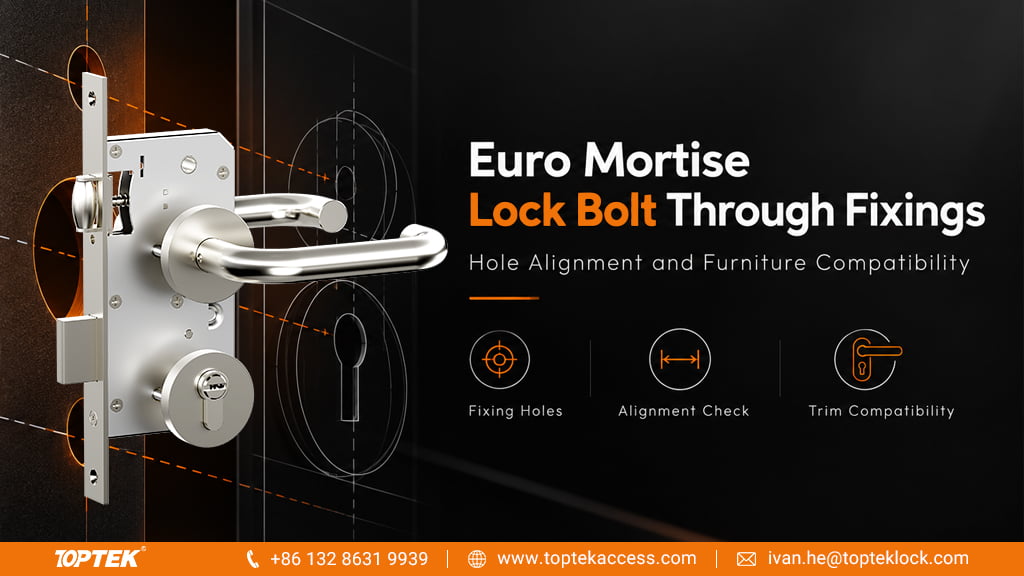
Euro mortise lock bolt through fixings require a compatible path between the two sides of the door furniture and the lockcase. Confirm the fixing centres, hole positions, fastener or sleeve diameter and applicable door thickness using the exact case and furniture drawings. Matching the spindle and cylinder positions does not automatically align the furniture screws. Obtain a confirmed fixing arrangement before machining the door or releasing a bulk order. Where the drawings do not establish a clear path, ask the suppliers to resolve the assembly rather than treating the lockcase as material that can be drilled to fit.
Separate furniture fixing from lockcase fixing
A door assembly contains several fixings that serve different purposes. Screws at the lock forend retain the case in the door edge. Furniture fixings secure the handles, roses or plates at the door faces. A bolt-through arrangement connects the furniture across the door, with its route determined by the hardware design. These are related parts of the assembly, but they do not share a single specification.
The distinction matters when a buyer receives a lockcase and handles from different suppliers. Both products may be described as suitable for a Euro mortise application, yet their fixing arrangements still need to be compared. The case occupies space inside the door exactly where some furniture fixings may need to pass.
Begin with the TOPTEK Euro mortise lock range and name the proposed furniture separately. Ask for the complete assembly arrangement, including whether the intended fastener passes through a designated case opening or follows another documented route. A general product category should never be used as a substitute for that drawing.
Read the fixing pattern using common reference points
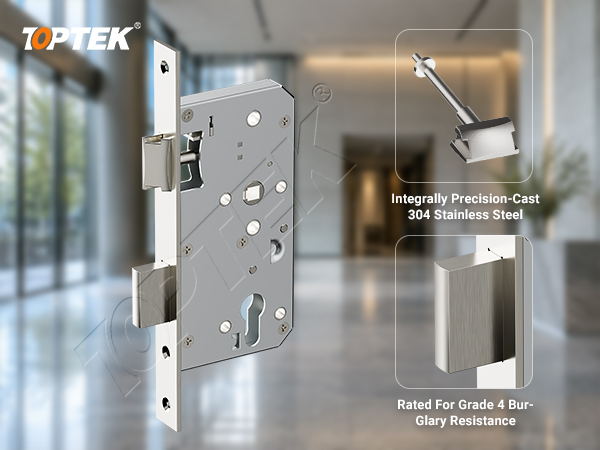
Compare the drawings from the same viewing direction and in the same units. Identify the spindle centre, the case outline and the door edge reference. Locate each furniture fixing from those points. A drawing that gives only the distance between two screws may leave their position relative to the lockcase unclear.
Keep centre distance terminology precise. The distance between the spindle and cylinder is not the distance between the furniture fixing holes. Backset establishes another relationship, normally between a specified door-edge datum and an operating centre. A familiar series designation does not supply every dimension needed to coordinate the screws.
For an escutcheon, check all required fixings rather than only the holes closest to the handle. For a rose, inspect the concealed base drawing as well as the visible cover. The cover’s diameter and appearance can conceal a fixing pattern that differs from another visually similar product.
Mark the required route on a combined drawing or an annotated assembly section. If one supplier uses a different datum, ask for the dimensions needed to reconcile the two views. This is more reliable than attempting to compare product photographs at different scales.
Check the fastener envelope as well as its centre
A centre line establishes position, but the actual fixing occupies space. Include the diameter of the bolt, sleeve or connector that passes through the assembly. Check any shoulder, collar or local enlargement shown in the furniture drawing. A nominally aligned centre does not prove clearance for a larger connecting sleeve.
Door thickness also affects the fixing selection. Confirm the usable fastener range and the engagement required by the furniture manufacturer. Keep supplied washers, bushes and other specified components in the record. Do not invent an engagement length or choose a longer screw simply because it reaches the opposite side.
The manufacturer example on UNION’s 2677 mortice latch page explicitly identifies provision for bolt-through furniture. It illustrates that this is a product-specific feature to verify. It does not establish the hole pattern, strength or compatibility of a TOPTEK lockcase.
Where the route is unclear, request a section or assembly detail that shows the fixing relative to the case. The useful answer identifies the parts and their spatial relationship. A broad assurance that both products are “standard” leaves the original question unresolved.
Use a compatibility matrix before releasing machining
Keep the following matrix with the door manufacturer’s preparation information. Each row should refer to the same case and furniture revision. If the project uses several handles, create a separate combination reference for each distinct fixing pattern rather than copying one approval across the range.
| Interface | Required evidence | Question to resolve |
|---|---|---|
| Fixing position | Furniture base or plate drawing and case drawing | Do the intended centres align with the permitted route? |
| Fixing size | Bolt, sleeve and connector dimensions | Does the complete fixing fit that route? |
| Door assembly | Thickness, preparation and relevant reinforcement details | Does the specified hardware suit the actual construction? |
| Fastener length | Manufacturer’s applicable range and engagement instructions | Which supplied fastener set is required? |
| Installed operation | Identified sample and installation record | Does operation remain correct after prescribed assembly? |
| Change control | Revision and substitution record | Does the confirmation still cover the proposed order? |
Do not release a door machining programme while a critical fixing route remains an assumption. The case pocket, furniture holes and operating centres form one preparation package. Correcting them after finished doors arrive can involve more than replacing a screw.
A supplier should be able to identify the specific drawing used for its response. If the drawing is a general family illustration, request confirmation that it applies to the selected function and case. Keep any exceptions visible in the order acknowledgement.
Review a representative assembly without changing the case
A representative sample is useful when it includes the intended door thickness, lockcase, furniture base and supplied fixing set. Label those components before the review. A loose handle demonstration on a different board does not answer whether the project assembly has the same screw path.
Have the competent installer follow the documented assembly method. Record whether the supplied components fit their intended positions and whether the operating parts behave as expected after the furniture is secured. If operation changes as the assembly is completed, record the condition and request assessment rather than increasing force.
Do not drill an assembled lockcase, enlarge a case opening or substitute an unapproved connector to make the sample fit. Such alterations can introduce debris, interfere with internal parts or change the documented configuration. Resolve the component choice with the suppliers and responsible door manufacturer.
For an existing opening, retain the original preparation information where available. Old holes, damaged material or a different reinforcement arrangement may change the fixing decision. A larger decorative cover can hide an old hole without providing the support required by the new furniture.
TOPTEK case selection and supporting documents
TOPTEK’s current range includes EN72SL sash mortise locks and EN72LL passage mortise locks. Choose the required operating function first, then coordinate the case with the furniture and door preparation. Changing to another function solely to obtain a convenient fixing route can create a different problem in the door schedule.
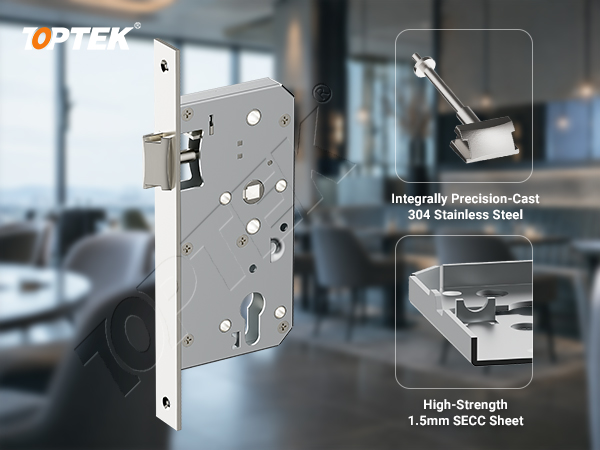
TOPTEK’s manufacturing information describes first-piece and in-process inspection activity. The quality management page is a starting point for discussing how a confirmed configuration will be maintained. Ask which dimensional record or inspection document can be linked to the selected product and revision.
Why TOPTEK for a coordinated enquiry? The product references and manufacturing context allow buyers to ask about a defined lockcase within a broader hardware supply discussion. The practical deliverable should be a clear response to the fixing matrix, with drawing references and supply responsibilities. General statements about quality do not replace those details.
Common ordering mistakes and the RFQ checklist
A frequent mistake is specifying only the visible handle model. Purchasing also needs the base, fixing set and any connecting sleeves. Another is copying an old fastener length after the door thickness or furniture base changes. Treat these changes as configuration changes and recheck the applicable instructions.
A third mistake is mixing revisions. A case drawing from an earlier quotation and a newly selected handle can appear compatible in an email thread while no one has confirmed the actual combination. Put both revisions in one enquiry and ask for a response against that pair.
- State the lockcase model, function and drawing revision.
- Identify the furniture model, base or plate and fixing set.
- Provide the door thickness and preparation drawing.
- Show fixing positions from agreed datums and include connector dimensions.
- Request the applicable fastener length range and assembly instructions.
- Identify who supplies each component and who confirms the combined arrangement.
- List sample quantities, production quantities and permitted substitution procedures.
Use the CE mortise lock RFQ checklist for the wider purchasing package. Keep this fixing matrix as a specific attachment, so the screw-path decision does not disappear among general commercial requirements.
For a combined hardware enquiry, refer to TOPTEK’s commercial door hardware manufacturing information. Ask the quotation to distinguish the confirmed assembly from separately supplied furniture that still needs coordination. This gives the door factory a usable scope before production starts.
Frequently asked questions
Do matching spindle and cylinder centres prove bolt-through compatibility?
No. Furniture fixing positions and the complete fastener path require their own check against the exact lockcase and furniture drawings.
Can every Euro mortise lock accept bolt-through furniture?
Do not assume universal compatibility. Confirm whether the selected case provides the required fixing route and whether it suits the chosen furniture and connector dimensions.
Is the visible rose diameter enough to select the fixing pattern?
No. Obtain the concealed base drawing and fixing specification. Similar visible covers can be used with different bases or fixing arrangements.
What if a furniture screw meets the lockcase?
Stop the assembly and ask the responsible suppliers to review the specified combination. Do not drill the assembled case or force a fastener through an unconfirmed route.
What should be retained after sample review?
Retain the case, furniture and fixing references, drawing revisions, door preparation and applicable assembly instructions, together with the identified sample and review result.
Send the fixing drawings or request a complete quotation
Coordinate the actual fixing path before the door is machined. A complete record of position, connector size, door thickness and supplied parts makes the selected combination easier to order and repeat.
Send the case and furniture drawings for an initial compatibility discussion. Highlight any unclear fixing position or sleeve dimension.
Request a formal Euro mortise assembly quotation with the confirmed configuration, quantities and required documentation.