

TL;DR
- Describe the users, frequency and foreseeable misuse before selecting a category of use.
- Request the complete classification and the exact tested handle assembly, rather than one grade number.
- Keep fire-door evidence and lock compatibility as separate acceptance checks.
- Compare samples with the same spindle, fixing arrangement and door preparation before releasing a purchase order.
Quick Answer
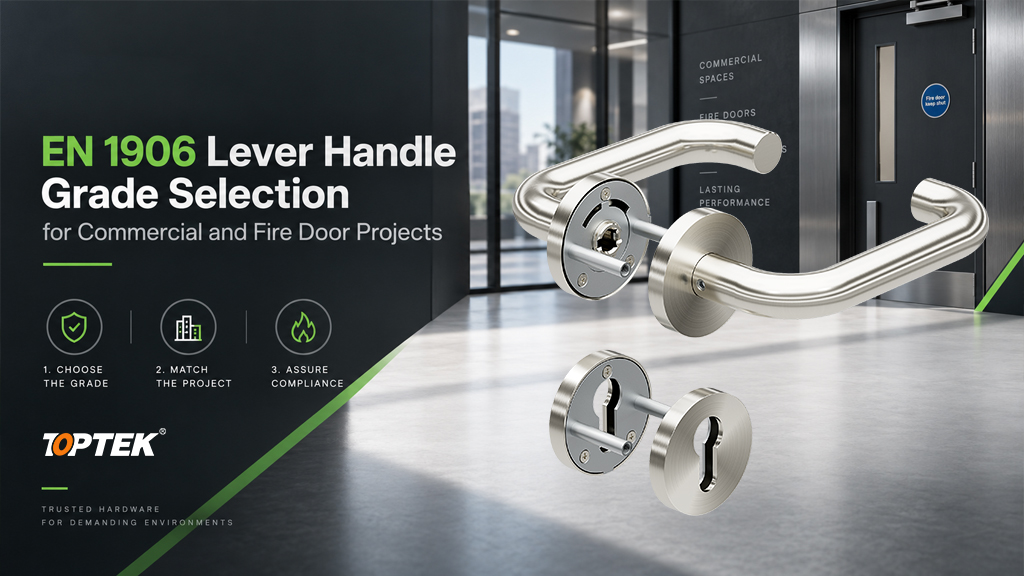
For commercial door hardware, EN 1906 lever handle grade selection should match the category of use to the opening, then check the remaining performance classifications and assembly details. Grade 3 and Grade 4 commonly describe different demands on the handle in use; they do not express a complete door specification. Record the required classification, obtain evidence for the offered configuration and verify compatibility with the lock, spindle and fixings. For a fire door, additionally check the applicable doorset evidence and installation instructions. The strongest advertised grade cannot compensate for an unsuitable assembly or an incorrectly installed handle.
What does the grade actually describe?
The first question to ask a supplier is which part of the classification the quoted number refers to. A category of use describes the duty expected in service. Durability, corrosion resistance and other characteristics have their own places in the classification. Two handles described with the same use grade can therefore differ in other documented properties that matter to the project.
The BSI entry for BS EN 1906:2012, checked on 19 September 2026, lists the edition as current and under review. It describes a standard for lever and knob furniture, with requirements addressing operation, mechanical performance and corrosion. Its scope is not a substitute for the specification of the complete lock or door.
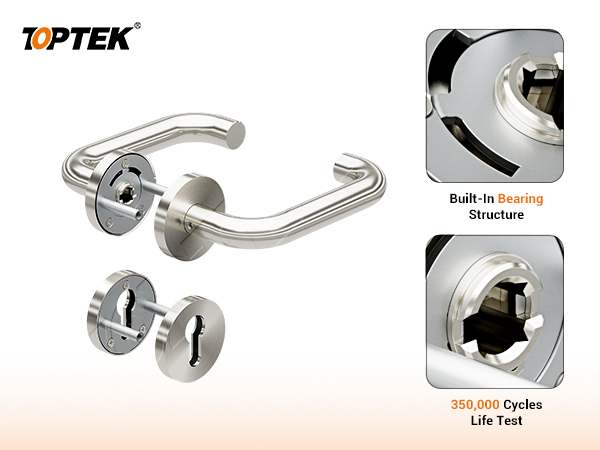
When comparing the TOPTEK EN 1906 lever handle range, put the complete classification next to the order reference. Add the report reference, configuration drawing and finish. This gives procurement a way to ask whether two offers address the same requirement, even when their marketing descriptions use different words.
How should buyers compare Grade 3 and Grade 4?
Compare the expected treatment of the opening, not only its daily traffic. A door used frequently by staff who look after the hardware presents a different problem from a door frequently pulled, struck or forced by users. The project description should identify both frequency and foreseeable misuse so that the category is chosen deliberately.
The EN 1906 category explanation in ASSA ABLOY’s Valli catalogue distinguishes Grade 3 public use with a substantial risk of misuse from Grade 4 service involving frequent forceful treatment. These descriptions help frame a specification discussion. The project team should still select the grade from the applicable standard, risk assessment and offered evidence.
| Opening condition | Question for the buyer | Record required |
|---|---|---|
| Busy public access | How often is the handle operated, and how much care is likely? | Use category and the reason it was selected |
| Repeated rough handling | Is higher resistance to abusive use needed? | Required use category and configuration evidence |
| Wet or exposed location | Does the finish suit the exposure and cleaning regime? | Separate corrosion requirement |
| Fire-resisting opening | Is this furniture covered for the actual doorset? | Applicable fire evidence and installation details |
| Access-controlled or escape opening | Does the handle operate the specified lock function? | Compatible hardware arrangement and functional checks |
A higher category can be appropriate where the consequences of damage are significant, but the purchasing decision should remain explicit. Record the operational reason and the supporting evidence. Otherwise, a grade becomes an expensive label that may still leave the actual failure risk unaddressed.
Read the complete classification before comparing quotations
Ask for a classification that belongs to the offered furniture assembly. The handle shape, rose or backplate, spindle, spring arrangement and fixing components should be identifiable. A report for a different arrangement may be useful background, but the supplier must explain its applicability to the configuration being supplied.
Start with use category, then examine durability separately. An additional cycle test does not automatically create a new category of use or prove a service life in years. Also distinguish a reported laboratory test result from a manufacturer’s development target. They answer different questions and should appear in separate lines of a technical submittal.
Next check corrosion, security and operation requirements against the location and lock function. Ask the supplier to explain any letters, symbols or footnotes. Do not remove a footnote when transferring a classification into a schedule. That small annotation may describe an extension, condition or limitation that procurement needs to retain.
A practical comparison sheet has one row per offered configuration. Columns should include the complete classification, evidence reference, finish, spindle, fixing pack and exclusions. If a supplier changes one component after sample acceptance, require a written review of its effect on the recorded classification before accepting the substitution.
Keep fire-door suitability separate from use grade
A handle’s use grade does not give a fire-resistance duration to a door. BSI’s standard description explicitly separates furniture performance testing from the additional evidence used to determine suitability on fire and smoke door assemblies. This distinction matters when a buyer is selecting furniture for an existing approved doorset.
Identify the door construction, relevant report or assessment, permitted furniture and installation conditions. Check the rose or backplate, fixing holes, spindle penetration and any protective components specified by the doorset documentation. Retaining the same external appearance does not prove that a substituted handle assembly is covered.
Also keep escape operation separate. A handle that returns smoothly may still be the wrong component for the specified emergency exit assembly. Ask the responsible hardware specifier to confirm the complete arrangement. Do not infer approval for an exit device from a furniture grade or from a photograph of a lever.
The fire door lever handle compatibility guide develops the assembly checks. For a fire-door procurement package, request evidence tied to the door and furniture configuration before ordering the complete quantity. Where the proposed arrangement falls outside the documented scope, resolve that discrepancy with the doorset provider rather than assuming that a higher use category will cover it.
Check the handle and lock together on a representative door
Classification evidence should be followed by a fitted compatibility check. A handle can perform well as a component and still bind when the spindle, fixings or door preparation are wrong. Select a representative opening and assemble the proposed lock, cylinder trim and lever furniture with the intended fixing pack.
- Confirm door thickness, spindle size, engagement and the required operating direction.
- Check that through-fixings clear the lock case and tighten as specified without distorting the rose.
- Operate both sides and confirm full latch retraction, return and release.
- Check lever clearance from the frame, adjacent trim and nearby surfaces.
- Verify the intended lock function with the door open before completing closed-door acceptance.
Record the conditions, not merely “sample passed”. Include the door reference, lock reference, spindle and fixing details, photographs and any adjustment. A later production issue is easier to investigate when the accepted installation is reproducible. Use the same record to prevent an unreviewed component substitution between the sample and the bulk order.
Common mistakes that create project risk
The most common specification error is treating a single grade as a complete performance promise. A quotation that says only “EN 1906 Grade 4” may still leave corrosion, operation and supporting documents undefined. Ask for the missing fields before comparing prices, because later clarification can alter the offered assembly.
Another error is copying a high cycle count into the warranty or maintenance plan. Test conditions and field conditions differ. Cleaning chemicals, door alignment, installation and misuse affect service. Keep contractual warranty terms explicit and plan inspections around the actual opening rather than converting a test count into a promised number of years.
A third error is assuming all similarly shaped handles share the same evidence. A concealed change in the base, spindle connection or spring can matter more than the visible shape. Link the approved bill of materials and assembly drawing to the purchase order, and have suppliers identify changes before shipment.
Why TOPTEK for a documented handle selection?
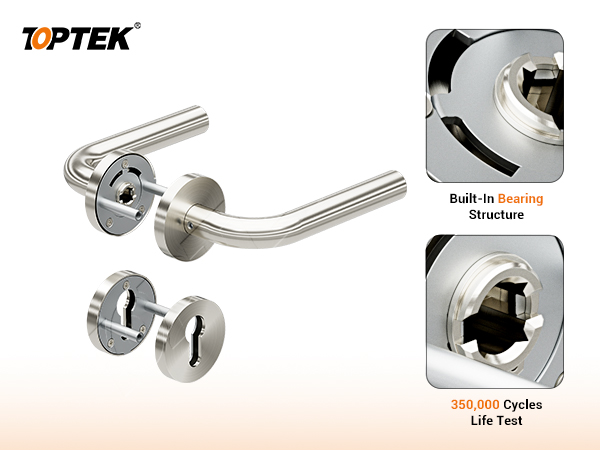
TOPTEK’s public range includes the EUG4001 spring-loaded lever handle as a concrete starting point for a project discussion. Identify the actual configuration in the quotation and request the relevant classification record. Product names, picture references and report model references should be connected in the submittal so the buyer can follow the evidence.
TOPTEK’s testing and laboratory information provides a route to discuss mechanical verification. Request the complete applicable report and configuration scope when a tested characteristic is part of the specification. Internal inspection and development testing should be identified separately from third-party evidence.
For buyers coordinating handles with locks and other components, the commercial door hardware manufacturing overview explains the wider TOPTEK product scope. Its value to the handle package is coordinated drawing, sample and production discussion. The buyer still needs a specific evidence and acceptance record for each selected configuration.
For an initial selection review, send one representative door detail, the intended use and the requested classification. Ask TOPTEK to identify a candidate assembly and the documents needed for comparison before committing the full door schedule.
RFQ checklist and purchase acceptance
A useful RFQ separates mandatory requirements from preferences. This allows the supplier to flag a mismatch instead of silently choosing a similar-looking item. Include the following information and ask for a line-by-line response.
- Project market, opening use, users and foreseeable rough handling.
- Required category of use and the remaining classification requirements.
- Lock function, door thickness, spindle and fixing arrangement.
- Finish, cleaning exposure and visual reference.
- Fire or escape assembly conditions where applicable.
- Sample quantity, report scope, configuration drawing and inspection records.
- Order quantities, release sequence, packaging and change-notification requirements.
Set the acceptance point before production: the technical schedule, sample configuration and supporting records should agree. Keep unresolved alternatives as separate quotation lines. That makes it possible to choose deliberately rather than discover a component substitution during installation.
Frequently asked questions
Is Grade 4 always necessary for a commercial door?
No. Select the use category from the expected frequency and treatment of the opening, then verify the remaining classification and assembly requirements. The building label alone is not enough.
Does Grade 4 mean a longer fire rating?
No. The category of use does not assign a fire-resistance duration to a door. Fire-door suitability depends on applicable assembly evidence and installation conditions.
Can two handles with the same use grade perform differently?
Yes. Other classifications, component details, finishes and installation conditions may differ. Compare the complete documented configuration rather than one grade number.
What should buyers request with a TOPTEK handle quotation?
Request the offered model, configuration drawing, complete classification, applicable evidence references, spindle and fixing details, finish, sample route and change-control conditions.
Can a supplier substitute a similar rose or spindle?
Review the change against the accepted assembly and evidence before allowing substitution. Similar appearance does not establish equivalent fit or documented performance.
What should a first selection enquiry include?
Send the project market, opening use, lock reference, door section, requested classification and any fire or escape assembly requirements. Identify which requirements are mandatory.
Request a lever handle grade review
Select the use category from the opening, compare the complete classification and confirm the fitted assembly. This sequence connects the grade to a purchasing decision that can be checked at delivery. For a formal quotation, send your handle schedule and representative door detail to ivan.he@toptekaccess.com, together with quantities and the required documents. Request an itemised configuration proposal, sample arrangement and evidence list for your project.