

TL;DR
- Survey every opening and record its current hardware before grouping work into phases.
- Separate the physical cylinder reference, door identifier and key-system symbol.
- Test a representative pilot before releasing the next installation batch.
- Plan access during the overlap period, including out-of-hours and emergency access.
- Reconcile installed cylinders, issued keys, removed components and exceptions after each phase.
Quick Answer
A commercial door cylinder changeover plan should define what changes at each opening, who retains access during the work and how completion is accepted. Begin with a verified door survey and an approved access matrix. Assign a separate package to each installation phase, including cylinders, keys, labels, work instructions and recovery arrangements. Complete a pilot, release only checked batches, and test each installed cylinder against its intended access permissions. Finish every phase with an updated door register, controlled custody of removed hardware and an exception list. The plan should preserve the commercial door lock’s required function throughout the transition.
Survey the opening before setting the programme
A usable survey identifies the actual lock interface, not simply the visible cylinder shape. Record the door number, location, door thickness, existing lock, cylinder format, cam or tailpiece, escutcheon and relevant fixing details. Add the inside function and any restrictions on access to the room. Photographs should show enough context to distinguish otherwise similar openings.
Separate an observed defect from the proposed replacement. A rubbing door, loose fixing or misaligned strike should not be recorded as a cylinder fault without investigation. If these conditions remain, a new cylinder may feel stiff even when it is correctly supplied. Schedule repair work separately so that the replacement team can identify which openings are ready.
The TOPTEK construction cylinder range includes different formats for different lock interfaces. A shared purchasing programme does not make those formats physically interchangeable. Assign the correct format and configuration to each opening, then determine whether the required keying arrangement is supported for those selections.
Use separate codes for doors, cylinders and access permissions
One code should not carry three different meanings. The door identifier locates the opening. The product reference identifies the physical cylinder configuration. The key-system symbol identifies an access relationship within the approved system. Keep these fields separate so a change of hardware does not accidentally change who can enter.
| Register field | Purpose | Changeover control |
|---|---|---|
| Door identifier | Locate the exact opening | Match the survey, work pack and completion record |
| Existing configuration | Describe the hardware being removed | Retain enough detail for fault investigation |
| Replacement configuration | Identify the part to install | Match the checked package and approved sample |
| Key-system symbol | Express approved access relationships | Link to the controlled permission matrix |
| Phase and status | Show progress | Distinguish surveyed, released, installed and accepted |
| Exception owner | Assign unresolved work | Record action, access arrangement and next review |
Keep sensitive key information in a restricted record. Installation labels should contain only the information the installer needs to match the package to the opening. Do not place key cutting information or a building-wide access hierarchy on packaging that circulates openly through the site.
Have a second person check the proposed mapping before cylinders are prepared or shipped. A correctly manufactured cylinder assigned to the wrong room is still a serious project error. Reconciliation at the package stage is easier than investigating unexpected access after occupants return.
Choose phases around access dependencies
The best phase is a group of openings that can be changed and accepted without creating an uncontrolled access gap. A floor or department may be a useful starting point, but shared entrances, connecting routes and service rooms can cross those boundaries. Map the dependencies before choosing a calendar sequence.
Identify who must enter each zone during the work: occupants, facilities staff, cleaners, security personnel and authorised contractors. Confirm the access arrangement for evenings and weekends as well as normal hours. Where two key systems overlap, give the affected users clear instructions about which credential operates which opening.
A simple planning example is a building with a shared entrance and two office wings. Replacing one wing first may be practical if its users can still pass through the shared entrance. It becomes impractical if the new keys are issued without addressing that entrance. Use an access-path review to identify the shared door before the work starts.
Plan recovery as a specific action, not a promise to “put the old cylinder back”. Reinstallation may be unsuitable if the old system is compromised, parts are damaged or the change has altered the lock arrangement. Agree an acceptable temporary access method and name the person who can authorise it.
Complete a pilot and release checked work packs
A pilot should include the difficult interfaces, not only the easiest office door. Select representative formats, unusual trim, different functions and any opening with restricted work access. Confirm fit, operation, package labelling and the time needed for safe completion. Record what the pilot changes in the installation method.
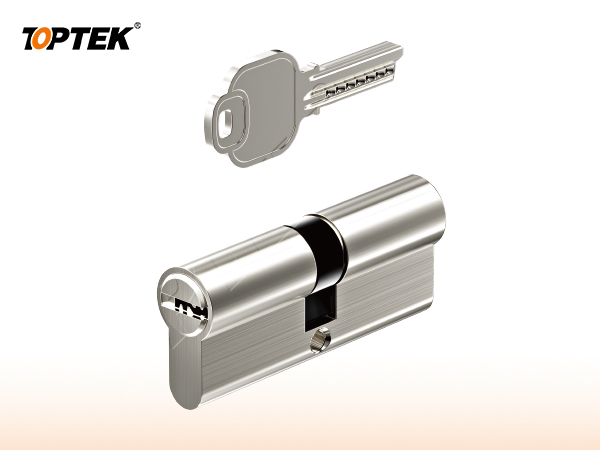
For a Euro profile candidate such as TOPTEK EPCHK7P, verify the ordered dimensions and function against the surveyed lock and trim. The model reference alone does not establish that every available variation fits the opening. Keep the accepted configuration in the work pack.
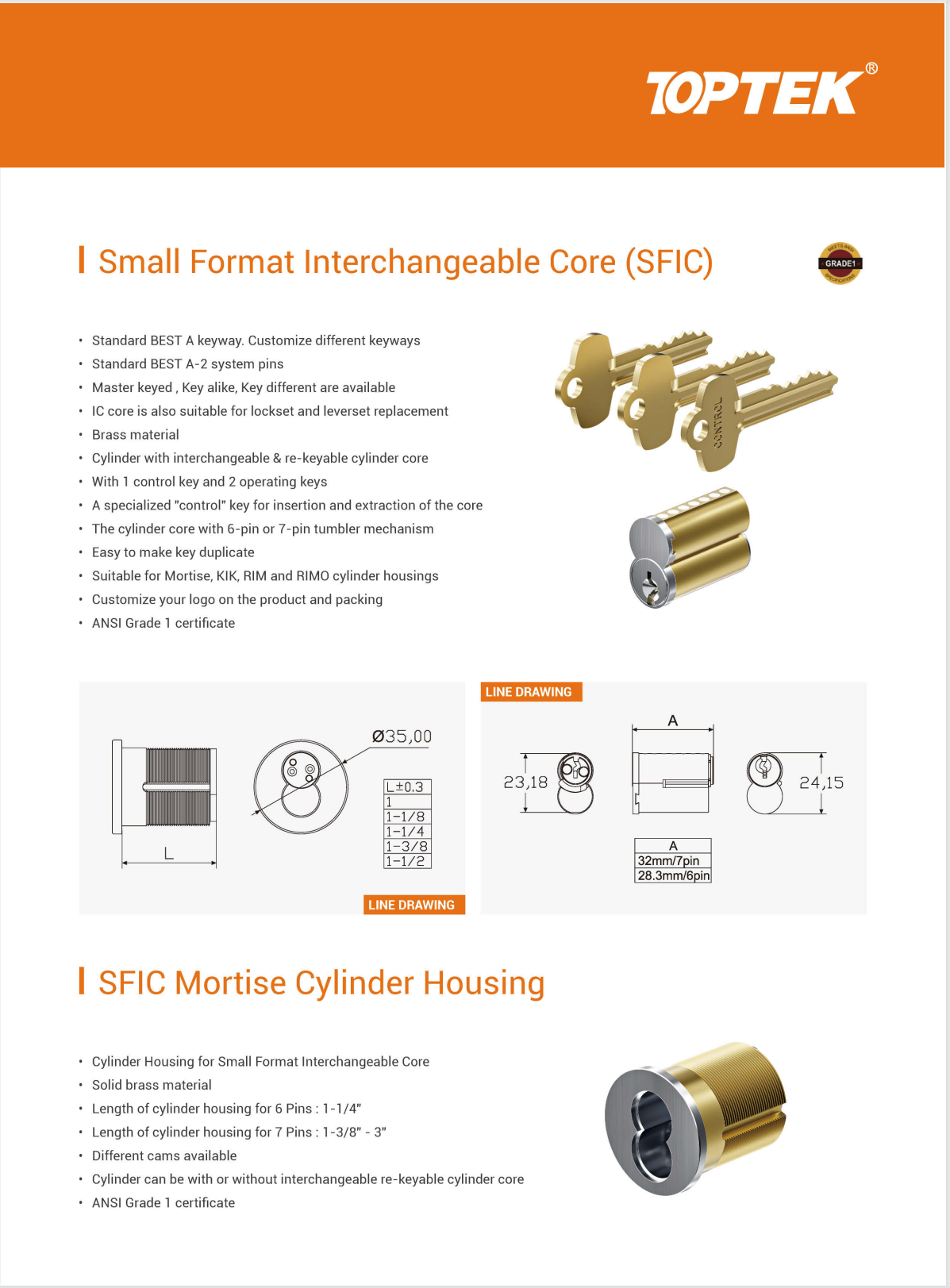
Different cylinder architectures also change the work method. Allegion’s explanation of conventional and interchangeable-core cylinders illustrates why removal procedures differ. It describes conventional-cylinder disassembly and control-key removal of compatible cores. Those are architecture examples, not a compatibility statement for TOPTEK or a reason to use another manufacturer’s procedure on an unidentified product.
Release a phase only when its quantities, labels, keys and instructions are checked. Keep spares identified separately from allocated units. An installer should not have to choose an apparently similar spare on site without confirming its mechanical configuration and keying assignment.
Install and accept each opening in a controlled sequence
Confirm the door identifier before removing hardware. Establish authorised access for the work area and retain the opening in a controlled condition. The installer should follow the selected lock and cylinder instructions, preserve required fixings and stop if the surveyed arrangement differs from the actual opening.
- Match the door, replacement package and authorised work instruction.
- Inspect the lock interface and preparation after removing the existing cylinder.
- Fit the specified replacement without forcing the cam, tailpiece or retaining parts.
- Check intended operation with the door open before testing the closed opening.
- Verify authorised keys and agreed non-access checks against the permission matrix.
- Confirm the required inside function and normal latching operation.
- Record completion, exceptions, key issue and custody of removed components.
Acceptance should distinguish physical installation from permission testing. A key turning freely does not prove that the access hierarchy is correct. Conversely, the right keying relationship does not prove that the installed cylinder is aligned or that the lock functions properly with the door closed.
When an opening fails, contain the problem locally. Record the symptom, door condition, fitted configuration and test result. Do not silently exchange it with another room’s cylinder. That can conceal the initial fault while creating a second, less visible access error.
Control the overlap period and close exceptions
The temporary coexistence of old and new keys needs an end date and an owner. Maintain a current list of openings remaining on the old system. Issue temporary access only through the agreed authority, and record the users affected by each change. Avoid informal key sharing as a substitute for a transition plan.
Removed cylinders and keys need controlled custody. Record whether each item is retained for an authorised purpose, returned to the owner or disposed of under the agreed security process. Do not leave removed components in an open installer box or mix them with accepted replacement stock.
After each phase, reconcile four things: what was issued to the installer, what was fitted, what was returned and what remains unresolved. A difference in counts is a prompt for investigation. It should not be cleared by changing the register to match an unverified assumption.
Close the programme only after the remaining exceptions have an accepted resolution. Deliver the final door register and key records to the authorised owner, with the agreed service information. Retain a controlled history of changes so future replacements do not depend on an installer’s memory.
Why TOPTEK for a coordinated cylinder programme?
TOPTEK provides project cylinder formats and customisation options that can be discussed against a door register. The commercial lock manufacturing overview gives the wider production context. The practical starting point is a verified schedule and a sample review, with the supplied configuration and keying scope confirmed in writing.
TOPTEK’s quality management information supports discussion of identification and inspection records. Ask how your order will distinguish phase, configuration, keying symbol and quantity. Quality controls are most useful when they can be connected to the package that arrives at a specific opening.
The construction master key cylinder supplier guide provides further procurement context. For an initial changeover review, send an anonymised sample of the door register and describe the access overlap. Ask TOPTEK to identify candidate configurations, sample needs and information gaps without circulating sensitive key data broadly.
RFQ checklist for phased cylinder replacement
- Project market, site access windows, phase dates and responsible contacts.
- Verified door register with lock formats, configurations and quantities.
- Controlled access matrix and authority for preparing or changing keying instructions.
- Representative pilot openings and acceptance method.
- Package labels, spare allocation and delivery split.
- Key quantities, approved recipients and custody requirements.
- Exception handling, recovery method and removed-hardware instructions.
- Required final records and arrangements for future replacement orders.
Keep installation dates separate from acceptance dates. A delivery programme can be met while the building still has unresolved access problems. The quotation should show what the supplier provides and which on-site responsibilities belong to the owner’s installer or security team.
Frequently asked questions
Can a cylinder changeover be completed in phases?
Yes, if each phase preserves the required access paths and has checked hardware, key issue, testing and exception controls. Shared entrances and service rooms need particular attention.
Should the door number and key-system symbol be identical?
Keep them as separate fields. The door number identifies a location, while the key-system symbol represents an access relationship. Separating them reduces assignment errors.
Is a pilot necessary when the cylinders look the same?
A representative pilot checks actual fit, lock function, labelling and the installation method. Similar appearance does not establish the same cam, tailpiece, dimensions or keying arrangement.
Can the old cylinder always be used as a fallback?
No. Its condition, security status and compatibility must permit reuse. Agree the recovery arrangement before work and identify who can authorise temporary access.
What should TOPTEK receive for a first quotation?
Provide an anonymised door register, configuration requirements, phase quantities, keying scope, sample needs and delivery sequence. Transfer sensitive key information through an agreed controlled channel.
When is a phase complete?
A phase is complete when the installed openings pass the agreed mechanical and access checks, key issue and removed hardware are reconciled, and any exceptions have an accepted resolution.
Request a cylinder changeover quotation
A successful changeover leaves every opening with a known configuration and every authorised user with a clear access route. Use the survey, phase release and acceptance records as one continuous process. Send your replacement schedule to ivan.he@toptekaccess.com and request an itemised cylinder proposal, pilot sample plan and delivery split for the agreed phases.