


TL;DR
- Locate the noise before deciding that a hinge needs lubrication.
- Check bearing construction and the exact maintenance instructions before applying a product.
- Record rubbing, movement and fixing condition separately from the sound.
- Choose replacement hardware by its complete configuration, then retest the installed door.
Quick Answer
Commercial door hinge squeaking should be investigated by observing when and where the sound occurs, identifying the hinge and checking the complete opening. A noise near the hinge side can also involve rubbing surfaces, seals, a closer or other hardware. Inspect for movement, contamination and misalignment without dismantling an unsupported door. Use lubrication only where the exact hinge instructions permit it, with the specified material and method. If noise accompanies damaged parts, excessive play or unreliable door operation, arrange a competent inspection and a configuration-specific repair or replacement.
This guide helps facilities teams and hardware buyers prepare a useful service record. The TOPTEK hinges and door power transfer range includes different mechanical and electrical configurations. Identify the installed product before applying a service method intended for another hinge type.
Record when the sound occurs
Observe a controlled opening and closing cycle under normal site procedures. Note whether the sound occurs at the start of movement, at a repeatable angle, near the final closing position or throughout travel. Record whether it occurs in both directions. A brief recording can help the service technician, especially when the fault disappears during an inspection visit.
Describe the sound without turning the description into a diagnosis. A squeak, scrape, click or grinding sound can point to different contacts, but a phone recording cannot establish bearing condition or structural adequacy. Include a view of the door and frame so the technician can relate the sound to movement and visible gaps.
Record recent changes: decorating, cleaning, new seals, closer adjustment, hardware replacement or a change in traffic. Those events are useful context, not proof of causation. If several openings were serviced together, identify which developed the noise and which remained normal. This comparison helps narrow the investigation without assuming every hinge from a batch has the same defect.
Locate the contact before changing anything
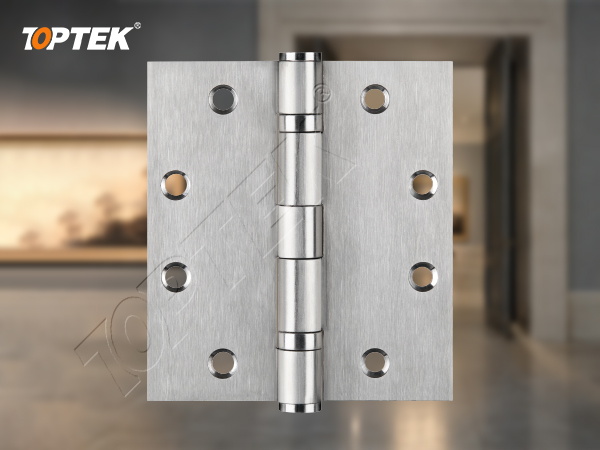
Inspect accessible surfaces for fresh rubbing marks, displaced debris, paint bridging moving parts and visible movement around fixings. Observe the door gaps and whether the leaf meets the frame evenly. Keep fingers clear of pinch points and do not remove pins, loosen supporting fixings or lift the door as an informal diagnostic step.
A noise that appears near final closure may involve a seal, latch or contact with the frame. Noise during a wider part of travel may require inspection of hinges, closer linkages or other moving interfaces. Let a qualified technician isolate components where necessary, following the relevant installation and service instructions.
The commercial door hinge tolerance guide provides context for recording alignment and fit. Use measurements against the applicable door and hinge drawings. There is no single visible gap or amount of movement that can establish acceptance for every commercial door assembly.
| Observation | Information to collect | Next review |
|---|---|---|
| Noise at a repeatable angle | Direction, angle range and visible contact | Inspect moving interfaces at that position |
| Noise after decorating | Paint, masking residue and work date | Check contamination and permitted cleaning |
| Movement around a leaf | Fixing location and supporting material | Review attachment and reinforcement |
| Door rubbing the frame | Contact location and gap measurements | Check alignment and door preparation |
| Noise with poor closing | Closing behaviour and other hardware | Assess the complete opening before release |
Identify the bearing and maintenance requirements
A hinge description such as ball bearing, plain bearing or maintenance-free affects the questions to ask, but it is not a complete service instruction. Find the product reference, bearing construction and current care document. Check whether the manufacturer permits lubrication, identifies service points or requires replacement when a fault develops.
For a clear example of why universal oiling advice is unreliable, SIMONSWERK’s technical guidance states that its maintenance-free slide bearings must not receive oil or lubricant. That instruction concerns the specified SIMONSWERK construction. It does not establish the bearing material or maintenance method of a TOPTEK hinge; it demonstrates why the exact product instructions matter.
Do not interpret a temporary reduction in sound after spraying as proof that lubrication was the correct repair. The original rubbing, damaged part or attachment problem may remain. If the hinge cannot be identified, ask the supplier for identification support before applying another product. Preserve photographs and any original packaging or order reference.
Control cleaning and lubrication as separate tasks
Cleaning removes a deposit from a defined area. Lubrication changes conditions at a moving interface. Confirm the permitted method for each rather than using one aerosol as a universal treatment. Products can also reach nearby paint, seals, flooring or electrical parts, so include those materials in the service review.
Where lubrication is explicitly permitted, follow the manufacturer’s specified lubricant, application points, amount and finishing procedure. Record the product used and remove excess only as instructed. Do not mix products because their names sound similar, and do not substitute a penetrant, cleaner or corrosion treatment for a specified lubricant without approval.
Where contamination is suspected, determine how it can be removed without disturbing the bearing or damaging the finish. Painted-over moving interfaces and hardened deposits may need a controlled repair rather than surface wiping. Leave dismantling and door support to competent personnel with the correct method and equipment.
An electrified hinge needs additional care around its conductors and connections. A mechanical noise investigation does not authorise pulling wires or removing a hinge pin. Identify whether the product carries power or signals and follow the appropriate isolation and service procedure before any work that could affect those circuits.
Decide whether the opening needs repair or replacement
Review noise together with function. A door that moves normally but produces a new sound requires investigation; a door with visible damage, unstable attachment or impaired movement may require prompt restriction and competent assessment under the site’s procedures. Do not keep cycling a door that appears unsafe simply to obtain a better recording.
The repair decision should address the identified condition. Correcting attachment or alignment may require work on the frame, reinforcement or preparation as well as the hinge. Replacing only the noisy hinge without reviewing the surrounding opening can leave the cause unchanged. Conversely, replacing the whole set without a diagnosis can obscure useful evidence.
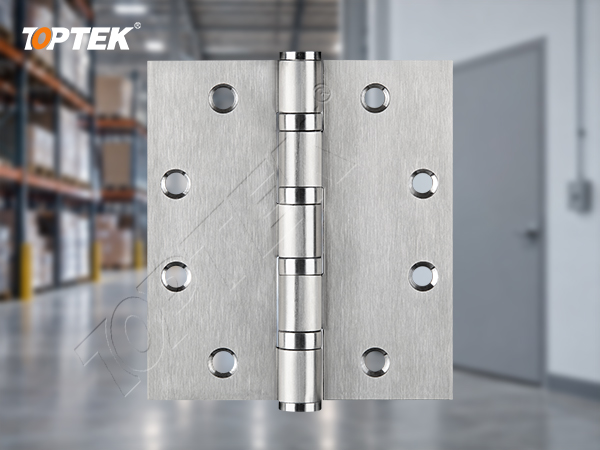
For a replacement request, record leaf height and width, thickness, hole pattern, corner shape, pin arrangement and finish. Include the door construction, weight information where available, hinge quantity and the current installation. Do not assume that changing from a 2BB to a 4BB description preserves the same mortise preparation or resolves the original noise.
For a fire-resisting or other specially specified opening, obtain the applicable assembly and maintenance requirements before changing hardware. A catalogue badge or a similar-looking hinge is not a substitute for the evidence required by that door configuration. Record the proposed change for the responsible project reviewer.
Retest and keep a useful service record
After authorised work, repeat the same observation sequence used at the start. Check the sound, visible contacts, attachment and intended door movement. Verify closing and latching where those functions apply, using the appropriate acceptance procedure. A quiet hinge alone does not demonstrate that the opening is ready for use.
Record the action taken and what changed. Include parts replaced, adjustment details, approved care products and the person responsible for acceptance. Retain the removed part with its door reference when investigation or supplier review is needed. Avoid mixing components from several openings into an unlabelled return box.
Arrange follow-up according to the product instructions, usage and observed condition. If the noise returns, compare the new observations with the earlier record instead of repeating the same treatment automatically. A repeatable fault pattern is more useful to the supplier than a sequence of undocumented sprays.
TOPTEK product scope and common ordering errors
TOPTEK’s catalogue separates full-mortise 2BB and 4BB hinges from electric variants. Its dimensional tables also distinguish leaf thicknesses and sizes. This makes the complete configuration important when a service enquiry becomes a replacement order. The full-mortise 4BB product page is one reference for that review.
Why TOPTEK? A buyer can discuss hinge dimensions, bearing configuration, finish and the surrounding door hardware together. Request the exact drawing and applicable maintenance information through the TOPTEK quality management enquiry. Keep model-specific performance evidence separate from general catalogue descriptions.
Common errors are ordering by photograph alone, treating bearing count as a load rating, copying a lubricant from another brand and overlooking altered door preparation. Other avoidable risks include removing a retained pin without identifying its design and replacing an electrical hinge with a mechanically similar non-electrical part. Each substitution needs review against the actual opening.
Buyer checklist and service RFQ
For an initial review, send a short recording, clear photographs and the order or model reference. State whether the door still operates normally. For a formal commercial door hardware enquiry, provide:
- Door number, door and frame construction, available weight data and hinge quantity.
- Hinge model, dimensions, thickness, fixing pattern, pin design and finish.
- Noise timing, movement direction, visible contact and recent site changes.
- Previous cleaning or lubrication products and the applicable service instructions.
- Any electrical transfer function and the relevant circuit documentation.
- Required evidence, sample quantity and the person approving the repair.
Ask the supplier to identify missing information before quoting an equivalent part. Keep the enquiry focused on the fault and configuration rather than demanding a “silent hinge” without defining the installation. Agree the acceptance observations that will be repeated after the work.
Frequently asked questions
Does commercial door hinge squeaking always mean the hinge needs oil?
No. Locate the noise and identify the hinge first. Rubbing, contamination, attachment problems or other hardware may need a different response.
Can a maintenance-free hinge be lubricated?
Only follow the exact product instructions. Some maintenance-free bearing designs expressly prohibit oil or lubricant.
Does a temporary reduction in noise prove the repair worked?
No. Recheck the identified cause, door movement, attachment and required closing or latching functions before accepting the work.
Can any 4BB hinge replace a noisy 2BB hinge?
No. Confirm dimensions, leaf thickness, preparation, fixing, pin arrangement, load suitability and any electrical or assembly requirements.
What evidence helps a supplier assess an intermittent squeak?
Provide a recording tied to door movement, clear photographs, product references, recent changes and a record of previous service actions.
Request a configuration-specific hinge review
A useful noise investigation moves from observation to product identification, controlled service and a repeat check. Keep the bearing instructions and complete door condition central to the decision. Avoid choosing a lubricant or replacement from sound alone.
Email ivan.he@toptekaccess.com with the hinge reference, door details, observations and required quantity. Request a drawing-based replacement assessment and the applicable care documents. TOPTEK is your Commercial Door Hardware Reliability Solution.