

CE Passage Latch vs Deadbolt Mortise Lock: Which Function Fits the Door?
TL;DR
Use a passage latch when the door must stay closed by a spring latch and open freely by lever without a separate security deadbolt. Use a single deadbolt when the project needs deliberate key or thumbturn locking and does not require automatic latching from that lockcase. Confirm the door closer, handle, cylinder, strike and applicable doorset requirements before ordering.
Start with the EN 12209 / CE Mortise Lock product hub, then use this narrower guide to define the required function and approval evidence.
Quick Answer
The functional test is simple: if the lock must catch automatically when the door closes, specify a latch. If the user must deliberately project a solid bolt for locking, specify a deadbolt. Some openings need both functions in one sash lock; do not force a passage latch or single deadbolt to do both jobs.
Start with closing versus locking
A passage latch and a single deadbolt answer different door questions. The latch is spring-loaded and holds the door closed after it meets the frame. The deadbolt is deliberately projected or retracted by a cylinder or thumbturn and provides a solid locking point.
The buyer should decide whether the requirement is “keep closed,” “lock securely,” or both. If both are required in one lockcase, a latch-only passage lock or deadbolt-only case may be the wrong function; review a sash or other combined configuration instead.
How the passage latch operates
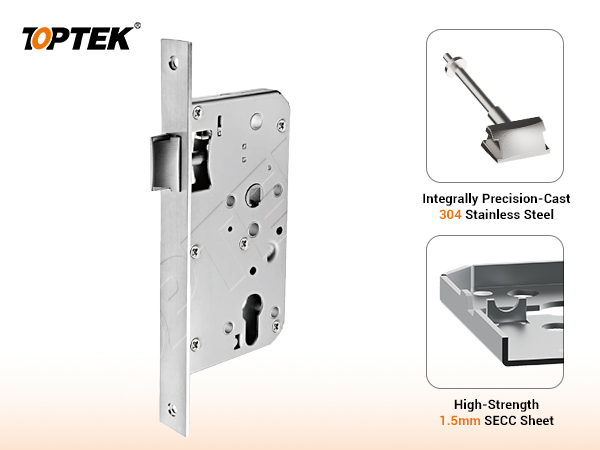
TOPTEK’s EN function material describes the passage mortise latch as a latch-only mechanical case. The lever handle turns the follower and retracts the spring-loaded bevelled latch. When released, the latch returns and engages the strike as the door closes.
This function suits internal passage doors where routine movement is expected and a separate deadbolt is unnecessary. It still requires correct handing or reversible-latch setup, follower size, spindle, lever return, forend and strike alignment. A latch-only case is not a security deadbolt.
How the single deadbolt operates
The single deadbolt mortise function is intended for manual locking and unlocking. The bolt is operated by a key cylinder or thumbturn and projects into the strike. Unlike a latch, it does not automatically catch merely because the door closes.
This distinction affects user behaviour and door control. A closed door can remain unlatched until the bolt is projected. Ask whether another device holds the door closed, whether a closer is fitted, and whether the project expects the deadbolt to be withdrawn before normal passage.
Do not confuse a passage latch with a sash lock
A sash mortise lock combines a latch and deadbolt in one case. Buyers sometimes specify “mortise lock” while expecting both lever passage and key locking, then order a latch-only or deadbolt-only model.
Write the required components explicitly: spring latch, deadbolt, lever follower and cylinder interface. The CE sash lock guide covers the combined choice. This article protects the separate latch-only and deadbolt-only search intentions.
| Question | Passage latch EN72LL | Single deadbolt EN72DL |
|---|---|---|
| Primary job | Hold door closed | Provide deliberate locking |
| Automatic action | Latch engages on closing | No automatic latching |
| User control | Lever retracts latch | Cylinder/thumbturn moves bolt |
| Trim focus | Lever, spindle, follower | Cylinder/turn and escutcheon |
| If both are needed | Select combined function | Select combined function |
Coordinate handles and cylinders
A passage latch normally requires compatible lever handles and spindle/follower geometry. A single deadbolt normally requires a compatible cylinder or thumbturn interface but no lever follower for that function. The trim must match the case rather than merely fit the door style.
Confirm centre lines, spindle size where present, cylinder profile, cam or turn interaction, escutcheon openings and door thickness. Do not machine lever holes for a deadbolt-only case or omit cylinder preparation from a manual locking set.
Coordinate the closer and strike
A latch relies on the door reaching the strike with enough alignment and closing force for the bevelled bolt to engage. A deadbolt relies on accurate alignment after the user closes the door and projects the bolt. Binding or preload can prevent either from working correctly.
Record door and frame material, closer, seals, gaps, strike type and adjustment limits. Do not file the strike as an informal cure for a mismatched preparation. Recheck the approved doorset instructions and responsible project requirements.
Buyer checklist before selecting the function
- State whether the door must latch automatically
- State whether deliberate key/thumbturn locking is required
- Identify whether both latch and deadbolt are needed
- Confirm lever, spindle and follower where applicable
- Confirm cylinder or thumbturn interface where applicable
- Provide door, frame, closer and strike information
- Provide backset, forend and preparation drawing
- List evidence scope and complete doorset responsibility
- Approve the identified working sample
Common mistakes and project risks
A common mistake is using a deadbolt-only lock on a door that must remain positively latched when shut. Another is buying a passage latch for a room that needs controlled locking. A third is relying on a product name while the drawing shows different openings.
These errors can trigger remachining, replacement trim, revised strikes, delayed inspections and unsafe user workarounds. Stop informal modifications when the required closing or locking behaviour is unclear. Preserve the original condition and involve the responsible door and hardware team.
TOPTEK evidence and product scope
TOPTEK’s EN material identifies the passage latch and single deadbolt functions used here. It describes lever-operated latching for passage use and cylinder/thumbturn-operated manual locking for the deadbolt case.
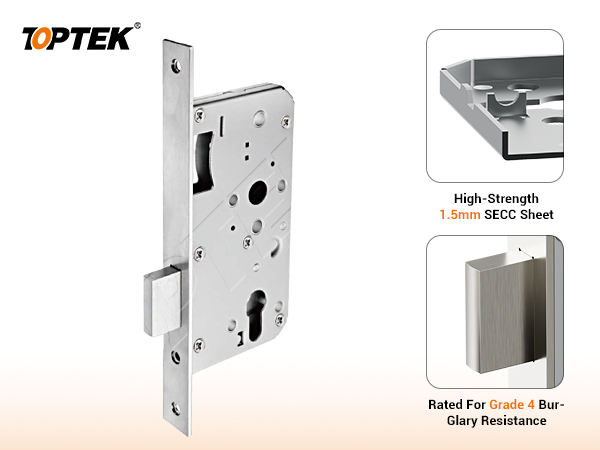
Use TOPTEK resources for current drawings and applicable evidence. This draft does not repeat unverified performance numbers visible in promotional images, and it does not treat a lockcase document as approval of the complete installed opening.
Product references and sample approval
Use the EN72LL passage reference for latch-only discussion and the EN72DL deadbolt reference for manual locking discussion. Verify that quotation, drawing, sample and delivered label cite the same version.
On the sample, demonstrate closing and latch engagement for EN72LL. For EN72DL, demonstrate full projection and retraction from every intended side. Check strike engagement without forcing the door and record the trim, cylinder and preparation revision.
RFQ checklist
Include opening number, closing/locking intent, selected latch/deadbolt/combined function, model, backset, forend, strike, follower/spindle, cylinder/turn, door thickness, hand, closer, frame preparation, finish, evidence requirements and sample acceptance sequence.
Ask the supplier to mark incompatible or missing fields. If the door needs both functions, request a combined-case proposal rather than assuming accessories can create the missing bolt. The approved drawing should control all machining dimensions.
Why TOPTEK: separate function from product family
TOPTEK can translate a general “CE mortise lock” enquiry into closing, passage and locking states. That review helps the buyer decide whether EN72LL, EN72DL or a combined function should enter the quotation.
The team can also flag mismatches between lever trim, cylinder preparation and strike geometry before sample approval. Keeping the selected function visible across documents reduces substitution risk during repeat orders.
Two-level CTA
For a first review, send the door schedule and state whether each opening must latch, lock or do both. Add photographs or drawings of existing preparation for replacement projects.
For a formal RFQ, submit model preference, full preparation, trim/cylinder interfaces, doorset requirements, evidence scope and sample plan through the TOPTEK contact page. Request a current drawing before machining.
Conclusion
A passage latch holds a door closed and opens by lever. A single deadbolt creates deliberate manual locking but does not automatically latch the door. They are not interchangeable, even when both fit a European mortise pocket.
Define the door behaviour first, then coordinate handles, cylinder, closer, strike and preparation. If the opening needs both latching and locking, select a combined function. Approve the complete identified sample and preserve the revision so later substitutions do not silently change how the door closes or secures.
Frequently asked questions
What is the key difference between a passage latch and deadbolt?
A passage latch automatically holds the closed door and retracts by lever; a deadbolt is deliberately projected or retracted for locking.
Does a deadbolt latch when the door closes?
No. A single deadbolt does not automatically latch merely because the door is closed.
Can a passage latch secure a locked room?
Not by itself. It provides latching and passage operation, not a separate security deadbolt.
What if the door needs both latching and locking?
Specify a compatible combined function such as an appropriate sash lock rather than forcing a latch-only or deadbolt-only case to perform both jobs.
What should the RFQ include?
Include the required closing/locking states, model, geometry, trim, cylinder, closer, strike, evidence and sample controls.