

CE Mortise Lock Binding After Installation: Isolate Door, Strike and Trim Problems
TL;DR
For CE mortise lock binding after installation, first record whether the symptom occurs with the door open, closed or both. Then separate door/strike contact from trim, spindle, cylinder and lockcase seating. Do not force the key, file parts or disable an exit function to make the symptom disappear. Escalate safety-critical faults to a qualified installer.
For model-specific configurations, start with the EN 12209 / CE Mortise Lock range. This guide addresses the narrower buyer question below.
Quick Answer: where should diagnosis begin?
Begin with a controlled comparison of the same operation with the door open and then closed, only where this can be done safely. If operation changes at closure, investigate the door, frame, seals and strike interaction first. If it is stiff in both states, investigate the assembled interfaces and case seating as well. These checks narrow the evidence; they do not certify a repair or prove which part is defective.
Define the symptom before selecting a replacement
The phrase “the lock is sticking” can describe several different events: the lever may resist movement, the latch may drag, the key may be difficult to turn, or the deadbolt may contact the strike pocket. Ask the installer to name the action and the exact moment when resistance appears. Record whether the symptom started immediately after fitting or after another door component was changed.
Keep the door in a safe condition and follow site procedures. A fire door or escape route must not be left unsecured, wedged or with its protective function defeated for convenience. If safe opening or exit cannot be assured, stop the informal checks and involve the responsible installer or building team. This guide is a purchasing and evidence-collection aid, not permission to alter a life-safety assembly.
Compare open-door and closed-door operation
A door that operates smoothly while open but becomes stiff when closed gives an important clue. The closed position introduces contact with the frame, strike and seals. Inspect the recorded door position, visible contact marks and alignment before assuming the internal mechanism has failed. Ask whether the symptom changes when the door is gently brought to its normal closed position without extra pushing or pulling. Do not apply force as a diagnostic shortcut.
If the same resistance is present while open, closure contact is unlikely to be the only explanation. The installed trim, spindle, cylinder, fixings and case seating remain part of the mechanical path. Several issues may coexist: correcting a strike offset does not excuse an incorrectly engaged spindle. Change only one authorised variable at a time and record the result, so the final explanation remains traceable.
| Observation | First area to investigate | Evidence to record |
|---|---|---|
| Smooth open; stiff closed | Door position, seals and strike contact | Open/closed comparison and contact photographs |
| Lever stiff in both states | Trim, spindle, follower and case seating | Assembly references and fitting sequence |
| Key action stiff; lever normal | Cylinder interface or bolt load | Affected key operation and door state |
| Symptom appears after final fixing | Seating, alignment and specified fixings | What changed during the last fitting step |
| Intermittent resistance | Repeatable door state or component interaction | Video of full sequence without forcing |
Separate latch contact from deadbolt contact
A sash lock has more than one moving element to describe. A latch can touch the strike as the door closes, while the deadbolt can encounter a different restriction when projected. Reporting only “strike problem” loses that distinction. Record which opening is involved, whether the bolt fully clears during operation, and whether contact appears at the lip, opening or pocket behind the strike.
The correct remedy depends on the approved door and frame detail. Do not enlarge strike openings, remove material or bend components simply because that reduces resistance. Such changes can affect engagement and the approved assembly. For the broader system relationship, review the complete European commercial-door hardware guide alongside the exact installation instructions.
Check trim and spindle alignment without masking the fault
The furniture can influence how the follower is loaded. A misaligned rose or plate, an unsuitable spindle arrangement or interference at an operating opening can introduce resistance even when the case works separately. The installer should compare the supplied parts with the configuration drawing and confirm that the assembly follows the prescribed sequence. Record whether resistance first appeared when a particular component was added.
Do not leave screws loose as the final solution. If loosening a component changes the symptom during an authorised inspection, that is evidence of an assembly interaction, not an accepted installation state. Resolve the alignment, component or fixing issue and restore the specified installation. Also confirm that the selected function uses the intended spindle arrangement; a similar external appearance does not establish functional equivalence.
Review cylinder fit and lockcase seating as separate checks
Key resistance can arise at a cylinder interface or from a loaded bolt. The open-versus-closed comparison helps distinguish those situations, but it does not replace checking the specified cylinder and cam relationship. Record the cylinder reference, fixing and function. Do not swap in an unrelated cylinder and treat a temporary improvement as approval of the replacement configuration.
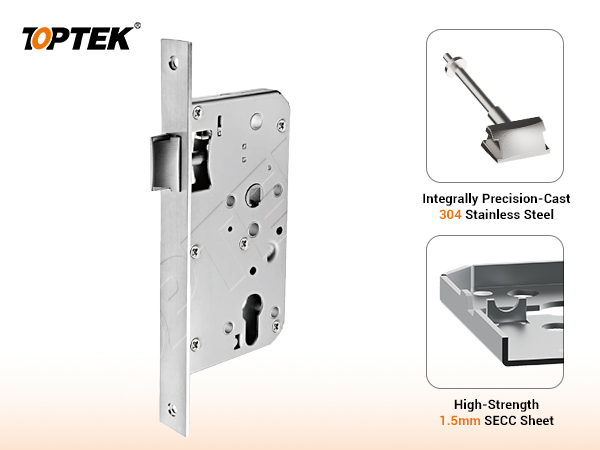
A lockcase also needs the intended pocket and seating. Debris or interference can prevent the case from sitting as designed; tightening the forend should not be used to pull an unsuitable assembly into position. TOPTEK’s EN product information describes a dust-cover design intended to help keep debris away from the mechanism. That feature does not make a contaminated or incorrectly prepared pocket acceptable. Keep the installation area clean and use the model-specific drawing.
Buyer checklist: collect a useful fault record
- Identify the lock model, function and drawing revision.
- State whether the affected action is lever, latch, key or deadbolt movement.
- Record open-door and closed-door behaviour separately.
- List cylinder, spindle, furniture and fixing references.
- Photograph the door edge, both faces, strike and visible contact marks.
- Describe fitting changes in sequence, including when resistance first appeared.
- Keep removed parts identified and do not modify them before technical review.
Common mistakes and project risks
Replacing a lockcase before recording the symptom can discard the most useful evidence. If the same door preparation or trim remains, the replacement may reproduce the problem. Another mistake is changing several parts at once: the assembly may feel better, but nobody knows which interface was responsible. A controlled record helps the supplier propose a specific next check rather than sending more parts without a diagnosis.
Avoid treating CE wording as a universal compatibility assurance. This article does not interpret a certification mark or claim a particular fire or escape approval. Any proposed modification must remain within the approved configuration and the responsible project team’s requirements. A working bench sample and a suitable installed doorset answer different questions; neither should be substituted for the other.
TOPTEK evidence and product scope
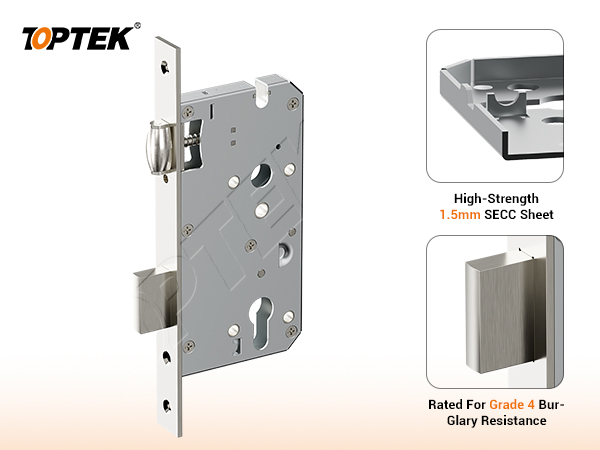
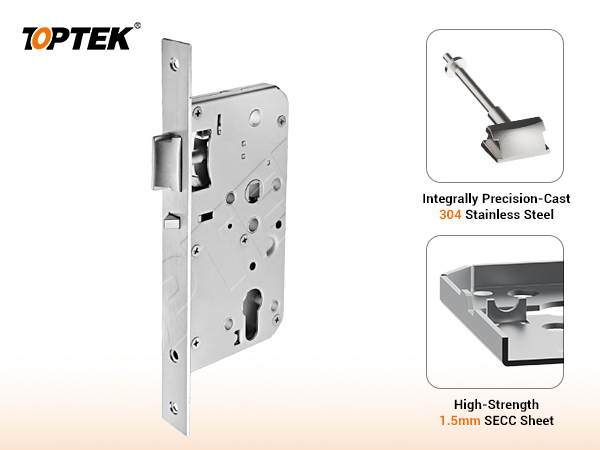
The TOPTEK EN mortise lock range includes different operating functions. Start a sash-lock enquiry with the EN72SL product reference when it matches the installed model, rather than using a generic photograph. The product information also describes a one-piece stainless-steel latch design. That is a construction detail, not evidence that installation-induced resistance is impossible.
Use TOPTEK technical resources to request the matching installation drawing and model-specific evidence. Keep internal tests separate from third-party reports and certifications. This troubleshooting guide does not extend any test result to other trims, cylinders or door constructions. The useful result is a clearly identified assembly and a fault record that engineering can evaluate.
RFQ checklist: if a replacement or matched set is required
- Send the fault record before requesting a replacement model.
- State whether the original case, cylinder and trim must remain or can change.
- Supply door and frame details plus the existing preparation drawing.
- Identify the required operating function and project evidence requirements.
- Ask for a matched component list and any drawing differences.
- Agree sample fit checks, acceptance responsibility and the procedure for unresolved symptoms.
Why TOPTEK: turn symptoms into a controlled review
A useful supplier response begins with a repeatable description, not an assumption that every stiff lock has the same cause. TOPTEK’s engineering and quality overview provides context for a model-based technical conversation. Request a written response that identifies the proposed assembly and the observations still needed.
TOPTEK covers ANSI, EN and AS mortise locks, panic exit devices, multi-point locking systems, electronic locks and access control, lever handles, construction cylinders, and hinges with door power transfer. This page is limited to installed EN/CE mortise-lock symptoms. TOPTEK is your Commercial Door Hardware Reliability Solution. TOPTEK: Smart Design. Strong Security.
Conclusion: diagnose the interaction before ordering parts
A useful diagnosis separates what happens during closure from what happens inside the assembled hardware. Preserve the evidence, avoid force and unapproved alterations, and ask the responsible installer to follow the exact model instructions.
For initial technical review, send the symptom sequence and photographs to ivan.he@toptekaccess.com. For a replacement or matched-set quotation, add the door details, component references and acceptance checks above. If the door’s safe operation is uncertain, arrange local qualified assistance before continuing.
Frequently asked questions
Why does a mortice lock work with the door open but bind when closed?
That pattern points first toward door, frame, seal or strike interaction. It is an observation to investigate, not proof that the lockcase has no fault.
Should I force the key when the lock is stiff?
No. Stop forcing the mechanism and arrange inspection. Record whether the resistance occurs with the door open or closed and during which operation.
Can overtightened trim cause binding?
Assembly pressure or misalignment can contribute to resistance. An authorised installer should check the specified trim, spindle, fixings and installation instructions rather than leaving screws loose.
Does CE marking prove that any trim will work with the lock?
No. Marking does not establish compatibility with arbitrary cylinders, spindles, furniture or door preparations. Verify the exact configured assembly.
What information helps TOPTEK investigate an installation issue?
Provide the model and revision, door details, function, symptom sequence, open-door and closed-door observations, photographs, component references and any changes made during fitting.