

Australian Mortice Lock Backset: Choosing 60 mm, 89 mm or 127 mm
TL;DR
Choose an Australian mortice lock backset from the door drawing, not a rule that a larger number is better. The 60, 89 and 127 mm options move the operating centreline and must be assessed with the case envelope, usable stile space, furniture and existing holes. TOPTEK identifies these as family options; exact configuration availability requires confirmation.
For model-specific configurations, start with the AS 4145 Mortise Lock range. This guide addresses the narrower buyer question below.
Quick Answer: how do you choose between the three sizes?
For a replacement, begin with the measured existing backset and the manufacturer’s drawing datum. For a new door, coordinate the preferred lever position with usable stile space and the full lockcase pocket. Then confirm the exact function, trim, cylinder and model drawing. Matching one backset number does not prove that two mortice locks are interchangeable.
What the backset dimension actually tells the buyer
Backset is a horizontal relationship between the forend reference face and the operating centreline identified on the lock drawing, commonly the spindle centreline. It helps place the lever on the door face. Always use the specified datum: an exposed decorative edge, a rebate or an assumed surface line can give the wrong measurement. A marked-up drawing is more reliable than an unlabelled dimension in an email.
Backset is not the case depth, centre distance, door thickness or faceplate width. Those are separate dimensions with separate jobs. A lock with the desired lever position can still have a case envelope that conflicts with the door construction. Likewise, a case that fits inside the stile can put the lever at the wrong location for the existing holes. Record the operating geometry and the body envelope together.
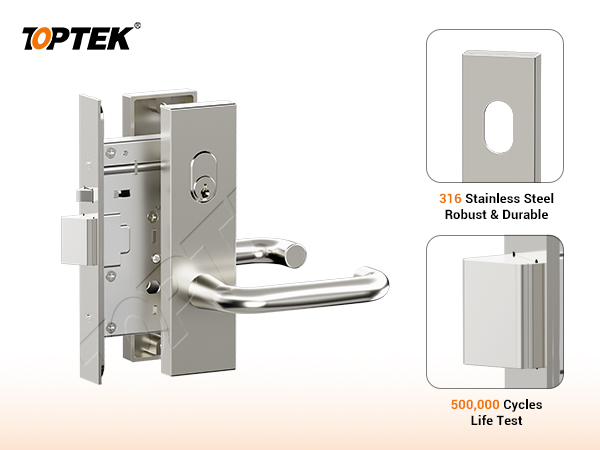
Compare 60, 89 and 127 mm without creating a false ranking
A 60 mm backset places the specified operating centreline closer to the forend than an 89 or 127 mm alternative. That may align with a particular door preparation, but it does not mean every narrow-looking stile can accept the associated case. The complete pocket dimensions and the usable internal space still decide whether that configuration is possible.
An 89 or 127 mm backset moves the operating point farther inward. A project may need that position for its door design or established preparation. Before selecting it, check how the body, fixings and furniture interact with rails, glazing and reinforcement. The larger dimension is a location choice, not a declaration of higher security, stronger construction or better performance.
| Option | Main comparison | What must still be confirmed |
|---|---|---|
| 60 mm | Closer operating centreline than 89/127 mm | Case envelope, trim, function and door construction |
| 89 mm | Operating centreline farther from the forend | Existing holes or approved new-door position |
| 127 mm | Farthest centreline among these three options | Usable internal space and complete assembly drawing |
New doors: coordinate the lever position with usable stile space
For a new door, begin with a cross-section as well as a face elevation. The face elevation shows where the lever and trim will appear. The section shows what is actually available inside the door. A nominal stile width can hide reinforcement, glazing details or other restrictions; it should not be treated as an empty rectangular cavity.
Ask the door manufacturer and hardware supplier to review the same drawing revision. Mark the chosen backset, full case outline, faceplate position and fixing routes. Then check the selected furniture against adjacent features and the intended user operation. Do not release a machining template on the strength of a catalogue backset alone. The output should be an agreed preparation for an identified configuration, not a general sketch that several suppliers interpret differently.
Replacement doors: preserve the evidence before changing the size
For an existing opening, first identify the installed lock and measure the current preparation using the correct reference face. Record the spindle position, cylinder position, faceplate recess, fixing locations and case pocket. Photograph both door faces and the edge with a scale visible. Where removal is needed, use an authorised installer and maintain the door’s required security and safe operation.
Changing from 89 to 60 mm, for example, changes an operating location. Existing lever holes do not move with the replacement case. The trim may also fail to cover previous openings or may lack sound fixing support. Even when the backset matches, compare the remaining interfaces before calling a product a direct replacement. This guide makes no unverified cross-brand interchangeability claim.
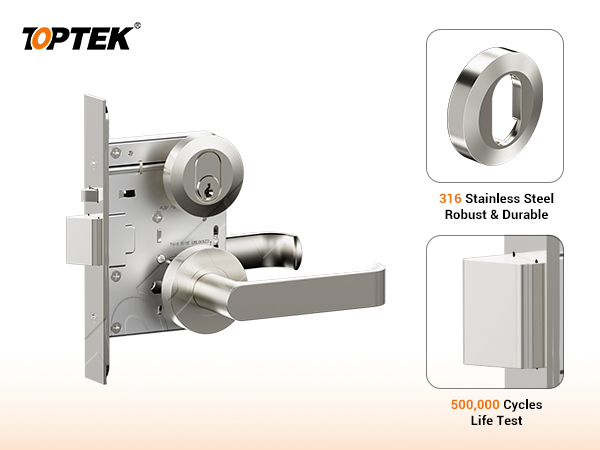
Why backset alone cannot define a complete lock order
A purchase description such as “89 mm Australian mortice lock” leaves major questions unanswered. Which function is required? What cylinder and cam arrangement is intended? Which furniture, spindle and strike are included? What door preparation is being used? These questions remain even if every bidder recognises the backset dimension.
Avoid converting a family-level option into a promise that every version is available in every size. Mechanical, motorised and solenoid-controlled configurations can have different interfaces and documentation. If a project is considering an electronic version, open a separate configuration review instead of transferring assumptions from a mechanical sample. Keep the backset comparison focused on geometry while the selected version’s other requirements are checked independently.
Buyer checklist: verify the geometry in the right order
- Identify the drawing reference face and operating centreline.
- Record the required backset in millimetres without rounding to a convenient option.
- Measure or specify the complete case pocket and usable internal stile space.
- Check faceplate, cylinder, spindle, furniture and fixing positions.
- For replacements, mark all existing holes and any required door repairs.
- Confirm the exact model, operating function and backset combination.
- Approve a representative fitted sample before freezing bulk preparation.
Common mistakes and project risks
One common mistake is treating case depth as backset. Another is assuming that a larger backset will improve the lock’s security classification. Both errors substitute an unrelated dimension for the evidence a buyer actually needs. Performance and approval depend on the documented configuration and application; the backset number alone cannot answer those questions.
A different risk appears when sales drawings, door-shop drawings and sample labels use inconsistent names. Obtain the exact quotation identifier and matching drawing before approval. Record the selected function, trim presentation and backset under that identifier. Do not silently equate similar-looking catalogue references. If a supplier changes a suffix or component during quotation, ask whether the change affects the preparation or operating sequence before accepting it.
TOPTEK scope: family options with configuration-level confirmation
TOPTEK’s internal Australian-product information identifies 60, 89 and 127 mm backset options. The Australian mortice lock product range is the appropriate starting point for a configuration enquiry. The TKAU6400RR round-rose product reference helps specify the furniture presentation, but a photograph does not establish the backset of a supplied sample.
For wider purchasing context, see the Australian-distributor mortice lock guide. Request current drawings and supporting material through TOPTEK technical resources. Ask for any claimed test or certification evidence to identify the exact model and scope. This article does not assign AS grades, fire durations or cycle-life values to the three backsets.
RFQ checklist: make backset selection quotable
- Project country, door references, quantity and new-build or replacement status.
- Requested 60, 89 or 127 mm backset, with the datum marked on a drawing.
- Door material, thickness, cross-section and usable pocket space.
- Required function, furniture layout, spindle and cylinder/cam arrangement.
- Strike and frame details plus any existing holes that must remain.
- Current drawing revision, unresolved dimensions and evidence requirements.
- Sample approval owner, inspection record and rules for component substitutions.
Why TOPTEK: connect dimensions to a controlled sample
A useful OEM discussion connects the requested dimension to an identifiable assembly. TOPTEK’s manufacturing and quality information supports that conversation, but the buying decision should still end with a model-linked drawing and a checked sample. Agree who confirms the door preparation and who releases the final configuration.
TOPTEK’s product scope includes ANSI, EN and AS mortise locks, panic exit devices, multi-point locking systems, electronic locks and access control, lever handles, construction cylinders, and hinges with door power transfer. This guide concerns Australian backset geometry only, not interchangeability across those families. TOPTEK is your Commercial Door Hardware Reliability Solution. TOPTEK: Smart Design. Strong Security.
Conclusion: select a position, then verify the complete fit
The right backset is the one that matches the intended door and assembly. Start from the drawing datum, compare the available space and keep the function and furniture attached to the decision. Do not turn a 60/89/127 mm comparison into a universal quality ranking.
For an initial geometry review, send a marked-up door section to ivan.he@toptekaccess.com. For a quotation and sample proposal, include the requested backset, exact function, trim presentation and approval checklist. Keep machining on hold until the configuration and drawing are confirmed.
Frequently asked questions
What is an Australian mortice lock backset?
It is the horizontal dimension from the lock forend reference face to the operating centreline identified on the product drawing, commonly the spindle centreline. Follow the drawing datum.
Is backset the same as case depth?
No. Backset locates an operating centreline; case depth describes the body envelope. Both dimensions are needed to check the door pocket.
Is a 127 mm backset more secure than a 60 mm backset?
Backset alone does not establish security or durability. Evaluate the exact lock configuration, door construction and applicable evidence separately.
Can I replace an 89 mm backset lock with a 60 mm version?
Not as an assumed direct swap. The operating centreline moves, so existing holes, trim, pocket and function must be reviewed before any replacement is approved.
Are all three backsets available in every TOPTEK configuration?
TOPTEK source information identifies 60, 89 and 127 mm family options. Confirm availability for the exact function, trim and lock version in the current quotation and drawing.