

ANSI Mortise Lock Trim: Escutcheon vs Sectional Rose Selection
TL;DR
Choose ANSI mortise lock trim as part of a complete working assembly. An escutcheon uses a larger plate; sectional furniture separates the lever rose from other openings. Neither appearance proves strength, security or interchangeability. Freeze the function, door preparation, spindle and fixing arrangement before approving the visual design.
For model-specific configurations, start with the ANSI Grade 1 Mortise Lock range. This guide addresses the narrower buyer question below.
Quick Answer: which trim format should you choose?
Use escutcheon trim when its verified footprint and opening layout suit the door design or an existing cosmetic footprint. Use sectional rose trim when separate components suit the architectural layout and leave enough sound material for their fixings. In both cases, approve the exact lockcase, cylinder, spindle and trim together on a representative door sample. A trim photograph is not an installation template.
Start with the operating function, not the finish
ANSI mortise lock trim is the furniture a user sees and operates, but the visible lever is only one part of the decision. Before selecting a plate shape, define what the outside lever, inside lever, key and thumbturn must do. A passage opening and a keyed office opening may share a visual family while needing different openings and components. Write that operating sequence into the door schedule rather than relying on a product photograph.
The useful purchasing question is not simply whether an escutcheon looks more substantial than a rose. It is whether the complete trim package supports the selected lock function without interference, missing parts or an unsuitable fixing pattern. If the project team changes the function after approving the trim, reopen the assembly check. A finish approval does not automatically approve a revised thumbturn or cylinder arrangement.
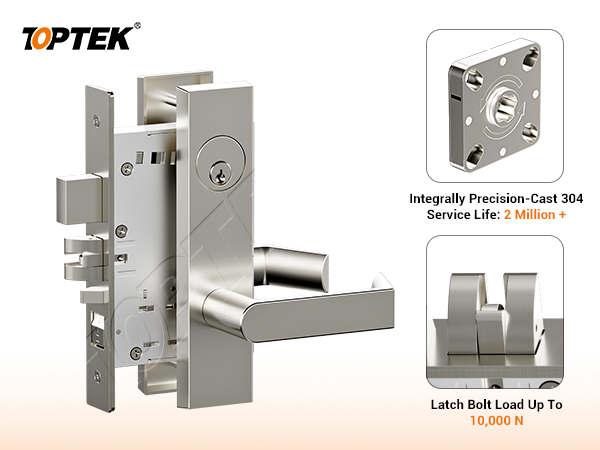
Escutcheon and sectional rose: compare the actual interfaces
An escutcheon can provide a continuous visual surface around multiple operating points. This can help coordinate a door elevation, but its length and width also have to clear glazing beads, decorative details and other hardware. On an existing door, check every old hole and mark against a dimensioned footprint. Coverage and secure attachment are separate questions.
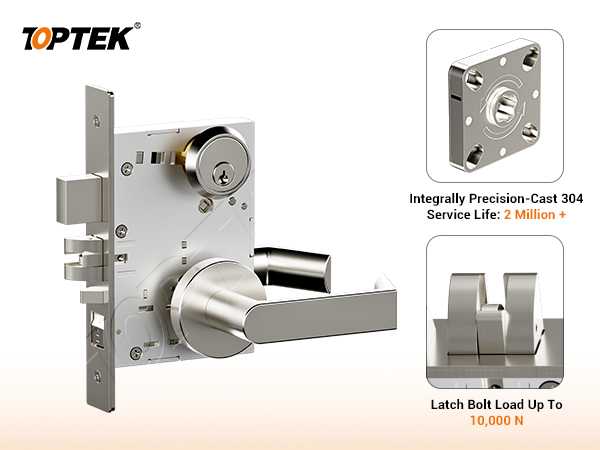
Sectional rose furniture gives the lever and other operating points separate surrounds. This changes the visible proportions and the positions where the door must support the furniture. Separate pieces do not mean fewer compatibility checks: the rose, cylinder surround and any turn still need the correct alignment. For both formats, verify how each side is fixed and whether the chosen arrangement conflicts with the lockcase or other components.
| Decision | Escutcheon check | Sectional rose check |
|---|---|---|
| Appearance | Plate footprint and all openings | Rose diameter and spacing of separate pieces |
| Existing preparation | Coverage plus sound fixing support | Exposed old holes and support at each fixing |
| Function | Correct key/turn/indicator cut-outs | Correct separate components and alignment |
| Assembly | Plate, spindle and through-fixing clearance | Rose fixing, spindle and cylinder-surround clearance |
| Approval | Complete configured sample | Complete configured sample |
Check the spindle and fixings as one mechanical path
The lever must transfer movement to the lock without binding or unreliable engagement. Record the spindle section, the required engagement at each end and the arrangement used by the selected function. Door thickness and the trim build-up affect that stack. Do not assume that a spindle taken from another assembly can be reused because it enters the follower. Its effective engagement and the assembled operating sequence still need verification.
Fixing positions deserve the same attention. A screw path that appears clear on a door elevation can intersect a case component inside the pocket. Confirm the manufacturer’s template and supplied fasteners before releasing machining information. Do not compensate for a mismatch by drilling the lockcase or substituting an arbitrary screw length. The right outcome is a documented, matched assembly, not a sample that works only after unexplained site adjustments.
Treat replacement coverage as a measured problem
For a refurbishment, photograph both faces of the door with the old furniture removed where an authorised installer can safely do so. Record the existing holes, surface damage and usable fixing areas. Overlay the proposed trim drawing at the same scale. This separates three outcomes: a clean direct fit, a cosmetic coverage solution with suitable support, or a door repair that must be resolved before new hardware is approved.
A larger plate should not become a shortcut around a damaged substrate. Equally, selecting small roses may expose marks that were hidden by the previous furniture. Get architectural acceptance of the visible result before ordering a batch. For the underlying machining review, use the ANSI mortise lock door-preparation checklist; this trim comparison does not replace the complete door template.
Buyer checklist: approve more than a colour sample
- Record inside and outside operation for every door function.
- Match door thickness and trim build-up to the specified spindle and cylinder arrangement.
- Compare all fixing positions with the case and door preparation drawings.
- Check plate or rose coverage against the actual door finish and existing holes.
- Record lever handing and clearance from adjacent door hardware.
- Approve one identified assembly and retain its drawing revision and component list.
Common mistakes and the project risks they create
Buying the lockcase and furniture under separate, incomplete descriptions can leave the assembly responsibility unclear. The case supplier may assume a particular spindle or turn; the furniture supplier may assume a different fixing layout. Avoid that gap by appointing one owner for the combined submittal and listing the interfaces that both suppliers must confirm.
Another mistake is accepting a showroom sample without recording its contents. A later bulk shipment can look similar but contain a different spindle, fastener pack or trim opening. Label the approved sample and its packaging contents. When a component changes, identify whether the change affects appearance only or the operating assembly. Never transfer a certification or performance claim from an attractive catalogue image to an unverified mixed-component lockset.
TOPTEK product scope and useful evidence
TOPTEK’s ANSI Grade 1 mortise lock range includes escutcheon and round-rose trim presentations. The TKAMRR9200 product page provides a concrete starting point for a sectional-furniture discussion. For an escutcheon project, identify TKAMEC9200 explicitly and ask for the configuration drawing rather than treating the two presentations as interchangeable sets.
The useful evidence is a model-linked package: component list, trim drawing, door preparation, operating function and any applicable test documentation with its stated scope. TOPTEK’s technical resources are a route into that discussion. Internal development tests and third-party certification are different kinds of evidence; neither should be expanded beyond the documented assembly. This guide makes no new numerical strength, cycle-life or fire-rating claim.
RFQ checklist: send an assembly request
- Project market, door references, quantities and intended operating functions.
- New or replacement door; material, thickness and preparation drawing.
- Escutcheon or sectional rose preference with marked-up footprint requirements.
- Cylinder/turn/indicator arrangement and inside/outside lever requirements.
- Spindle, fixings, handing and finish requirements, with unresolved items flagged.
- Required drawings and evidence; sample review owner and acceptance checks.
- Packaging contents, spare-component needs and revision-control expectations.
Why TOPTEK: make the approval repeatable
For a door manufacturer, hardware brand or distributor, the value of an approval is its repeatability. TOPTEK’s manufacturing and quality overview provides context for a discussion about controlled drawings and assembly consistency. Ask the team to identify the proposed parts and the checks that will carry from sample to order. A clear approval record is more useful than a broad promise that all mortise furniture will fit.
TOPTEK’s wider product scope covers ANSI, EN and AS mortise locks, panic exit devices, multi-point locking systems, electronic locks and access control, lever handles, construction cylinders, and hinges with door power-transfer solutions. This article concerns ANSI trim selection only; compatibility across those families is not implied. TOPTEK is your Commercial Door Hardware Reliability Solution. TOPTEK: Smart Design. Strong Security.
Conclusion: approve the interface before the appearance
Escutcheon and sectional rose trim are two useful layouts, not a universal quality ranking. Choose the format that works with the door, then verify the function, spindle, fixings and visible footprint as a complete assembly. That keeps the purchasing decision tied to an installable lockset.
For an early-stage review, email a door elevation and your preferred trim format to ivan.he@toptekaccess.com. For a quotation and sample plan, include the RFQ checklist above with the required configuration and approval responsibilities. Keep any unresolved dimensions clearly marked until the configuration drawing is confirmed.
Frequently asked questions
Is escutcheon trim stronger than sectional rose trim?
Appearance alone cannot establish strength. Compare the specified assembly, fixing arrangement, supporting structure and applicable evidence for the exact configuration.
Can a larger escutcheon repair damaged door preparation?
No. It may cover a cosmetic footprint, but it does not restore damaged substrate or make an unsupported fixing secure. Repair suitability must be assessed separately.
Can I reuse an existing spindle with new trim?
Only after confirming its section, engagement, length and function with both the lockcase and replacement trim. A similar-looking spindle is not proof of compatibility.
Does the same trim work with every mortise lock function?
No. Confirm the key, thumbturn, indicator and inside/outside operating requirements, then match the trim openings and components to the selected function.
What should a trim RFQ include?
Provide the door schedule, function, door thickness, preparation drawing, trim layout, finish, spindle and fixing requirements, cylinder arrangement and sample acceptance criteria.