
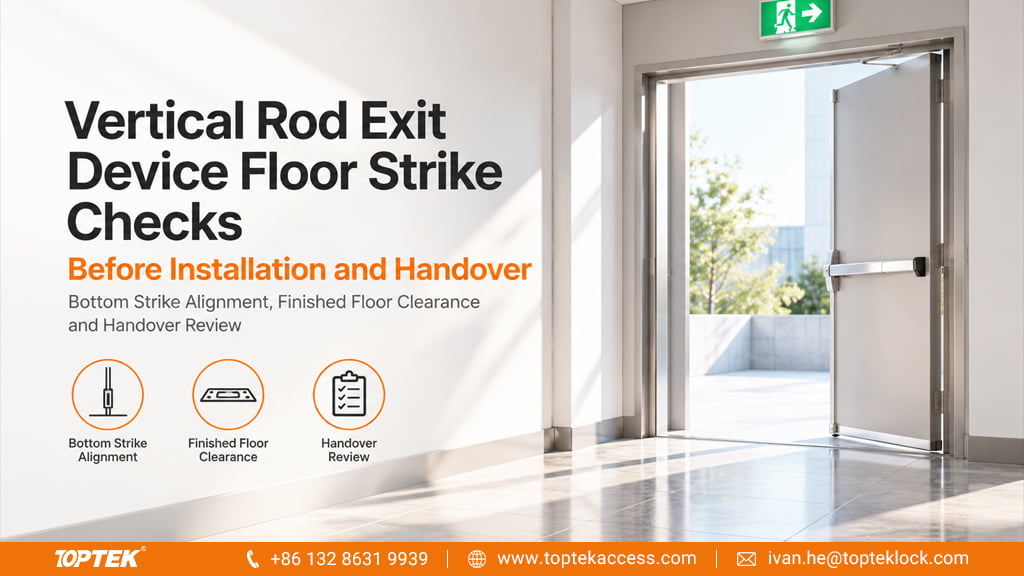

A vertical rod exit device floor strike should be selected and positioned against the finished opening, the bottom latch and the manufacturer’s installation detail. The visible hole in the floor is only one part of that relationship. Door movement, threshold construction and the latch’s released position determine whether the opening will work consistently. Buyers reviewing TOPTEK’s panic exit device range should include the floor interface in the enquiry before the hardware set is ordered.
TL;DR
- Confirm whether the specified assembly uses a bottom latch and which strike it requires.
- Use the final floor and threshold level as the installation reference.
- Check both secure engagement when closed and clear travel when released.
- Record changes to flooring, door alignment and strike fixing before handover.
- Keep any proposal to omit a bottom rod within the documented device and doorset configuration.
Quick Answer
To specify a vertical rod exit device floor strike, identify the exact bottom latch, strike part and installation template, then coordinate their location with the finished floor and closed-door position. Check that the substrate and threshold can support the prescribed fixing. During an agreed functional inspection, the latch must release clear of the floor and engage correctly when the door closes. A dragging latch can involve rod adjustment, door alignment or a changed floor level; enlarging the strike opening is not a reliable diagnosis. Have the responsible installer confirm the cause and the approved correction.
Identify what meets the floor
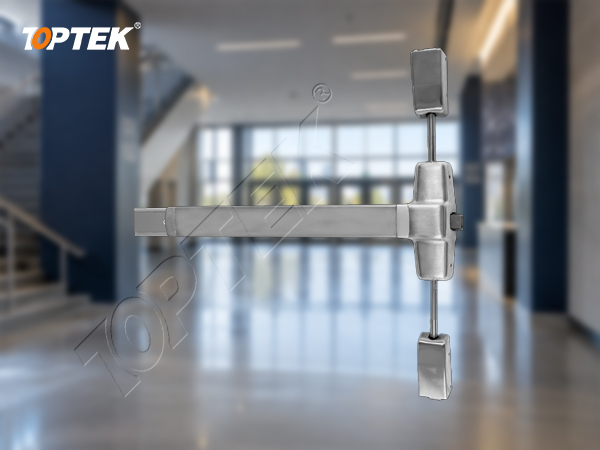
Start with the complete device identification. Surface rods and concealed rods describe where the operating linkage sits, but neither description by itself identifies the bottom strike. The latch shape, mounting arrangement and documented floor detail still need to match. A replacement receiver that looks similar can place the contact surface differently or provide the wrong clearance for the moving latch.
Request the device model, bottom latch designation, strike reference and applicable drawing revision as a connected set. Include the door material and whether the opening is a single leaf or a pair. A photograph should show the latch and receiver together, plus the surrounding threshold. A tightly cropped image of a worn hole usually leaves out the information needed to identify the assembly.
For an early choice between device layouts, the rim and surface vertical rod comparison explains the different installation arrangements. Once a rod device is selected, develop its own floor detail. A rim device pictured on another project does not provide a substitute strike specification.
Establish the finished floor reference
Floor finishes often change after hardware is measured. Tile, screed, a replacement threshold or a permanently fitted entrance mat can alter the space beneath the leaf. Mark the intended finished floor level on the coordination drawing and identify which contractor owns that information. Measuring from an unfinished slab can produce a correct-looking preparation that becomes unsuitable when the opening is completed.
Record the closed-door position, the threshold section and the level across the door’s travel. Check whether a local ridge or slope lies in the path of the released latch. The installer needs a reliable reference at the actual latch position, not merely a floor measurement taken at the hinge side. Where the floor is still incomplete, label the measurement as provisional and arrange a final check before fixing the strike permanently.
The receiver also needs a suitable supporting construction. Identify whether it is anchored into the structural floor, incorporated into a threshold, or installed by another method prescribed for the device. Waterproofing, concealed services and floor-finish details should be reviewed with the responsible building trade before drilling or cutting. The hardware drawing does not by itself authorise changes to those building elements.
Separate engagement from travel clearance
There are two different observations to make. When the door is closed, the bottom latch must reach the intended secured condition. When the device is operated and the door moves, the released latch must clear the receiver and floor. An opening can pass one observation and fail the other. Record both results instead of writing only that the door opens.
The Von Duprin 98/9927 installation instructions, page 6, illustrate this distinction for that specific product: they describe floor clearance with the door open and deadlatching with it closed. They also show different bottom-strike arrangements. Use this as an example of why the two conditions need separate checks; its dimensions, parts and adjustment procedure are not TOPTEK specifications.
| Observation | Information to record | Question for the installer |
|---|---|---|
| Latch contacts the floor after release | Contact position, door angle and floor finish | Is full retraction achieved and is the leaf aligned? |
| Door closes but bottom point does not engage | Closed position, receiver alignment and latch condition | Does the installed assembly match the specified detail? |
| Operation changed after flooring work | Previous and final floor or threshold sections | Which approved detail must be revised? |
| Strike moves under normal use | Fixings, substrate condition and movement | Is the support and fixing method suitable? |
| Performance varies between cycles | Debris, alignment and repeatable operating observations | What prevents consistent release and engagement? |
Inspect contamination and fixing without concealing the cause
A floor receiver can collect construction dust, packaging fragments and cleaning debris. Inspect the accessible area and arrange cleaning in accordance with the hardware instructions. Protect unfinished preparations during building work using an agreed method that is removed before the opening returns to service. Permanent packing, adhesive residue or a cover left in place can change the receiver’s usable space.
Do not treat every symptom as dirt. A distorted strike, damaged mounting surface or loose fixing requires its own assessment. Photograph the condition before cleaning or repair so that recurring issues can be compared. If a fastener repeatedly loosens, record the substrate and fixing specification rather than simply increasing tightening force. Required torque and anchoring details come from the applicable instructions and substrate assessment.
Similarly, avoid using a larger recess to mask poor alignment. It may change engagement or leave a hazardous floor detail without correcting the door movement. Have the competent installer identify whether the fault belongs to the door, device, rod linkage or receiver before selecting a remedy.
Coordinate threshold changes and bottom rod alternatives
Threshold replacement should trigger a review of the existing floor strike. Compare the proposed section with the accepted detail before work starts. The change may affect mounting height, support, receiver position or the path of the released latch. Keep the hardware supplier and flooring contractor working from the same drawing revision so that neither assumes the other has allowed for the interface.
Some projects seek a configuration without a bottom rod to avoid a floor receiver. Treat that as selection of a documented hardware arrangement. Do not remove the lower rod or latch from an installed device as an informal solution to dragging, cleaning difficulties or threshold conflict. The complete device configuration, opening function and any applicable doorset evidence must support the proposal.
Build a useful installation and handover record
Arrange functional inspection when the final floor, threshold and door hardware are in place. The responsible team should preserve required escape access while tests are carried out. Use the prescribed operating method and confirm that the device releases, the door moves without unwanted contact, and the latch returns to its intended condition after closing. Repeat the agreed checks after a correction.
For paired doors, identify each leaf and its associated receiver. Record any sequence needed by the specified arrangement. Do not infer the correct result from one leaf while the other remains fixed in a convenient position. The accepted condition should represent how the opening will actually be used.
The handover record should include the final drawing, installed part references, floor section, inspection date and responsible installer. Add photographs with the door closed and open. Record the correction made and the subsequent result, rather than replacing the original failed observation with a simple pass. This gives a service technician a useful starting point if the problem returns after further building work.
Prepare the TOPTEK enquiry and evidence request
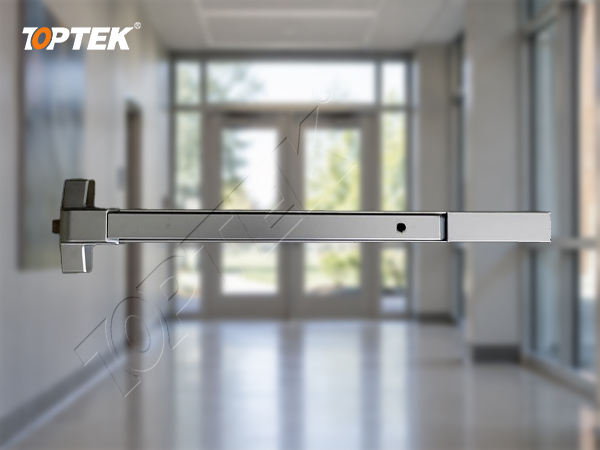
The TOPTEK PEDAM001 product page provides a starting model reference for a rod-style enquiry. Ask for the exact supplied configuration, matching strike information and installation documentation for your opening. Product photography establishes the layout being discussed; it does not establish a floor clearance, a fixing specification or a fire rating.
Why include TOPTEK in the review? Its exit device range can be considered with the opening’s other commercial door hardware. Use the quality management resources to frame requests for sample identification, inspection records and traceability. Keep any performance or certification requirement tied to the exact model and documented assembly.
- Provide the door schedule, leaf construction and opening direction.
- Include the finished floor level, threshold section and available fixing substrate.
- Identify the device, bottom latch and proposed strike references.
- Send closed and open photographs for an existing installation.
- State the target market, required evidence, quantities and sample needs.
- Identify who approves the building interface and who performs installation checks.
Send the opening and floor detail for a hardware review before finalising the strike preparation.
Frequently asked questions
Does every vertical rod exit device need the same floor strike?
No. Select the strike against the exact device, bottom latch and applicable installation detail.
Can new flooring cause a bottom latch to drag?
A changed floor level can affect clearance. Check the final floor profile, door alignment and full latch retraction before deciding on a correction.
Can I remove the bottom rod to eliminate the floor strike?
Use only a documented configuration supported for the device and opening. Do not remove a rod as an informal repair.
What should be photographed for a strike enquiry?
Show the device identification, bottom latch, receiver, threshold and surrounding floor, with views of the door open and closed.
When should the final functional check take place?
Check the opening after the final floor, threshold and hardware are installed, and repeat the affected checks after any change.
Specify the receiver with the complete opening
A useful floor-strike specification connects the latch, receiver, floor construction and operating observations. Resolve those interfaces before drilling and preserve the accepted detail for maintenance. For a confirmed hardware set, request a quotation with the door schedule and agreed strike configuration.
Děkuji za skvělé shrnutí. Kontrola podlahového protiplechu je často opomíjená, přitom je pro správnou funkci únikové tyče naprosto klíčová. Užitečné.