

TL;DR
- Identify the opening and the exact lock configuration before collecting certificates.
- Keep ANSI/BHMA performance evidence separate from UL fire-door hardware evidence.
- Match the model, function, trim and markings to the applicable record and installation instructions.
- Resolve configuration differences before releasing door preparation or ordering the production batch.
Quick Answer: What belongs in the submittal?
A UL fire door mortise lock submittal needs an opening schedule, the full proposed model and function, the applicable current certification record, marking information, installation instructions and coordinated door preparation drawings. Add a configuration comparison showing that the lock, trim, cylinder, strike and fixings match the proposed assembly. A fire door lock manufacturer should identify the evidence applicable to that configuration; the project reviewer determines its acceptability for the opening. Record deviations and their disposition before ordering. Neither an ANSI Grade 1 description nor a product photograph establishes the required fire-door approval.
Start with one opening and one configuration
The opening reference is the link between the architectural requirement and the lock being purchased. Give each door a stable identifier and carry it through the hardware schedule, drawings, sample labels and delivery records. If several openings share a configuration, list them together only after checking that their relevant door construction and hardware requirements agree.
Record the destination jurisdiction, project specification, required fire protection and any separate smoke-control or egress requirements. Include the door and frame manufacturers, construction, leaf arrangement, thickness and relevant drawings. These details allow a reviewer to identify which questions concern the lock supplier and which need a response from the doorset supplier or project authority.
For the lock selection itself, use the TOPTEK ANSI Grade 1 mortise lock range to identify the product path, then request the complete order designation. Record mechanical or electrified operation explicitly. Two assemblies with similar external lever trim may require different evidence and installation information.
A useful first page states the requested decision: approval of a particular lock configuration for specified openings. Avoid a cover sheet that merely says “mortise locks” and leaves the reviewer to infer which pages apply. Give the submission a revision number and name the person responsible for resolving comments.
Separate the documents by what they prove
Each document should answer a defined question, so a strong result in one category does not conceal a missing approval in another. The following is a procurement index, not a substitute for the project specification.
| Document | Question to resolve | Reference to record |
|---|---|---|
| Opening schedule | Where will this configuration be used? | Door identifiers and specification revision |
| Lock performance evidence | What mechanical performance is documented? | Model, standard and applicable grade scope |
| Fire hardware record | Which configuration and use are covered? | Issuer, file, category and restrictions |
| Installation instructions | How is the covered hardware installed? | Document revision and permitted options |
| Coordinated drawing | Does the proposed opening match? | Preparation, strike, trim and fixing details |
| Review response | What differences have been accepted? | Comment, disposition and accountable reviewer |
The UL Solutions doors and hardware application guide explains product categories, markings and the relationship between opening components. Use it to locate the relevant certification information, then examine the individual record. A reference to UL 10C identifies a positive-pressure fire-test route; it does not by itself identify a listed TOPTEK order code.
The separate ANSI mortise lock certification checklist supports evaluation of mechanical-performance claims. In the fire-door submission, cross-reference that evidence while keeping the fire-hardware review clearly identifiable. An ISO management-system certificate belongs in the supplier-quality section, not in place of either product record.
Match the model, label and accessories
The ordered configuration must be traceable to the applicable certification information and the marking supplied with the product. Copy identifiers exactly, including suffixes that distinguish functions or options. Where the commercial order code differs from the designation in the evidence, request a written mapping from the responsible supplier instead of accepting a verbal explanation.
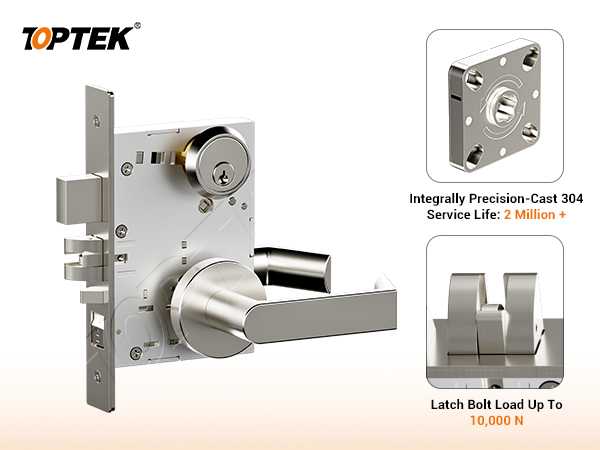
For example, TOPTEK provides TKAMEC9200 escutcheon lever trim and round-rose trim configurations. Those names help identify the purchase configuration. They are not interchangeable statements of fire scope. The submittal should show the selected trim, cylinder arrangement, spindle, strike and relevant fasteners alongside the applicable instructions.
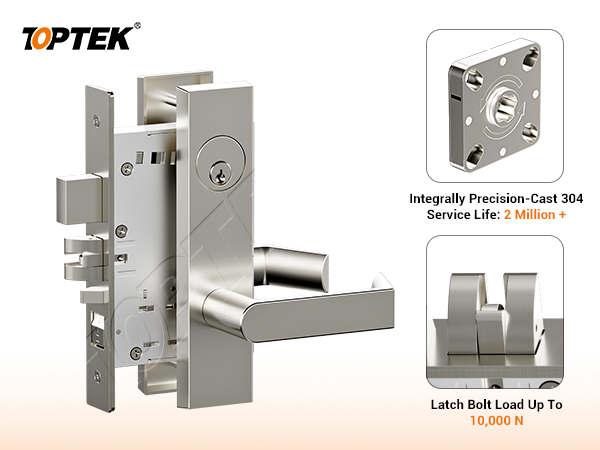
Ask where identification will remain visible after installation and what packaging information supports receiving checks. A sample label photo is useful only when it represents the configuration being supplied. The reviewer should be able to connect the mark to the product and the relevant record without relying on a generic logo on a presentation slide.
If you only have an existing lock photo and a door number, send them with the target market and specification excerpt to ivan.he@toptekaccess.com. TOPTEK can help identify the product route and the missing information needed for a configuration review.
Coordinate function with the complete opening
Function review should describe what occupants and authorized users can do on each side of the actual door. Record outside access, inside operation, key control and any deadbolt action in plain language beside the function designation. Have the project team confirm the required egress arrangement before selecting the final function.
A sample demonstration should follow that agreed description. Check latch retraction and return, the effect of locking the outside trim, and the relationship between key, lever and thumbturn where fitted. This verifies the proposed operating configuration; it does not reproduce a fire test or replace an installation inspection.
For electrified variants, supply the relevant wiring and operating sequence as additional documents. Do not carry a mechanical product record across to an electrified configuration without checking scope. Power-loss behavior, access-control integration and permitted egress arrangements need their own coordinated review.
Control preparation and installation differences
A preparation drawing should show the proposed physical arrangement and expose differences before machining begins. Coordinate the lock pocket, door edge, faceplate, strike location, cylinder and trim fixings with the door and frame suppliers. Use the applicable manufacturer’s instructions and approved assembly details rather than a generic cutout downloaded for a visually similar lock.
Keep a short deviation register. For each difference, identify the opening, original requirement, proposed change, affected evidence and person responsible for disposition. Examples include a different strike, a changed fixing position or an added cable route. Do not resolve such differences by enlarging the preparation on site and updating the drawing afterward.
The practical release sequence is document comparison, resolution of differences, approval of the applicable drawings, and then production preparation. Record the accepted revision in the purchase order. When drawings change, identify which samples and previously reviewed documents must be reconsidered.
Common mistakes and the project risks they create
The most expensive submittal errors are often failures of identification rather than missing pages. A large file can still be unusable if the reviewer cannot connect its evidence to the proposed opening.
- Using a family name alone: request the full order designation and configuration mapping so the wrong option is not purchased.
- Accepting a fire-duration slogan: obtain the applicable record and restrictions instead of treating an advertised duration as approval for every door.
- Mixing trim drawings: align the bill of materials and preparation with the selected escutcheon or rose arrangement.
- Closing comments informally: retain written dispositions with the submission revision so later teams can follow the decision.
- Changing components after approval: route substitutions back through the responsible review process before shipment or installation.
These controls also make replacement orders easier. A future buyer needs the accepted configuration and its evidence references, not just a photograph of an installed lever. Retain the document index with the building’s hardware records.
TOPTEK product scope and supplier evidence
TOPTEK offers ANSI mortise lock configurations with escutcheon and round-rose trim, supported by product information and manufacturing documentation. Use the TOPTEK fire door lock supplier page to start a market-specific evidence discussion. Request the current file set for the exact proposed model and configuration before specification.
Why TOPTEK for this process? The lock and trim product paths provide concrete starting points for drawing, function and sample coordination. The commercial lock manufacturing capabilities page adds supplier context. Manufacturing capability supports procurement review, while acceptance of a particular fire-door configuration still depends on its applicable evidence and project requirements.
Keep in-house development checks, independent reports and certification records in separate categories. Request the document needed by the tender, not simply the strongest-sounding statement. No family-wide UL listing, fire duration or authority approval should be inferred from the product images in this guide.
RFQ checklist and release record
A complete RFQ lets suppliers price the same opening-specific requirement and identify documentary gaps early. Send the following information together:
- Project country, specification section, required approval route and opening identifiers.
- Door and frame construction, leaf arrangement, thickness and preparation drawings.
- Exact function, mechanical or electrified configuration, trim and cylinder requirements.
- Strike, finish, handing, fixing details and relevant installation restrictions.
- Required certification records, marking information and submission format.
- Sample quantity, production quantity, delivery stages and replacement requirements.
Before release, check that every opening maps to an accepted configuration, every evidence reference is identifiable, and every deviation has a recorded outcome. Attach the approved drawing revision and sample identifier to the order. Ask the supplier to flag subsequent changes that affect the reviewed configuration.
Frequently asked questions
Does ANSI Grade 1 establish UL fire-door approval?
No. Keep mechanical-performance evidence separate from the applicable fire-door hardware certification and opening review.
Can a product photo replace the certification record?
No. A photo helps identify the configuration, but the reviewer needs the applicable record, marking information and installation conditions.
Should the submittal identify the trim and strike?
Yes. Record the complete proposed assembly and compare its trim, cylinder, strike and fixings with the applicable documents.
What if the order code differs from the evidence designation?
Request a written mapping that connects the ordered configuration to the documented model and identifies any limitations.
When should a changed component be reviewed?
Before release of the affected purchase, preparation or installation. Record the change and its disposition with the accepted configuration.
Request a fire-door submittal review
The best submission is a clear chain from opening requirement to product configuration, evidence and installation. Send TOPTEK your opening schedule and specification excerpt for an initial document review. For a formal quotation, add quantities, trim, cylinder, finish and required delivery stages, and email ivan.he@toptekaccess.com with the subject “UL fire door mortise lock submittal”.
TOPTEK supplies commercial locks, lever handles, cylinders, hinges and related door hardware for project procurement. TOPTEK is your Commercial Door Hardware Reliability Solution. TOPTEK: Smart Design. Strong Security.