

TL;DR
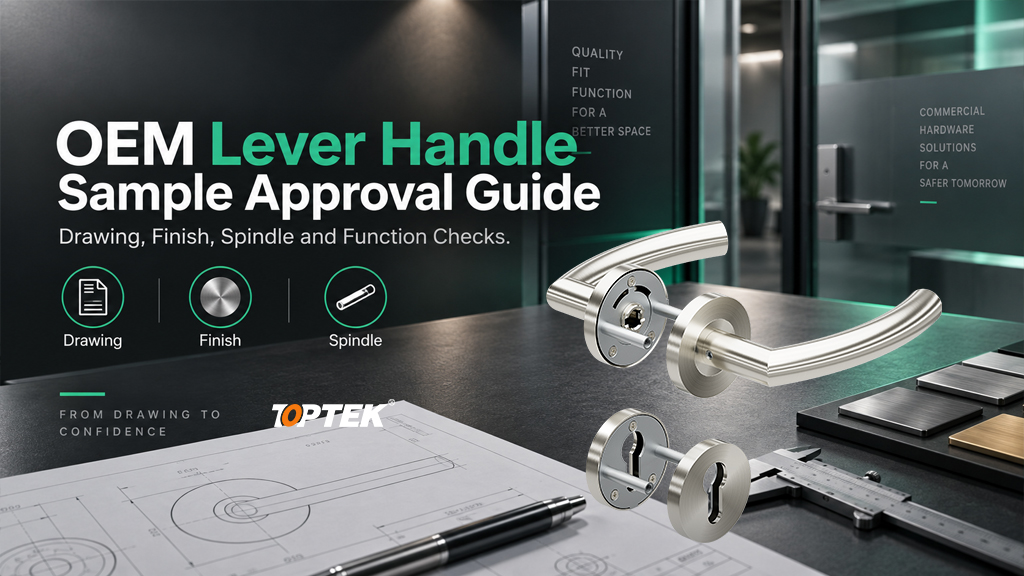
OEM lever handle sample approval should connect a numbered sample to its drawing revision, finish reference, spindle, fixings, lock interface and inspection record. Approve appearance, dimensions and installed function separately, then state exactly what production may reproduce. A good-looking loose handle cannot demonstrate how the complete set will behave after installation.
Quick Answer
Use a sample approval sheet with three decisions: visual acceptance, dimensional acceptance and functional acceptance. Identify the lever, rose or plate, spring arrangement, spindle and fixing pack. Fit the complete set to representative door preparation with the specified lock. Record results, exceptions and the approved revision. Keep matching reference samples with buyer and supplier before releasing production.
Start with the TOPTEK EN 1906 lever handle range to identify the product family. For an initial review, send the handle reference, door thickness and lock model to ivan.he@toptekaccess.com. TOPTEK can help identify the missing drawing and sample checkpoints.
Key takeaways for an OEM purchasing team
- Give the sample a permanent identity tied to a drawing and component list.
- Compare the actual finished assembly, including the supplied screws and spindle.
- Record the installation method so another person can repeat the check.
- Separate an accepted exception from the normal production requirement.
- Review changes to parts, finish or process before using the earlier approval.
Define what the sample is intended to approve
An appearance sample may establish shape and colour without representing final production tooling. A functional assembly may prove the operating concept while using a different surface finish. A production-intent sample should represent the agreed materials, components and manufacturing route. Write the purpose on the submission sheet so these different decisions cannot be confused.
For a private-label programme, list every item supplied in the box: both handles, bases, covers, spindle, fasteners, installation instructions and packaging. Identify any item borrowed from a test fixture. A lock borrowed for the test is an interface reference; it is not automatically included in the commercial supply scope. This distinction prevents an attractive sample kit from creating an inaccurate purchase specification.
Build a drawing and sample comparison record
Assign a reference to the complete set and separate references to components that may vary. Mark the drawing revision, finish code, submission date and sample quantity. Photograph the labels and the contents before fitting. If the sample differs from the drawing, record the difference against the affected feature instead of attaching a general note saying that the sample is acceptable.
Measure from the datums shown on the drawing. Record the instrument, units and actual result beside each critical feature. Useful checkpoints include mounting centres, base footprint, projection, spindle section, engagement and screw path. A nominal dimension without a tolerance or an agreed acceptance method does not establish a pass/fail decision. Resolve that definition with the supplier before inspecting the batch.
| Approval area | Record to retain | Release question |
|---|---|---|
| Identity | Sample label, assembly code, drawing revision | Can this exact set be ordered again? |
| Appearance | Finish master, viewing conditions, agreed limits | Does the visible set match the accepted reference? |
| Dimensions | Actual readings against defined drawing features | Do the interfaces meet their acceptance limits? |
| Operation | Lock reference, installation setup, observed results | Does the fully tightened set operate correctly? |
| Evidence | Model-specific documents and configuration scope | Do the documents identify the supplied assembly? |
| Production | Retained samples, inspection plan, change record | Can the accepted configuration be reproduced? |
Approve finish under repeatable conditions
A screen image is useful for discussing a finish direction, but it is a weak production acceptance reference. Compare physical pieces under agreed lighting and viewing conditions. For brushed finishes, include grain direction and consistency between handle, neck and rose. For polished surfaces, inspect visible scratches, edge transitions and the areas that are difficult to see in a catalogue photograph.
Separate cosmetic expectations from corrosion requirements. A finish sample establishes appearance; it does not establish an environmental performance result. If a corrosion test is required, specify the test method, specimen condition, duration and acceptance criteria in the evidence request. Confirm that the report concerns the same material and finish route. Keep the master sample protected from handling damage and label which faces control the comparison.
Check the spindle and lock interface as an assembly
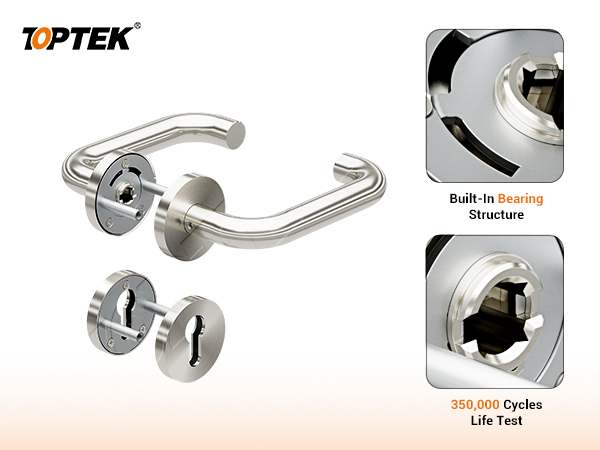
The spindle has to engage both lever hubs and the specified lock follower without preventing the furniture from seating. Use the complete door-and-trim stack, including both bases and any approved spacers. Check that the spindle can be positioned as intended and that retention features engage correctly. Do not shorten or substitute parts during the approval test without recording the resulting configuration.
Verify that through-fixings clear the lockcase and other hardware. The installation method should describe how the bases are aligned and tightened. Record the specified fastener treatment and tightening instruction where these are supplied. A result obtained with loose mounting screws is not a useful acceptance result for a fully installed lever. Repeat the operation check after the complete fixing sequence.
Record movement rather than saying that it feels good
Operate the lever from both sides and observe latch withdrawal, return to rest, rubbing, looseness and any interference with the door or adjacent trim. Where the application needs an upward lever movement, identify that requirement explicitly and check the exact selected configuration. Use a defined observation or measurement for each acceptance point; informal descriptions such as smooth or solid are difficult to reproduce.
Separate compatibility checks from performance evidence
A fitted sample check answers whether the selected components work together in the chosen preparation. A performance report answers a different question about the identified product under a stated test method. The BSI summary of BS EN 1906 describes tests covering matters such as operating torque, free play, durability and strength. It also distinguishes fire performance testing from the mechanical furniture requirements.
Use the EUG4001 model page as a product identification reference, then request documents for the exact configuration being purchased. Do not infer that a customised rose, spring, finish or fixing combination has the same evidence as another assembly. Agree which modifications require a fresh technical evaluation before production release.
Convert sample acceptance into a production instruction
Keep one controlled reference with the buyer and a matching reference with the supplier. List the accepted drawing, component list, finish and packaging revisions. Where a deviation is accepted, define its scope: one sample, a limited batch or the normal specification. Avoid an approval note that allows a temporary exception to become an uncontrolled permanent change.
The production inspection plan should identify critical interfaces, appearance checkpoints, assembly function and identification marks. Agree the sampling method and acceptance criteria with the responsible quality teams. One successful sample cannot establish process capability across a batch. Pilot production provides an opportunity to check whether the accepted configuration can be assembled and inspected consistently using the intended process.
Treat replacement components as changes
A visually identical screw, spindle or spring may have different functional effects. Require a change record that identifies the old and new references, reason, affected orders and checks to repeat. Review packaging changes too: exposed contact between metal parts can damage an accepted finish during transport. Link replacement-part orders to the approved assembly rather than relying on a photograph of the visible lever.
Common buyer mistakes and project risks
The most expensive mistake is a broad approval statement with no defined scope. Other risks include measuring unfinished components against finished-part limits, mixing parts from different samples, accepting finish from a photograph, testing without the production lock, and overlooking instructions or fixing packs. These gaps can lead to installation rework, batch disputes and inconsistent replacement stock.
Keep the OEM approval task distinct from general product selection. The lever handle manufacturer selection guide helps assess a potential supplier. This approval record turns the selected supplier and design into a reproducible purchase requirement.
Buyer checklist and RFQ package
- Target market, door application, expected quantities and intended supply scope.
- Lever and base references, drawing revisions, lock model and door construction.
- Spindle, fixing path, installation instructions and representative preparation.
- Physical finish reference and appearance acceptance conditions.
- Required product evidence, exact model scope and applicable project requirements.
- Sample purpose, measurement plan, functional sequence and approval owner.
- Pilot inspection, retained samples, packaging and repeat-order controls.
Why TOPTEK and what the evidence supports
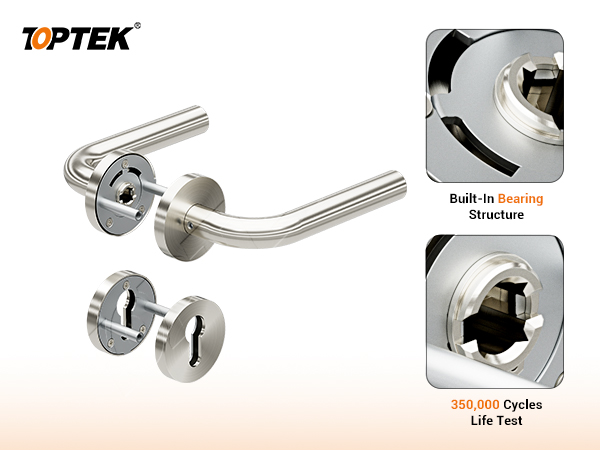
TOPTEK’s documented OEM/ODM process includes requirement definition, engineering, sample development, pilot production and delivery control. Its lever development material identifies spring, bearing and component fit as engineering concerns. These are useful subjects for a sample discussion; the quoted configuration and its documents should establish any promised performance.
Review the OEM/ODM door hardware manufacturing process and the TOPTEK testing laboratory. Laboratory capability is distinct from third-party certification of a particular supplied product. Request the relevant original report when a project needs a certified claim.
Frequently asked questions
What should an OEM lever handle sample approval include?
Include the sample identity, drawing revision, component list, finish reference, dimensional results, fitted function checks, accepted deviations and production release scope.
Can a finish photograph replace a physical reference?
A photograph helps communication, but a protected physical reference under agreed viewing conditions provides a more repeatable basis for production appearance checks.
Should the sample be tested with the specified lock?
Yes. The complete spindle, lever, fixing and lock combination should be checked in representative preparation after final tightening.
Does a sample approval establish EN 1906 performance?
No. Sample approval and model-specific performance evidence serve different purposes. Match the required report to the exact configuration being purchased.
When should the buyer repeat approval checks?
Repeat the affected checks when the drawing, material, spring, spindle, fixing, finish, lock interface or production process changes.
Conclusion and project risk summary
A useful approval leaves a repeatable record: what was inspected, how it was installed, what passed and what production may reproduce. Missing identities and undefined exceptions create avoidable procurement risk. Close those gaps before ordering a batch and keep the record available for incoming inspection and later replenishment.
TOPTEK product scope and next step
TOPTEK supplies lever handles alongside commercial lock systems, construction cylinders, hinges and door power transfer products. Coordinate only the interfaces needed for the opening; a family relationship does not establish universal compatibility. TOPTEK is your Commercial Door Hardware Reliability Solution. TOPTEK: Smart Design. Strong Security.
For an OEM lever programme, send the drawing package, finish reference, lock and door details, quantities and evidence requirements to ivan.he@toptekaccess.com. Request a configuration review, sample route and quotation tied to the same revision so your purchasing and quality teams can approve one clearly identified set.