

TL;DR
- Choose a replacement scope after identifying the fault and the exact lock assembly.
- A matching backset and handle centre distance do not establish gearbox interchangeability.
- A gearbox-only repair needs an approved service part and compatible drive connections.
- A complete strip still needs checks against the door preparation, keeps and operating function.
Quick Answer
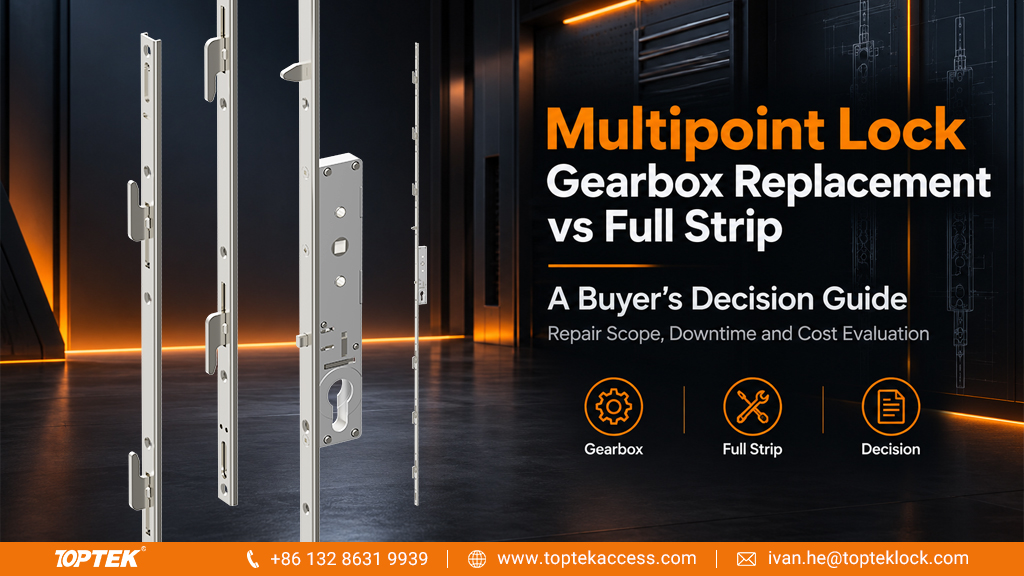
For multipoint lock gearbox replacement vs full strip, compare the confirmed fault, serviceability of the centre case and condition of the connected mechanism. A gearbox-only option can be considered when the supplier identifies an approved replacement for that exact assembly and confirms that the remaining strip and remote locking points are serviceable. Consider a complete assembly when the mechanism has wider damage, the correct service part is unavailable or compatibility cannot be established. Neither choice should be made from price or visible dimensions alone. Retain the required operating function and verify the finished door with the selected components.
Define exactly what the quotation will replace
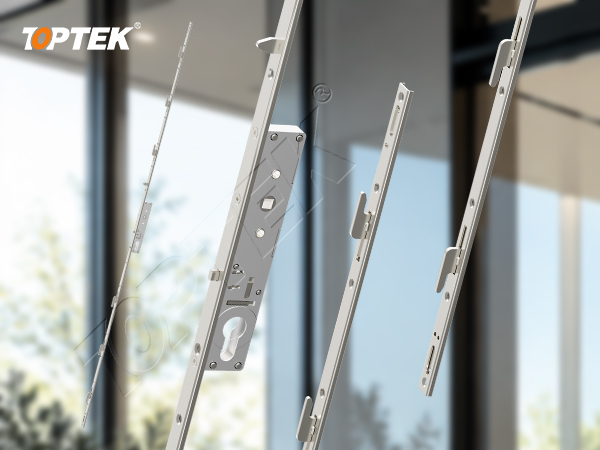
Suppliers may use gearbox, centre case, main lock case and mechanism differently. Start by marking the proposed supply scope on a photograph or drawing. Does gearbox mean the centre case alone, a centre section with drive connections, or a longer assembly? Does full strip include remote locking cases and connecting components? Keep the cylinder, handles and frame keeps separately listed unless the quotation explicitly includes them.
This simple clarification prevents two superficially similar offers from being compared as if they contain the same parts. It also protects the service plan. A technician expecting a complete mechanism may arrive with only a centre case, while a buyer expecting a quick service-part swap may receive an assembly requiring a new fit review.
The TOPTEK multipoint locking systems range includes different product references and operating arrangements. Identify the installed platform and the required replacement scope before selecting from a new-product range. A current model is not automatically a drop-in service replacement for an older mechanism.
Separate the symptom from the failed component
A stiff key, heavy handle or incomplete locking movement does not, by itself, locate a gearbox fault. Door alignment, a damaged strip, obstructed keeps or an unsuitable cylinder and handle arrangement may affect operation. Record when the symptom occurs, which locking points are affected and whether the condition changes with the door position. A qualified technician should decide what observations are safe and appropriate for the particular lock.
Do not force a mechanism to produce a more obvious symptom. Keep detached or visibly damaged parts for identification, and describe any recent changes to the door, handles, cylinder or frame. The distinction between a problem that began after hardware replacement and one that developed gradually can make the supplier’s investigation more useful.
Ask for a diagnosis that explains the proposed replacement scope. If the recommendation is gearbox-only, what evidence supports the condition of the rest of the assembly? If it is a full strip, what makes the existing strip unsuitable? A short written reason is valuable when purchasing compares cost, downtime and repeat visits.
Where cylinder or handle selection is part of the problem, use the multipoint cylinder and handle compatibility guide to structure the enquiry. Keep that interface review distinct from the question of whether the centre case can be separated and replaced.
Compare the two replacement routes
| Decision factor | Gearbox-only route | Complete-strip route |
|---|---|---|
| Part identification | Exact approved service case and revision required | Complete assembly and supplied scope required |
| Existing mechanism | Remaining parts must be suitable for continued use | Replacement must still match the door and frame |
| Drive interface | Connections and movement must match the retained parts | Internal matching may be supplied as a set; external fit remains |
| Installation work | Follow the permitted service procedure | Review preparation, keeps and associated hardware |
| Purchase evidence | Service-part confirmation and repair scope | Assembly drawing, parts list and substitution review |
Use the table as a decision record, not as a presumption that one route is cheaper or safer. A lower component price can be offset by additional diagnosis, specialist labour or a second visit. Conversely, replacing an otherwise suitable assembly without identifying a frame problem can leave the original symptom unresolved.
Keep any required fire, security or other doorset evidence in the decision. The supplier should identify whether a proposed repair or substitution remains within the relevant documented configuration. A new component does not automatically preserve an existing performance claim, and a larger replacement scope does not automatically improve it.
Why matching dimensions are only the first filter
Backset, centre distance, case outline and fixing locations help identify a candidate. They cannot describe every mechanical relationship. The centre case must transfer the correct movement through its connections to the retained locking points. A case can resemble the old one while belonging to a different operating platform or revision.
Ask about the complete part reference, connection geometry, required travel and relationship between handle or cylinder input and remote locking-point movement. Do not derive compatibility from photographs of a similar connector. Obtain a supplier statement tied to the exact existing assembly and replacement reference, supported by the relevant service documentation.
Distinguish automatic, handle-operated and key-operated functions. If the old door required lifting the handle before locking, a replacement described only as multipoint may not preserve the same sequence. Likewise, changing a centre case should not silently change how a user releases or secures the door. Write the required sequence in plain language and have it confirmed.
Serviceability is a separate question from fit. Do not drill out rivets, open a case or modify a connection merely because a replacement part appears dimensionally close. The permitted repair method, required tools and responsibility for the finished assembly belong in the service instruction.
When a full strip needs a wider fit review
A complete strip can remove uncertainty about the relationship between a supplied centre case and its remote components, but it introduces an external fit question. The overall layout must suit the existing preparation and the frame keeps. Confirm each engagement location, the faceplate and the relevant cylinder and handle interfaces against the actual opening.
If the offered assembly changes the locking-point type or position, identify any associated work and replacement keeps before placing the order. Do not describe a substitution as direct replacement while leaving frame work for the installer to discover. A clear quotation separates hardware supply from modifications and the acceptance of those modifications.
Check the condition of the door and frame as part of the same review. If the existing strip was bent or the opening alignment has changed, simply repeating the original dimensions may not address the cause. The appropriate specialist should establish which defects require correction and how the repaired opening will be checked.
Prepare a useful identification and service enquiry
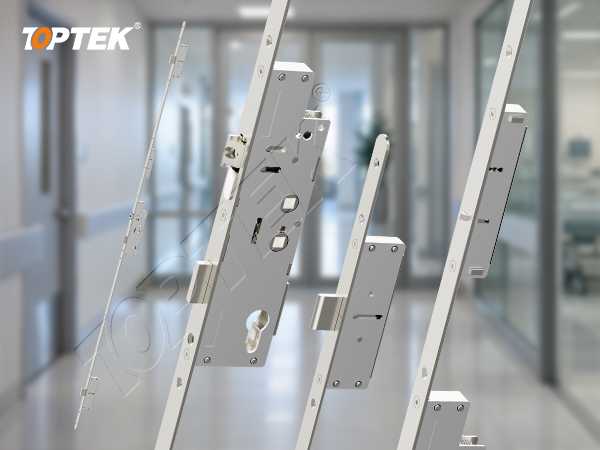
Provide clear images of the complete lock and any visible markings, together with the door manufacturer’s information if available. Add a dimensioned drawing with a common reference point. Explain the operating sequence and the observed fault without replacing diagnosis with an assumption such as “the gearbox has failed.”
A manufacturer-specific example is FUHR’s replacement and spare-parts guidance, which directs users to identification information and specialist support. This illustrates the value of identifying the mechanism and using a suitable service channel. It does not establish that FUHR and TOPTEK components are interchangeable.
For an OEM or distributor managing several generations of a product, keep a revision cross-reference. Record which exact service part is permitted for which assembly, the supporting document and any associated component changes. Do not turn a successful repair on one sample into a universal interchangeability rule across all stock carrying a similar name.
Also establish availability and support expectations. Ask whether the offer is a service component or a current complete product, whether associated parts are included and how any future replacement should be identified. These answers improve the purchasing decision without requiring unsupported promises about service life.
TOPTEK scope, RFQ checklist and acceptance
TOPTEK’s Auto Lock product reference is one starting point for a new assembly enquiry. Do not assume the centre case is sold separately or can repair another platform. Ask for that supply and compatibility information explicitly. For PD1000, Auto Lock or another nominated model, the drawing and confirmed configuration should define the order.
Why TOPTEK? Buyers can connect their product question with TOPTEK’s quality management information and request the specific records needed for the selected supply. The useful evidence is the link between the identified part, its controlled configuration and the agreed check, rather than a broad claim that every multipoint mechanism behaves the same way.
- Identify the installed brand, model, revision and complete assembly.
- Provide the symptom, affected points and any recent hardware or door changes.
- Mark gearbox-only and complete-strip quotation scopes separately.
- Request the applicable service-part or replacement compatibility confirmation.
- State the required operating sequence and associated cylinder, handles and keeps.
- Include documentation, sample, packaging and quantity requirements.
- Agree who installs the parts and records the finished-door checks.
At acceptance, retain the removed part reference, new part reference and the reason for the chosen scope. Confirm the specified operation at every relevant locking point and record the condition of the finished opening. If a defect remains, keep it visible in the service record rather than treating component replacement as proof that the door is ready.
Frequently asked questions
Can I replace only the gearbox on every multipoint lock?
No. Separate replacement depends on the design, availability of an approved service part and the permitted procedure for the exact assembly.
Do matching backset and centre distance prove compatibility?
No. They are useful identification dimensions, but connections, drive movement, operating function and revision must also be confirmed.
Does a stiff handle prove that the gearbox is damaged?
No. The symptom can involve other parts of the lock or opening. Obtain an appropriate diagnosis before choosing the replacement scope.
Will a full strip work with the existing keeps?
Only if the complete layout and engagement interfaces are compatible. Confirm the replacement assembly against the actual frame and keeps.
What should a supplier quote show?
It should identify the exact supplied parts, compatibility basis, required associated changes, applicable instructions and the checks needed on the finished door.
Request a replacement-scope review
Send the identification photographs and fault record first when the correct repair scope is uncertain. For a formal quotation, add the confirmed drawing, quantities and associated hardware list through TOPTEK’s commercial door hardware enquiry. Choose the scope that restores the documented assembly and resolves the diagnosed problem, with a clear record of what was changed and why.