


TL;DR
- Identify the complete pair of doors, both exit devices, the removable mullion and the matching strikes.
- Separate temporary removal for goods movement from acceptance of the opening after reinstatement.
- Check seating, retention and latching on each leaf using the exact assembly instructions.
- Give facilities staff a repeatable removal, storage and return-to-service record.
Quick Answer
Removable mullion exit device checks should establish that the centre post has been returned to its specified mounting position, secured by its intended retention method and paired with the correct strikes. Then check each door leaf and exit device independently before observing the pair together. A post that looks upright does not prove correct seating or latch engagement. Use the manufacturer’s instructions for the exact mullion and hardware combination; record any changes to brackets, flooring, strikes or door alignment. Where a rated or otherwise regulated opening is involved, retain the applicable assembly evidence and project acceptance requirements.
Understand what the removable mullion does
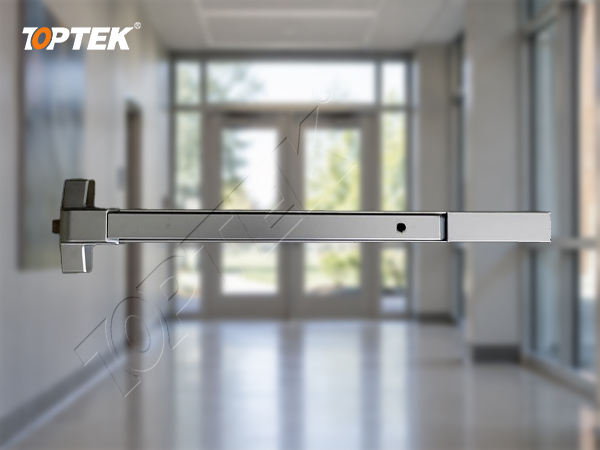
On an appropriate paired-door arrangement, a removable hardware mullion provides a central mounting location for strikes used by rim exit devices. Removing it can provide a wider temporary passage for large equipment. That arrangement differs from a permanent structural mullion and from a pair equipped with vertical rod devices. These terms should be resolved before a drawing is priced, because they describe different hardware interfaces and service tasks.
The immediate procurement question is not simply whether the post can be removed. Ask how it is retained, what must be released, how it is stored and how the complete opening is returned to service. An opening frequently used for deliveries needs a practical ownership arrangement: somebody must be responsible for replacing the correct post and confirming the doors work afterwards. Avoid relying on the delivery team to recognise an incomplete hardware assembly.
For a broader comparison of device arrangements, review rim exit devices and surface vertical rod devices. A comparison helps establish the opening concept; it does not establish that a particular mullion is compatible with every rim device. Obtain that answer for the actual set of part numbers.
Build a paired-opening identity record
Give each leaf a permanent identifier such as Leaf A and Leaf B, tied to a drawing showing the viewing side. Record the device references, outside trim, strike references and mullion marking. Add the top and bottom mounting components and the applicable instruction revision. If the opening has different hardware on its two leaves, show that difference explicitly rather than describing the pair as two identical sets.
Photograph the installed post, both strike faces and its mounting locations before planned removal. These photographs help identify parts and visible changes, but dimensions and engagement criteria must come from the approved documents. A photograph alone cannot establish the depth of a concealed fixing or prove that a retention mechanism is fully engaged.
| Record item | Buyer or facilities question | Useful evidence |
|---|---|---|
| Mullion identity | Is this the post assigned to this opening? | Part reference and opening label |
| Retention method | What confirms correct reinstatement? | Model-specific instruction and observed check |
| Each strike | Does the reference match its device and mounting? | Hardware schedule and installation drawing |
| Leaf position | Has the closed-door relationship changed? | Inspection record for each leaf |
| Service ownership | Who returns the pair to normal use? | Named role and completion record |
Where several similar posts are used in one building, keep their identities distinct. Apparent similarity is not an interchangeability statement. A storage label is a low-cost way to prevent a maintenance task from becoming an uncontrolled substitution.
Plan removal and reinstatement before the delivery arrives
Agree the movement route, working area and restoration responsibility with the building operator. Removal changes the opening arrangement; the operator must manage access and any required alternative provisions while work takes place. Follow the exact release procedure, including the manufacturer’s requirements for keys, tools and support. This guide does not replace those instructions or authorise removing hardware from an occupied escape route.
Provide a storage location that protects the post, strikes and retention surfaces. Keep loose components with the opening record. Do not leave parts where vehicles, pallets or cleaning equipment can damage them. If removal exposes floor mounting components, identify the temporary condition to the people managing the work area and follow the site’s arrangements for safe passage.
Before reinstatement, check for damage and debris at the specified interfaces. A changed floor finish, a displaced mounting component or a bent strike deserves investigation before the doors are accepted. Do not compensate by forcing the post into position, omitting a fixing or filing a mating surface without the applicable manufacturer’s approval.
The Falcon exit device catalogue, page 26, provides a manufacturer-specific example: its listed removable mullions are paired with specified 24-R devices, and strikes are identified separately. This shows why a complete component schedule matters. It does not establish compatibility with TOPTEK devices or replace the installation instructions for the selected opening.
Check the post first, then each door
Start with the post’s seating and retention checks defined by its own instructions. Confirm that the correct components are present and that the intended indication or mechanical check of engagement is satisfied. Do not adopt a universal gap, torque or pull-test value from another model. If the instruction is unavailable, obtain it before declaring the post correctly reinstated.
Next observe Leaf A with its own exit device and strike. Check the specified closing, latching and release functions under controlled conditions. Repeat for Leaf B, recording the results separately. A successful check on one leaf does not clear the other. Where outside trim is included, verify its intended operation without assuming that it is the same function on both leaves.
Finally observe the pair together in the sequences relevant to the building. Look for unwanted contact, interference between leaves or a change in the strike relationship when the neighbouring leaf moves. Keep this functional observation separate from any formal test required by the product evidence or local project specification.
When a problem appears only after reinstatement, compare the current mounting and strike positions with the last accepted record. That comparison can help a qualified technician focus the investigation. It does not prove that the mullion caused the fault; door alignment, fixings and other hardware remain possible contributors.
Common mistakes and the project risks they create
One common mistake is treating the centre post as optional after a delivery. If the installed devices depend on strikes carried by that post, the intended latching arrangement has not been restored simply because the leaves can close. The return-to-service checklist should therefore name the post and each device, rather than asking only whether the doorway looks clear.
Another mistake is treating all parts carrying the same brand as a matched assembly. Product families can have different mounting details and strike options. Keep the device, strike and mullion references together when asking for a substitution. Any fire, security or other performance claim must apply to the documented combination and its permitted installation, not merely to a familiar brand name.
Also avoid hiding a developing problem by repeated strike adjustment. If the post no longer seats consistently, adjustment may conceal damage or a changed mounting condition. Record what changed and obtain the correct remedial procedure. Maintenance staff should not need to invent a new alignment routine every time the post is removed.
TOPTEK product scope and evidence to request
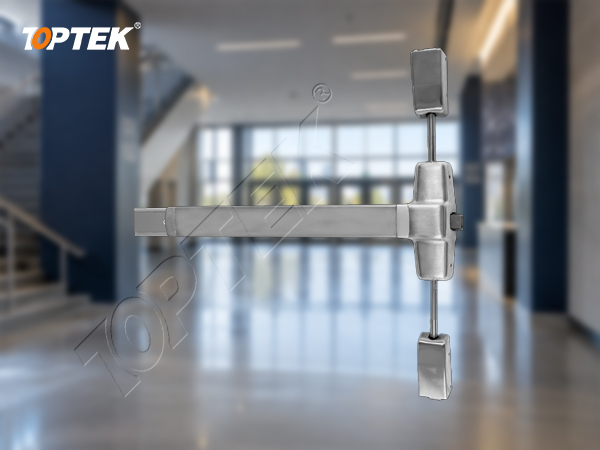
The TOPTEK panic exit device range provides a starting point for discussing device formats. The PEDAM001 product page is a specific vertical rod product reference for comparison. Neither a product photograph nor a general range description proves that a removable mullion is supplied or approved for a proposed device combination.
For a rim-device enquiry, request the exact model, matching strike details and the evidence needed for the intended opening. Identify separately who supplies the mullion and who accepts the assembled door set. This division prevents a device quotation from being interpreted as approval of mounting components supplied by another party.
Why TOPTEK? A useful supplier discussion connects the product enquiry with drawings, part identification and documented quality controls. Review TOPTEK’s quality management information, then request the records relevant to the selected configuration. Ask for model-specific evidence rather than transferring ratings or test results across an entire product family.
RFQ checklist for a removable-mullion opening
- Provide the opening number, market, door materials, dimensions and labelled leaf arrangement.
- State the required device function on each leaf and any outside trim or access-control requirement.
- Identify the proposed mullion, strikes, brackets and their suppliers.
- Describe how often removal is expected and who will perform it.
- Attach the current hardware schedule, drawings and applicable assembly evidence requirements.
- Request the permitted installation, reinstatement and maintenance documents.
- Define the sample or site demonstration and the records required before repeat orders.
Ask the quotation to identify included and excluded components. Separate device pricing, strikes, mullion-related items, documentation and any project-specific review. A clear scope is more useful than a single line that promises a complete pair without describing what it contains.
Frequently asked questions
Does every pair of rim exit devices need a removable mullion?
No. The required arrangement depends on the devices, strikes and complete door design. Confirm the intended configuration with the hardware supplier and project designer.
Can a removable mullion be left out after moving equipment?
If the door arrangement depends on it, the opening must be restored according to its approved instructions and site procedures before normal service resumes.
Does an upright post prove correct reinstatement?
No. Check the specified seating and retention method, then verify each device and strike and the operation of both leaves.
Can one supplier’s mullion be used with another supplier’s device?
Only where compatibility and the applicable assembly requirements have been established for the exact combination. Similar appearance is insufficient.
What should a handover record include?
Include opening and component identities, instruction references, reinstatement observations, checks for each leaf, unresolved defects and the person responsible for return to service.
Request an opening review or formal quotation
Begin with a labelled sketch and the complete part list. Ask for a configuration review when the mullion or strike arrangement is uncertain. Once the scope is defined, send quantities, delivery requirements and required documents through TOPTEK’s commercial door hardware enquiry. Treat successful reinstatement as a documented part of the opening’s service routine, so temporary access for equipment does not leave an incomplete door assembly behind.