

Why is this question more important than it first appears? Because cutting a mortice pocket removes part of the fire-resistant door core and introduces metal that can conduct heat. An unsuitable lock case, an oversized cut-out, the wrong intumescent protection, a substituted strike plate, or poor latch alignment can affect fire performance and project acceptance. Therefore, base the decision on evidence for the complete opening, not on the words “fire rated” in a catalogue.
TL;DR: Can You Install a Mortice Lock on a Fire Door?
What is the short answer? Install a mortice lock on a fire door only when evidence supports the selected model and the work follows the door and lock manufacturers’ instructions plus the approved fire-test or assessment scope. Therefore, confirm the exact model, door material, leaf thickness, lock function, preparation, intumescent requirements, lever, cylinder, strike, closer, and local approval route before machining.
- Verify the exact model: A certificate for one lock family does not automatically cover every function, size, or modified version.
- Match the tested door: Steel-door evidence does not automatically prove suitability for a timber or composite fire door, and the reverse is also true.
- Separate the standards: EN 12209 evaluates mechanical lock characteristics; EN 1634-1 evaluates fire resistance in a door assembly.
- Control the preparation: Do not enlarge the lock pocket, drill extra holes, or change the installation method without approved evidence.
- Confirm escape function: Fire resistance and safe egress address related but separate project requirements.
- Inspect the complete opening: The door must self-close, latch, remain aligned, and use compatible hardware after installation.
Quick Answer: What Makes a Mortice Lock Suitable for a Fire Door?
What makes a mortice lock suitable for a fire door? Suitable evidence must connect the exact lock model to its intended use, fire-door configuration, installation conditions, and required performance. Therefore, a reliable technical submission normally includes the certificate or listing, model schedule, classification, fire evidence, Declaration of Performance where applicable, installation instructions, preparation drawing, and intumescent details.
What does “fire-rated mortice lock” not mean? It does not give permission to place the lock in any fire door for any number of minutes. Instead, fire resistance belongs to a tested or assessed doorset configuration. The door leaf, frame, lock, forend, strike, cylinder, lever, hinges, closer, seals, fixings, gaps, opening direction, and workmanship can all affect the result.
Project Blueprint: Fire Door Hardware Sourcing Matrix & Checkpoints
What must you check before installing a mortice lock on a fire door? Review the door evidence, lock evidence, hardware schedule, preparation drawing, fire and egress requirements, and approval authority as one coordinated package. This table helps architectural hardware specifiers and project buyers confirm door behavior, backset, C-to-C distance, strike alignment, and certification scope before issuing an RFQ to a manufacturer.
| Checkpoint | What to Verify | Risk If Ignored |
|---|---|---|
| Door construction | Steel, timber, timber composite, door thickness, core type, frame, leaf size, single or double leaf, and opening direction. | Evidence may not apply to the actual doorset. |
| Exact lock model | Model reference, function, backset, centre distance, case size, forend, strike, latchbolt, deadbolt, and handing. | A similar-looking lock may sit outside the certified or assessed scope. |
| Fire evidence | Test standard, tested model, assessed models, door configuration, E-Integrity, I-Insulation, duration, and limitations. | Suppliers may quote fire minutes without the conditions that produced them. |
| Door preparation | Approved mortice pocket, spindle and cylinder holes, fixing positions, tolerances, and maximum permitted material removal. | Oversized or extra machining may weaken the door core. |
| Intumescent protection | Whether the evidence requires a lock wrap, pad, liner, mastic, or other protection, plus its required location. | Missing or unapproved material may change heat transfer and fire performance. |
| Compatible hardware | Lever handle, spindle, cylinder, thumbturn, escutcheon, strike, closer, hinges, seals, and fixings. | Substitutions can alter operation, clearances, or approval scope. |
| Egress requirement | Normal access, emergency exit, panic exit, escape direction, user type, and applicable local rules. | The door may resist fire but fail the required escape function. |
| Final inspection | Self-closing, positive latching, gaps, alignment, lever return, key or turn operation, signage, labels, and maintenance record. | A compliant product can still fail because of poor installation or adjustment. |
🔧 Technical Assistance for Architectural Specifiers
Are you mapping out a commercial project layout? Contact TOPTEK for official 1:1 scale CAD template drawings, hardware schedule templates, and Intertek fire test evidence dossiers tailored to your specific backset and door construction.
Compliance Architecture: Which Standards Apply to a Fire Door Mortice Lock?
Which standards matter most? The answer depends on the target market, but European projects commonly separate mechanical lock performance under EN 12209 from doorset fire resistance under EN 1634-1. According to standard and testing references from BSI and Intertek, EN 12209 relates to mechanically operated locks and locking plates, while specific assembly fire resistance requires separate verification. Review the matrix below to coordinate hardware selection with the regulatory route.
| Standard or Route | What It Addresses | Buyer Action |
|---|---|---|
| EN 12209 | Mechanically operated locks and locking plates: durability, strength, security, function, and classification. | Check the exact model, classification code, certificate version, intended use, and declared performance. |
| EN 1634-1 | Fire-resistance testing of door assemblies under a defined specimen and configuration. | Check door material, opening direction, E/I result, duration, hardware set, and permitted variations. |
| CPR and CE documentation | European construction-product performance documentation under the applicable regulatory route. | Request the current certificate, Declaration of Performance, model list, and traceable manufacturer information. |
| EN 179 or EN 1125 | Emergency-exit or panic-exit operation, depending on users and application. | Do not infer safe egress from an EN 12209 mechanical-lock classification alone. |
| EN 1906 and EN 1303 | Lever-handle and cylinder performance. | Coordinate trim and cylinder selection with the lock, door preparation, and fire-door evidence. |
| UL 10C and North American listings | Positive-pressure fire tests and listed fire-door opening requirements in North American routes. | Do not substitute CE/EN evidence for a required UL route; review the UL Solutions fire-rated doors guide. |
Can one certificate satisfy every country? No, the project specification, local rules, door manufacturer, fire engineer, certifier, and authority may add requirements. Likewise, Intertek’s fire-door testing information connects the expected rating to installation under the stated specifications. Always confirm the current acceptance route before procurement or installation.
What Does TOPTEK’s EN 12209 Certificate Actually Prove?
What verified evidence is available? TOPTEK’s Intertek Certificate of Constancy of Performance No. 2649-CPR-26002201 covers listed mechanically operated mortice locks under EN 12209:2003/AC:2005 for intended use on fire-resistance and/or smoke-control doors. Intertek Ibérica Spain S.L.U., Notified Body 2649, first issued the certificate on June 4, 2026. However, buyers should confirm current validity and the selected model on the TOPTEK certification page before approval.
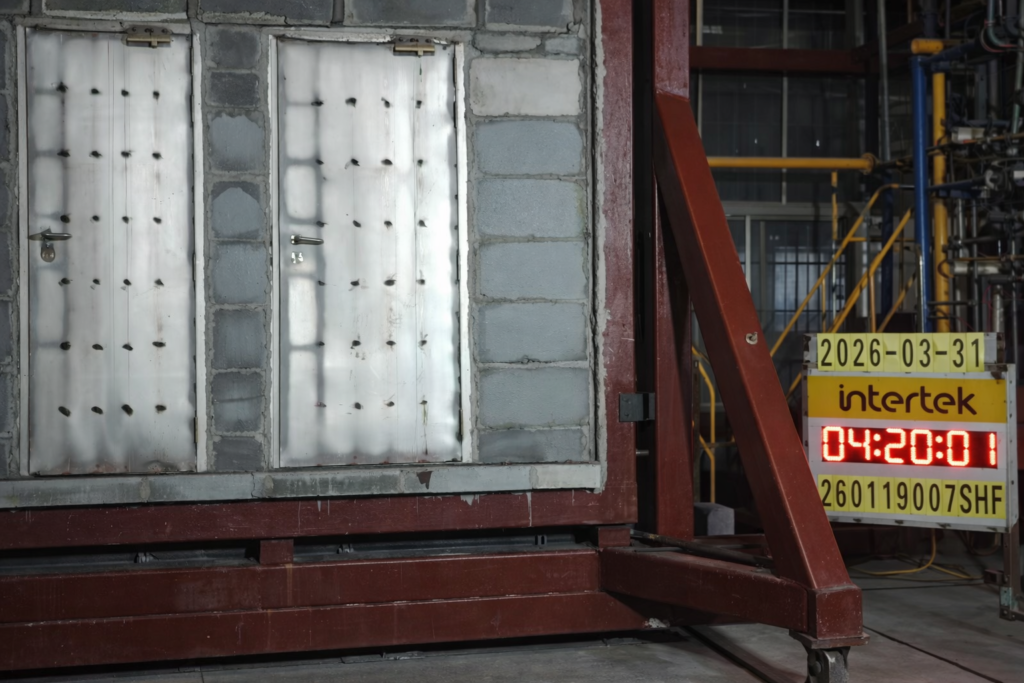
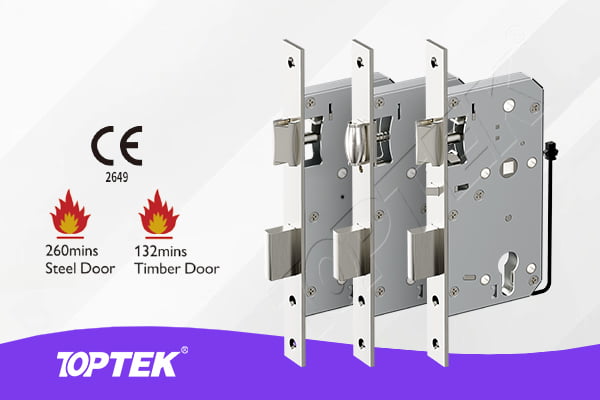
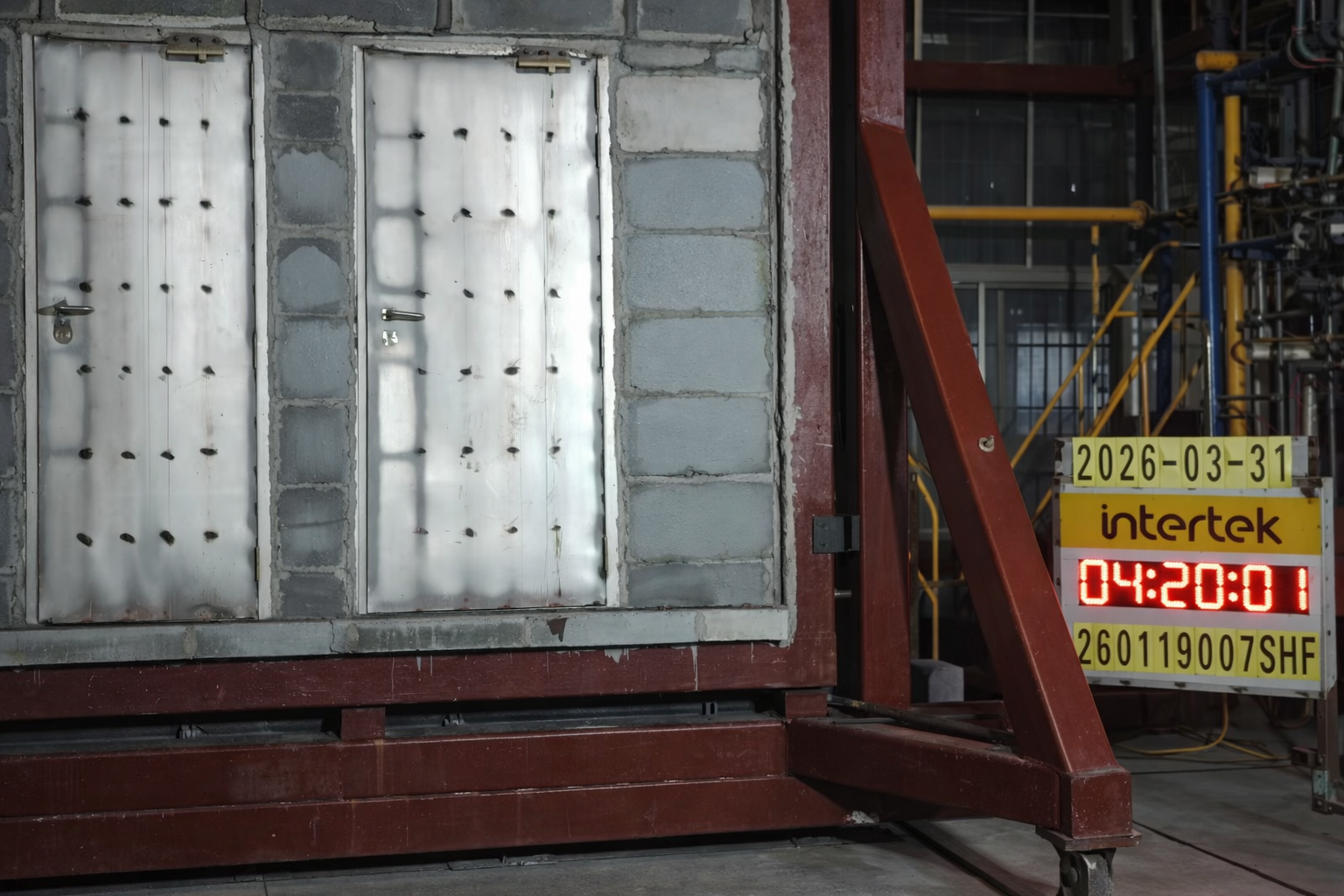
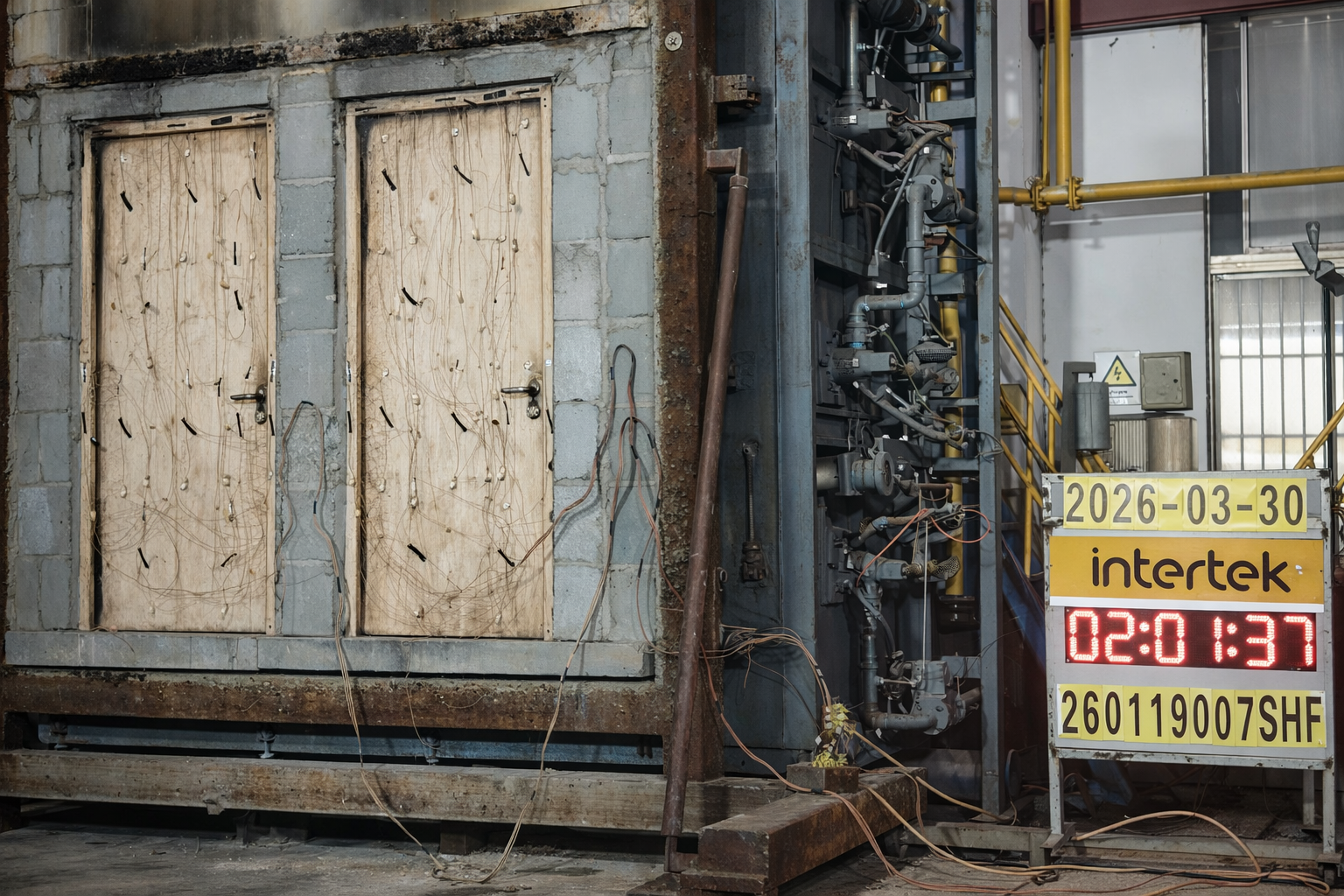
Which fire tests support the listing? The certificate records EN 1634-1:2014+A1:2018 testing of models EN10085ESL and EN8085RL in defined single-leaf steel and timber-composite doors. The steel door opened away from the furnace and achieved 260 minutes of E-Integrity; the certificate states N/A for insulation. The timber-composite door opened into the furnace and achieved 132 minutes of both E-Integrity and I-Insulation. Intertek assessed the other Table 3 models as having the same performance. However, project teams must still verify model scope, installation, doorset compatibility, and local acceptance.
What is the certified durability result? The certificate table records 200,000 cycles for the covered latch-action and roller-latch categories, while TOPTEK tests up to 1,000,000 cycles in its own laboratory. Keep these evidence levels separate. Third-party certification supports declared performance. In contrast, internal endurance testing supports development, batch control, and product improvement.
How Should a Mortice Lock Be Installed on a Fire Door?
How should installation begin? Start with an approved door schedule and evidence review, not with a router or drill. Before work starts, the installer should have the correct model, current drawings, both manufacturers’ instructions, required fire-stopping materials, and a record of permitted preparation. A competent person should perform the work under the project’s certification or inspection scheme.
- Confirm the complete opening: Identify the door leaf, frame, rating, material, thickness, size, opening direction, closer, hinges, seals, and required lock function.
- Match the exact lock: Check the model number, backset, centre distance, case depth, forend dimensions, handing, latch orientation, strike, cylinder, spindle, and lever handle.
- Review the approved preparation: Use the door and lock drawings to locate the mortice pocket and every permitted hole. Do not rely on a generic lock-case template.
- Remove only permitted material: Keep the mortice pocket accurate and close-fitting. Avoid oversized cavities, unnecessary through-holes, damaged core material, or unapproved site modifications.
- Install specified fire protection: Fit the exact intumescent wrap, pad, liner, or seal arrangement stated in the supporting evidence. Do not add or omit products by assumption.
- Fit without distortion: Secure the lock, forend, strike, trim, cylinder, and fixings without bending the lock case or creating friction between internal parts.
- Align the door and strike: Adjust the hinges, closer, seals, gaps, and strike so the latch enters positively without slamming, binding, or being held back.
- Test and document: Verify self-closing, positive latching, lever return, key or thumbturn operation, escape behavior, deadbolt function, and door gaps. Record the installed model and inspection result.
Can this article replace the approved installation instructions? No, it is a technical selection guide rather than a universal installation specification. Door constructions and evidence scopes differ. Therefore, if the evidence does not expressly cover the planned preparation or hardware set, obtain written approval from the responsible technical parties before proceeding.
Do Fire Door Mortice Locks Always Need Intumescent Protection?
Is an intumescent lock wrap always required? Not automatically; the test evidence, assessment, door instructions, or project specification determines the requirement. Intumescent material expands under heat and can protect the lock pocket. However, its type, thickness, position, and coverage must match the approved configuration. A generic wrap cannot make an unsupported lock suitable for a fire door.
Can an installer substitute one intumescent product for another? Only when relevant evidence permits it or the project’s technical route approves it. Different materials expand at different temperatures, pressures, and rates. They may also alter lock-case clearance and operation. Therefore, confirm the required protection around the lock body, forend, strike, cylinder opening, spindle opening, or other local area.
Operational Profile: Matching Mortice Lock Functions to Project Risks
Which function is correct? Choose the lock function from the door schedule and user behavior, then confirm that the mechanical, fire, and egress evidence covers that exact function. This matrix details how specific configurations map to door behaviors and what architectural hardware procurement managers must verify before bulk purchase.
| Lock Function | Typical Operation | Fire-Door Project Check |
|---|---|---|
| Sash lock | Lever operates the latch; cylinder controls the locking function. | Confirm latch engagement, deadbolt use, cylinder operation, and escape requirement. |
| Passage latch | Lever retains/retracts the latch without a deadlocking function. | Confirm that positive latching and access control meet the door schedule. |
| Deadlocking bolt | Cylinder or key controls the deadbolt without a lever-operated latch. | Do not use where the door must self-latch or provide an unapproved escape route. |
| Night latch | Lever and/or cylinder operates the latch according to the selected design. | Confirm re-entry, free-egress behavior, and closer/latch coordination. |
| Bathroom lock | Lever operates the latch; turn operates the privacy deadbolt. | Confirm emergency release, accessibility, privacy, and fire-door scope. |
| Roller latch and deadbolt | Roller supports closing alignment; cylinder controls the deadbolt. | Confirm the closer, pull-handle use, roller pressure, and whether the project requires positive latching. |
| Escape or access mortice lock | Inside operation may retract locking elements in one action, depending on the model. | Verify EN 179, EN 1125, local egress rules, user type, and the complete hardware set separately. |
What functions are available from TOPTEK? The TOPTEK EN 12209 Grade 3 mortise lock range includes 72 mm, 78 mm, and 85 mm centre-distance platforms with sash lock, passage latch, deadbolt, bathroom, night-latch, roller-latch, and access or escape configurations within the relevant model scope. However, buyers should still match the ordered model reference to the current certificate, function drawing, backset, strike, lever, cylinder, and fire-door configuration.
Ten Critical Sourcing and Installation Mistakes to Avoid in Commercial Projects
What causes most problems? The largest risks come from assumptions made between product selection, documentation, door preparation, installation, and final inspection. As a result, avoiding these critical errors prevents price-only sourcing mistakes, wrong backsets, and unapproved component configurations on site.
Mistake 1: Treating Every Mortice Lock as a Fire Door Lock
Can a standard mortice lock qualify because it uses metal? No, material and appearance do not establish fire-door suitability. Therefore, request model-specific evidence and confirm intended use before adding the lock to the door schedule.
Mistake 2: Treating EN 12209 as a Complete Fire-Door Approval
Does EN 12209 alone prove a complete fire rating? No, it provides mechanical-lock performance and relevant fire/smoke-door characteristics, while specific assembly fire resistance requires separate evidence. Therefore, review EN 1634-1 data, door configuration, assessment scope, and installation details together with the EN 12209 documentation.
Mistake 3: Applying Steel-Door Evidence to Timber Doors
Can a supplier advertise a 260-minute steel-door result as 260 minutes on timber doors? No, the construction and performance criteria are different. Instead, TOPTEK’s current certificate separates 260-minute E-Integrity for the defined steel configuration from 132-minute E-Integrity and I-Insulation for the defined timber-composite configuration.
Mistake 4: Making an Oversized Mortice Pocket
Does extra clearance make installation safer? No, unnecessary material removal can weaken the door core and create an unapproved void around the lock case. Therefore, use accurate tooling, the approved preparation drawing, and the permitted tolerance. A dust cover can keep debris out of the mechanism, but it cannot correct an oversized cut-out.
Mistake 5: Guessing the Intumescent Requirement
Is “more intumescent” always better? No, both missing material and unapproved extra material can move the installation away from its evidence. For this reason, use the specified product, thickness, position, and fixing method, and keep it from obstructing the lock mechanism.
Mistake 6: Choosing the Wrong Lock Function
Can a fire-rated sash lock automatically serve an emergency exit? No, safe egress depends on release operation, occupancy, user familiarity, and the exit-hardware standard. Therefore, simulate the levers, cylinder, thumbturn, latchbolt, deadbolt, auxiliary bolt, and power-loss behavior where the project uses electrified hardware.
Mistake 7: Ignoring Strike, Closer, and Door Alignment
Is it enough for the latch to work while someone holds the door open? No, the door must close from the required positions and latch under real closer force. Otherwise, a misaligned strike, excessive seal pressure, loose hinge, weak closer, or binding latch can leave the fire door unlatched.
Mistake 8: Substituting Hardware Without Technical Review
Can the installer change the cylinder, lever, strike, fixings, or lock version because the replacement fits? Not automatically. Dimensional fit is only one check. In addition, a substitution can change the fire evidence, egress behavior, security, spindle engagement, heat transfer, or door preparation.
Mistake 9: Confusing Internal Tests with Third-Party Certification
Can a supplier describe an internal cycle test as a certified result? No, internal validation and third-party certification are different evidence categories. Therefore, TOPTEK separates the 200,000-cycle result in the Intertek certificate from internal testing up to 1,000,000 cycles for engineering and quality control.
Mistake 10: Forgetting Inspection and Maintenance
Does compliance end after installation? No, wear, door movement, loose fixings, damaged seals, dirt, and building alterations can affect closing and latching over time. Therefore, establish an inspection frequency based on local rules, risk, traffic, manufacturer instructions, and the responsible person’s fire-safety plan.
Which Lock Engineering Details Reduce Project Risk?
Which structural details matter after you confirm compliance? Latch construction, lock-case rigidity, dust protection, deadbolt strength, corrosion solution, spring stability, and dimensional consistency affect reliability and service life. However, these features do not create a fire rating. They help the selected fire door mortice lock operate consistently within its approved application.
How is TOPTEK’s European lock case designed? TOPTEK’s published product insight specifies a 1.5 mm lock cover, a one-piece investment-cast SS304 latch component instead of a riveted latch-and-pull-rod assembly, and a dust-protection cover that reduces the risk of wood chips entering the mechanism during door preparation. In addition, selected projects can use different component finishes and SS316 material options for higher corrosion requirements. Confirm the exact model, material, finish, and test route before quotation.
What security performance is available? TOPTEK designed specified deadbolt configurations for Grade 4 security performance, with engineering data recording 5,000 N axial load and 7,000 N side load. However, classification varies by function and model. Buyers should verify the selected certificate row rather than applying this statement to every lock.
How Does TOPTEK Validate Fire Door Mortice Lock Reliability?
How does TOPTEK support repeatable quality? TOPTEK combines third-party certification with incoming inspection, first-article inspection, in-process control, assembly inspection, and in-house laboratory validation. In addition, the laboratory supports mechanical endurance, strength, corrosion, impact, pull-force, cylinder, deadbolt, and environmental testing. TOPTEK uses internal evaluation for development and production control, while third-party evidence supports certification and project submission.
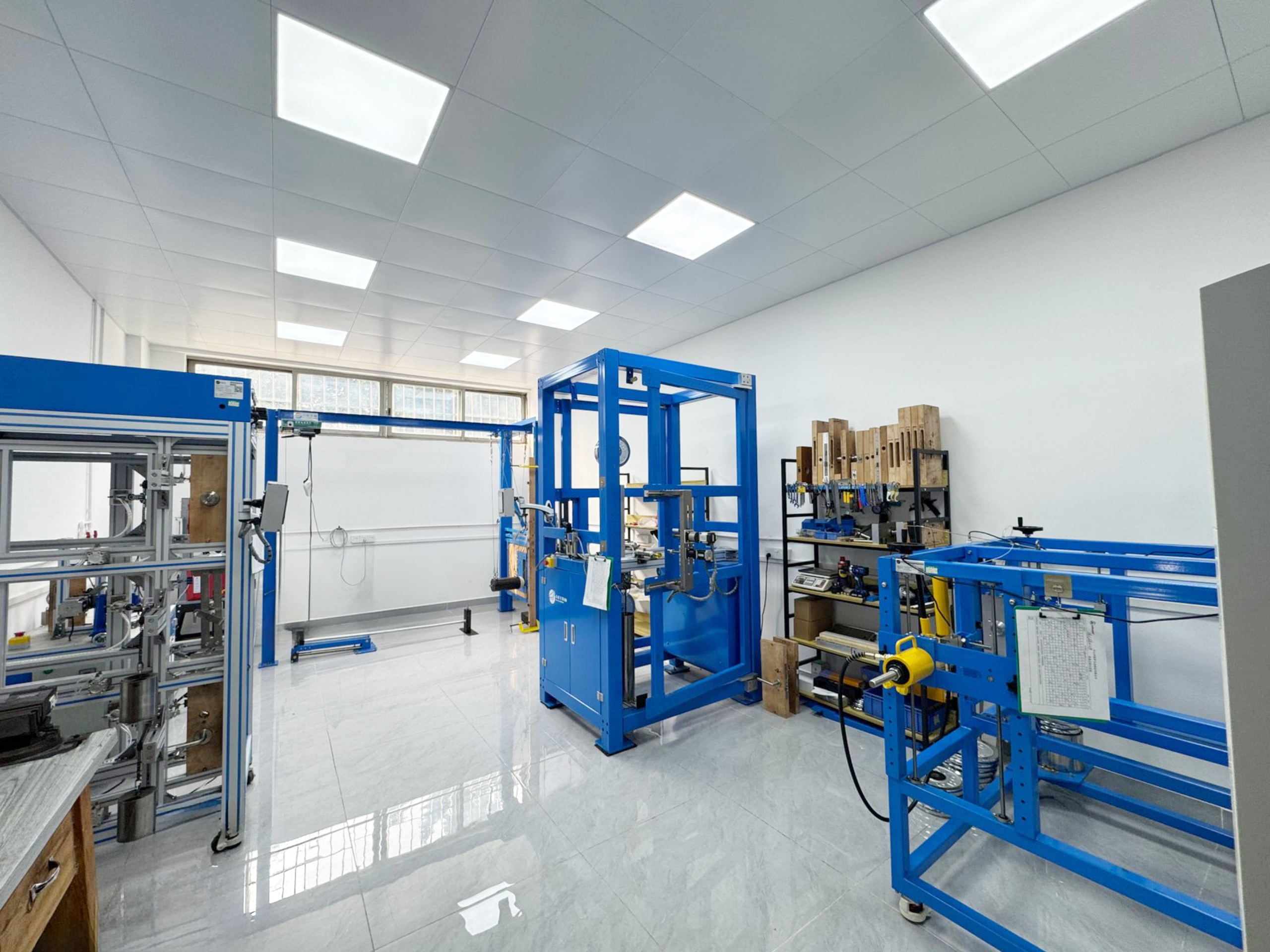
Where can buyers review the product and proof routes? Buyers can compare the European commercial mortise lock platform, read the detailed CE mortise lock and EN 12209 buyer guide, review UL 10C versus EN 1634-1, and check TOPTEK’s commercial door hardware manufacturing capability. For this reason, these resources help separate product selection, fire evidence, regional standards, manufacturing control, and RFQ preparation.
What Should Buyers Include in a Fire Door Mortice Lock RFQ?
What information produces an accurate quotation? A fire door mortice lock RFQ should define the door, market, function, dimensions, evidence requirement, hardware interface, finish, quantity, and sample-validation route. When issuing an RFQ to an EN 12209 Grade 3 mortise lock OEM manufacturer or project supplier, including full dimensional drawings and hardware compatibility lists ensures an accurate technical match.
- Target country, project specification, and authority or certification route.
- Steel, timber, or composite door construction, rating, leaf thickness, size, and opening direction.
- Door schedule and required function for each opening.
- Backset, centre distance, lock-case dimensions, forend, strike, handing, and door-preparation drawing.
- Lever handle, spindle, euro-profile cylinder, thumbturn, escutcheon, closer, hinge, and seal details.
- EN 12209 classification, CE/CPR documentation, EN 1634-1 evidence, EN 179 or EN 1125 requirement, and any local rule.
- Intumescent protection and permitted installation configuration.
- Material, corrosion requirement, finish, logo, packaging, quantity, forecast, and delivery schedule.
- Sample quantity, installation trial, function test, documentation review, and approval responsibility.
Which supplier terms are relevant without changing this article’s search intent? Project buyers may compare an EN 12209 Grade 3 mortise lock supplier, EN12209 lock case manufacturer, fire-rated EN mortise lock supplier, or OEM/ODM euro-profile mortice lock factory after establishing the technical requirements. However, TOPTEK recommends completing the compatibility and RFQ checklist before comparing price. Re-machining doors, replacing locks, or resubmitting documents can cost more than the lock-price difference.
Why Work With TOPTEK on Fire Door Mortice Lock Projects?
Why is TOPTEK relevant to fire-door manufacturers and commercial project buyers? TOPTEK combines listed EN 12209 lock models, verified Intertek fire-door evidence, 72/78/85 mm platforms, OEM/ODM engineering, controlled manufacturing, and an in-house laboratory. Established in 1991, TOPTEK operates a 13,000 m² facility with more than 220 employees and over 20 R&D engineers. As a result, its processes support lock brands, fire-door manufacturers, distributors, contractors, specifiers, and access-control integrators.
What should buyers ask TOPTEK to review? Send the door schedule, target market, fire-door construction, rating, and lock function requirements directly to our technical desk. Our engineering team will map out a precise hardware compliance blueprint to de-risk your project before bulk shipping commences.
FAQ: EN 12209 Fire Door Mortice Lock Compliance
Q1: Does a certified EN 12209 lock guarantee suitability for all fire doors?
A1: No. EN 12209 certifies the mechanical lock hardware attributes. Fire suitability depends entirely on the full door assembly test under EN 1634-1, matching the exact lock model, door core material, and installation scope.
Q2: Can I use the same lock evidence for both steel and timber fire doors?
A2: No. Steel and timber conduct heat differently. For instance, TOPTEK’s Intertek certificate specifies a 260-minute E-Integrity rating for single-leaf steel doors, but a 132-minute rating for timber-composite door configurations.
Q3: How can I request technical CAD files and test reports from TOPTEK?
A3: Project teams and OEM partners can contact the TOPTEK technical department directly through our contact page to secure precise CAD profiles, hardware scheduling templates, and official certification copies.