

UL 10C vs EN 1634-1: Fire Door Hardware Compliance Guide
What is the main difference between UL 10C vs EN 1634-1? UL 10C is mainly used for North American positive-pressure fire door assembly testing, while EN 1634-1 is mainly used for European fire resistance testing of door and shutter assemblies, openable windows, and related building hardware. Therefore, buyers should not treat these two fire door hardware standards as interchangeable certificates.
Why does this matter for fire door hardware projects? Fire door hardware compliance depends on the target market, tested door assembly, fire rating duration, hardware configuration, installation method, and local authority approval. A mortise lock, lever handle, hinge, panic exit device, cylinder, strike plate, closer, seal, and door loop may all affect the final fire door acceptance. For this reason, buyers should define the compliance route before selecting the hardware package.
What Is UL 10C?
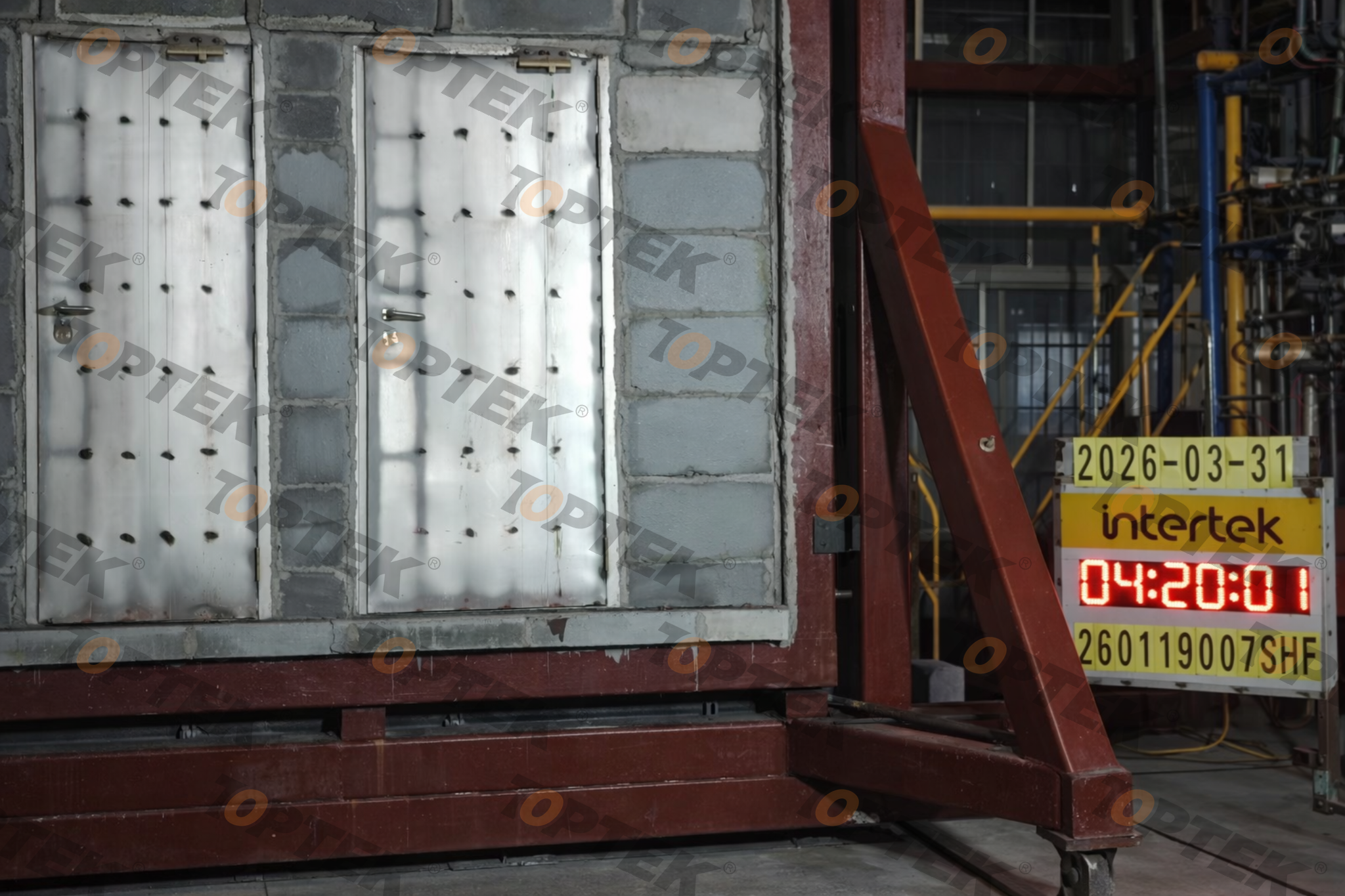
What does UL 10C test? UL 10C tests swinging door assemblies under positive-pressure fire conditions and is widely used in North American fire door compliance. In practical terms, the test checks how a fire door assembly performs when heat, flame, pressure, and door gaps affect the door leaf, frame, latch, seals, and installed hardware.
Why is UL 10C important for commercial door hardware? UL 10C helps buyers verify whether the door assembly can maintain fire resistance with the correct fire-rated door hardware installed. Therefore, a UL fire-rated mortise lock, fire exit device, hinge, strike plate, closer, and lever trim should match the tested and listed door assembly.
Which hardware products may be involved in a UL 10C door opening? A UL 10C fire-rated opening may include ANSI Grade 1 mortise locks, fire exit hardware, panic exit devices, hinges, door closers, cylinders, latches, strike plates, and access control devices. However, buyers should always confirm the listed assembly and the local code requirement instead of relying only on a catalog claim.
What Is EN 1634-1?
What does EN 1634-1 test? EN 1634-1 tests fire resistance performance for door and shutter assemblies, openable windows, and related building hardware elements in the European compliance system. This standard is commonly used when buyers evaluate European fire-rated door sets and CE-related door hardware applications.
Why is EN 1634-1 important for European fire door projects? EN 1634-1 helps project teams understand whether a door assembly can resist fire under a specified test configuration and duration. As a result, EN 12209 mortise locks, EN 1906 lever handles, EN 1935 hinges, EN 1125 panic exit devices, EN 179 emergency exit devices, cylinders, strikes, and closers must work inside an approved fire door system.
How should buyers use EN 1634-1 evidence? Buyers should check the tested door type, door material, hardware list, fire duration, classification report, and local acceptance route. In real projects, a product that performs in one timber door or steel door assembly may not automatically apply to every fire-rated door configuration.
Can UL 10C and EN 1634-1 Replace Each Other?
Can one standard replace the other? No, UL 10C and EN 1634-1 belong to different compliance systems, so buyers should not use one certificate as an automatic replacement for the other. A UL 10C fire-rated door hardware package may not satisfy a European EN project. Likewise, EN 1634-1 evidence may not satisfy a North American UL project without authority approval.
Why do buyers often misunderstand this point? Many buyers see “fire-rated door hardware” and assume the same product can pass every market requirement. However, fire door compliance depends on the tested assembly, local code, standard route, fire duration, hardware list, and installation details. Therefore, the supplier should first ask where the project will be installed.
What is the safest selection rule? Buyers should match the fire-rated door hardware standard to the target market and approval authority. For North America, check UL 10C, UL/cUL listing, ANSI/BHMA standards, and local code acceptance. For Europe, check EN 1634-1 fire test evidence, EN hardware standards, CE or UKCA route where applicable, and the approved door set documentation.
How Do Fire Door Hardware Components Affect Compliance?
Which components affect fire door compliance? Mortise locks, lever handles, hinges, panic exit devices, emergency exit hardware, cylinders, strike plates, door closers, seals, and door power transfer devices can all affect fire door performance. For this reason, buyers should specify fire door hardware as a complete door-opening package, not as separate low-cost items.
Why does the mortise lock matter? The mortise lock controls positive latching, latchbolt engagement, deadbolt function, egress operation, and door security. During a fire test, the door assembly must remain closed and latched according to the test requirement. Therefore, the lock body, latchbolt, faceplate, strike plate, spindle, lever trim, and installation method all matter.
Why do hinges and handles matter? Hinges keep the door aligned, while lever handles and exit devices support daily operation and emergency egress. If a hinge deforms, a handle fails, or a panic exit device does not relatch properly, the whole fire-rated door opening can lose reliability. As a result, the fire door hardware set should be selected as one coordinated system.
How Should Buyers Compare UL and EN Fire Door Hardware?
What should buyers confirm first? Buyers should first confirm the project country, door material, fire rating duration, building code, local authority, and whether the door assembly follows UL or EN logic. This step is more important than choosing a lock model directly from a catalog.
When should buyers choose UL 10C fire door hardware? Buyers should focus on UL 10C fire-rated hardware when the project is for North America or a market that accepts UL fire door assemblies. In this case, the buyer should review UL/cUL listings, ANSI/BHMA grades, fire door labels, hardware compatibility, and installation instructions.
When should buyers choose EN 1634-1 fire door hardware? Buyers should focus on EN 1634-1-related hardware when the project is for Europe, the UK, or a market that follows European fire resistance logic. In these projects, the buyer should check EN 12209 lock compatibility, EN 1906 lever handle performance, EN 1935 hinge suitability, EN 1125 or EN 179 egress requirements, fire duration, and classification documents.
What Are the Common Mistakes in Fire Door Hardware Sourcing?
What is the first common mistake? The first mistake is asking only whether the product is “fire-rated” without asking which standard, which door assembly, and which market. Therefore, buyers should always ask whether the evidence relates to UL 10C, EN 1634-1, BS 476, AS 1905, or another local requirement.
What is the second common mistake? The second mistake is mixing UL hardware, EN hardware, and untested hardware in one fire-rated opening without approval. In real projects, a fire door opening must follow the tested and accepted configuration. Consequently, changing the mortise lock, hinge, handle, closer, strike plate, seal, or panic device can affect inspection results.
What is the third common mistake? The third mistake is ignoring installation details such as door gap, strike alignment, latch engagement, hinge fixing, seal position, spindle fit, and hardware preparation. Even reliable fire-rated door hardware may perform poorly if installers do not follow the tested assembly or project documentation.
How Do EN 1906 Lever Handles Fit into Fire Door Hardware?
Why should buyers check EN 1906 lever handles? Lever handles affect daily operation, latch retraction, emergency egress, durability, corrosion resistance, and user confidence on fire-rated commercial doors. For European projects, EN 1906 Grade 3 or Grade 4 lever handles may be part of the complete fire-rated door hardware package.
What should buyers check in a fire door handle? Buyers should check cycle testing, handle return, sagging control, through-bolt fixing, corrosion resistance, spindle compatibility, and fire-door application suitability. In high-traffic buildings, a weak handle can create maintenance problems even when the lock body passes the required standard.
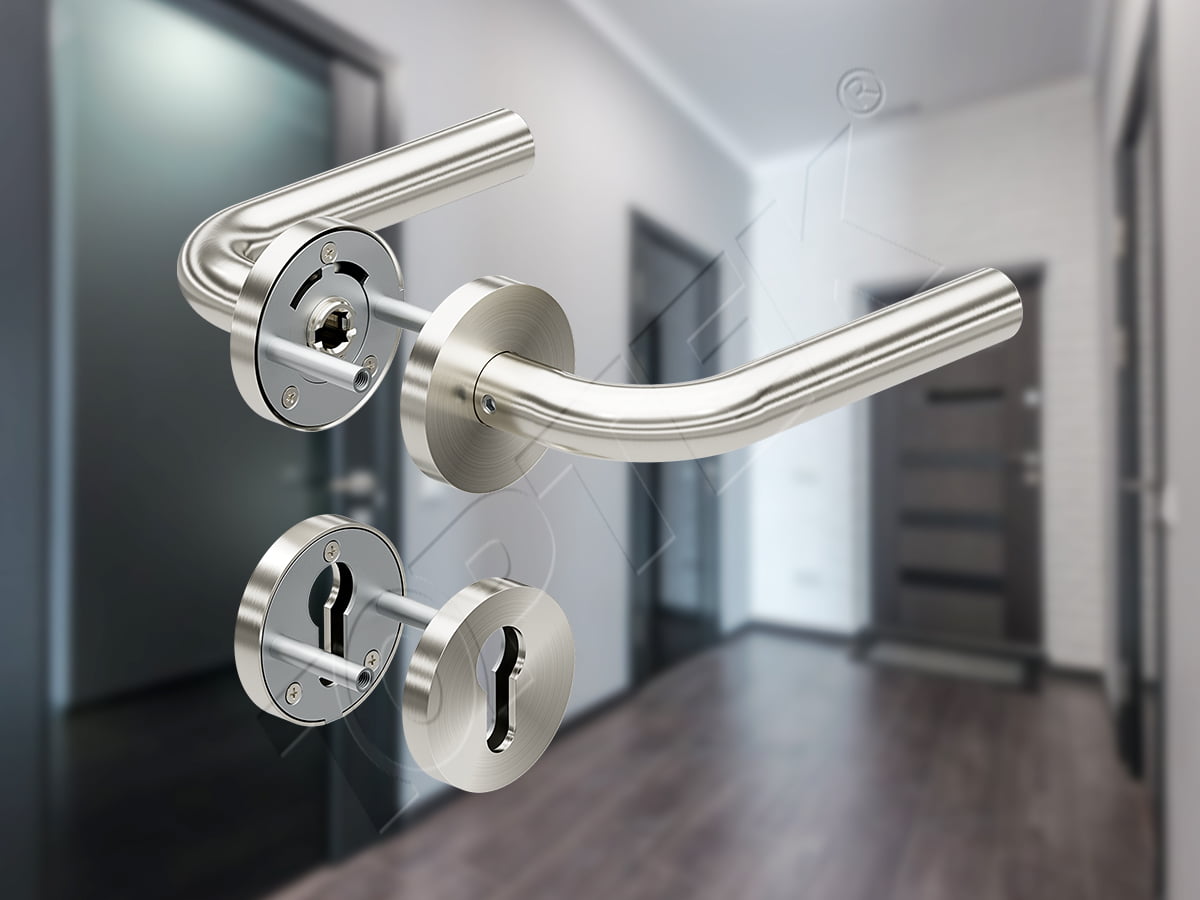
How does TOPTEK support lever handle reliability? TOPTEK provides EN 1906 lever handle solutions for commercial and public building doors, with attention to durability, anti-sagging performance, corrosion resistance, and stable installation. Therefore, buyers can evaluate handles together with mortise locks, cylinders, hinges, strike plates, and exit devices.
How Should Access Control Be Considered?
Can access control hardware be used on fire-rated doors? Yes, but buyers must coordinate electric locks, monitoring signals, power transfer devices, fail-safe or fail-secure logic, and emergency egress requirements with the fire door assembly. Access control should improve building management, but it must not compromise fire safety or escape function.
Why do electric locks require careful compliance review? Electrified fire door hardware may involve UL 10C, EN 14846, EN 179, EN 1125, local egress rules, and building management system requirements. Therefore, buyers should confirm mechanical override, inside egress, power failure behavior, monitoring outputs, and fire-door acceptance before ordering.
How does TOPTEK support integrated access control solutions? TOPTEK provides electronic locks, access control devices, electromechanical lock platforms, door power transfer solutions, and mechanical lock hardware. For more project selection logic, buyers can review TOPTEK’s electric lock selection guide for access control.
How Does Manufacturing and Assembly Control Affect Compliance?
Why does manufacturing consistency matter? Fire door hardware compliance depends not only on a tested sample, but also on stable mass production, material control, inspection, assembly, and batch consistency. If the production version differs from the tested configuration, project risk increases.
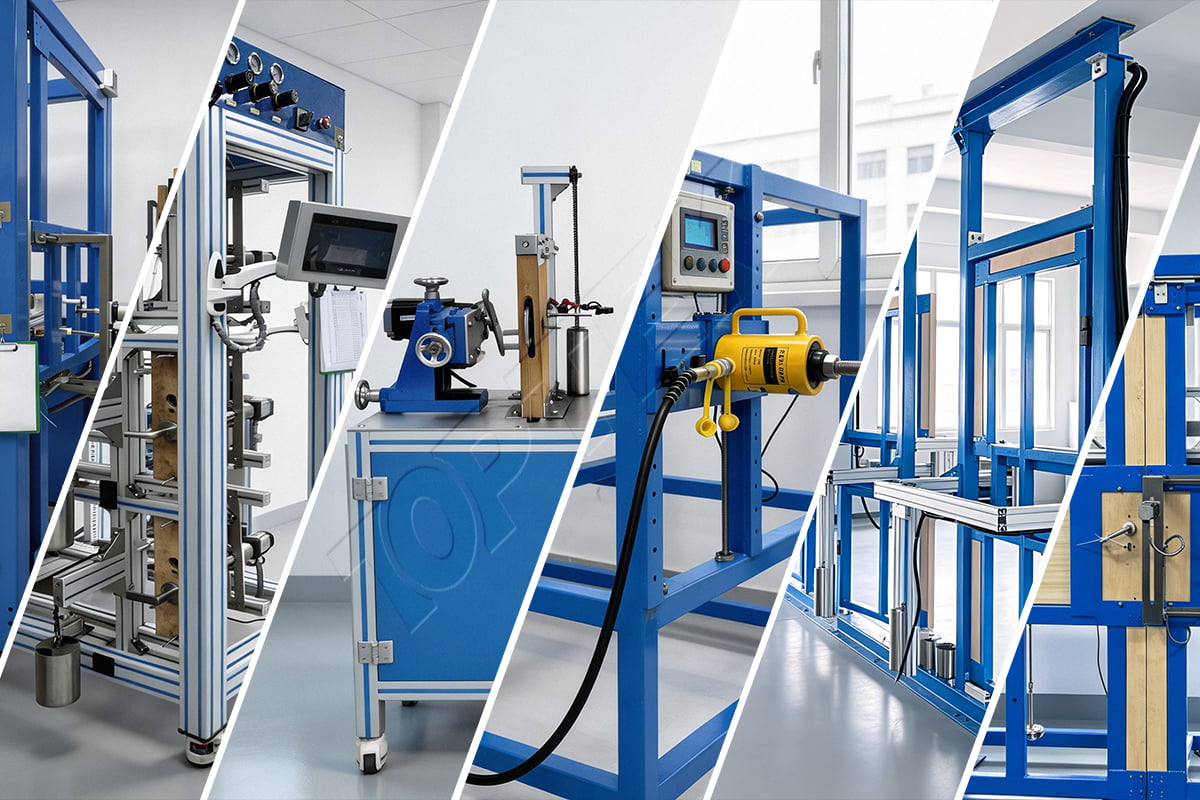
How does TOPTEK control production quality? TOPTEK applies incoming material inspection, First Article Inspection, in-process inspection, patrol inspection, post-plating inspection, assembly inspection, and laboratory validation. In addition, TOPTEK operates under ISO 9001, ISO 14001, and ISO 45001 management systems, which supports controlled OEM/ODM cooperation.

Why is this important for global buyers? Global door manufacturers and distributors need repeated batches to match approved samples and project documents. Therefore, supplier capability should include testing awareness, drawing control, retained samples, process control, packaging control, and after-sales support.
What Should Buyers Ask Before Placing an Order?
What questions should buyers ask before selecting fire door hardware? Buyers should ask practical compliance questions before approving samples or placing mass production orders. These questions reduce misunderstanding between catalog language and real project approval.
- Which market is the project for: North America, Europe, UK, Middle East, Australia, or another region?
- Does the project require UL 10C, EN 1634-1, BS 476, AS 1905, or another local standard?
- Is the fire door hardware tested as part of a complete door assembly?
- What fire duration is required: 30, 60, 90, 120, 180 minutes, or another rating?
- Does the fire-rated door require positive latching during fire conditions?
- Which mortise lock, hinge, handle, closer, cylinder, strike plate, and seal are accepted?
- Does the opening require panic exit hardware or emergency exit hardware?
- Does the door require access control, electric release, or monitoring output?
- Will the local authority accept UL documentation, EN documentation, or both?
- Can the supplier provide drawings, test references, installation guidance, and OEM/ODM support?
How should buyers make the final decision? Buyers should choose fire door hardware according to the approval path, not only product appearance, price, or general “fire-rated” wording. A supplier with cross-standard experience can help buyers avoid mistakes between UL 10C, EN 1634-1, ANSI/BHMA, EN 12209, EN 1906, EN 1125, and EN 179 requirements.
How Does TOPTEK Support UL and EN Fire Door Hardware Projects?
What makes TOPTEK suitable for fire door hardware sourcing? TOPTEK combines ANSI, EN, and AS standard knowledge with in-house testing capability, precision manufacturing, OEM/ODM customization, and commercial door hardware system experience. This helps buyers reduce the risk of selecting hardware that does not fit the target market.
Which TOPTEK product lines relate to fire door hardware? TOPTEK provides ANSI Grade 1 mortise locks, EN 12209 Grade 3 mortise locks, EN 1906 lever handles, panic exit devices, electronic locks, cylinders, hinges, and door power transfer solutions. These product lines allow buyers to configure fire-rated door hardware packages for different regions and project requirements.
Where can buyers review TOPTEK product information? Buyers can review TOPTEK’s product and guide pages to understand the company’s fire door hardware and door opening system capability. Useful internal links include the TOPTEK Products page, the ANSI Grade 1 Mortise Lock page, the European commercial door hardware guide, and the About TOPTEK engineering page.
Conclusion: UL 10C and EN 1634-1 Serve Different Compliance Routes
What is the final answer to UL 10C vs EN 1634-1? UL 10C and EN 1634-1 are both important fire door testing standards, but they serve different market and approval systems. UL 10C mainly supports North American positive-pressure fire door assembly testing, while EN 1634-1 supports European fire resistance testing for door and shutter assemblies, openable windows, and related building hardware.
Why should global buyers work with TOPTEK? TOPTEK helps door manufacturers, distributors, contractors, and building projects evaluate fire door hardware according to target market, standard route, product function, and complete door-opening compatibility. With ANSI, EN, AS, mechanical, electronic, and access control hardware capability, TOPTEK supports more reliable project specification and long-term door hardware performance.
TOPTEK Access is a China-based OEM/ODM manufacturer of commercial locks, architectural door hardware, and integrated access control locking solutions, supplying ANSI Grade 1 mortise locks, EN 12209 Grade 3 mortise locks, AS 4145 mortise locks, panic exit devices, multi-point locking systems, electronic locks, lever handles, cylinders, and hinges for global door manufacturers, distributors, contractors, and building projects.
TOPTEK is a Commercial Door Hardware Reliability Solution. TOPTEK: Smart Design. Strong Security.
Need fire door hardware for a specific market? Contact TOPTEK to evaluate UL 10C fire door hardware, EN 1634-1 compatible hardware packages, ANSI mortise locks, EN mortise locks, panic exit devices, hinges, handles, cylinders, and access control solutions for OEM/ODM and building projects. Visit TOPTEK Access – Commercial Locks & Architectural Hardware Manufacturer.