

How Can a Mortise Lock Support Emergency Egress?
How can a mortise lock support emergency egress? A mortise lock supports emergency egress when people can open the door from inside quickly, safely, and without a key. The lock must still keep secure latching and fire-door performance where the project requires it. In commercial door hardware projects, Mortise Lock Emergency Egress involves the lock body, lever handle, latchbolt, deadbolt, cylinder, panic hardware, access control logic, and fire-rated door assembly.
Why should buyers understand this before choosing a lock? The wrong lock function can create unsafe escape, failed inspection, access control conflict, and fire-door compliance risk. Therefore, door manufacturers, lock brands, distributors, contractors, fire door suppliers, and system integrators should review emergency egress from the specification stage.
What Does Emergency Egress Mean for a Mortise Lock?
What is emergency egress in a mortise lock application? Emergency egress means people can exit through the door quickly during an emergency. They should not need a key, tool, or complicated operation. This requirement often applies to offices, hotels, hospitals, schools, apartments, public buildings, transport facilities, and fire-rated escape routes.
How is a mortise lock different from a simple latch? A mortise lock has an internal lock case that controls several functions in one body. It may control the latchbolt, deadbolt, auxiliary latch, spindle, cylinder, lever handle, thumbturn, and monitoring outputs. As a result, the right mortise lock can balance security, access control, fire safety, and inside escape.
Which door type should buyers confirm first? Buyers should first identify the door function before selecting the lock. The door may be a normal commercial door, fire-rated door, emergency exit door, panic exit door, access control door, or apartment entrance door. After that, buyers can match the correct standard route, such as EN 12209, EN 179, EN 1125, EN 14846, UL, ANSI/BHMA, or AS 4145.
How Does a Mechanical Mortise Lock Allow Safe Escape?
How does the inside handle support emergency exit? The inside lever can retract the latchbolt through the spindle and lock follower. This allows the user to open the door from inside in one clear action where the lock function supports it. Therefore, the internal lock function matters more than the outside appearance.
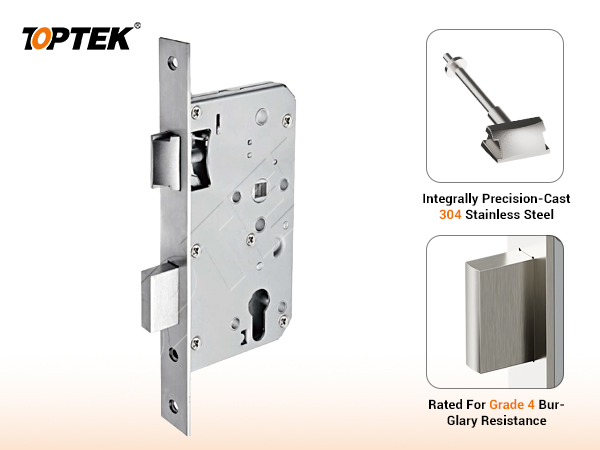
Why does the latchbolt design matter? The latchbolt must retract smoothly and project reliably after the door closes. Poor latch movement can cause hard opening, poor relatching, or user complaints. TOPTEK’s EN 12209 Grade 3 Mortise Lock platform uses a one-piece investment-cast SUS304 latch assembly. This structure helps reduce loosening risk compared with traditional riveted latch designs.
How can the lock keep security while supporting escape? The correct escape mortise lock allows inside egress while limiting unauthorized access from outside. The outside side can use cylinder control, lever trim, reader control, or restricted access logic. For this reason, buyers should define the outside access method before confirming the lock function.
What Is the Role of EN 179 and EN 1125?
How do EN 179 and EN 1125 relate to emergency egress? EN 179 usually applies to emergency exit doors used by familiar occupants. EN 1125 usually applies to panic exit doors used by the public. Therefore, project teams should match the lock and exit hardware to user behavior.
When is EN 179 more relevant? EN 179 is more relevant for trained users or familiar occupants. These doors may appear in offices, staff areas, service rooms, and controlled commercial zones. In this case, a lever-operated emergency exit lock may suit the project if the authority accepts it.
When is EN 1125 more relevant? EN 1125 is more relevant when public users may panic or may not know the building. These doors often need panic exit devices or panic bars. Therefore, buyers should review the mortise lock, panic hardware, fire-rated door requirement, and local approval route together.
How Does an Escape Mortise Lock Differ from a Standard Lock?
What makes an escape mortise lock different? An escape mortise lock focuses on quick inside opening and reliable latching. A standard sash lock or deadbolt lock may focus more on daily locking. By contrast, an escape mortise lock must support life-safety logic as well as security.
Which TOPTEK models support this selection logic? TOPTEK’s European mortise lock platform covers 72, 78, and 85 series functions. The range includes mortise sash lock, passage lock, deadbolt lock, bathroom lock, night latch, escape lock, classroom lock, roller latch lock, and anti-thrust escape lock. This gives buyers a broader EN mortise lock platform for different commercial doors.
Why does this matter for project schedules? One building may need several lock functions across different doors. A project may include office doors, fire doors, apartment doors, service doors, escape doors, and access control doors. Therefore, buyers should build a door schedule instead of using one generic lock function for every opening.
How Does Fire Door Compatibility Affect Emergency Egress?
Can every mortise lock be used on a fire-rated escape door? No, the lock must match the tested fire door assembly and local approval route. Buyers should check the door leaf, frame, latch, strike, handle, hinge, closer, seal, and installation method. Fire door hardware compliance works as a complete opening, not as one isolated lock body.
What fire test references support TOPTEK’s EN mortise lock platform? TOPTEK’s European mortise lock platform includes fire test references for steel and timber fire doors. The platform includes steel fire door references up to 260 minutes and timber fire door references up to 132 minutes. However, final acceptance still depends on the tested assembly and local authority.
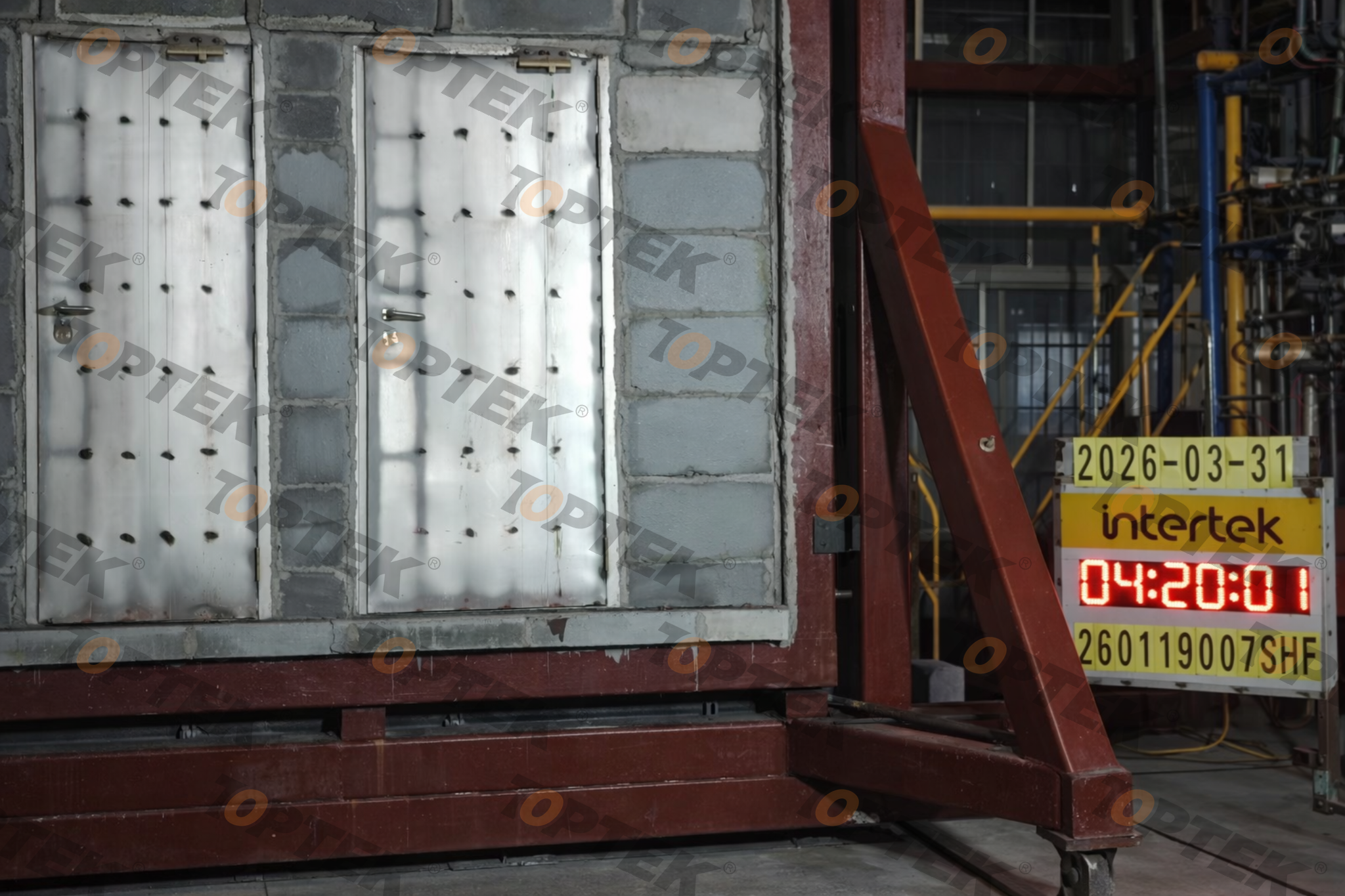
Why is positive latching important? A fire-rated door usually needs to remain closed and latched during fire conditions. At the same time, people must still escape from the inside when required. Therefore, Mortise Lock Emergency Egress must balance immediate escape and reliable fire-door latching.
How Does Access Control Change Emergency Egress?
Can an access control mortise lock support emergency egress? Yes, but access control must not block safe escape from inside. Project teams should coordinate the mortise lock, reader, controller, electric release, power failure mode, monitoring signal, mechanical override, and local code requirement.
Why should buyers not choose only by fail-safe or fail-secure habit? Fail-safe and fail-secure logic must match the door function, security level, fire strategy, and egress rule. If buyers choose the wrong mode, the door may create a security risk or an unsafe escape condition. Therefore, project teams should confirm this early.
How does TOPTEK support electromechanical egress applications? TOPTEK provides EN solenoid-controlled self-locking mortise locks, motorized mortise locks, electronic locks, and access control devices. These platforms can support commercial door projects that need mechanical egress and electronic release. For related selection logic, buyers can review TOPTEK’s electric lock selection guide for access control.
What Testing Should Buyers Ask For?
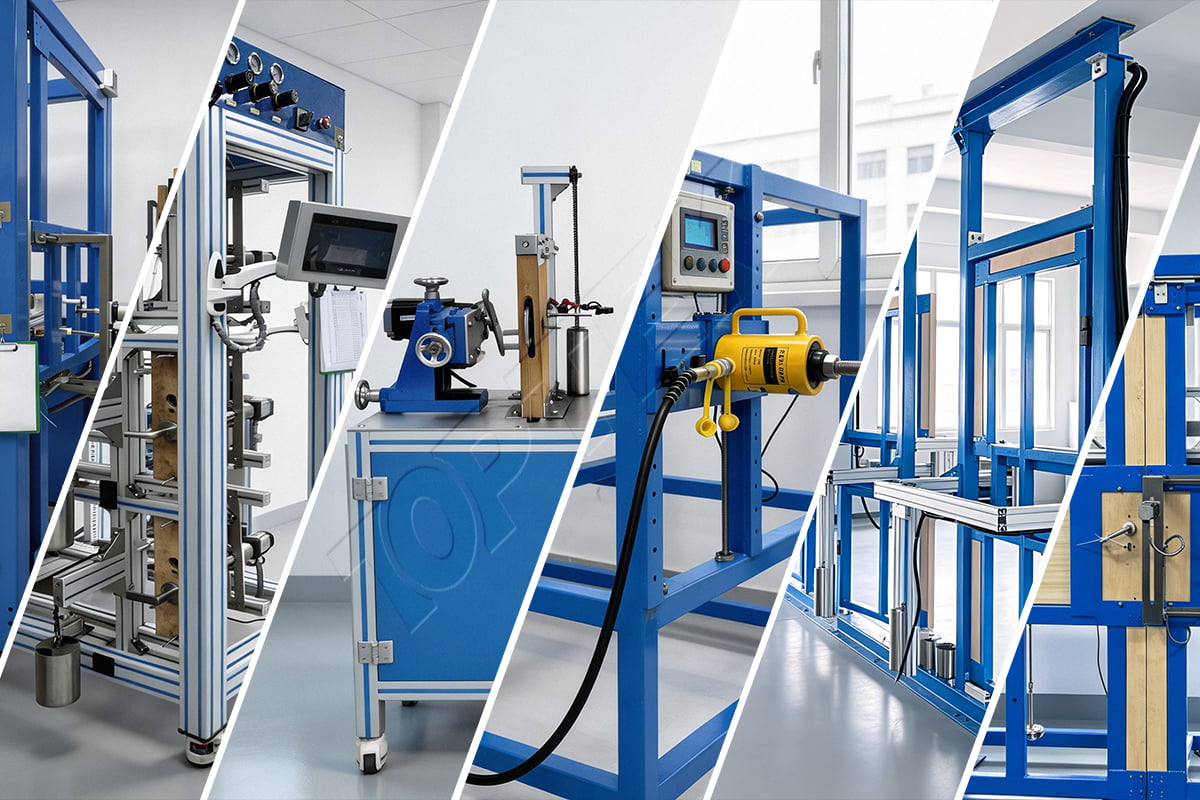
Why is testing important for emergency egress locks? Testing helps verify reliable operation after repeated use, fire-door preparation, and access control integration. A lock may work during a sample demonstration. However, it may still fail later if durability, alignment, material, or internal structure is weak.
What test data should buyers review? Buyers should ask about EN 12209 classification, EN 1634-1 fire test evidence, EN 179 or EN 1125 compatibility, EN 14846, cycle testing, corrosion resistance, latch strength, and quality control. TOPTEK’s CE-certified EN mortise locks show 300,000-cycle durability in the certification route. In addition, TOPTEK’s internal laboratory can test up to 1,000,000 cycles for product validation.
Where can buyers review external compliance references? Buyers can use recognized testing bodies to understand door hardware, access control, and egress requirements. UL provides information about access and egress control locking configurations. Intertek also provides testing services for locks, hinges, latches, closers, and exit devices. Buyers can review UL access and egress control guidance and Intertek door hardware testing.
What Structural Details Improve Reliability?
Which internal structure points should buyers check? Buyers should check the latchbolt design, deadbolt strength, lock case cover, dust protection, spring structure, follower, strike plate fit, handle operation, and cylinder interaction. These details affect daily use and emergency escape performance.
How does TOPTEK improve latch and lock body reliability? TOPTEK uses a 1.5mm lock case cover, one-piece SUS304 investment-cast latch construction, dust protection cover, and reinforced deadbolt design. This helps reduce installation debris risk, rivet loosening risk, and long-term operation failure in commercial projects.
Why does deadbolt strength still matter on escape-related doors? Security still matters because many escape doors also protect apartments, offices, service areas, or controlled zones. TOPTEK’s EN mortise lock deadbolt can reach Grade 4 security performance, including 5,000N axial pressure and 7,000N side pressure. Therefore, buyers can evaluate both safety and security.
How Should Buyers Avoid Real Project Failures?
What real project failures should buyers avoid? Buyers should avoid unstable certification performance, installation debris, poor latch return, hard operation, corrosion failure, and inconsistent mass production quality. These problems can cause inspection delay, product rejection, high maintenance cost, and brand damage.
Why does dust protection matter during installation? Wood chips or installation residues can enter the lock case and cause jamming, rough operation, or functional failure. TOPTEK adds dust protection to the lock body to reduce this risk during door preparation and installation. This detail is useful for wooden fire doors and project-site conditions.
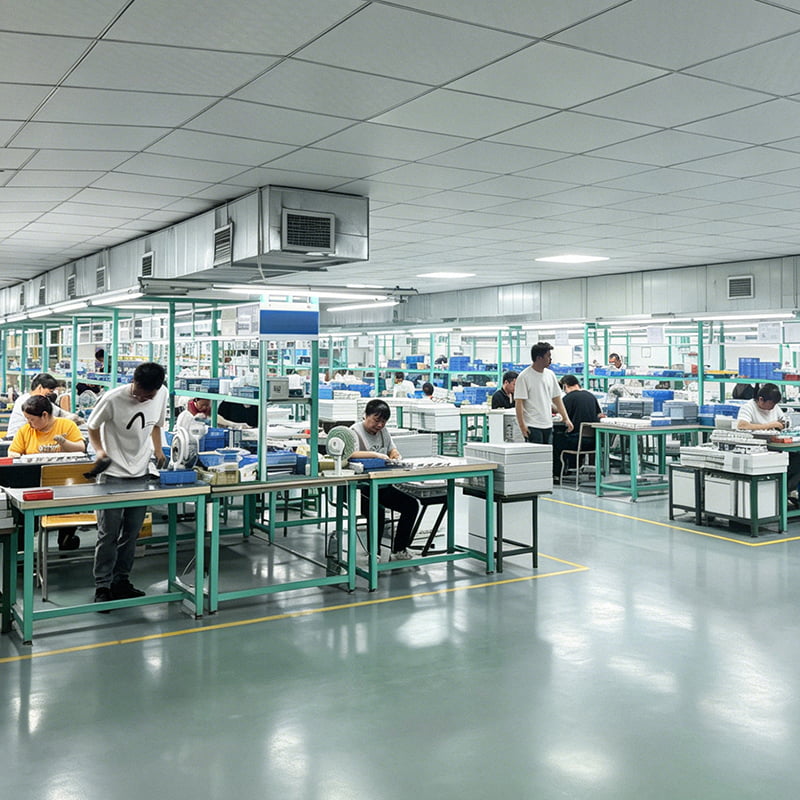
How does batch consistency protect buyers? Batch consistency helps production match the approved sample, tested performance, drawings, and finish requirements. Therefore, TOPTEK uses FAI, in-process inspection, post-plating inspection, assembly inspection, and laboratory validation before mass production.
How Does Regional Market Selection Affect Egress Lock Choice?
Should buyers use the same mortise lock for every market? No, different markets require different standards, dimensions, fire-door rules, egress requirements, cylinder formats, and approval routes. For Europe, buyers may need EN 12209, EN 179, EN 1125, EN 14846, and EN 1634-1. For North America, ANSI/BHMA and UL routes may apply.
How should Australian projects be handled? Australian projects may require an Australian standard mortise lock or AS 4145 mortise lock. Buyers searching for fire door mortice lock Australia, commercial mortice lock AS 4145, or AS 4145 compliant lock manufacturer should confirm local requirements before choosing a European or ANSI lock body.
Why does TOPTEK’s cross-standard capability matter? TOPTEK provides ANSI Grade 1 mortise locks, EN 12209 Grade 3 Mortise Locks, AS 4145 mortise locks, electronic locks, cylinders, panic exit devices, and hinges. As a result, international buyers can discuss one complete door hardware package while matching regional compliance logic.
How Should Buyers Specify an Emergency Egress Mortise Lock?
What should buyers confirm before placing an order? Buyers should confirm the door function, inside operation, outside access method, fire rating, access control logic, monitoring need, exit requirement, lock standard, and local approval route. This prevents the common problem of choosing a lock that looks correct but fails during approval or installation.
- Confirm whether the door needs emergency exit, panic exit, fire-rated door, or access control function.
- Confirm whether EN 179, EN 1125, EN 14846, EN 12209, EN 1634-1, ANSI/BHMA, UL, or AS 4145 applies.
- Confirm whether the inside lever must retract only the latch or also release locking points.
- Confirm whether the outside side needs key control, lever trim, reader control, or restricted access.
- Confirm whether fail-safe or fail-secure logic is required for electrified locks.
- Confirm latchbolt, deadbolt, follower, cylinder, strike plate, and spindle compatibility.
- Confirm door material, door thickness, backset, center distance, and lock case dimensions.
- Confirm fire test evidence, tested assembly, installation drawing, and local authority acceptance.
- Confirm corrosion requirement, optional 316 stainless steel components, and finish consistency.
- Confirm retained sample control, packaging, spare parts, and long-term supply support.
How should buyers evaluate a supplier? Buyers should choose a supplier that understands emergency egress, fire door hardware, access control, mechanical lock functions, standards, testing, and mass production control. A supplier that only offers a low-price lock body may not support approval, engineering discussion, or long-term maintenance.
How Does TOPTEK Support Mortise Lock Emergency Egress Projects?
What makes TOPTEK suitable for these applications? TOPTEK combines EN 12209 mortise lock development, escape lock functions, access control lock platforms, in-house testing, precision manufacturing, OEM/ODM customization, and global project experience. Therefore, buyers can evaluate mechanical egress, fire-rated door compatibility, electronic release, and regional standards together.
Which TOPTEK pages support this article? Buyers can review TOPTEK’s product and guide pages to understand EN mortise lock, escape door, access control, and complete door hardware capability. Useful internal links include the EN 12209 Grade 3 Mortise Lock category, the Anti-thrust Escape Mortise Lock EN85ESL page, the EN 12209 Grade 3 Mortise Lock OEM / ODM page, and the TOPTEK Products page.
Why does complete hardware thinking matter? Emergency egress does not depend on the mortise lock alone. It also depends on lever handles, cylinders, strikes, hinges, panic hardware, door closers, seals, access control devices, and the tested door assembly. Therefore, TOPTEK builds its solution around complete commercial door hardware reliability.
Conclusion: How a Mortise Lock Supports Safe Escape
What is the final answer? A mortise lock supports emergency egress when its internal function allows safe inside opening, reliable latching, fire-door compatibility, and correct access control logic. For commercial projects, Mortise Lock Emergency Egress should be selected by door function, standard route, fire requirement, user behavior, and system integration.
Why should global buyers consider TOPTEK? TOPTEK helps buyers configure EN 12209 escape mortise locks, anti-thrust escape locks, fire-rated mortise locks, access control locks, panic hardware, lever handles, cylinders, hinges, and complete project door hardware packages. With in-house testing, precision manufacturing, OEM/ODM support, and cross-standard experience, TOPTEK helps reduce egress, compliance, installation, and reliability risks.
TOPTEK Access is a China-based OEM/ODM manufacturer of commercial locks, architectural door hardware, and integrated access control locking solutions, supplying ANSI Grade 1 mortise locks, EN 12209 Grade 3 mortise locks, AS 4145 mortise locks, panic exit devices, multi-point locking systems, electronic locks, lever handles, cylinders, and hinges for global door manufacturers, distributors, contractors, and building projects.
TOPTEK is a Commercial Door Hardware Reliability Solution. TOPTEK: Smart Design. Strong Security.
Need a project-ready emergency egress mortise lock solution? Contact TOPTEK to evaluate EN 12209 escape mortise locks, anti-thrust escape locks, fire-rated door hardware, access control mortise locks, panic exit devices, and complete commercial door hardware packages for OEM/ODM and building projects. Visit TOPTEK Access – Commercial Locks & Architectural Hardware Manufacturer.