

Fire Door Lock Evidence Matrix: How to Verify EN 12209 and Door Assembly Test Scope
TL;DR: A Fire Door Lock Is Approved by an Evidence Chain, Not a Label
A fire door lock is suitable only when evidence connects the exact lock model and function to the intended door construction, tested or assessed hardware configuration, installation method, required fire performance, and local approval route. EN 12209 documents mechanical lock characteristics and fire/smoke-door suitability within its scope. EN 1634-1 tests the fire resistance of a defined door assembly. Neither should be treated as universal approval for every door, rating, lock function, or hardware substitution.
- Identify the exact lock model, function, backset, centre distance, forend, strike, cylinder, spindle, and lever set.
- Check the EN 12209 classification, current CE/CPR documentation, Declaration of Performance, and listed model scope.
- Match the EN 1634-1 evidence to the actual steel, timber, or composite door configuration.
- Confirm the permitted preparation, intumescent protection, hardware set, opening direction, and field of application.
- Keep fire resistance, mechanical performance, and emergency-egress requirements as separate approval checks.
Quick Answer: What Evidence Makes a Fire Door Lock Suitable?
The minimum reliable answer is a traceable evidence package. It should identify the exact fire door lock, show its declared mechanical performance and intended use, connect it to relevant fire-test or assessment evidence, define the door and installation conditions, and confirm acceptance by the responsible door manufacturer, fire engineer, certifier, or authority for the project.
A “fire rated” label, CE mark alone, or test duration without specimen details is insufficient. Compare the evidence package before approving samples or machining doors.
For product-family review, start with TOPTEK’s EN 12209 Grade 3 mortise lock range, then confirm the selected model against the current certificate, fire evidence, drawing, and doorset requirements.
Why Fire Door Manufacturers and Project Buyers Need an Evidence Matrix
An evidence matrix prevents a valid document from being applied to the wrong product or door. Procurement often involves separate files from the lock manufacturer, door manufacturer, testing body, consultant, and project authority. Each file may be genuine, yet the proposed opening can remain unsupported if model names, door constructions, hardware combinations, or installation details do not match.
A certificate summary without its model schedule and test scope can create false confidence. EN 12209, EN 1634-1, CE, and a fire duration answer different questions. The matrix turns them into one traceable decision trail.
Fire Door Lock Evidence Matrix
Use this matrix before product approval, sample installation, tender submission, or bulk ordering. Record the source, revision, exact model, relevant page, decision owner, and limitations.
| Evidence layer | What to verify | What it can support | What it does not prove alone |
|---|---|---|---|
| Product identity | Manufacturer, exact model, function, backset, centre distance, forend, strike, latch/deadbolt, handing, and revision. | Traceability between the offered lock, drawing, sample, and documents. | Fire suitability or doorset approval. |
| EN 12209 evidence | Classification code, certificate or report version, intended use, declared characteristics, listed models, and locking-plate scope. | Mechanical lock performance and the standard’s relevant fire/smoke-door classification context. | The fire resistance of every complete door assembly. |
| CE/CPR and DoP | Manufacturer identity, product type, harmonised route, notified-body information where applicable, declared performance, date, and model list. | Traceable declared performance for the product under the applicable European construction-product route. | Automatic acceptance in every country, project, or doorset. |
| EN 1634-1 test evidence | Test specimen, door material, leaf and frame construction, dimensions, opening direction, hardware set, preparation, exposure direction, E/I results, duration, and observations. | Fire resistance achieved by the tested door assembly under the stated conditions. | Unlimited transfer to different door types, sizes, hardware, or installation methods. |
| Assessment or field of application | Permitted variations, model families, door constructions, size limits, hardware substitutions, and installation limitations. | Defined extensions beyond the exact test specimen when issued through the accepted technical route. | Unwritten assumptions or site changes outside the stated scope. |
| Door-manufacturer evidence | Approved hardware schedule, preparation drawing, machining limits, intumescent details, fixings, seals, gaps, closer, and inspection instructions. | Compatibility with the specific door design and manufacturing system. | A different door core, frame, or construction. |
| Egress evidence | Required escape behavior, occupancy, user familiarity, inside release, EN 179 or EN 1125 route, and local rules. | Emergency or panic-exit operation when the complete device and application match. | Fire resistance from EN 12209 alone. |
| Installation and inspection record | Installed model, preparation, protection, alignment, positive latching, self-closing, operation, gaps, labels, and sign-off. | Evidence that the approved design was implemented and works at handover. | Approval for an unsupported product or configuration. |
EN 12209, CE Marking, and EN 1634-1 Answer Different Questions
EN 12209 and EN 1634-1 should be read together but not merged into one claim. BSI lists BS EN 12209:2024 as the current edition for mechanically operated locks and locking plates. Its scope excludes assessment of a product’s contribution to the fire resistance of a specific doorset.
A certificate’s cited edition and the latest standard edition may differ. Confirm the applicable regulatory and project route rather than substituting editions.
By comparison, BSI’s EN 1634-1 overview describes a fire-resistance test method for door and shutter assemblies and openable windows. The test therefore belongs to a defined specimen and configuration. Buyers need the specimen details and permitted variations, not only the number of minutes.
The European Commission’s CPR information explains the common technical language for construction-product performance. CE marking and a Declaration of Performance communicate declared performance; they do not replace project-specific doorset verification.
A Practical Boundary Statement for Specifications
A defensible specification can state that the selected lock must have current, model-specific EN 12209 and CE/CPR documentation, and that its use must remain within relevant fire-test, assessment, door-manufacturer, and project-approval scope. It should not state that an EN 12209 certificate universally certifies the complete fire door.
For the broader product-standard route, use TOPTEK’s CE mortise lock and EN 12209 centre guide.
Eight Scope Fields That Must Match Before Approval
Compare the proposed opening with the evidence field by field. A missing critical field requires technical review.
- Exact model and function: Match the reference and operation, not just a 72 mm, 78 mm, or 85 mm platform name.
- Door material: Separate steel, timber, timber-composite, and other core constructions.
- Leaf, frame, and size: Check thickness, dimensions, leaf arrangement, frame, and opening direction.
- Fire criteria: Read integrity and insulation separately, with the applicable E or I criterion.
- Hardware set: Check lever, spindle, cylinder, strike, hinges, closer, seals, and fixings.
- Preparation: Confirm the lock pocket, permitted holes, tolerances, and material removal.
- Protection: Use the documented intumescent type, thickness, position, and coverage.
- Approval: Confirm door-manufacturer, fire engineer, certifier, and local authority requirements.
Once the evidence route is confirmed, the TOPTEK EN72SL sash mortise lock page can support dimensional and function review. It does not replace the certificate, test report, or approved doorset documentation.
TOPTEK Evidence: A Model-Specific Example with Clear Limits
TOPTEK’s public evidence should be read as a model-and-configuration route. The current TOPTEK certification page lists CE documents for EN 12209 Grade 3 mortise locks and emergency escape mortise locks, plus a fire-rated mortise lock report route. Buyers should request the current complete file, model schedule, and Declaration of Performance for the lock under review.
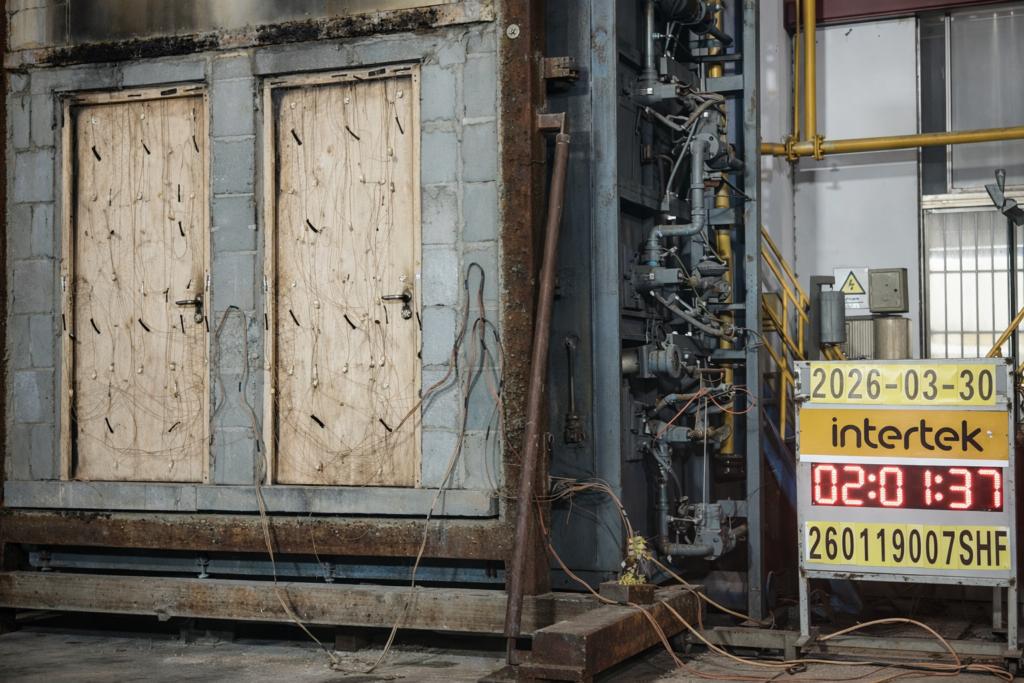
TOPTEK’s published Intertek evidence identifies defined EN 1634-1 steel and timber-composite door tests. The public technical explanation records 260 minutes of E-integrity for the defined single-leaf steel configuration, with insulation stated as not applicable, and 132 minutes of both E-integrity and I-insulation for the defined timber-composite configuration. These results must stay attached to their tested or assessed scope; they are not a promise that every TOPTEK lock, every steel or timber door, or every installation will achieve the same result.
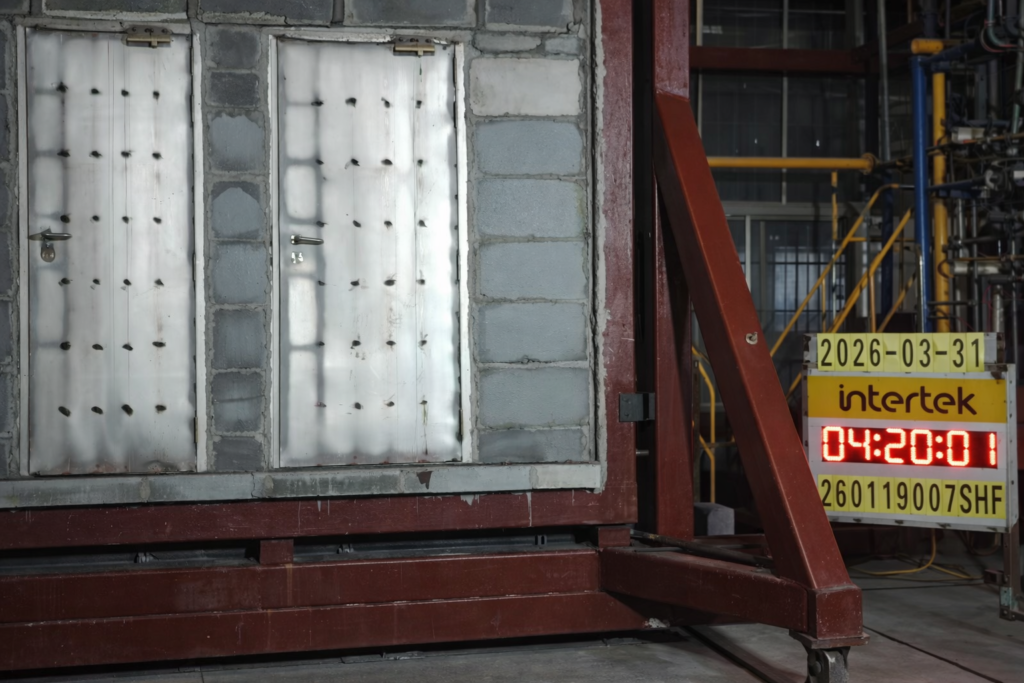
TOPTEK also uses in-house laboratory checks for development and production consistency. Internal endurance, strength, corrosion, dimensional, and functional checks support engineering and quality control, but they must not be described as third-party certification. The current public document route is available on the TOPTEK certification and test-evidence page.
Six Common Evidence Mistakes
Most evidence failures come from scope assumptions. They can delay approval, force re-machining, or create an unsupported installation.
- Accepting a family name instead of an exact model list. A shared case size does not prove that every function or variant sits within the same evidence.
- Quoting fire minutes without the test criteria. State the door construction, E/I result, test orientation, and defined configuration.
- Using steel-door results for timber doors. The material, core, heat transfer, preparation, and permitted variations differ.
- Treating CE marking as doorset approval. CE/CPR documentation communicates declared product performance; the complete opening still needs its applicable approval route.
- Changing the strike, trim, cylinder, preparation, or intumescent protection after document review. A dimensionally compatible substitute may still sit outside the evidence.
- Combining fire and escape claims. Fire-door evidence does not automatically prove emergency or panic-exit behavior. Review EN 179, EN 1125, and local rules separately when required.
For installation risks and common site errors, use the separate guide on installing a mortice lock on a fire door. Keeping installation guidance separate from this evidence-matrix page reduces overlap and gives buyers a clearer next step.
Buyer Checklist Before Sample Approval
Do not release a sample for door machining until the evidence and geometry agree.
- The quoted model and function appear in the current model schedule or accepted assessment.
- The classification code and declared performance match the tender requirement.
- The door material, frame, size, rating, leaf arrangement, and opening direction are identified.
- The backset, centre distance, case depth, forend, strike, spindle, and cylinder are shown on controlled drawings.
- The fire-test report or assessment states the relevant door and hardware configuration.
- Required intumescent protection and machining details are documented.
- Escape behavior and applicable EN 179 or EN 1125 requirements are reviewed separately.
- The responsible technical authority has identified any country- or project-specific conditions.
- The sample-validation plan includes self-closing, positive latching, lever return, key or thumbturn operation, gaps, and inspection records.
RFQ Checklist: What to Send for a Fire Door Lock Evidence Review
A complete RFQ allows the supplier to return a model-and-document route instead of a generic quotation.
- Target country, project type, specification, fire rating, and approval authority.
- Door and frame material, leaf thickness, size, core, single- or double-leaf arrangement, and opening direction.
- Door schedule or at least the required lock function for each opening.
- Backset, centre distance, case and forend dimensions, strike form, handing, and preparation drawing.
- Lever, spindle, cylinder, thumbturn, escutcheon, closer, hinges, seals, fixings, and intumescent details.
- Required EN 12209 classification, CE/CPR documents, DoP, EN 1634-1 evidence, and any EN 179 or EN 1125 route.
- Finish, corrosion requirement, branding, packaging, quantity, forecast, sample quantity, and delivery target.
If the package is incomplete, send door photos, the frame and leaf material, current lock model, basic dimensions, known voltage for electrified openings, target market, and quantity. TOPTEK can identify the unanswered technical fields before recommending the next document or sample step.
Why TOPTEK for Fire Door Lock Evidence and OEM/ODM Review
TOPTEK combines product engineering, controlled manufacturing, laboratory validation, and third-party document routes. Established in 1991, TOPTEK operates a 13,000 m² facility with more than 220 employees and over 20 R&D engineers.
TOPTEK can review lock function, drawings, door preparation, hardware interfaces, samples, and documents before quotation. Final suitability remains subject to the product, doorset evidence, installation, and project authority.
FAQ: Fire Door Lock Evidence and Test Scope
Does an EN 12209 certificate prove that a lock fits every fire door?
No. EN 12209 evidence supports defined mechanical-lock characteristics and relevant intended-use information. A specific fire door still requires matching door-assembly evidence, permitted variations, installation details, and project acceptance.
Is a CE-marked lock automatically a certified fire doorset?
No. CE marking and the Declaration of Performance communicate declared product performance under the applicable route. They do not certify every complete combination of door leaf, frame, lock, strike, trim, seals, closer, hinges, and installation.
What is the difference between EN 12209 and EN 1634-1?
EN 12209 addresses mechanically operated locks and locking plates. EN 1634-1 is a fire-resistance test method for door and shutter assemblies and openable windows. Buyers need both product-level and assembly-level evidence where the project requires them.
Can a steel-door fire-test result be used for a timber door?
Not automatically. Door material, core construction, preparation, heat transfer, specimen details, and field-of-application rules differ. Obtain evidence that expressly covers the planned timber, steel, or composite configuration.
What should a supplier return after an evidence review?
A useful response should identify the proposed model and function, controlled drawing, dimensional match, available certificate and DoP route, fire-test or assessment scope, installation conditions, unresolved approvals, sample plan, and quotation assumptions.
What can a buyer send without a complete door schedule?
Send door photos, leaf and frame material, the existing or desired lock function, basic dimensions, target fire rating and market, quantity, and known hardware details. The supplier can then identify the missing RFQ checkpoints.
Conclusion: Approve the Evidence Chain Before the Lock
A reliable fire door lock decision starts with scope matching. Verify the exact model and function, read EN 12209 and CE/CPR documents within scope, connect the lock to EN 1634-1 doorset evidence, and confirm permitted variations, installation, egress requirements, and local acceptance. This is more dependable than choosing by a “fire rated” label or test duration alone.
Project risk summary: An unsupported model substitution, wrong door-material assumption, uncontrolled mortice preparation, mismatched strike or trim, or incomplete egress review can create rework, inspection delay, and an evidence gap in the completed opening. Resolve those questions before purchase order approval and door machining.
TOPTEK Access is a China-based OEM/ODM manufacturer of commercial locks, architectural door hardware, and integrated access control locking solutions, supplying ANSI Grade 1 mortise locks, EN 12209 Grade 3 mortise locks, AS 4145 mortise locks, panic exit devices, multi-point locking systems, electronic locks, lever handles, cylinders, and hinges for global door manufacturers, distributors, contractors, and building projects.
TOPTEK is your Commercial Door Hardware Reliability Solution.
TOPTEK: Smart Design. Strong Security.
Request a Model-and-Evidence Route for Your Fire Door Project
Email ivan.he@toptekaccess.com with your target market, door construction, rating, lock function, basic dimensions, hardware schedule or photos, evidence expectations, and quantity. TOPTEK can return a preliminary model recommendation, drawing and door-preparation checkpoints, applicable document route, sample-validation plan, and quotation assumptions.