

CE Mortise Lock Certificate Checklist for Fire Door Manufacturers
A CE mortise lock certificate should be treated as one controlled record in a larger technical submission, not as a one-page buying shortcut. Fire door compliance engineers and quality managers must connect the certificate to the exact lock model, Declaration of Performance (DoP), CE marking, fire-test or assessment evidence, installation instructions, and the door manufacturer’s own approval route.
TL;DR: What Should a Fire Door Factory Check?
- Obtain the complete certificate, including every annex and model-list page.
- Match the legal manufacturer, certificate number, issuing body, standard reference, intended use, factory, issue status, and validity statement.
- Match the ordered function, backset, centre distance, and full model reference—not only a family name such as “72 mm mortise lock.”
- Cross-check the certificate against the DoP and CE marking. Product identity and declared performance must tell the same story.
- Review fire evidence by tested door construction, installation orientation, model, criteria, duration, and stated limitations.
- Do not treat EN 12209 evidence as certification of the complete fire door assembly.
- Freeze the approved document set and hardware schedule before samples, door machining, or production release.
Quick Answer: Is the CE Certificate Enough?
No. A CE mortise lock certificate is not enough by itself for a fire door manufacturer’s approval file. It can confirm third-party assessment and factory production control for the listed product scope, but the compliance file should also include the applicable DoP, CE marking information, exact model schedule, declared classification, fire-test or assessment evidence, drawings, installation instructions, and any conditions imposed by the doorset approval route.
The European Commission’s guidance on the DoP and CE marking describes the DoP as a key part of the Construction Products Regulation and explains that CE marking links the product to its declared performance. Intertek’s EN 12209 scope summary also states that EN 12209 covers mechanical lock characteristics, while the contribution to the fire resistance of a specific doorset is outside that standard’s scope. This is why document matching matters more than seeing a CE logo.
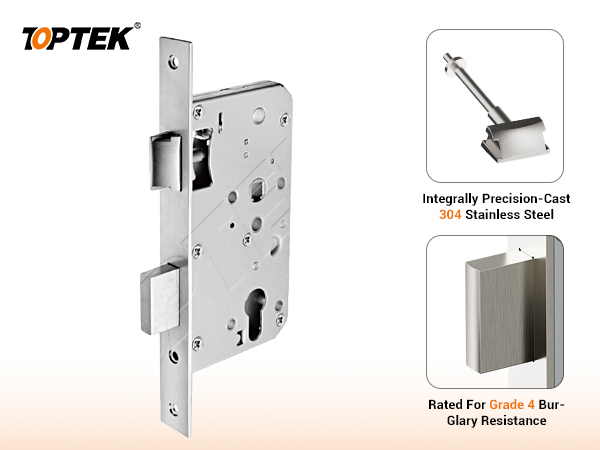
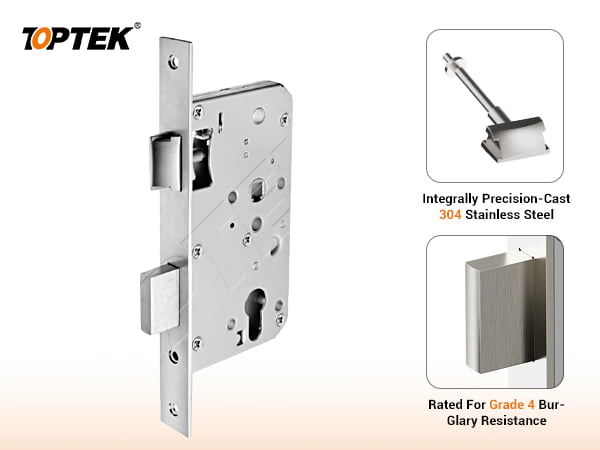
Use TOPTEK’s EN 12209 Grade 3 mortise lock range to identify the candidate function and dimensions, then verify the full certificate model reference before approval.
Which Documents Belong in the Approval Stack?
A defensible approval stack separates regulatory evidence, product-scope evidence, fire evidence, and installation controls. Each document answers a different question.
| Document | What to verify | What it does not prove alone |
|---|---|---|
| Certificate of Constancy of Performance | Certificate number, manufacturer, product scope, intended use, standard, AVCP system, notified body, factories, dates, status, annexes, and model list. | It does not approve every model, modification, doorset, market, or installation. |
| Declaration of Performance | Unique product-type code, intended use, manufacturer, AVCP route, harmonised technical specification, notified body where applicable, and declared essential characteristics. | It does not replace installation instructions or doorset evidence. |
| CE marking or label | Traceability to the DoP and product type, manufacturer identity, relevant reference year, standard, declared classes, and notified-body identification where required. | A CE logo without traceable data is not a complete compliance file. |
| Certificate annex and model schedule | Exact model, function, backset, centre distance, classification, and any family-assessment statement. | A similar product photo or shortened sales model cannot prove inclusion. |
| Fire test, classification, assessment, or listing | Test standard, tested model, door leaf and frame construction, leaf arrangement, opening direction, installation, integrity/insulation criteria, duration, and limitations. | Evidence for one configuration does not automatically cover another door construction. |
| Drawing and installation instructions | Mortise pocket, fixings, strike, latch engagement, lever/cylinder interface, intumescent requirements, and permitted substitutions. | Correct paperwork cannot rescue an installation outside the approved scope. |
| Internal QC and test records | Batch traceability, incoming inspection, dimensional checks, functional tests, and change control. | Internal testing does not replace third-party certification or project approval. |
How Do You Audit a CE Mortise Lock Certificate?
Audit the file in seven passes. Stop the approval whenever one record cannot be traced to the next.
1. Confirm the Market and Applicable Technical Route
Start with the country, project specification, door approval scheme, and authority requirements. EN 12209 addresses mechanically operated locks and locking plates. Fire resistance of a specific doorset requires separate evidence and coordination with the complete assembly.
Edition control also matters. BSI lists BS EN 12209:2024 as the current British edition, while an existing CPR certificate may cite an earlier harmonised basis. Do not silently replace one reference with another. Record the edition shown on the certificate, the edition required by the project, and the applicable regulatory basis, then obtain confirmation from the responsible certification or approval party when they differ.
2. Verify the Certificate Identity
Check the issuer, notified-body number, certificate number, legal manufacturer name and address, production sites, product description, intended use, AVCP system, first-issue date, expiry or continuing-validity statement, and issue status. Request the complete PDF directly from the supplier or a verified proof page. A cropped cover, screenshot, or editable file is insufficient.
3. Match the Exact Model and Function
Trace the purchase description to the annex model. For example, a sales reference such as TOPTEK EN72SL sash mortise lock is a useful selection starting point, but compliance approval needs the backset-specific model shown in the certificate, such as EN5572SL for a 55 mm backset and 72 mm centres. Confirm function, backset, centre distance, latch or roller type, deadbolt, trigger, handing, forend, strike, and any change from the listed construction.
4. Read the Classification and Performance Table
Do not copy a classification code from another function. The certificate can assign different results to sash, roller, passage, deadbolt, night-latch, bathroom, and access/escape configurations. Check the row for the selected model and retain the table headings and footnotes with the code. A string of digits without its edition and legend is easy to misread.
5. Connect the Lock Evidence to the Fire Door Evidence
Record which model was physically tested, the door construction, single- or double-leaf arrangement, opening direction relative to the furnace, installation details, and reported criteria. Then identify whether other models were directly tested or assessed by the certification body. The TOPTEK fire door mortice lock installation guide explains why door preparation, strike alignment, hardware compatibility, and intumescent details remain part of the assembly decision.
6. Cross-Check the Certificate, DoP, and CE Marking
Create a three-column comparison. The manufacturer, product type, standard reference, intended use, model identity, declared performance, notified-body details, and DoP reference should be consistent. Log every mismatch instead of resolving it through assumption. If the supplier has not provided a current DoP for the ordered product, keep the file open and request it.
7. Freeze the Controlled Submission
Assign revision dates to the certificate, DoP, marking artwork, drawings, installation instructions, hardware schedule, and fire evidence. Link the approved model to the purchase order and incoming-inspection plan. Any change to the lock case, function, materials, dimensions, strike, cylinder interface, door preparation, or manufacturing route should trigger a documented technical review.
What Is the Go, Hold, or Reject Decision?
| Status | Evidence condition | Action |
|---|---|---|
| Go | Exact model, document identities, applicable route, fire-door scope, and installation controls are aligned and approved. | Release a controlled sample or production stage with revision traceability. |
| Hold | The product may be suitable, but the DoP, exact model row, edition basis, fire assessment, drawing, or marking data is missing or inconsistent. | Issue a written document request. Do not machine or release doors until the gap is closed. |
| Reject | The ordered model is outside the certificate, the intended use is wrong, the document is altered or unverifiable, or the door application conflicts with the evidence. | Select a covered model or obtain a new approved evidence route. |
Need a Model-to-Document Gap Review?
Email the certificate and annex, target lock model, door material, required fire rating, target market, and any available door schedule to ivan.he@toptekaccess.com. If your file is incomplete, send a door photo, frame/leaf material, basic dimensions, known voltage if access control is involved, and expected quantity. TOPTEK can return a preliminary model recommendation, missing-document list, drawing-review route, and sample path for further project approval.
What Does the Current TOPTEK Evidence Show?
The five-page Intertek file reviewed for this checklist is Certificate of Constancy of Performance No. 2649-CPR-26002201, Spec ID 92177. It names Zhongshan Toptek Security Technology Co., Ltd., identifies Intertek Ibérica Spain S.L.U. as notified product certification body NB 2649, cites EN 12209:2003/AC:2005, and states the intended use as fire-resistance and/or smoke-control doors. The file states a first issue date of June 4, 2026, an expiration date of December 31, 2026, and issue status 1. Project teams must still confirm current status before approval.
The annex lists function- and backset-specific models. It records 200,000 latch-action cycles for the covered latch and roller categories shown in its performance table. Its fire-suitability table identifies EN10085ESL and EN8085RL as tested models: the defined single-leaf steel configuration reports 260 minutes of E-Integrity with insulation listed as not applicable, while the defined single-leaf timber-composite configuration reports 132 minutes of E-Integrity and 132 minutes of I-Insulation. A note states that the Table 3 models were assessed as having the same performance. This assessment statement still does not certify an unrestricted final doorset.
Review or request the controlled file through the TOPTEK certification and project-document page. The public proof route is useful for prequalification, but a door factory should retain the supplier-issued revision that matches the purchase order and obtain the applicable DoP rather than assuming the certificate replaces it.
Which Certificate Review Mistakes Cause Project Risk?
- Approving only the cover page. The model list, classifications, performance tables, and footnotes usually sit in the annex.
- Matching a family name instead of a full model. Centre distance alone does not identify the function or backset.
- Calling a certificate the DoP. These documents have different roles and should be cross-checked.
- Applying one test duration to every door. Steel, timber, composite, insulated, uninsulated, single-leaf, and double-leaf configurations are not interchangeable.
- Ignoring edition and revision control. A current technical standard and a certificate’s stated regulatory basis may differ.
- Substituting internal test data for third-party evidence. Factory QC supports consistency but does not expand certificate scope.
- Releasing door machining before the evidence is frozen. An unsupported mortise pocket, strike, or hardware substitution can create rework and approval risk.
Buyer Checklist: What Should Quality Managers Record?
- Target country, project, specification, approval scheme, and required fire/escape function.
- Certificate PDF source, number, issuer, notified-body number, issue status, dates, and full page count.
- Legal manufacturer, address, production site, product description, intended use, and AVCP system.
- Exact model, function, backset, centre distance, handedness, forend, strike, latch, deadbolt, and trigger arrangement.
- Classification row, performance table, footnotes, and installation-condition notes.
- DoP number/revision, CE marking artwork/label, and traceability to the ordered product.
- Fire-test, assessment, classification, or listing document with door construction and limitations.
- Approved door-preparation drawing, lock instructions, intumescent details, and compatible lever/cylinder/closer schedule.
- Sample approval record, change-control trigger, incoming-inspection criteria, and batch traceability.
RFQ Checklist: What Should the Door Factory Send?
Send enough information for the supplier to match both hardware and evidence:
- Target market, project approval route, required standards, fire rating, smoke-control requirement, and escape requirement.
- Door leaf and frame material, core, thickness, leaf arrangement, handing, opening direction, and available doorset evidence.
- Lock function, backset, centre distance, case/forend/strike dimensions, cylinder, lever, spindle, thumbturn, and closer.
- Existing door preparation or drawing, permitted intumescent system, finish, corrosion environment, quantity, packaging, and delivery stages.
- Required supplier deliverables: certificate, annex, DoP, CE marking data, report/assessment route, drawings, instructions, sample plan, and quotation.
FAQ: CE Mortise Lock Certificate Verification
Is a CE mortise lock certificate the same as a Declaration of Performance?
No. The certificate can support third-party assessment and constancy-of-performance requirements, while the manufacturer issues the DoP to declare product performance under the applicable route. Review both and check that their product identities agree.
Does an EN 12209 certificate prove the complete fire door is certified?
No. EN 12209 addresses the mechanical lock and relevant characteristics. The fire resistance of the specific door assembly depends on separate test, assessment, classification, listing, installation, and approval evidence.
How do I know whether my lock model is covered?
Match the full model reference in the certificate annex, including function, backset, centre distance, and any suffix. Do not approve by appearance, catalogue family, or shortened name alone.
What if the certificate cites an older EN 12209 edition?
Record the certificate’s stated basis and compare it with the current project and regulatory requirements. Ask the notified body, project certifier, door approval holder, or responsible authority to confirm the applicable route; do not update the reference by assumption.
Which fire evidence should a door factory request?
Request the document required by the project route, such as a fire test, assessment, classification, certificate, or listing. It should identify the tested hardware, door construction, installation, performance criteria, duration, and limitations.
Can a screenshot or sales datasheet be accepted as certificate evidence?
No. Use the complete, traceable PDF from a verified source and retain the relevant revision. A datasheet can support selection, but it should not replace the certificate, DoP, or fire evidence.
Conclusion: Approve the Document Chain, Not the Logo
A reliable CE mortise lock review follows a traceable chain: project requirement, exact model, certificate annex, classification, DoP, CE marking, fire evidence, drawing, installation instruction, and controlled production record. When one link is missing, hold the approval and close the gap in writing.
Request a CE Mortise Lock Compliance and RFQ Review
Send your target market, door material, required rating, lock function, basic dimensions, expected quantity, and available certificate or drawing files to ivan.he@toptekaccess.com. If no complete door schedule is available, start with door and frame photos, leaf/frame material, lock reference, basic measurements, known voltage, and quantity. TOPTEK can return a preliminary covered-model route, specification gaps, drawing or door-preparation review needs, sample recommendation, certification-document route, and quotation checklist. You can also use the verified TOPTEK project inquiry form.