

TL;DR
- An EN 1634-1 fire test report evaluates a complete test assembly, not an isolated mortise lock in every possible door.
- Check the report number, issue date, test standard, tested lock model, related model scope, door construction, hardware configuration, and reported performance criteria.
- Do not treat a test duration as automatic approval for every timber door, steel door, door thickness, lock function, or market.
- A report showing no failure when a test was stopped at the sponsor’s request does not mean the specimen failed at that time.
- Ask the manufacturer to map the proposed lock model and doorset configuration to the applicable report before approval.
Quick Answer: How Should Buyers Read an EN 1634-1 Fire Test Report?
Read an EN 1634-1 fire test report as evidence for a defined doorset configuration, not as a universal fire-rating statement for a lock. Start by verifying the laboratory, report number, standard edition and exact tested model. Then review the timber or steel door construction, lock installation, integrity and insulation results, test duration, related-model assessment and the report’s limitations.
BSI describes EN 1634-1:2014+A1:2018 as a method for determining the fire resistance of door and shutter assemblies and openable windows. That assembly-level scope is the reason a buyer must review more than the lock model alone.
Why Does the Fire Test Report Need a Technical Review?
A report can be genuine and still be unsuitable for a particular project. The evidence may cover a different door material, lock function, backset, installation method, supporting construction or performance criterion. A purchasing team that checks only the test duration may overlook the conditions that made the result possible.
This matters to door manufacturers, architectural hardware distributors, contractors and specification teams. The lock is one component in a doorset that may also include the leaf, frame, hinges, closer, cylinder, lever furniture, strike, intumescent material, fasteners and seals. Changing one component can affect whether the proposed configuration remains within the available evidence.
Seven Checks for an EN 1634-1 Fire Test Report
1. Is the Standard and Edition Clearly Identified?
The report should name the test standard and edition used by the laboratory. For example, TOPTEK’s current mortise-lock fire test reports reference EN 1634-1:2014+A1:2018. Buyers should compare this with the project specification and the requirements of the local approval authority.
EN 1634-1 addresses fire resistance testing of door assemblies. It should not be confused with EN 12209, which classifies mechanically operated locks, latches and locking plates for their intended mechanical performance.
2. Can You Identify the Laboratory, Report Number and Issue Date?
Traceability begins with a unique report number and a recognizable issuing laboratory. Check the laboratory name, report number, issue date, page numbering and any revision status. Request the complete report rather than relying on a cropped cover page, screenshot or supplier-created summary.
A complete document also helps the buyer see the specimen description, drawings, installation details, observations, temperature data, photographs and limitations that may not appear on the summary page.
3. What Exact Mortise Lock Model Was Tested?
The tested model must be identified before a buyer considers related models. A report may test one representative model and discuss other models that have similar structures or materials but different sizes. That relationship must be stated in the report or supported by an appropriate technical assessment; it should not be assumed from a similar product appearance.
For an RFQ, send the intended lock function, backset, centre distance, case dimensions and model number. TOPTEK can then compare the requested product with the relevant EN 12209 mortise lock documentation.
4. Was the Lock Tested in a Timber or Steel Doorset?
Timber and steel doorsets must be reviewed separately because their construction and fire behaviour are different. Check the leaf material, frame, door thickness, leaf size, supporting construction, seals, hardware and installation details recorded in the report.
A result from one timber doorset should not automatically be applied to every timber door. The same caution applies to steel doors. The buyer needs to confirm the permitted field of application and any project-specific approval route.
5. Which Criteria Were Evaluated: Integrity, Insulation or Both?
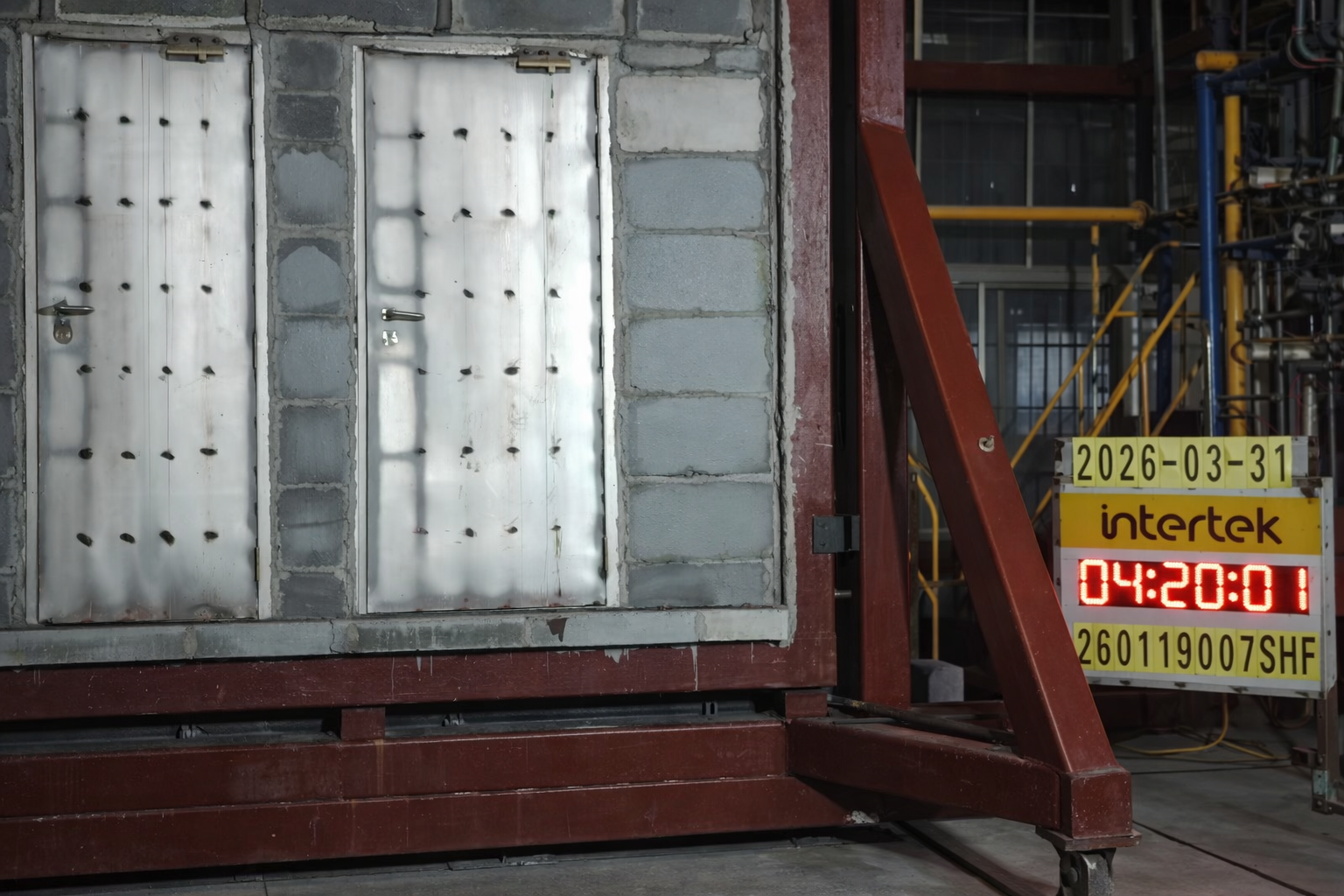
The test duration has meaning only when it is connected to the reported performance criteria. Integrity observations can include sustained flaming, openings assessed by gap gauges and ignition of a cotton pad. Insulation assessment considers temperature rise on the unexposed face.
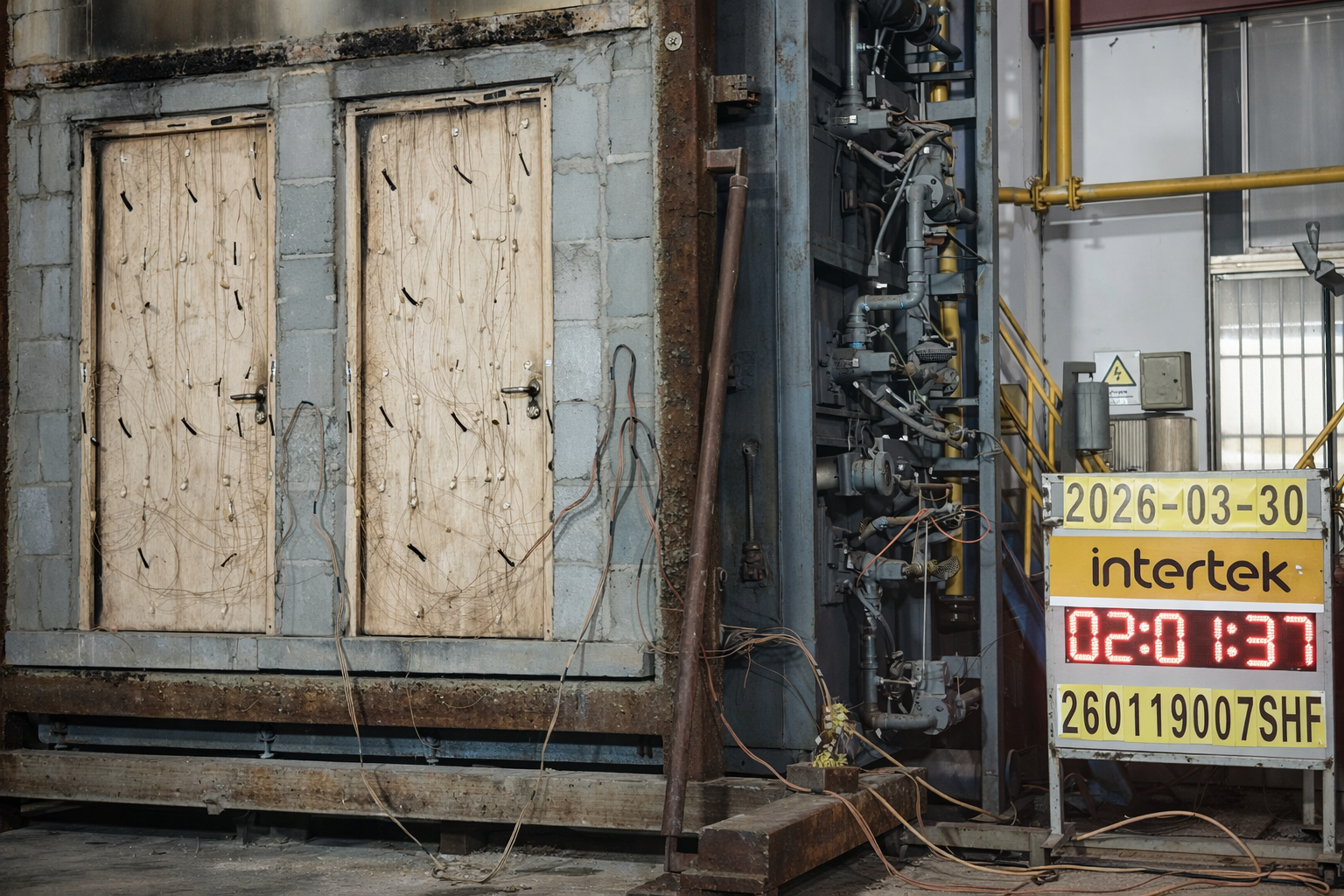
TOPTEK’s timber composite doorset reports recorded both integrity and insulation results. In the tested uninsulated steel door assemblies, the reports state that no insulation evaluation was required and no unexposed temperature measurements were conducted. Therefore, a steel-door integrity result should not be rewritten as an insulation result.
6. Why Did the Test End?
Buyers should distinguish a test stopped at the sponsor’s request from a test that ended because a performance criterion failed. The TOPTEK reports reviewed for this article state that the timber tests were discontinued after 132 minutes and the steel tests after 260 minutes at the sponsor’s request. Their summary tables recorded no failure of the reported criteria at those times.
This wording does not prove unlimited performance beyond the observed period. It also does not mean that the specimen failed at 132 or 260 minutes. Use the exact language and conditions stated in the report.
7. What Are the Report’s Scope and Limitations?
A test report is evidence, but it is not automatically a product certification or blanket project approval. The TOPTEK reports state that the observations and results are relevant only to the tested samples and that the report by itself does not imply participation in an Intertek certification program.
Before approval, ask whether the proposed change is permitted by the direct field of application, supported by an extended application or assessment, or requires additional testing. Local building regulations, the fire-door manufacturer’s evidence and the authority having jurisdiction may also affect acceptance.
What Do TOPTEK’s Current Mortise-Lock Fire Test Reports Show?
Four Intertek reports provide separate evidence for two representative mortise-lock platforms installed in timber composite and uninsulated steel doorsets. The following table is a reading guide, not a substitute for the complete reports.
| Report | Tested lock model | Doorset | Observed period | Reported result at test end |
|---|---|---|---|---|
| 260119007SHF-001 | EN8085RL | Timber composite | 132 minutes | No failure of the reported integrity or insulation criteria |
| 260119007SHF-002 | EN10085ESL | Timber composite | 132 minutes | No failure of the reported integrity or insulation criteria |
| 260119007SHF-003 | EN10085ESL | Uninsulated steel | 260 minutes | No failure of the reported integrity criteria; insulation was not evaluated |
| 260119007SHF-004 | EN8085RL | Uninsulated steel | 260 minutes | No failure of the reported integrity criteria; insulation was not evaluated |
All four reports have an issue date of 22 May 2026 and reference EN 1634-1:2014+A1:2018. Each report contains the specimen description, model information, test observations and limitations needed for a detailed review.
Need the complete evidence package? Review TOPTEK’s certification resources or contact the engineering team to request the applicable full report and model-scope review.
What Does a Fire Test Report Not Prove by Itself?
A report for a tested configuration does not automatically prove that every related product and door combination is suitable. Avoid making any of the following assumptions:
- Every model from the same supplier has the same evidence.
- A timber-door result automatically covers a steel door, or vice versa.
- The observed test duration is a universal classification for every market.
- Changing the lockcase, cylinder, lever, spindle, fasteners or intumescent protection has no effect.
- A test report is the same as third-party product certification.
- A successful laboratory result replaces approval of the final doorset specification.
For additional installation context, see Can You Install a Mortice Lock on a Fire Door?
What Should Buyers Send for a Fire-Rated Mortise Lock Review?
A complete RFQ lets the manufacturer check compatibility before quoting. Include:
- Required fire duration and applicable project standard
- Country, approval route and authority requirements
- Timber, steel or composite door construction
- Door thickness, leaf size, frame and supporting construction
- Mortise-lock function and exact model, if already selected
- Backset, centre distance, forend dimensions and handing
- Cylinder, lever handle, spindle, strike and fixing details
- Intumescent kit or protection required by the doorset design
- Required reports, certificates, declarations or drawings
- Estimated order quantity and sample-validation schedule
Send the specification to ivan.he@toptekaccess.com or use the TOPTEK contact form. The team can review model selection, report scope, samples and OEM/ODM requirements before production.
Why Work with TOPTEK on EN Mortise-Lock Projects?
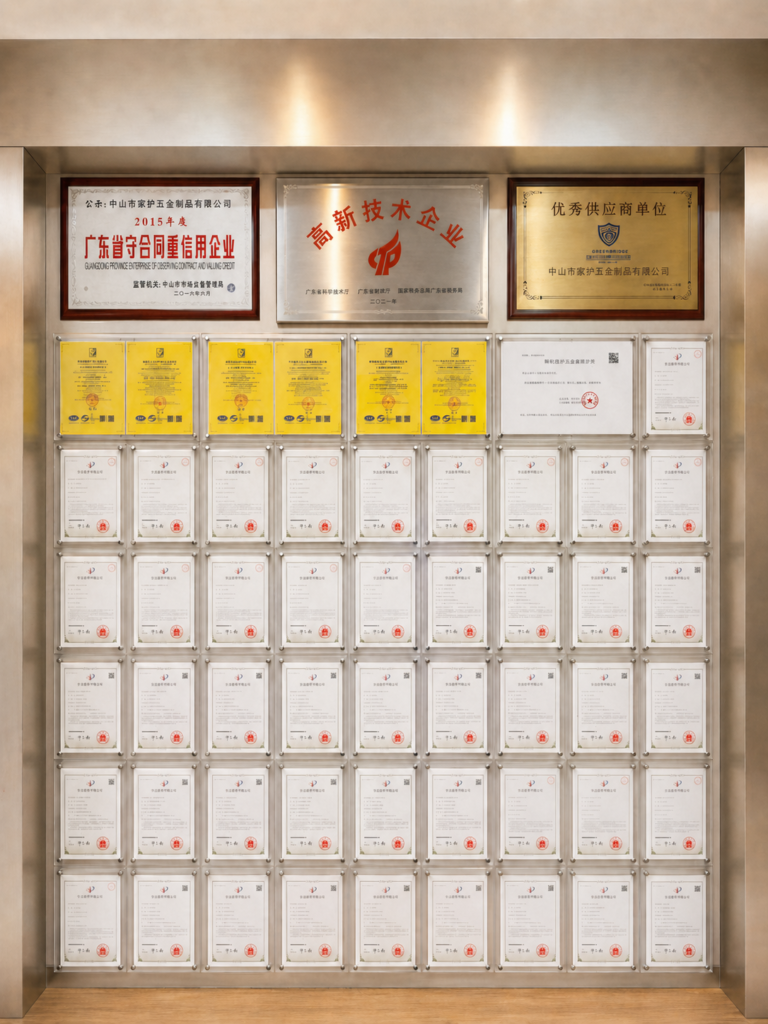
TOPTEK combines lock engineering, manufacturing, in-house validation and third-party documentation support. Founded in 1991, Zhongshan Toptek Security Technology Co., Ltd. develops mechanical and electronic locking products for door manufacturers, lock brands, distributors, contractors and access-control partners.
For fire-door hardware projects, the practical value is not simply supplying a report. It is helping the buyer connect the requested function and dimensions to the applicable model, test evidence, doorset conditions and production controls. This reduces the risk of approving a product based only on a cover page or marketing statement.
Frequently Asked Questions
Does an EN 1634-1 report mean the mortise lock is fire rated for every door?
No. The report applies to the tested sample and described assembly, together with any permitted field of application or supported assessment. The proposed lock and doorset must be checked against that scope.
Is a 260-minute steel-door result the same as an EI260 classification?
Not automatically. In TOPTEK’s reviewed uninsulated steel-door reports, integrity criteria were evaluated for 260 minutes, while insulation was not evaluated. Buyers should use the exact result and classification route stated in the applicable documents.
Why do the timber and steel test durations differ?
The reports cover different doorset constructions and were stopped at different times at the sponsor’s request. The durations should be read with the tested construction, evaluated criteria and report limitations.
It may support related models when the report or an appropriate technical assessment identifies the relationship and permitted scope. Similar appearance alone is not enough.
What document should a buyer request from the supplier?
Request the complete applicable test report, model mapping, drawings, installation details and any required certificate, declaration, field-of-application document or assessment for the project.
Conclusion
An EN 1634-1 fire test report is valuable only when it is read in context. Verify the exact lock model, complete doorset, evaluated criteria, observed duration, related-model scope and evidence limitations before approving a fire-rated mortise lock.
TOPTEK supports EN 12209 mechanical mortise locks, escape functions, electronic locks, lever handles, cylinders and related architectural hardware. As a complete project hardware manufacturer, TOPTEK’s broader production capabilities also cover ANSI Grade 1 locksets, AS 4145 mortise locks, panic exit devices, and tailored OEM/ODM architectural hardware solutions. For a project-specific review, send your hardware schedule and doorset details to ivan.he@toptekaccess.com.
Written and reviewed by Ivan He, General Manager, Zhongshan Toptek Security Technology Co., Ltd.