
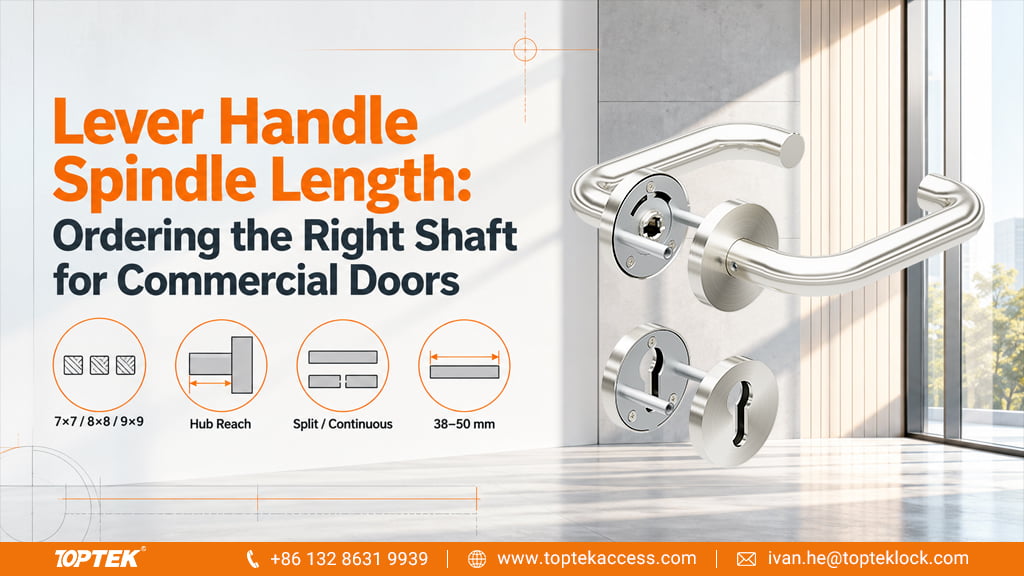

Lever handle spindle length is an assembly dimension, not a door-thickness label. For a commercial replacement order, the shaft must fit the lock follower and reach both handle hubs without bottoming out. TOPTEK’s LHEU001 handle configuration offers 7 × 7, 8 × 8 and 9 × 9 mm spindle sections and a stated 38–50 mm door-thickness range. The purchase order still needs the actual shaft length and connection details for the selected lock.
TL;DR
- Choose the square section and operating arrangement before calculating length.
- Measure the finished door and the installed position of both handle hubs.
- Order the spindle and fixing pack as identified components of the handle set.
- Check the thinnest and thickest door configurations represented in the order.
Quick Answer
To select lever handle spindle length, establish the distance between the installed hub entrances, then account for the required insertion into each hub. Confirm the lock follower position, retention features and any permitted end clearance against the selected assembly drawing. A door described as 45 mm thick does not, by itself, define the shaft length. Likewise, “8 mm spindle” describes its square section, not its length. Ask the handle supplier to quote the complete connection for the actual door and lock combination.
What TOPTEK offers for a commercial handle order
The LHEU001 configuration combines a 140 mm lever with 53 or 55 mm cover options and the three spindle sections listed above. These options help door manufacturers and distributors coordinate handle furniture with different lock followers. They are choices to specify, not three interchangeable shafts to use indiscriminately.
Start with the TOPTEK lever handle range, then identify the handle and lock together. Where an existing purchase uses another product reference, keep that reference on the enquiry and request its matching drawing. Do not transfer one model’s dimensions to another handle because the lever shape looks similar.
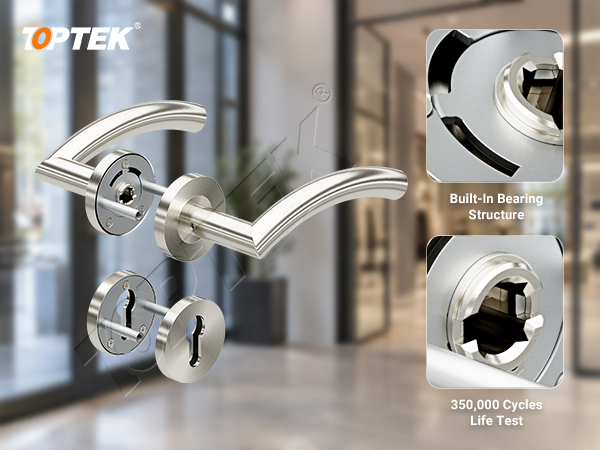
Section, length and function need separate entries in the order. The square section fits the receiving openings; the length establishes reach; the construction determines how the two sides operate. A continuous bar cannot replace a split or independent spindle arrangement simply because its ends fit.
| Order field | What it establishes | Buyer action |
|---|---|---|
| Square section | Fit in handle hubs and lock follower | Match both components to the same specified section. |
| Overall length | Reach through the installed assembly | Record the dimension between defined end faces. |
| End and retention features | How the handle holds the shaft | Identify grooves, slots or other specified features. |
| Operating arrangement | How each side drives the lock | Confirm continuous, split or other required construction. |
Changing length will not correct the wrong section or operating arrangement. Make those decisions first so that the sample tests the intended connection.
Measure the installed assembly once
Use a section through the handle axis to locate the finished door faces, mounting bases, hub entrances and lock follower. Include permanent facings or protection plates where they affect the assembly. Mark inside and outside, especially when the furniture differs between the two faces.
For a continuous shaft, a useful geometry check is the distance between the two hub entrances plus the intended insertion into each hub. This is a drawing check, not a universal cutting formula. Minimum engagement, usable socket depth and end clearance come from the component design. Do not add decorative cover thickness twice if it is already included in the hub position.
For example, adding a facing that moves one hub outward by 3 mm increases the distance to that hub by 3 mm. The existing spindle may remain suitable only if the resulting engagement stays within the permitted range. The example explains the dimensional effect; it does not set an allowable engagement margin.
Decide whether one spindle pack can serve the order
A shared pack is useful only when it works across every door configuration assigned to it. Group doors by finished thickness, handle base, lock and spindle arrangement. Keep exceptional doors on separate lines rather than asking the installer to discover the differences on site.
Use this short sample sequence with the intended components:
- Compare the shaft section, ends and length with the order drawing.
- Assemble the handle bases without using screws to pull a resistant assembly together.
- Check engagement and retention by the supplier’s method.
- Operate both sides and verify the required lock action after final tightening.
- Repeat on the smallest and largest approved installed stack.
If the assembly binds only after tightening, investigate alignment and component seating. Do not treat loose final fixings as an acceptable solution. Cut a spindle only when its manufacturer permits it and defines how to preserve the working ends and retention features.
Turn the approved fit into repeatable supply
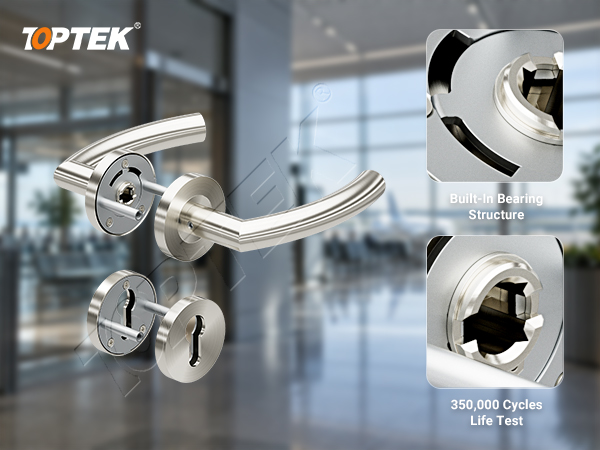
TOPTEK’s OEM/ODM process includes drawings, sample approval, first article inspection and production checks. For this purchase, make the approved spindle dimensions and handle connection part of that process. A reference sample and a clearly identified parts pack give procurement, assembly and installation teams the same specification to work from.
The quality management process explains the manufacturing controls. As a commercial door hardware manufacturer, TOPTEK can discuss the handle within a wider hardware order while keeping each connection defined. This helps buyers compare complete offers rather than a lever price that leaves the spindle unresolved.
Cover fit is a separate decision. Use the rose diameter guide when existing door holes also need to be covered.
Frequently asked questions
Does a 38–50 mm door range specify the spindle length?
No. It describes the stated door range for the configuration. The spindle length and connection must still match the selected handle, lock and installed trim.
Can a 7 mm spindle be replaced with an 8 mm spindle?
Only if both the handle connection and lock follower are designed for the replacement section. A larger or smaller square is not a length adjustment.
What should a distributor include in a spindle enquiry?
Include the handle and lock references, finished door thicknesses, installed section drawing, spindle section, end details and quantities by configuration.
Can one sample approve all door thicknesses?
One assembled condition proves that condition. A common pack should also be checked at the relevant thickness limits and with any different trim arrangements.
Request a spindle and handle package
For a fit review, send TOPTEK the lock follower details and an inside-to-outside section of the door assembly. For a formal quotation, add quantities by door condition, handle finish, branding and packing requirements. Request a matched handle and spindle quotation so the agreed connection travels with the order.