
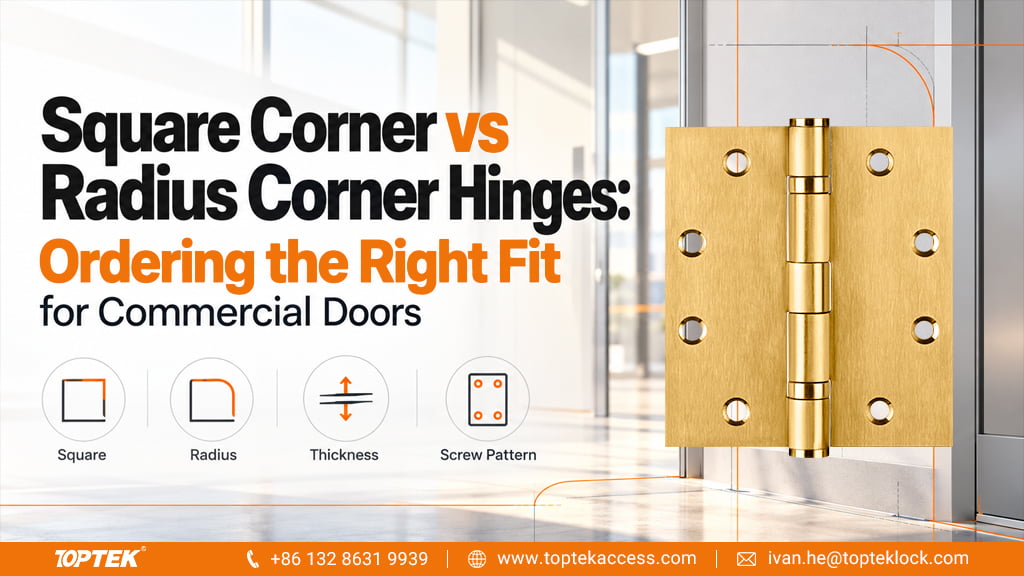

Quick answer: square corner vs radius corner hinges
Choose square corner vs radius corner hinges by matching the leaf outline to the mortise in both the door and frame. Square corners have a right-angle outline; radius corners follow a specified curve. Matching height and width is not enough: a square leaf can be held above a rounded recess, while a rounded leaf can leave gaps in a square recess. For commercial orders, specify corner shape together with leaf thickness, screw pattern and the complete hinge drawing.
Purchasing priority: separate doors with different preparations before setting the order quantity. A correct hinge for the main door group may still be unsuitable for repaired frames or replacement door leaves.
What the corner changes at installation
The hinge leaf needs to seat as intended in its recess. If the pocket has curved corners but the hinge has square corners, the remaining material can obstruct the leaf. Screws should not be used to force it flat. Conversely, a rounded hinge in a square pocket can leave exposed corner spaces even when its straight edges align.
| Existing preparation | Proposed leaf | Order decision |
|---|---|---|
| Square corners | Matching square outline | Compare thickness, screw pattern and remaining dimensions |
| Radius corners | Matching radius outline | Confirm the actual radius, not simply “round” |
| Radius pocket | Square leaf | Resolve corner interference before ordering |
| Different door and frame pockets | One standard configuration | Document each side and review the complete arrangement |
Corner shape is not a strength grade. Changing a corner outline should not silently change material, bearing arrangement or the application’s performance requirements.
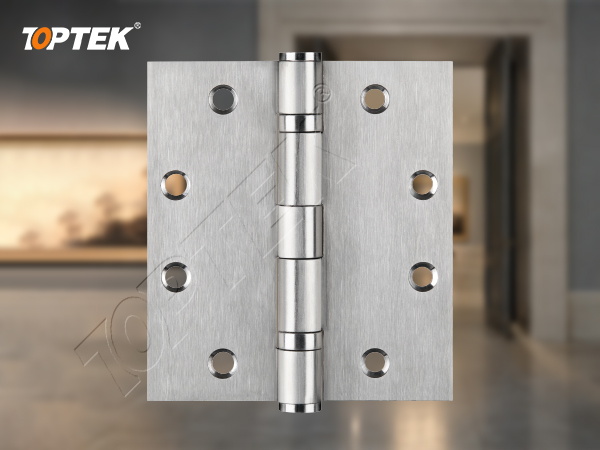
Use TOPTEK model dimensions to specify the whole hinge
TOPTEK’s 2BB full mortise hinge family and 4BB family include SS304, five-knuckle configurations illustrated with square corners. The dimensional schedules show why an order needs more than a nominal hinge size.
| TOPTEK model | Nominal size | Leaf thickness |
|---|---|---|
| 2BB4040 | 4.0 × 4.0 inches | 3.0 mm |
| 2BB4545 | 4.5 × 4.5 inches | 3.0 mm or 3.4 mm configuration |
| 4BB4545 | 4.5 × 4.5 inches | 4.6 mm |
A 4.5 × 4.5 inch description therefore leaves important choices unresolved. In this example, the 4BB4545 leaf is 1.2 mm thicker than the 3.4 mm 2BB4545 option. That is a dimensional difference to review against the recess depth, not permission to exchange the hinges without checking the door assembly.
For a radius-corner requirement, include the exact radius and outline drawing in the enquiry. Obtain the matching product proposal before treating it as a supplied TOPTEK variant. The square-corner families shown here give a defined starting point for a quotation.
Measure the door and frame separately
Survey the hinge position on the door and the corresponding position on the frame. Earlier repairs may have changed one side only. Record height, leaf width, thickness, pocket depth, corner shape and screw-hole locations. Distinguish a single leaf’s width from the overall open hinge width so both parties use the same dimensions.
If the corner is curved, use a radius gauge or dimensioned template and retain the measurement units. A photograph with a scale is useful supporting information, but perspective can distort the curve. Do not specify “small radius” or use a coin comparison as the final manufacturing instruction.
Have a qualified installer support the door and control any removal needed for measurement. Paint buildup and damaged edges should be recorded separately so they are not mistaken for the original machining dimensions.
Check seating, thickness and fasteners together
A leaf that is too thick for the existing pocket can stand proud even when its corners match. A different screw pattern can create another mismatch after the outline has been resolved. Compare the full drawing before deciding that the replacement will reuse the existing preparation.
For the fixing choice, use the door hinge screw selection guide. The screw type and support must suit the door and frame material. A cosmetic fit around the corners does not establish adequate fastening.
On a sample assembly, inspect both leaves for even seating, then check door movement and the project clearances. If machining or repair is proposed, agree it with the responsible door supplier. For rated assemblies, permitted work follows the applicable door instructions and configuration; this geometry comparison does not authorise a field modification.
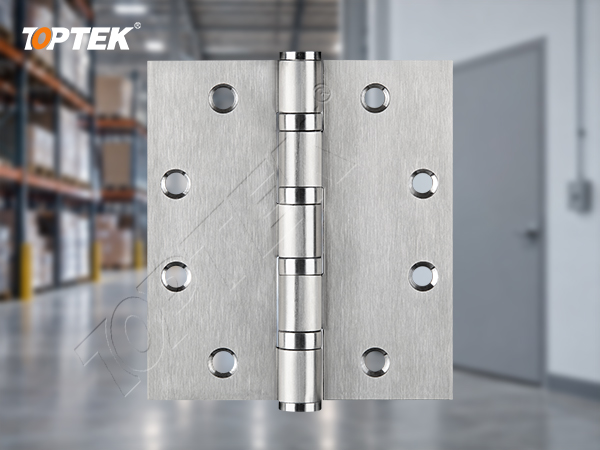
Why drawing control matters for OEM hinge orders
As a commercial door hardware manufacturer, TOPTEK offers OEM/ODM development and production inspection, including first article and in-process checks. Tie the order drawing to the sample and make the critical fit dimensions visible to the inspection team. The quality management process then has concrete criteria to check: outline, thickness, screw positions, material and finish.
For a door manufacturer, this supports a consistent hinge pocket across a production run. For a distributor, separate configuration codes help staff avoid substituting two hinges that share a nominal size but differ in thickness. These practical controls make repeat procurement clearer without relying on broad claims about durability.
Send a quotation package that resolves the fit
- Door and frame material, application, door dimensions and required performance.
- Hinge model or existing reference, with quantities by door group.
- Dimensioned door-side and frame-side pocket outlines, including corner radii where applicable.
- Leaf thickness, pocket depth, screw pattern and fastener requirements.
- Finish, marking, packaging and any separately identified preparation changes.
Explore the TOPTEK hinge range for the relevant product family, then request the exact configuration. A drawing and a representative sample provide a better basis for a commercial offer than a hinge photograph alone.
Frequently asked questions
Can a square corner hinge fit a radius mortise?
The square corners may obstruct seating in a rounded recess. Compare the outlines and resolve any required preparation change with the responsible door supplier before installation.
Does a matching nominal size guarantee replacement fit?
No. Leaf thickness, corner outline, screw pattern and other drawing dimensions must also match the intended door and frame preparation.
Does TOPTEK 2BB4545 have only one thickness?
No. The dimensional schedule lists 3.0 mm and 3.4 mm configurations. State the required thickness with the model reference on the quotation and order.
Are radius corners weaker than square corners?
Corner shape alone does not establish hinge strength. Select the complete hinge specification and application-specific performance evidence.
Request a hinge configuration quotation
Match the corners first, then confirm thickness and fixings before committing to the batch. Send TOPTEK the two pocket drawings and preferred model to discuss the sample arrangement. Include quantities, finish and delivery requirements for a formal quotation tied to that configuration.