

TL;DR
- Specify materials by component instead of describing the whole lock with one alloy name.
- Review the oval cylinder, actuator and furniture as a fitted assembly.
- Identify the exact backset, operating version and inside/outside function.
- Link the accepted sample to production drawings, finish references and batch identification.
Quick Answer
An AS 4145 mortice lock OEM project needs a component-level specification and a fitted-sample record. Define the lock version, function direction, backset, trim, Australian oval cylinder interface and material requirements. Then connect that configuration to the applicable performance documents, finish sample and production inspection plan. For an OEM/ODM hardware manufacturer, the release package should show exactly what the buyer accepted and which later changes require another check. This provides a practical basis for commercial door hardware sourcing without assuming that similar-looking locksets share every material, interface or performance characteristic.
Choose the platform and operating version
Begin with the required door behaviour. Describe what the inside lever does, how the outside lever is controlled, and how the key or thumbturn changes the lock state. Identify the reference side on the drawing. A reversible setup still needs an agreed final configuration for assembly, packing and installation.
The TOPTEK AS 4145 Mortise Lock range includes the TKAU6400 family with escutcheon and round-rose furniture. TOPTEK’s source materials also distinguish mechanical, motorized and solenoid-operated versions. Select the intended version explicitly; do not use a mechanical sample to approve an electrical operating sequence.
This guide concentrates on the mechanical assembly, component materials and sample-to-batch connection. If the order includes powered variants, give those variants separate electrical and functional requirements. Combining all versions in one line on the purchase order can hide different interfaces, accessories and test responsibilities.
Turn material expectations into a component schedule
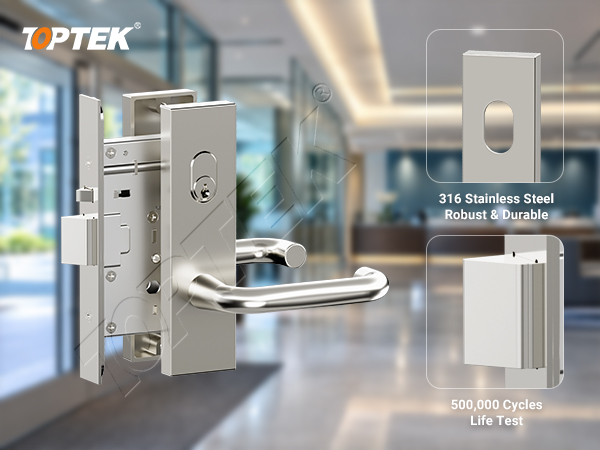
A buyer may request stainless steel hardware for appearance, cleaning or environmental reasons. Translate that request into a list of components and their specified materials. Separate the lever, escutcheon or rose, forend, strike, latch, case and fasteners. Different components have different functions and may use different materials within the same lockset.
TOPTEK’s Australian product information describes 316 stainless steel lever and furniture options. Confirm the supplied configuration on the drawing and bill of materials rather than extending one trim description to every internal part. Also separate the base material from the surface treatment. A finish name or a colour sample does not establish the underlying alloy.
| Component group | What the buyer should specify | Acceptance reference |
|---|---|---|
| Visible furniture | Material, finish, texture and appearance limits | Component drawing and retained finish sample |
| Lockcase and moving parts | Material requirements for the selected configuration | Controlled bill of materials and inspection route |
| Strike and fixings | Material, geometry and supplied hardware | Frame-interface drawing and parts list |
| Cylinder interface | Profile, actuator, retention and furniture relationship | Named cylinder and fitted-sample record |
| Packaging | Protection, identification and accessory separation | Accepted packing specification |
For coastal or exposed locations, describe the actual environment and cleaning access. ASSDA’s guidance on preventing tea staining explains that alloy selection, surface condition and maintenance all influence stainless steel appearance. A material designation alone should not become a promise that the hardware will never stain or need cleaning.
Ask the supplier how the agreed material requirements will be verified. The method should suit the component and the purchasing specification. Keep material records connected to the part and batch instead of collecting an unrelated certificate simply because it contains the same alloy name.
Validate the Australian oval cylinder interface
Identify the cylinder supplier, reference and intended actuator arrangement. Review the physical profile, retention method and projection through the furniture. Then demonstrate the key or thumbturn action with the lock fully assembled. An oval shape is a starting point for identification, not proof that every oval cylinder fits or operates the selected mechanism.
Check clearance with the intended escutcheon or separate cylinder rose. Observe whether the key can complete its required movement and whether the cylinder remains correctly retained after the furniture is fitted. Record any rings, spacers or accessories that affect the relationship. Replacing one of these items later can change a previously accepted fit.
The TKAU6400EC product presentation provides a starting reference for the escutcheon arrangement. Ask for the project drawing and the corresponding cylinder configuration before finalizing preparation. Where an existing key system must remain, include that requirement at the start so cylinder compatibility and key-control responsibilities can be reviewed together.
Start with a cylinder-interface check: send the cylinder reference, photographs, door thickness and selected furniture. If the actuator details are unknown, provide the available drawing and ask which additional measurements are needed. This is more useful than ordering a sample against the description “standard oval cylinder.”
Approve backset, trim and door preparation together
TOPTEK’s TKAU6400 source information identifies 60 mm, 89 mm and 127 mm backset options. These options are not interchangeable preparations. Select the backset against the door profile and furniture position, then confirm the case envelope, cylinder centre and fixing paths on the configuration drawing.
The Australian mortice lock backset guide explains the selection question. Once a choice is made, carry the value into the sample label, purchase order and receiving record. A correct lock family with the wrong backset can still require an expensive change to a prepared door.
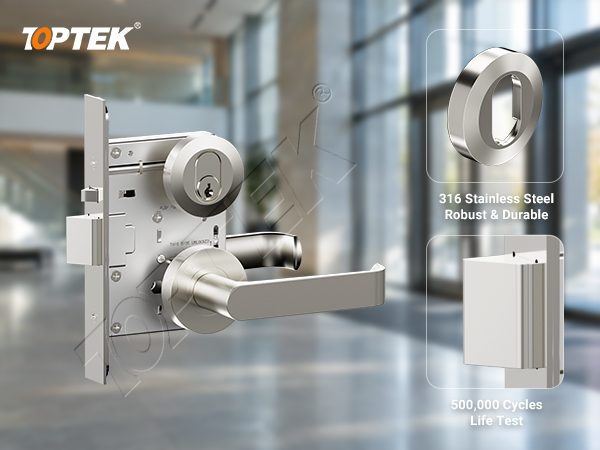
With an escutcheon, review overall plate coverage and the relationship between the lever and cylinder openings. With round-rose furniture, check the separate fixing positions and their alignment. Fit the intended spindle and fasteners without substituting convenient workshop parts. Confirm smooth movement after final tightening using the manufacturer’s installation method.
Include a representative strike and frame in the review. Examine latch engagement, door clearance and the effect of stops or seals. If the assembly binds, record whether the cause is preparation, alignment, clamping or a component mismatch. Avoid accepting a hand-adjusted sample unless its changes are reflected in the production documents.
Make batch approval traceable to the accepted sample
Assign the sample an identity that includes the lock reference, operating version, backset, furniture, cylinder and drawing revision. Retain an agreed finish reference separately when it is useful for colour comparison. Both parties should know which physical samples govern appearance and which represent the complete functional assembly.
TOPTEK’s documented process includes retained customer colour samples and corresponding supplier information. It also describes first-article inspection and in-process checks. These records help connect the buyer’s acceptance to repeat production, provided the purchase order identifies the same configuration and finish reference.
Before releasing a batch, confirm that the first assembled product matches the agreed configuration. Review the component list and function alongside appearance. A first article is especially useful after a drawing change, new tooling or a supplier change affecting an interface. Agree the review requirements in the order; do not invent a universal sample quantity or acceptance limit.
Separate the decision to release the batch from the inspection method used to support it. The buyer and supplier should agree the relevant characteristics, records and disposition of nonconforming items. A signed sample label does not mean that every later batch can bypass inspection or that unauthorized substitutions are acceptable.
Why TOPTEK: review manufacturing and evidence at the right level
TOPTEK is an OEM/ODM manufacturer of architectural hardware, mechanical locks and related electronic locking products. Its source materials describe machining, stamping, assembly and in-house testing capabilities. For an Australian lock project, the practical value is the ability to connect the component design with the agreed manufacturing and inspection route.
Use the TOPTEK quality management information as a starting point for specific questions about first articles, material verification and finish consistency. Request records applicable to the selected configuration. An equipment list explains available capability; the order still needs its own acceptance requirements.
Keep any AS 4145 performance requirement tied to the exact product and supporting report. Do not transfer another manufacturer’s grade, a family-level statement or an internal test result into the order as independent certification. For a fire-rated opening, obtain the applicable doorset evidence and installation requirements separately. A material schedule or a successful fitted sample does not establish fire performance.
TOPTEK’s broader scope includes ANSI and European mortise locks, cylinders, levers, hinges and power-transfer products. Maintain separate interfaces and evidence for each system in a mixed-market supply program. Similar finishes can coordinate appearance without making the mechanical components interchangeable.
RFQ checklist and common project mistakes
- State the Australian or New Zealand application and door construction.
- Select the operating version and describe inside/outside function.
- Specify the model, backset, trim style and door thickness.
- Provide the oval cylinder reference, actuator details and keying requirements.
- Attach preparation, spindle, fixing and strike drawings.
- Define material requirements by component and identify the finish sample.
- List required performance documents and any doorset evidence.
- Agree sample purpose, inspection responsibilities and release milestones.
- Provide variant quantities, packaging requirements and batch labels.
- Identify change triggers and the references needed for repeat orders.
Common mistakes include treating 316 trim as proof of an all-316 assembly, accepting cylinder shape without an operating check, and approving a sample without a revision. Another risk is mixing backsets or operating versions under identical packaging. Resolve these issues through component records, fitted checks and distinct item identification.
Frequently asked questions
What should an AS 4145 mortice lock OEM project specify first?
Specify the application, operating version, inside/outside function, backset, trim, oval cylinder interface and component material requirements.
Does 316 trim mean every lock component is 316?
No. Confirm the material of each relevant component against the agreed bill of materials and drawing. A trim description does not define the whole assembly.
Are all oval cylinders interchangeable?
No. Check the profile, actuator, retention, projection and operation with the intended lock and furniture.
What connects the sample to a production batch?
The connection is the accepted configuration, drawing revision, sample identity, finish reference, inspection requirements and batch identification.
When should a repeat order be reviewed again?
Review it when the configuration, cylinder interface, material, finish, preparation or supporting evidence changes, and define the checks affected by that change.
Request a project configuration review
A clear OEM package makes material, interface and batch decisions traceable. Select the exact configuration, demonstrate it on a representative opening and retain the reference needed for subsequent orders.
Explore TOPTEK OEM/ODM door hardware capabilities. Send an existing lock reference or interface photographs for an initial review. For a formal quotation, provide the material schedule, cylinder details, drawings and quantities to ivan.he@toptekaccess.com. The team can review the proposed configuration and sample requirements. Smart Design. Strong Security.