

TL;DR
- Approve the complete fitted lockset, including the cylinder and strike supplied for the project.
- Separate appearance acceptance from dimensional, functional and evidence acceptance.
- Record the drawing revision and sample identity before releasing tooling or production.
- Repeat affected checks whenever trim, cam, function, finish or door preparation changes.
Quick Answer
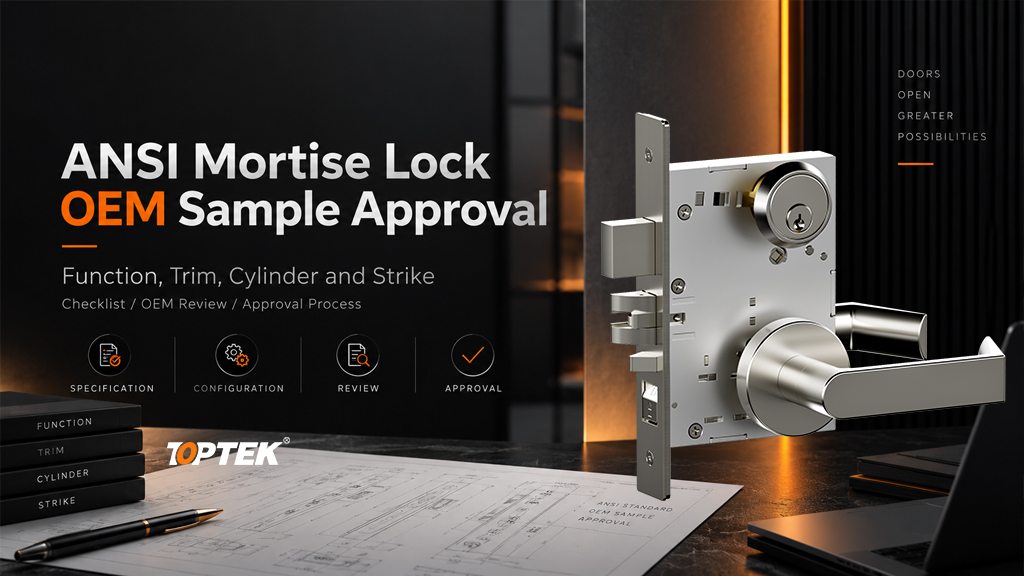
An ANSI mortise lock OEM sample approval package should connect a named function to a specific lock body, trim set, cylinder, strike and door preparation. Verify operation from both sides with the assembly fitted as intended. Record the observed result for each action, the drawing revision and any agreed deviation. Then retain matching reference samples and define which changes trigger another review. An OEM/ODM hardware manufacturer needs this record to reproduce the accepted assembly; a photograph and a short approval email cannot establish all of these requirements.
Define the approval scope before ordering samples
Start with the opening and the people who use it. Record whether access should remain controlled after the user releases the key, how the inside lever operates, and whether a thumbturn or other control changes the outside lever state. Write these requirements in plain language alongside the proposed function designation. Do not select a function solely because its name resembles a room name on the door schedule.
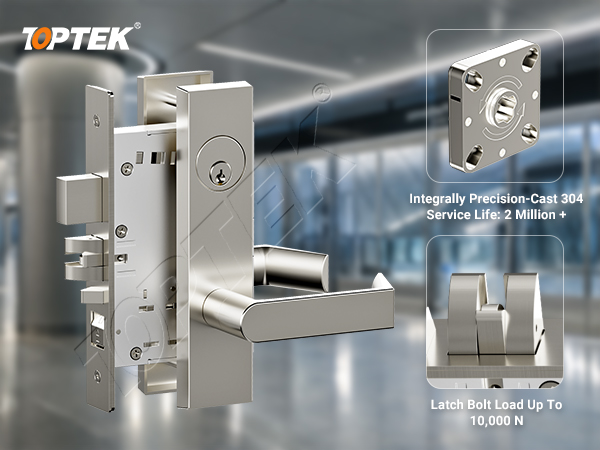
The TOPTEK ANSI Grade 1 Mortise Lock range includes escutcheon and round-rose trim presentations. The sample request should distinguish the lock mechanism from the furniture configuration. A trim photograph identifies appearance, but it does not establish every cylinder, spindle, fixing or operating detail.
Use separate acceptance boxes for function, fit, appearance and documents. If a buyer accepts the finish while a cylinder question remains open, the record should make that limited acceptance clear. Assign a responsible buyer contact to resolve the remaining item and identify which production activity depends on it. This keeps a finish decision from becoming an accidental release of the entire lockset.
Build a function test around observable actions
A functional test needs a starting condition, an action and an expected result. Begin with the door open, then repeat the relevant actions on the fitted door and frame. Use the intended cylinder and trim. Record key removal, lever return, latch retraction and any deadbolt movement separately so that a reviewer can see which component performed each action.
| Sample checkpoint | What to demonstrate | Record to retain |
|---|---|---|
| Outside access | Lever and key behaviour before and after locking | Function description and observed result |
| Inside operation | Lever, thumbturn and bolt behaviour for the specified function | Action sequence from the occupied side |
| Door closure | Latch engagement and contact with the actual strike | Door/frame setup and any interference |
| Return condition | Lever and controls return without binding | Installed trim and fixing details |
| Repeat operation | The same sequence after adjustment or reassembly | Adjustment history and final revision |
Where an auxiliary latch is present, examine its relationship with the strike and follow the installation instructions. Do not infer correct engagement merely from the sound of the main latch entering the opening. Likewise, a successful key turn with the door open does not prove that the bolt has adequate clearance in the frame.
Define the test method and acceptance criteria with the supplier before the sample arrives. An informal demonstration is useful for function matching, but it is not a substitute for a standard test or independent certification. Avoid forcing controls or adding improvised loads to demonstrate security performance. Use the appropriate documented test route for those requirements.
Review trim and cylinder as connected interfaces
The TKAMRR9200 round-rose lever trim provides a different furniture arrangement from an escutcheon. With sectional furniture, record each component centre and fixing location. With an escutcheon, verify the overall plate position, cylinder opening and lever alignment. Neither arrangement removes the need to check the door thickness and the spindle engagement.
For a practical comparison, use the escutcheon versus sectional rose selection guide. Then add the chosen configuration to the sample bill of materials. Include rings, spacers, fixing screws, spindle parts and the supplied installation instructions. Small accessories can alter projection or clamping even when the main trim looks unchanged.
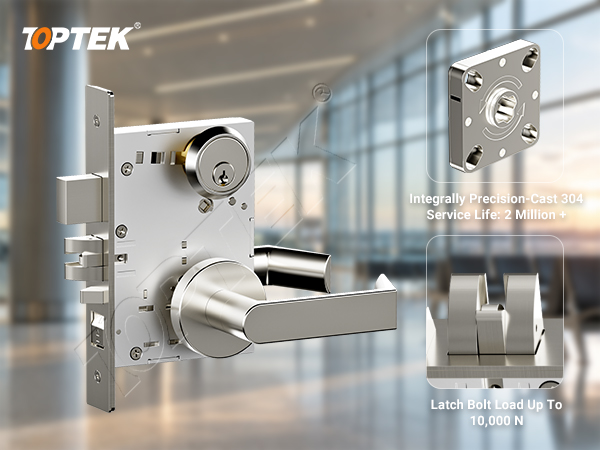
Specify the cylinder format, cam geometry, length and intended keying arrangement. A cylinder that threads into the case may still have an unsuitable cam or projection. Evaluate it with the exact rings and trim, and confirm retention using the manufacturer’s method. Record the cylinder supplier and reference so a later purchase does not silently substitute another interface.
Start with an interface review: send the lock function, door thickness, trim drawing and cylinder reference to TOPTEK. If the complete door schedule is unavailable, photographs of both door faces and the edge can help identify the drawings needed for a useful sample request.
Check the strike on a representative door and frame
The strike controls how the moving lock components meet the frame. Record its lip, opening, fixing centres, recess and any box behind it. Check the door stop and seals in the same setup because they influence the final closed position. A sample evaluated against an unrelated workshop plate cannot establish the project frame interface.
Before changing the strike position, inspect door alignment and the preparation. Distinguish a hardware mismatch from a sagging door, an incorrect recess or trim that has distorted the assembly. Photograph contact marks and record the correction. Recheck both closing and unlocking after the change; improving one action should not hide interference elsewhere.
For a replacement project, record the original preparation and any permitted modifications. For a new door, obtain the door manufacturer’s confirmation of the preparation drawing. Fire-rated and other regulated assemblies need the applicable doorset evidence and installation limitations; sample fit alone does not authorize a change to those assemblies.
Why TOPTEK: connect the reference sample to production evidence
TOPTEK supports OEM/ODM architectural hardware manufacturing, including mechanical locks and related trim. Its documented production process includes first-article checks, in-process inspections and surface-finish checks after plated parts return. These controls are useful when the buyer defines which configuration and appearance the checks must reproduce.
The TOPTEK quality management overview provides context for these production controls. Request an inspection plan tied to the approved drawings rather than a general assurance that samples and batches will match. Keep the inspection characteristics relevant to the order: interface dimensions, function, finish, identification and completeness.
BHMA’s A156.13-2022 overview describes mortise-lock evaluation across operation, strength, security, cycling, finish and dimensions. These are different evidence categories. A working sample demonstrates its observed operation; it does not independently prove a grade, certification status or fire listing. Match any such requirement to the exact model and supporting documents.
TOPTEK’s product scope also includes European and Australian mortise locks, cylinders, levers and access-control hardware. Keep their interfaces and evidence separate in a mixed-market order. A shared brand or similar lever shape does not make components interchangeable between these systems.
Control common approval errors and repeat-order risks
- Approving a photograph: retain a physical assembly reference and the drawings that define its hidden interfaces.
- Mixing revisions: label the lock, trim and strike so the test record identifies the parts actually examined.
- Changing the cylinder after testing: repeat the cam, projection, retention and operating checks.
- Treating colour as material proof: specify the relevant component material separately from its surface finish.
- Reordering by a nickname: use controlled part references and the accepted revision.
Both parties should retain an identified reference sample where practical. Record who holds it and what it represents. If a sample has been modified during testing, update its label and the associated drawing. An unrecorded filed strike or substituted spindle makes the sample a poor production reference.
Establish change triggers for the function mechanism, cylinder cam, trim fixing, strike geometry, critical material and finish process. Assess the affected interfaces before deciding the review scope. A packaging artwork change may need a different check from a cam change; treating every change identically wastes effort and can obscure the important risks.
RFQ checklist and release package
For a focused quotation and sample plan, provide the following information. Separate confirmed requirements from options so TOPTEK can return an itemized configuration and identify the decisions that affect tooling, samples or production.
- Target market, opening application and door/frame construction.
- Function designation with inside and outside action descriptions.
- Lock, escutcheon or rose references and required lever style.
- Door thickness, preparation drawing and strike arrangement.
- Cylinder format, cam, length, keying and sourcing responsibility.
- Component material requirements, finish reference and appearance limits.
- Applicable performance documents and project evidence requirements.
- Sample quantity, inspection method and release responsibilities.
- Branding, packaging, installation instructions and batch identification.
- Forecast quantities and required delivery milestones for quotation.
Frequently asked questions
What does ANSI mortise lock OEM sample approval cover?
It covers the agreed function, lock body, trim, cylinder, strike, door preparation and evidence package, linked to an identified sample and drawing revision.
Can trim approval release the complete lockset?
Only if the approval explicitly includes the other requirements. Appearance acceptance alone does not confirm function, fit or supporting evidence.
Must the sample use the final cylinder?
Use the intended cylinder and cam for the interface review. A later substitution requires the affected fit and operating checks to be repeated.
Does a sample test establish ANSI/BHMA certification?
No. Sample operation and formal certification are different evidence routes. Verify any certification requirement against the exact product and applicable documents.
What should a repeat order reference?
Reference the accepted configuration, drawing revision, sample identity, finish standard, inspection plan and any approved changes.
Request an OEM sample review or quotation
A useful approval turns a physical sample into an unambiguous purchasing reference. Agree the function, fit the complete hardware set and preserve the result in controlled records. This gives the buyer and manufacturer the same basis for the next order.
Explore TOPTEK’s OEM/ODM door hardware manufacturing capabilities. For a preliminary review, send your function and interface questions. For a formal quotation, send the RFQ checklist, drawings and quantity schedule to ivan.he@toptekaccess.com. TOPTEK can review the proposed configuration and define the sample and documentation route. Smart Design. Strong Security.