

TL;DR
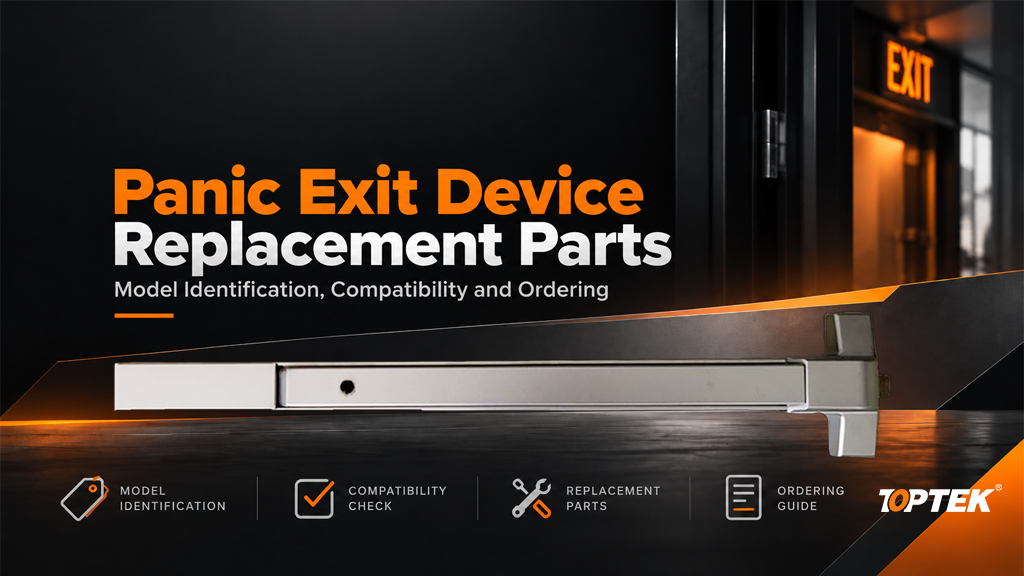
- Order panic exit device replacement parts against the complete device identity and revision.
- Separate cosmetic items from components that transmit force, retain the latch or connect outside trim.
- Use the manufacturer’s approved part or assembly reference; matching dimensions alone cannot establish compatibility.
- Record the repair and check the complete opening before returning it to service.
Quick Answer
How should buyers specify panic exit device replacement parts? Identify the installed manufacturer, series, device type, handing, outside trim, options and any fire-exit designation. Then obtain the applicable parts drawing and written confirmation of the replacement reference. Include photographs, the original order or batch reference and the observed fault. A compatible spare must preserve the intended operating function and the documented assembly configuration. Where identity, revision or approved service scope cannot be established, ask the manufacturer to assess an assembly replacement instead of selecting a visually similar loose component.
For an initial identification review, send the complete door and device photographs with the opening reference. Keep the installed hardware and the proposed spare linked in one enquiry so that purchasing does not lose the application details.
Identify the installed device before choosing a part
A description such as “silver panic bar spring” is not an adequate purchasing specification. Similar-looking devices can use different mechanisms, springs, pivots, fasteners and connecting parts. A change may affect how far the latch retracts, how the touch bar returns or how the outside lever interacts with the device. Start with the whole product, then identify the service component within it.
Photograph the complete inside device, outside trim, strike and any labels without removing protected markings. Record the door number, opening direction and whether the opening uses one leaf or a pair. Locate the original supply reference if available. A purchase order, installation drawing or retained packaging label can connect an apparently generic part to a specific configuration.
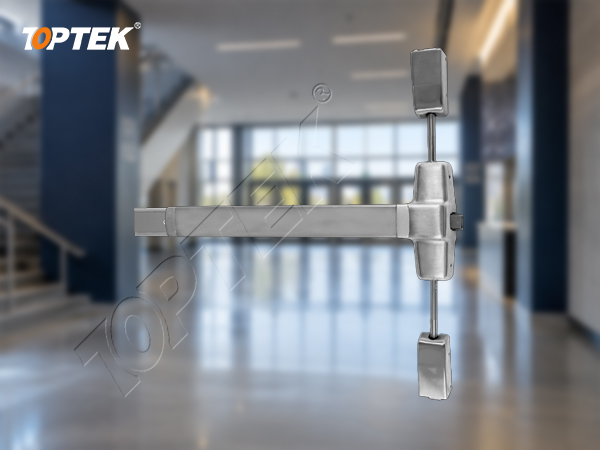
The TOPTEK panic exit device range is a starting point for identifying current product families. Existing installations still require their own identification. A current catalogue image does not establish that every earlier revision accepts the same replacement component.
Define the replacement scope and compatibility evidence
Ask whether the manufacturer supplies the item separately, within a service kit or only as a complete assembly. That distinction matters because a kit may contain matched parts that should be replaced together. A loose component offered by another supplier may omit retaining hardware or instructions essential to the approved repair.
| Requested item | Information to confirm | Purchase decision |
|---|---|---|
| Cover or end cap | Series, fixing pattern, finish and revision | Confirm the exact reference and included fasteners |
| Latch or centre assembly | Device type, function and approved service scope | Use the specified assembly and instructions |
| Rod or connecting component | Device arrangement, handing and adjustment method | Check the complete connecting system |
| Outside trim connection | Trim function, spindle or tailpiece interface | Verify inside and outside operation together |
| Strike or fixing kit | Door/frame construction and assembly documentation | Preserve the specified engagement and attachment |
The table is a request checklist, not a declaration that every TOPTEK device has each listed component or a separately available repair kit. Request the service scope for the exact model. For comparison, Allegion directs users to brand- and category-specific exit device parts manuals. This illustrates the value of a manufacturer parts reference; it does not establish interchangeability between brands.
Separate a failed part from a door condition
A replacement request should describe the symptom before naming its presumed cause. “The latch does not retract fully when the bar is pressed” is more useful than “the spring is bad.” The symptom may involve the mechanism, strike contact, door alignment, trim connection or installation. Record when it occurs and whether it began after adjustment, impact or other work on the opening.
Have a competent service person assess the opening under the applicable maintenance procedure. Do not instruct building users to force the bar, remove internal parts or defeat the latch while waiting for a spare. Where operation is unsafe, the responsible building team should implement its approved arrangements for the affected opening.
Door preparation and attachment deserve particular attention. TOPTEK’s panic bar door preparation guide explains the interfaces between device, strike, reinforcement and trim. Replacing a component without resolving a displaced strike or insecure fixing can leave the original problem in place.
A useful service request separates observations from conclusions. Record visible damage, unusual movement and the operating condition. Attach a short video only when it can be made safely under the site’s procedure. Ask the service provider to state both the diagnosed cause and the reason for the selected repair.
Preserve the documented assembly and opening requirements
For an opening with fire or emergency-exit requirements, obtain the documentation applicable to the installed device and door assembly before changing components. The replacement must remain within the manufacturer’s permitted configuration and the project’s requirements. Do not assume that a matching screw diameter, finish or latch outline is enough to preserve suitability.
Keep fire-exit identification distinct from a general description of panic hardware. Record the exact labels and the available installation or listing information. Ask the manufacturer whether the proposed component is approved for that configuration and whether any additional inspection or authorisation is required locally. This guide does not establish a universal repair permission or substitute one jurisdiction’s requirements for another’s.
Performance evidence also belongs to a defined specimen or assembly. TOPTEK’s testing laboratory information describes internal validation capabilities. Internal testing supports development and quality control; it does not by itself approve a field modification or provide a third-party listing for a mixed assembly.
Build a usable replacement-parts RFQ
Send the information in a format the manufacturer can resolve without guessing. Use one row per installed configuration and attach the photographs under the same reference. When several doors share one appearance, check whether their functions and revisions are actually identical before combining quantities.
- Door reference, building use and relevant opening requirements.
- Manufacturer, full device model, serial or batch information and original order reference.
- Device arrangement, handing, length variant, outside trim and fitted options.
- Clear photographs of the complete assembly, labels, affected item and mating components.
- Observed symptom, service history and any recent door or frame work.
- Requested part number, drawing revision and confirmation of permitted replacement scope.
- Required quantity, packaging identification, installation instructions and acceptance records.
State whether the enquiry is for a quotation, compatibility assessment or urgent service planning. Ask the supplier to distinguish confirmed parts from items requiring further identification. Obtain lead time and availability for the actual reference; do not base a maintenance plan on an assumed stock position.
For repeat procurement, include an approved substitution rule. A purchasing team should know who can approve a revised part and what evidence is required. Price, appearance and a supplier’s statement that a component is “universal” should not replace that decision process.
Receive, install and record the approved spare
At receipt, compare the supplied reference, revision, quantity and included hardware against the order. Keep the packaging label with the job record until identification is complete. Quarantine an unidentified or visibly damaged part rather than placing it into a general service drawer.
Installation should follow the manufacturer’s service instructions and the site’s arrangements. After the work, verify the complete opening’s intended operation, including bar movement, return, latch engagement, outside trim function and door closing as applicable. Record the results against the door number and the replacement reference. A successfully fitted part still needs an opening-level functional check.
Retain the date, installer, diagnosis, removed part reference, new part reference and any follow-up action. This helps distinguish repeated component failure from recurring alignment or installation problems. Where the same symptom appears across several doors, review the shared configuration before repeatedly ordering the same spare.
Common purchasing mistakes and service-stock risks
The first mistake is ordering from a close-up photograph alone. Include the surrounding assembly and labels so the supplier can identify the interface. The second is treating handed or function-specific parts as identical because the covers match. The third is mixing unlabeled spares from different projects, which removes the traceability needed when a repair becomes urgent.
Another risk is approving only the visible finish. A cover may match the door aesthetic while the associated mechanism belongs to a different revision. Keep cosmetic acceptance separate from functional compatibility. If a finish change is necessary, document it alongside the approved technical reference.
Stock planning should follow the installed population and supplier-supported service scope. Record the quantity of each configuration, critical openings, expected procurement route and storage conditions. Ask for confirmed availability of approved kits before setting stock levels. Do not dismantle complete devices merely to create an informal collection of interchangeable-looking parts.
TOPTEK product scope and support
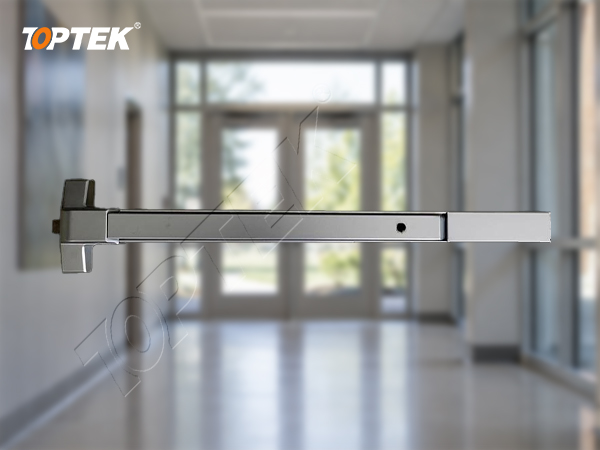
The current range includes PEDAM002 and other panic exit device configurations. TOPTEK’s manufacturing approach includes product development, sample confirmation and quality control. For a spare-parts enquiry, the useful starting point is the installed assembly identity and a clear service requirement.
Why TOPTEK
Product and manufacturing coordination can help buyers connect their enquiry to drawings, retained samples and production references. Ask TOPTEK to confirm what is available for the named model: a replacement item, a matched assembly or a complete device. This is a model-specific discussion, not a promise that TOPTEK supplies universal parts for other manufacturers.
Frequently asked questions
Can panic exit device parts be exchanged between brands?
Do not assume interchangeability. Obtain written confirmation for the exact installed device, replacement reference and approved assembly configuration.
Is a matching photograph enough to order a spare?
No. Include the complete device identity, revision or batch information, function, mating components and the applicable parts reference.
Should a worn item be replaced individually or as an assembly?
Follow the manufacturer’s supported service scope. Some items may be supplied only as a matched kit or complete assembly.
What if the device label cannot be read?
Provide original order records and complete photographs for identification. If compatibility cannot be established, request an assessment of an appropriate assembly replacement.
What should be retained after a repair?
Keep the door reference, diagnosis, installer and date, old and new part references, installation record and complete opening functional-check results.
Request a model-specific replacement review
Panic exit device replacement parts should preserve the intended assembly and make future maintenance traceable. Identify the device, confirm the permitted repair, and keep the part reference connected to the opening throughout procurement and service.
For identification, send TOPTEK the installed device photographs, labels and symptom description. For a formal quotation, add quantities, approved service scope and delivery requirements to your commercial door hardware enquiry.