
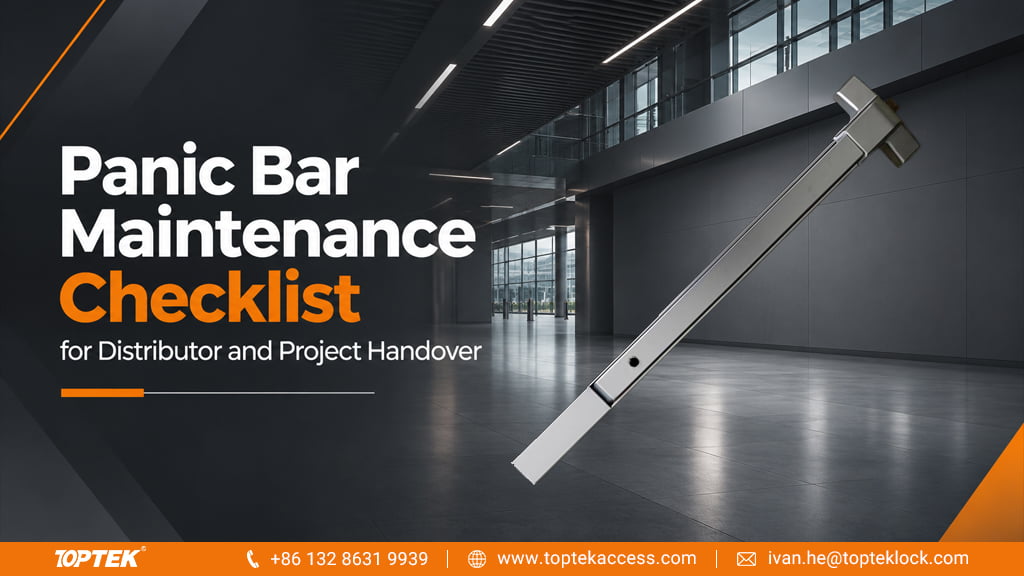

A useful panic bar maintenance checklist connects the supplied device to the door it operates. For distributors and project suppliers, the handover should identify the exit-device model, show the required inspection points and explain how to report a fault. A bar that moves freely is only part of the result: the opening must release correctly, close normally and engage its intended latch points.
TOPTEK supplies rim and vertical-rod exit devices. These layouts need different inspection coverage. Identifying the layout when the order is placed gives the site team a more useful starting point than a generic sheet labelled only “panic bar.”
Match the record to the supplied device
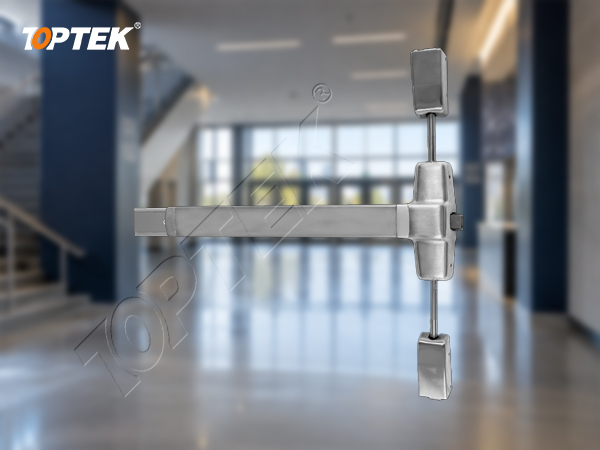
The PEDAM002 rim device places the main latch interface beside the device body. The inspection record should identify that latch and its matching strike. The PEDAM001 vertical-rod device has upper and lower assemblies linked to the operating mechanism; its record should identify the rods, guides and each latch interface present on the supplied configuration.
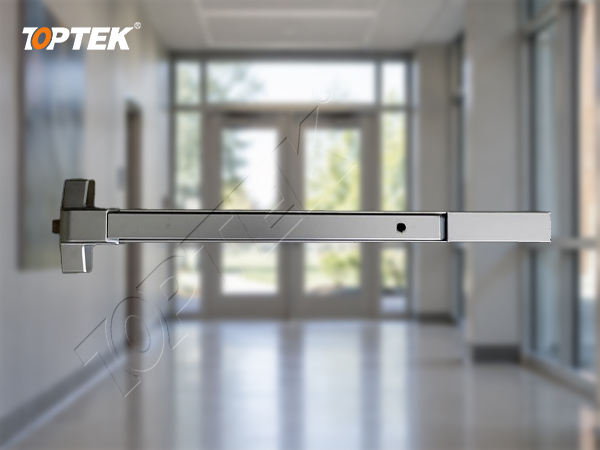
This distinction changes the maintenance enquiry. “The bar operates but the door will not latch” is incomplete for a vertical-rod opening if nobody identifies which latch point failed to engage. A photograph of the whole opening, followed by the affected interface, helps the supplier separate a local component problem from a door-position problem.
Inspect the opening before ordering a replacement
Have the responsible technician observe the door in its normal condition before making adjustments. Record whether it reaches the closed position without assistance and whether the symptom occurs throughout the swing or only as the latch meets the strike. Check the hinges, closer, seals and visible obstructions alongside the exit device.
If operation changes as the door meets the frame, investigate that interaction before deciding that the entire device needs replacement. Moving a strike to compensate for a displaced leaf can leave the original cause unresolved. Corrective work should follow the supplied instructions and the requirements for that opening.
| Inspection area | Observation to retain | Why it matters to the supplier |
|---|---|---|
| Door movement | Where resistance starts and whether the door closes normally | Separates door-position issues from device symptoms |
| Operating bar and covers | Return movement, rubbing, visible damage or loose parts | Locates the affected assembly |
| Latch interfaces | Which points retract and engage after closing | Prevents one successful latch from hiding another fault |
| Outside trim | Result of the specified outside-entry operation | Keeps entry-control faults distinct from inside release |
Give the site team the correct service information
Agree the maintenance documents with the hardware supply before handover. The record should retain the model, opening identifier, outside trim, instruction revision and supplier contact. Include the original installation photographs and the accepted operating condition so later work has a reference.
Inspection frequency, lubrication, adjustment and component replacement must follow the applicable model instructions and site maintenance programme. Do not turn a checklist into a universal repair method. Keep installation, service and parts information together for the device actually supplied.
Any fault affecting dependable exit release or latching needs prompt attention through the building’s responsible safety team. Keep the affected opening under the site’s approved arrangements while competent personnel resolve it. Do not improvise an additional lock or disable a latch to make the symptom disappear.
Make the original order useful for after-sales support
TOPTEK’s OEM and ODM service includes product configuration, sample development and production follow-up. For a distributor’s exit-device range, discuss the service-document set and spare-parts planning alongside the initial supply. Identify the exact component before agreeing availability; a similar appearance does not establish interchangeability.
Retain the accepted model and configuration against each opening. When reporting a fault, add the initial symptom, photographs, previous changes and the result after corrective work. This lets a repeat order refer to a known assembly instead of starting again from a photograph of an unidentified bar.
Request support for the installed configuration
Email TOPTEK about the installed exit device with the model or order reference, opening photographs and the latch or trim behaviour that needs attention. For a new project, include the device quantities and required handover documents so supply and service needs can be discussed together.