
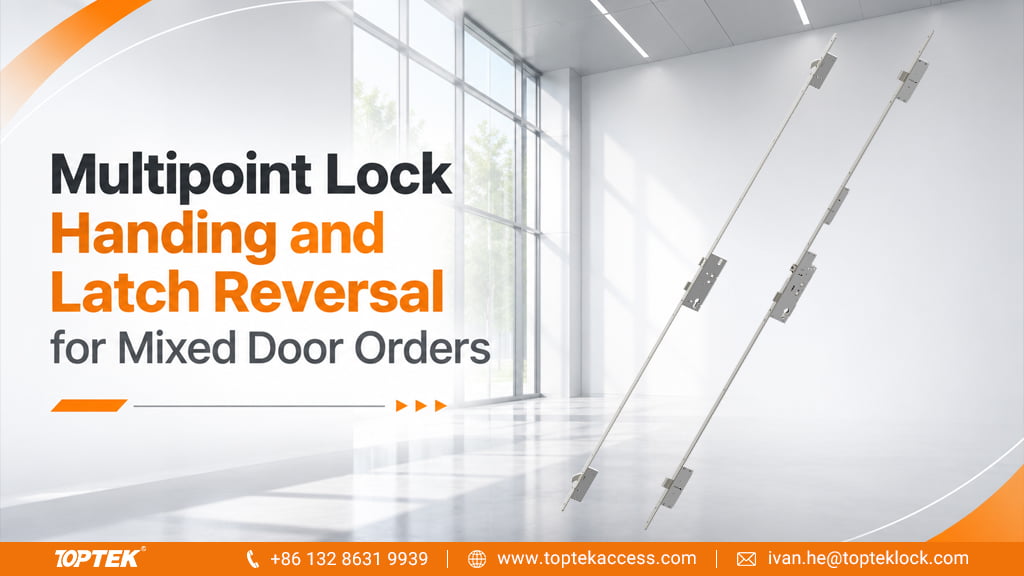

For mixed left- and right-opening door orders, specify multipoint lock handing with a labelled door drawing and the required inside and outside operation. TOPTEK’s MUSG4592 automatic multipoint lock has a reversible latch. This provides a useful configuration option, but reversing the centre latch does not by itself establish the orientation or function of every component in the door assembly.
The procurement decision is therefore practical: agree the required final orientation, then decide who will set it and how the assembly line will identify it. This is especially useful when a distributor or door manufacturer supplies similar doors with different opening directions.
What the MUSG4592 reversible latch changes
MUSG4592 combines one central lock case with two auxiliary lock cases. It uses automatic projection of the main deadbolt and auxiliary hooks when the door closes in the intended configuration. Its reversible latch allows the latch contact direction to be set for the required door orientation.
That feature can reduce the need to select a different central-latch arrangement solely because the door swing changes. The benefit applies only after the complete configuration has been checked: remote locking points, frame keeps, handles and their operating functions still need to match the door. It is not a promise that one assembled stock item fits every opening.
Use the TOPTEK multipoint locking range to identify the platform, then include MUSG4592 by name in the configuration enquiry. The Auto Lock product reference is a separate range reference; model names and conversion instructions should remain specific to the item being ordered.
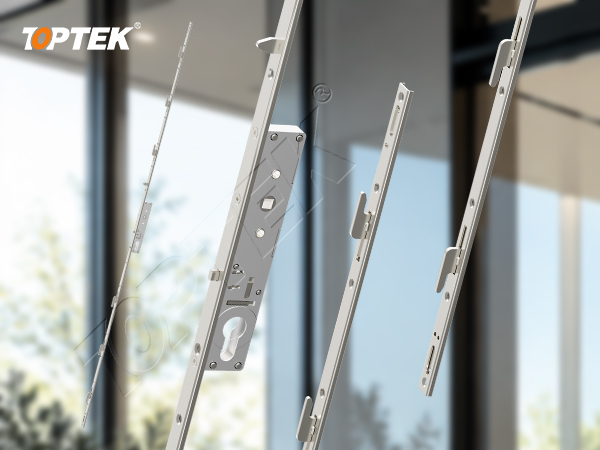
Replace an ambiguous left or right label with a drawing
Show the viewing side, hinge position and swing arrow on a plan view. Label the faces by their use, such as corridor and room, and identify the active leaf for paired doors. The supplier can then confirm the supplied orientation against that drawing, even when the purchaser and factory normally use different handing conventions.
Add the required handle and key behaviour. A latch bevel describes physical contact during closing; it does not say whether the outside handle should open freely, require a key or operate another function. Keeping those decisions separate avoids a correctly oriented latch being supplied with the wrong operating arrangement.
Choose the assembly responsibility before batch ordering
| Supply arrangement | Suitable purchasing priority | What the order should state |
|---|---|---|
| Request the final orientation from the factory | Minimise conversion work on the door assembly line | Drawing reference, quantities by orientation and final configuration label |
| Request an approved local conversion arrangement | Keep flexibility where trained personnel configure doors locally | Exact model instructions, responsible assembler and completed-orientation check |
Agree availability for the selected model before choosing either arrangement. Do not remove a screw simply because another lock uses it for reversal. The MUSG4592 product description establishes that the latch is reversible; the applicable installation instructions must control the conversion steps and any fastener settings.
TOPTEK’s OEM and ODM development process connects requirements, drawings and samples with production planning. For a mixed door order, use that discussion to agree configuration labels and the responsibility for the final latch orientation. A sample photograph should show the same viewing direction as the purchase drawing.
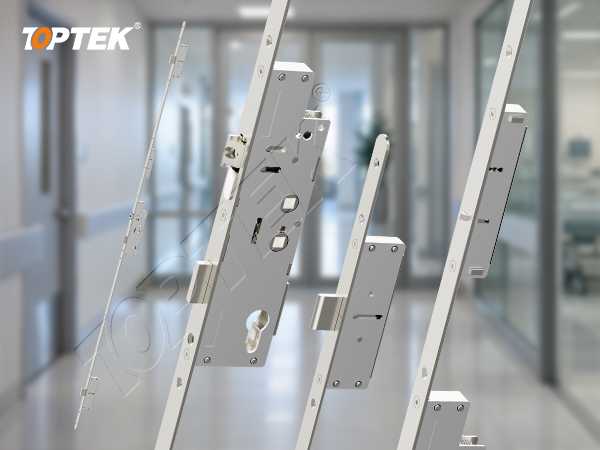
Check the completed door in its intended direction
After an authorised conversion, the responsible assembler should verify the latch retention and return according to the model instructions, then check the complete door’s closing, locking and release. On an automatic assembly, include the remote points and their frame interfaces; a centre latch that moves freely cannot prove that all points engage correctly.
Support the long strip during handling. TOPTEK’s multipoint product-development experience identifies faceplate deformation as a cause of operating resistance. If resistance appears after assembly, check for handling distortion and alignment as well as orientation. Reversing the latch again will not correct a bent strip.
Record the accepted hand, drawing revision and any approved conversion on the sample and packing reference. For repeat purchases, quote that configuration rather than relying on the short description “left-hand lock.” This preserves the decision after the original buyer or assembler changes.
Send the door orientation for configuration review
Email TOPTEK your door orientation drawing with the selected model, inside and outside functions, quantities for each orientation and preferred assembly arrangement. Include the door profile and matching hardware when requesting a quotation for the complete configuration.