
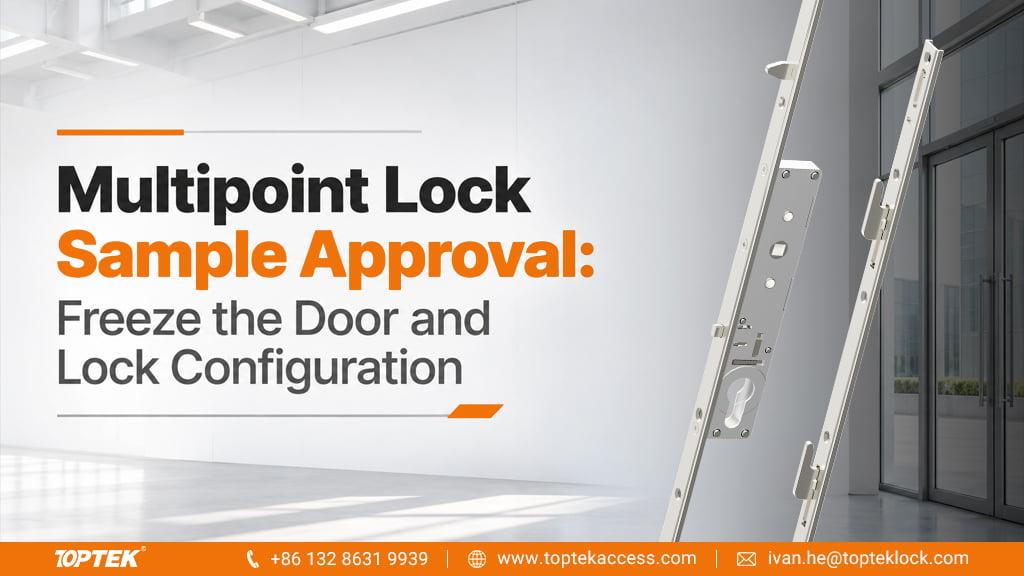

Multipoint lock sample approval should identify the combination being accepted: the lock, keeps, door profile, associated hardware and drawing revision. For a door manufacturer, the useful result is a configuration that can be ordered and checked again. A smooth demonstration becomes meaningful when another person can reproduce it using the same components and preparation.
TOPTEK’s OEM/ODM process connects product drawings and the bill of materials with sample development, first-article inspection and pilot production. These steps serve a practical buying purpose: sample feedback can change a defined product reference before the production order is released.
Choose the operating arrangement before requesting the sample
The TOPTEK multipoint locking range covers different operating arrangements. An automatic mechanism, a lift-lever arrangement and a cylinder-operated arrangement ask different things of the user and the door. State the required operation at the start, including how the door should lock and how authorised users should open it.
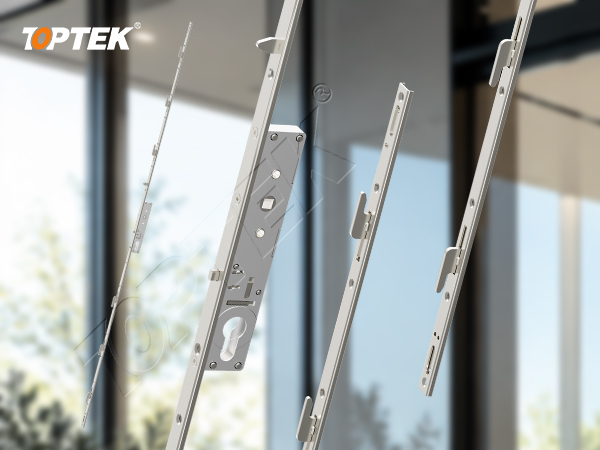
For example, the MUSG4592 automatic platform combines a central lock case with two auxiliary cases. That means the sample enquiry must include the matching keeps and their positions along the door, not only the central case preparation. A complete layout makes it possible to check the relationship between the door profile and all three locations.
Use manufacturing experience to focus the door trial
TOPTEK’s multipoint-lock development experience highlights two practical problems: dimensional mismatch can prevent the intended automatic action or cause premature release, and bending a long faceplate can introduce binding. These observations explain why the complete door trial matters.
First inspect the received strip and packaging. Then fit the lock and keeps to the agreed door preparation. Check the operation without forcing the door or adjusting the keeps simply to obtain one successful demonstration. If an adjustment is necessary, record what changed and incorporate the accepted change into the drawing or fitting instruction.
A useful distinction is between a repeatable setup and a hand-tuned demonstration. If the trial works only after a keep is moved, the new position is part of the accepted configuration. Leaving the original drawing unchanged sends the next production door back to the earlier problem.
Connect each sample decision to the production reference
| Decision | Reference to retain | Why it matters to the order |
|---|---|---|
| Lock and keep combination | Complete model and component references | Prevents an apparently similar assembly being substituted. |
| Door preparation | Agreed profile and dimensional drawing revision | Links machining to the configuration that was actually tried. |
| Accepted adjustment | Recorded change and updated dimension or instruction | Makes the result repeatable beyond the sample bench. |
| Sample condition | Identified sample with photographs and agreed observations | Provides a comparison for later supply. |
| Shipping protection | Agreed support and packing arrangement for the long strip | Keeps transport condition in the production discussion. |
Agree the measurements and acceptance criteria before the trial. Use the tolerances and methods applicable to the selected model and door; there is no useful universal clearance to insert into every multipoint-lock order.
Make the approval specific enough for repeat supply
A prototype can answer a development question. A production reference must also identify the configuration being supplied. TOPTEK’s OEM/ODM multipoint-lock development process includes sample work and pilot production so that the product decision can be connected to manufacturing.
The approval record should state which sample and revision it covers, which door setup was used, and which observations were accepted. Keep a retained reference where appropriate. Agree how a later change to the keep, faceplate, internal component or door preparation will be reviewed before repeat supply.
This does not make every small change a new project. It allows the buyer and manufacturer to identify the interfaces affected by the change and agree the checks needed for that configuration.
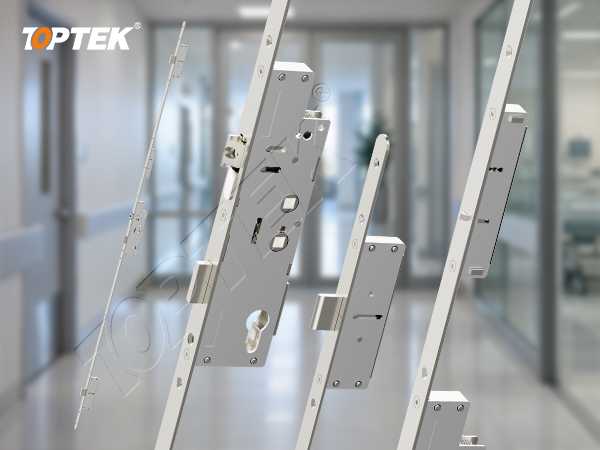
If comparing alternatives such as PD1000, retain a separate configuration record for each. A product-family relationship does not make the same keeps, preparation or approval record applicable to every model.
For projects requiring performance or fire documentation, connect the required report or certificate to the exact product and assembly scope. The TOPTEK testing capability overview explains the development support available; a sample sign-off remains a purchasing and configuration decision, distinct from the documentation required for the project.
Start a sample request with the door drawing
Send TOPTEK your door section, required locking operation and proposed keep layout. Add the target market, intended order quantity and the decision the sample must support. Request a proposed lock configuration and sample plan, with the references that will carry forward into the production order.
Frequently Asked Questions
What should a multipoint lock sample approval identify?
Identify the lock and keeps, door configuration, drawing revision and sample reference. Record accepted adjustments so that the same configuration can be reproduced for production.
Does changing a keep require the whole sample process to restart?
Review which interfaces the changed keep affects, including location, engagement and operation. Agree the checks needed for that configuration and update the reference before repeat supply.