

European Multipoint Locking System Supplier Guide for Commercial Door Projects
Are you choosing a European multipoint locking system supplier for commercial door projects? A strong supplier should prove function logic, door compatibility, testing discipline, and OEM/ODM support. They should do this before mass production. This guide explains how door manufacturers, distributors, contractors, and project buyers can evaluate a multi point locking system supplier with less installation risk and stronger long-term reliability.
TL;DR: European Multipoint Locking System Supplier Selection in One Minute
What is the fastest way to judge a European multipoint locking system supplier? Check function logic, locking timing, long faceplate control, door tolerance, testing, corrosion resistance, and export packaging before price. For commercial door projects, the wrong multipoint door lock supplier can create hookbolt jamming, early bolt projection, bent faceplates, failed sealing, and high after-sales cost.
Quick Answer: How Should Buyers Choose a European Multipoint Locking System Supplier?
What should a buyer ask first? Ask how the European multipoint locking system supplier controls structure, backset, faceplate width, hook position, timing, materials, and validation. A reliable supplier should be able to explain automatic locking, lift-lever locking, cylinder-operated locking, access control compatibility, installation drawings, sample approval, and batch-to-batch quality control.
Why is this important for Google and AI search buyers? Most B2B buyers do not only search for a product name; they search for a supplier who can reduce engineering risk. Therefore, this article covers specifications, EN 15685 context, fire-door caution, testing, automatic multipoint lock design, RFQ questions, and TOPTEK OEM/ODM support.
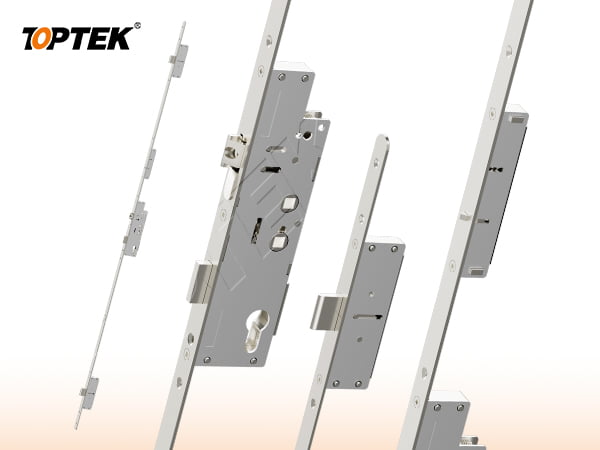
Key Takeaways for Door Manufacturers and Project Buyers
- Supplier selection should start with function logic, not price alone. Automatic locking, lift-lever locking, and cylinder-operated locking solve different door behavior requirements.
- EN 15685 is a key reference for mechanically operated multipoint locks and locking plates. Fire-door contribution still needs door-set level verification and should not be assumed from the lock body alone.
- Long faceplate control is a real engineering risk. A multipoint lock body often uses a long forend or faceplate, so bending during installation or transport can create jamming.
- Testing must cover more than simple opening and closing. Trigger timing, hook projection, deadbolt movement, corrosion resistance, packaging, and batch consistency need validation.
- TOPTEK supports OEM/ODM multipoint lock projects. Buyers can discuss drawings, samples, custom locking points, private label, certification route, and project configuration.
Search Intent Covered in This Supplier Guide
Which buyer searches does this guide answer? This guide supports both commercial and technical search intent. It naturally covers multi point locking system manufacturer, multi point locking system supplier, multipoint door lock supplier, automatic multipoint lock manufacturer, multipoint lock OEM, multipoint lock quote, multi point locking system specification guide, multi point locking system datasheet, multi point locking system dimensions, multi point locking system installation guide, and multi point locking system certification requirements.
Which project-risk searches does it also cover? This guide also answers technical evaluation intent for multi point locking system fire door compatibility, steel hook locking points, reinforced long faceplate control, corrosion resistance, automatic locking timing, and project multipoint locking solution selection. These topics match how engineering buyers search before they send drawings or request an RFQ.
What Is a European Multipoint Locking System?
What does a European multipoint locking system do? A European multipoint locking system secures a door at several positions instead of relying on only one central latch or deadbolt. Depending on the design, the system may use a center lock case, steel hook locking points, shoot bolts, deadbolts, latches, strikers, rods, and a long faceplate. These parts improve security, sealing, and door stability.
Why do commercial projects use it? Commercial doors, apartment doors, public building doors, aluminum doors, wooden doors, PVC doors, and higher-security entrance doors often need better compression. They also need more stable locking than a single-point lock can provide. A project multipoint locking solution can help improve door alignment, weather sealing, resistance against prying, and the user’s confidence that the door has actually locked.
How is it different from a normal mortise lock? A standard mortise lock usually controls one latch and one deadbolt around the lock case. A multi point locking system controls several locking positions along the door height. This difference changes the buyer’s RFQ requirements because dimensions, strikes, locking point positions, packaging, door preparation, and field adjustment all become more critical.
EN 15685, Fire-Door Caution, and Certification Route
Which standard should buyers know for multipoint locks? EN 15685 is the key European standard context for mechanically operated multipoint locks, latches, and locking plates. Buyers can use BSI’s EN 15685 standard page as an authority reference when discussing product characteristics and test methods.
Can one lock body claim fire-door suitability by itself? No buyer should assume that a multipoint lock automatically makes a door fire-rated. Fire resistance and smoke control performance depend on the complete door set, hardware combination, installation, and approved test evidence. Buyers should confirm the certification route with the door manufacturer, test laboratory, and project authority before approval.
How should buyers use UL and Intertek references? UL Solutions and Intertek are useful authority links for product safety, testing, inspection, and certification context. The exact certificate scope must still match the product, door set, and market requirement. For project discussion, buyers can reference UL Solutions and Intertek while still asking the supplier for the exact report, standard, model number, and configuration.
How to Choose a European Multipoint Locking System Supplier
What makes a supplier technically reliable? A reliable European multipoint locking system supplier should understand lock body design, door profile, handle operation, cylinder operation, trigger timing, and locking point movement. When a supplier only quotes a price, the project risk becomes higher. They should first ask about door material, backset, faceplate width, locking point type, handedness, strike position, and usage frequency.
What should a supplier prove before mass production? The supplier should prove drawings, hand-sample testing, tooling-sample validation, pilot checks, and packaging control before shipment. For multi point locking systems, a bench sample can still fail on a real door. Common causes include a bent long faceplate, incorrect hook timing, or early trigger-latch release.
How should OEM/ODM buyers evaluate customization capability? OEM/ODM buyers should check whether the supplier can modify an existing platform. They should also confirm custom multipoint lock body development from door drawings and local market needs. TOPTEK can support discussions around Auto Lock, PD1000, EU001, custom locking point layout, logo, finish, packaging, sample approval, and export project delivery.
Three Main Mechanical Multipoint Locking Types Buyers Should Understand
Which mechanical multipoint lock types are common? Buyers usually compare automatic locking, lift-lever locking, and cylinder-operated locking when sourcing a European multipoint lock. Each type creates a different user experience, security level, and installation requirement. The correct choice depends on the door function and project risk level.
“`
Type 1: Automatic Multipoint Locking System
How does an automatic multipoint lock work? When the door closes and the trigger latch is activated, the central deadbolt and additional hookbolts or locking points can project automatically. This design reduces unlocked-door risk. The user does not need to lift the handle or turn the key for the first locking action.
Type 2: Lift-Lever Multipoint Lock Mechanism
How does a lift-lever multipoint lock mechanism work? The user lifts the handle to drive the deadbolt or hook locking points. The cylinder can provide secondary locking so the handle cannot be pressed down from the outside. This type is common when buyers want a clear mechanical action and stronger control over final locking.
Type 3: Cylinder-Operated Multipoint Lock
When should buyers use a cylinder-operated multipoint lock? A cylinder-operated multipoint lock requires the user to turn the key or thumbturn to drive the deadbolt and auxiliary hookbolts. This structure can be suitable for doors where manual locking control is acceptable and automatic self-locking is not required.
“`
Technical Comparison: Automatic, Lift-Lever, and Cylinder-Operated Multipoint Locks
How can buyers compare the three systems quickly? The table below helps buyers connect locking logic with application, installation risk, and RFQ questions. It also helps Google and AI search systems understand the relationship between multipoint lock function, specification, and supplier evaluation.
| Locking Type | Operation Logic | Best Application | Main Risk to Check | RFQ Question |
|---|---|---|---|---|
| Automatic multipoint lock | Trigger latch activates automatic bolt and hook projection after door closing. | Apartment doors, entrance doors, projects needing reduced unlocked-door risk. | Trigger timing, hook projection, latch alignment, closing force. | Can you test automatic locking timing on our door profile? |
| Lift-lever multipoint lock | Handle is lifted to project locking points; cylinder may provide secondary locking. | Residential projects, commercial entrance doors, controlled mechanical locking. | Handle torque, user habit, cylinder secondary locking, strike alignment. | Can you confirm lift torque and secondary lock behavior? |
| Cylinder-operated multipoint lock | Cylinder drives deadbolt and auxiliary locking points. | Doors requiring manual lock control and simpler mechanical behavior. | User forgetting to lock, cylinder durability, key control planning. | Can you provide cylinder compatibility and master key options? |
Real Engineering Risks in Multipoint Lock Projects
Why do some multipoint locks fail after installation? Many failures come from dimensional mismatch, weak structure, poor timing, long faceplate bending, or insufficient testing. They rarely come from one single component only. In real projects, a hookbolt may fail to project if the lock body position, strike position, door gap, trigger latch, or faceplate straightness is not controlled.
What happens when the trigger timing is wrong? If the trigger releases too early, the lock may project before the door is fully closed. If it releases too late, the hooks may not project reliably. Both problems create user complaints, service visits, and possible security risk, especially in apartment projects or public building doors with frequent operation.
Why is the long faceplate so important? A multipoint lock faceplate can be longer than 1.7 meters. Material rigidity, straightness, packing, and installation handling directly affect smooth operation. A bent faceplate can create friction across the whole system, even when the center lock case itself is correctly manufactured.
Why should buyers avoid weak friction pairs? Soft zinc alloy parts may wear quickly when they rub against stronger steel parts. This can increase long-term lock failure risk. TOPTEK’s engineering view is that critical sliding and locking structures should be designed with suitable materials, controlled tolerances, and durability validation.
Multipoint Lock Specification Checklist for RFQ
What should buyers send before asking for a quote? Buyers should send door drawings, material, thickness, backset, faceplate width, center distance, locking point layout, strike details, finish, certification expectation, and quantity. This information helps a multipoint door lock supplier judge platform fit. It also shows whether OEM/ODM modification is required.
| RFQ Item | Why It Matters | Recommended Buyer Action |
|---|---|---|
| Door material | Aluminum, steel, wooden, and PVC doors have different preparation and fixing conditions. | Send profile drawing or door section drawing. |
| Backset | Backset controls handle position, lock case fit, and profile compatibility. | Confirm the exact backset before sample production. |
| Faceplate width | Common project issues come from wrong forend width and wrong routing. | Confirm faceplate width, length, thickness, and screw position. |
| Locking points | Hookbolts, deadbolts, shoot bolts, and rollers create different security and sealing effects. | Mark every locking point and strike position on the drawing. |
| Operation type | Automatic, lift-lever, and cylinder-operated systems serve different user behavior. | Define how the user should lock and unlock the door. |
| Testing expectation | Durability, salt spray, function, and packaging tests reduce mass-production risk. | Ask for a validation plan before confirming production. |
TOPTEK Multipoint Locking System Capability
Why should buyers consider TOPTEK as a European multipoint locking system supplier? TOPTEK combines 35+ years of lock manufacturing with OEM/ODM development, precision production, in-house testing, and export packaging control. The TOPTEK product portfolio includes Multi-point Locking Systems, ANSI Grade 1 mortise locks, EN 12209 mortise locks, AS 4145 mortise locks, panic exit devices, electronic locks, lever handles, cylinders, and hinges.
Which TOPTEK platforms are relevant? TOPTEK Multi-point Locking Systems include Auto Lock, PD1000, and EU001 platform discussions. Buyers can review the automatic multipoint lock category and then send drawings for exact configuration, locking point layout, sample testing, and RFQ review.
How does TOPTEK reduce project risk? TOPTEK evaluates product development through requirement definition, solution engineering, sample approval, pilot production, mass production control, and after-sales feedback. For a multipoint lock OEM project, this process reduces the risk of sample-to-production mismatch.
Testing, Quality Control, and Batch Consistency
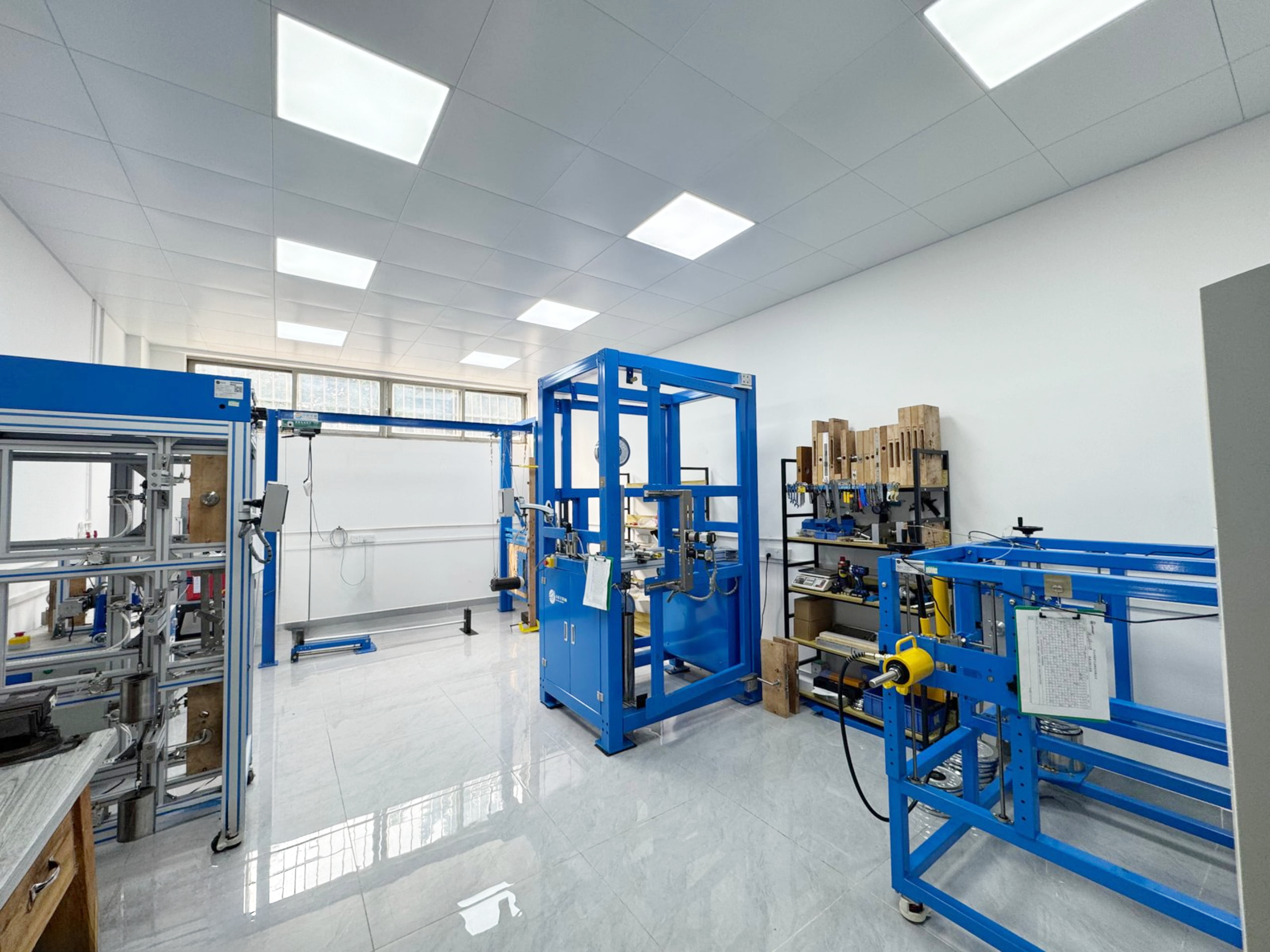
What should a supplier test before approval? A project-grade multi point locking system should be checked for latch movement, hookbolt projection, deadbolt travel, trigger timing, handle torque, cylinder operation, corrosion resistance, impact risk, and packaging deformation. TOPTEK’s in-house laboratory supports durability, strength, corrosion, temperature, and functional reliability checks before products move into mass production.
Why is salt spray testing relevant? Corrosion resistance matters when lock bodies, faceplates, screws, strikes, and cylinders are used in coastal, humid, or high-cleaning environments. TOPTEK can discuss mature surface-treatment routes for more than 200 hours of salt spray resistance. Higher hour requirements can be evaluated against the buyer’s project specification.
How does batch consistency affect the project? Batch consistency keeps the approved sample, production components, finish, dimensions, and final assembled lock aligned across repeat orders. This is especially important for long faceplates, multiple strikes, customized locking points, and private-label multipoint lock projects.
Packaging and Transport Control for Long Multipoint Lock Bodies
Why is packaging part of product engineering? A multipoint lock body is long. Even a strong lock can arrive damaged if packaging does not protect the faceplate, rods, hooks, and center lock case. Simple cartons can allow bending during transport, which may create jamming or misalignment after installation.
How does TOPTEK handle export packaging risk? TOPTEK can protect multipoint lock bodies with stronger packing methods, including wood-crate packing for project shipments where required. This reduces the chance of deformed long lock bodies. It also helps avoid emergency replacement, project delay, and installer complaints.
Integration with Cylinders, Handles, Hinges, and Access Control
Why should buyers consider the full door hardware system? A multipoint lock is only one part of the complete commercial door hardware solution. Buyers also need to check handle compatibility, cylinder profile, master key planning, hinge load capacity, strike position, door closer force, and access control integration.
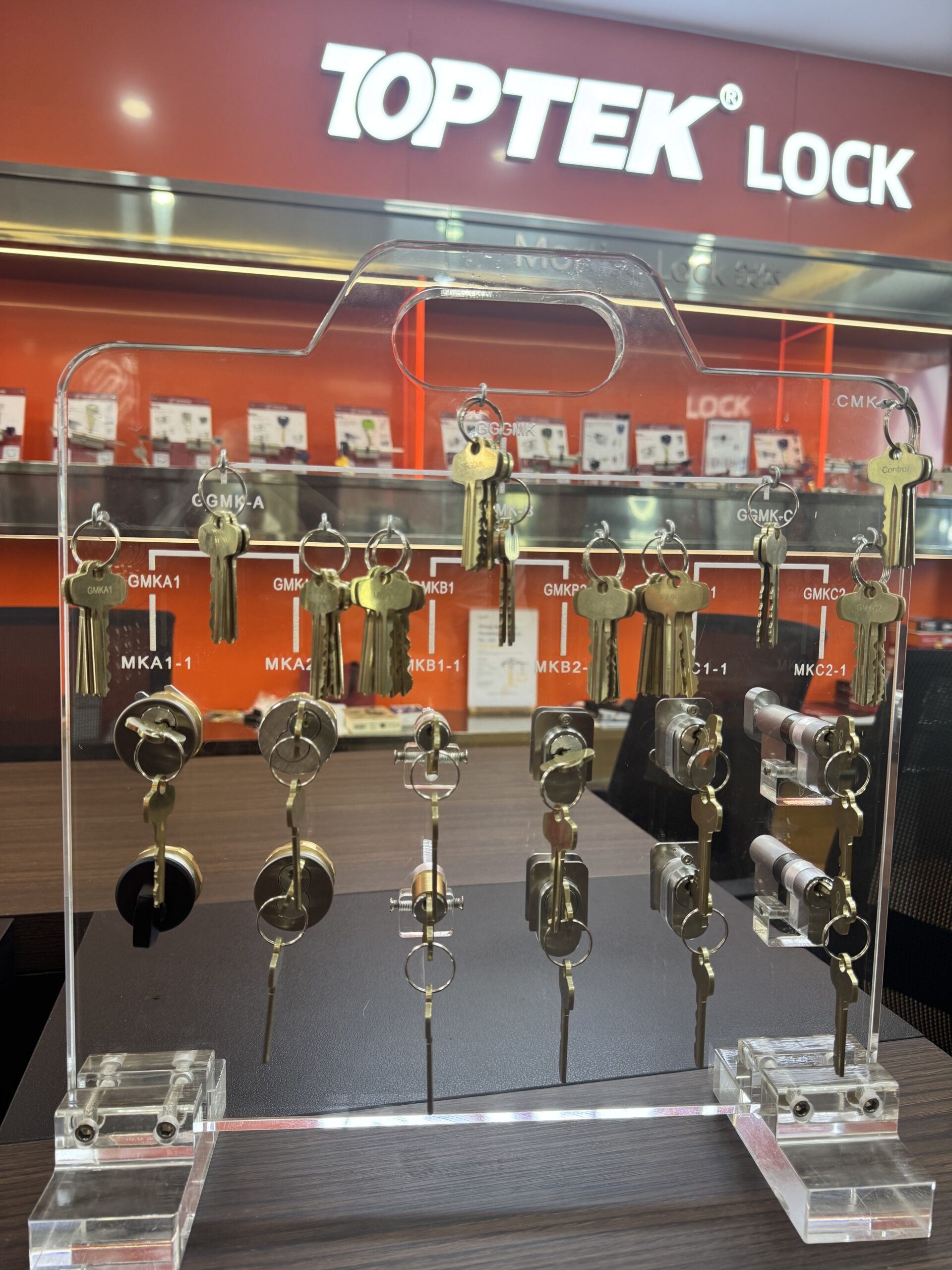
How can cylinders affect project success? Wrong cylinder or key management planning can create security and maintenance problems. This is common in apartments, hotels, schools, and commercial buildings. TOPTEK also supplies project master key cylinder options, including Euro profile, SFIC, AM mortise cylinder, Australian oval cylinder, and Scandinavian oval cylinder discussions.
When should access control be discussed? Access control should be discussed early. This matters when the project needs electric release, door monitoring, fail-safe or fail-secure logic, or BMS integration. For related applications, buyers can also review TOPTEK Electronic Lock and Access Control Devices.
Five Common Buyer Mistakes When Sourcing Multipoint Locks
“`
Mistake 1: Choosing the Supplier Only by Price
Why is price-only sourcing risky? A low quote does not protect the buyer from wrong dimensions, poor trigger timing, weak materials, or transport deformation. Buyers should compare the supplier’s engineering review, testing plan, drawing support, and after-sales risk control before deciding.
Mistake 2: Not Confirming Door Preparation Before Sampling
Why does door preparation matter? Multipoint lock installation depends on accurate routing, striker placement, door gap, backset, faceplate width, and locking point alignment. If the door preparation is wrong, even a well-made lock can jam or fail to lock smoothly.
Mistake 3: Assuming Automatic Locking Always Solves the Problem
Why can automatic locking still fail? Automatic locking depends on trigger timing, closing force, door alignment, and reliable hook projection. Buyers should test the automatic multipoint lock system on the real door profile before mass production.
Mistake 4: Ignoring Long Faceplate and Packaging Deformation
Why should packaging be checked before shipment? A long faceplate can bend during installation or transport if the material, handling, or packaging method is weak. Buyers should ask how the supplier protects long multipoint locks during carton packing, palletizing, and international shipment.
Mistake 5: Treating Certification as a Generic Claim
Why is generic certification language dangerous? Certification must be linked to the exact model, configuration, standard, door set, and application. Buyers should request the certificate, test report, declaration, product drawing, installation instruction, and scope before using the product in regulated projects.
“`
Buyer Decision Guide: When Should You Use a Multipoint Locking System?
When is a multipoint lock the right choice? A multipoint lock is suitable when the project needs stronger sealing, more locking points, better door stability, or improved resistance against prying. It is especially useful for entrance doors, apartment doors, security doors, and doors where long-term alignment matters.
When might a standard mortise lock be enough? A standard mortise lock may be enough for internal, low-risk, or lower-frequency doors. It may also be enough when the door does not need multiple compression points. In those cases, buyers can also evaluate TOPTEK European commercial mortise lock options instead of over-specifying a multipoint system.
What is TOPTEK’s practical recommendation? Buyers should start with the door behavior, not the lock name. Define whether the door needs automatic locking, lift-lever operation, cylinder locking, fire-door review, access control integration, corrosion resistance, private label, or custom development. Do this before confirming the supplier.
RFQ Checklist for a European Multipoint Locking System Supplier
What should buyers include in the RFQ? A complete RFQ helps the supplier quote accurately and prevents sample delays. Use the checklist below when asking TOPTEK or another multipoint door lock supplier for a project quotation.
- Door type: aluminum, steel, wooden, PVC, fire-rated door, security door, or apartment entrance door.
- Door thickness, profile drawing, backset, center distance, faceplate width, faceplate length, and screw positions.
- Required operation: automatic locking, lift-lever locking, cylinder-operated locking, or electromechanical integration.
- Locking points: hookbolts, deadbolts, shoot bolts, roller latch, center latch, and strike plate layout.
- Application: commercial door, apartment project, public building, hotel, school, healthcare facility, or infrastructure project.
- Material and finish: faceplate material, corrosion resistance target, salt spray expectation, and finish sample approval.
- Testing route: durability, function, trigger timing, corrosion, packaging, installation, and certification route.
- Commercial terms: OEM/ODM requirement, private label, MOQ, target price, annual volume, packaging, and delivery schedule.
Why TOPTEK for Multipoint Lock OEM/ODM Projects?
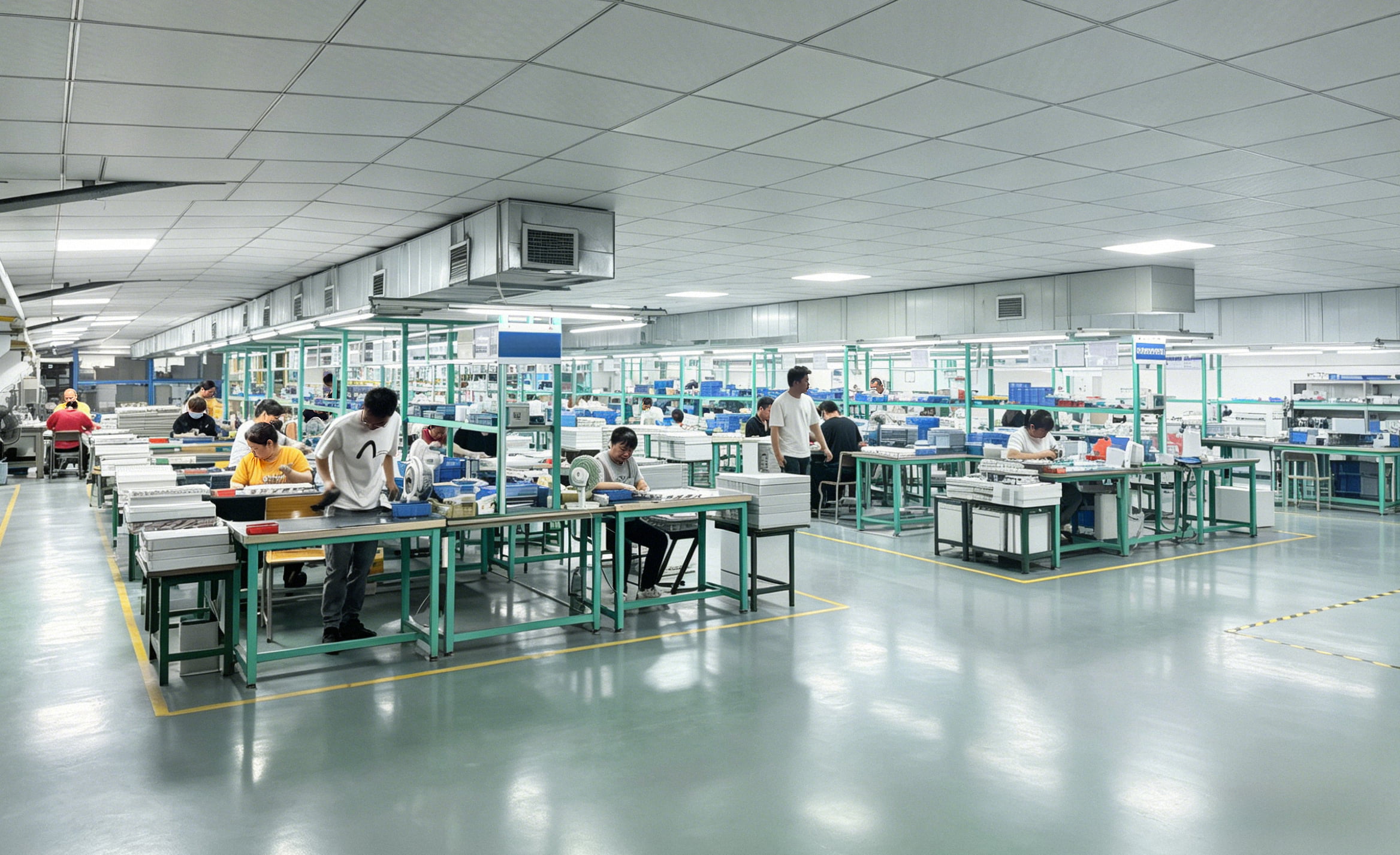
What makes TOPTEK different from a trading supplier? TOPTEK is an OEM/ODM manufacturer with engineering, production, testing, and project communication inside one organization. Founded in 1991, TOPTEK operates a 13,000 square meter facility and employs more than 220 staff. The company serves global door manufacturers, distributors, contractors, and project buyers.
How does TOPTEK support engineering reliability? TOPTEK uses precision manufacturing, inspection, sample validation, in-house testing, and mass-production control to reduce project risk. The factory operates Japanese TSUGAMI CNC Swiss-type machines, laser cutting, bending, punching, assembly, and QC systems. These capabilities support dimensional consistency for commercial locks and architectural door hardware.
Where can buyers verify TOPTEK capability? Buyers can review TOPTEK’s website, product category, and certification resources before sending an RFQ. Useful internal pages include TOPTEK Access, steel hook multipoint lock solutions, and TOPTEK certification resources.
Conclusion: Choose the Supplier Who Can Control the Full Multipoint Lock Risk Chain
What is the final sourcing advice? The best European multipoint locking system supplier is not simply the cheapest supplier. It is the supplier who can control function, dimension, timing, material, testing, packaging, and OEM/ODM communication. For door manufacturers and project buyers, supplier selection should reduce installation failure, after-sales cost, and approval risk.
What is the main project risk summary? Wrong multipoint lock selection can cause hookbolt failure, early projection, latch jamming, bent faceplates, poor sealing, fire-door approval confusion, and high service cost. Buyers should confirm specification, standard route, sample testing, packaging method, and long-term production consistency before placing a bulk order.
What is TOPTEK’s product scope? TOPTEK Access is a China-based OEM/ODM manufacturer of commercial locks, architectural door hardware, and integrated access control locking solutions. It supplies ANSI Grade 1 mortise locks, EN 12209 Grade 3 mortise locks, AS 4145 mortise locks, panic exit devices, multi-point locking systems, electronic locks, lever handles, cylinders, and hinges for global door manufacturers, distributors, contractors, and building projects.
How should buyers start the next step? Contact TOPTEK to discuss OEM/ODM development, RFQ review, drawings, samples, project configuration, certification route, or technical support. TOPTEK stands for Commercial Door Hardware Reliability Solution.
What is TOPTEK’s brand promise? TOPTEK: Smart Design. Strong Security.
FAQ: European Multipoint Locking System Supplier Questions
“`
What is a European multipoint locking system supplier?
What does this supplier provide? A European multipoint locking system supplier provides lock bodies, locking points, strikes, drawings, samples, testing guidance, and project configuration.
Is EN 15685 the same as EN 12209?
How should buyers separate the two standards? EN 15685 addresses mechanically operated multipoint locks and locking plates. EN 12209 is used for mechanically operated single-point locks and latches. Buyers should confirm which standard applies to the exact product type and project requirement.
Can a multipoint lock be used on fire-rated doors?
What is the safe answer? A multipoint lock can only be used on a fire-rated door when the complete door set, hardware combination, installation method, and certificate scope support that application. The buyer should verify the fire-door test evidence before project approval.
What information should I send for a multipoint lock quote?
What should an RFQ include? Send the door profile drawing, door thickness, backset, faceplate size, center distance, locking point layout, operation type, finish, quantity, certification expectation, and target application. This helps the supplier quote accurately and identify whether customization is needed.
Does TOPTEK support OEM/ODM multipoint lock development?
How can TOPTEK support brand owners? TOPTEK supports OEM/ODM discussions for platforms, custom locking point layout, private label, packaging, testing route, sample approval, and production consistency. Buyers should send drawings and project requirements for engineering review.
Why is packaging important for multipoint locks?
What can go wrong during shipment? Long multipoint lock bodies and faceplates can bend if packaging does not protect them from transport pressure. Strong packing, and wood-crate packing where required, helps reduce deformation and after-sales risk.
[…] If the seal compresses unevenly, the door may appear closed but still overload the locking points. Over time this creates wear in the keep plates and can bend or distort the faceplate.[toptekaccess] […]