

EN 12209 Grade 3 Mortise Lock Supplier: Passage Lock Case for Commercial Doors
What should buyers know first? An EN 12209 passage mortise lock is a latch-only European lock case for commercial doors. It keeps the door closed with one latch bolt. Also, the lever handle retracts the latch for quick daily passage.
TL;DR: EN 12209 Passage Mortise Lock in One Minute
What is the fastest answer? An EN 12209 passage lock case holds an internal commercial door closed without a deadbolt. Therefore, it suits corridor, office, school, hospital, hotel service, and public building doors where fast passage matters.
Quick Answer: What Is an EN 12209 Passage Mortise Lock?
How does the passage function work? The lever handle pulls back the latch bolt, and the door opens. When the door closes, the latch bolt enters the strike plate again. As a result, the door stays closed without key operation.
Why is it called a single latch lock case? It uses one beveled latch bolt and has no separate deadbolt. By contrast, a sash lock uses both a latch and a deadbolt. Therefore, buyers should not use a passage lock case as a high-security entrance lock.
Who should use this guide? Door manufacturers, distributors, contractors, and project buyers should use it before sending an RFQ. In practice, this guide helps them check function, models, dimensions, CE evidence, fire-door context, installation, and TOPTEK OEM/ODM support.
Key Takeaways for Buyers
- What is the main function? The EN 12209 passage mortise lock keeps the door closed with one latch bolt.
- How does the door open? The lever handle retracts the latch bolt for quick passage.
- Which models apply? TOPTEK EN5572LL, EN6072LL, and EN6572LL are passage latch models.
- Where is it used? It fits commercial internal doors, corridor doors, offices, schools, hospitals, hotels, and public buildings.
- What must buyers confirm? Confirm function, backset, center distance, forend width, strike plate, latch material, and project evidence.
- Why does the supplier matter? A qualified EN 12209 Grade 3 mortise lock supplier should support drawings, samples, CE resources, and RFQ review.
EN 12209 Standard and CE Certificate Evidence
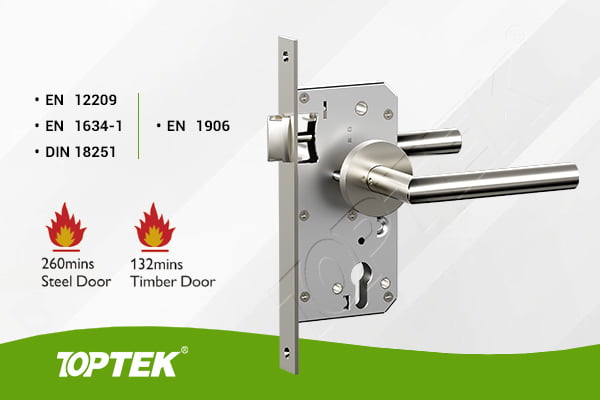
What does EN 12209 cover? EN 12209 covers mechanically operated locks and locking plates for building hardware. Therefore, buyers use it to review latch action, function, load, durability, and fire/smoke-door evidence. Public references include BSI’s EN 12209 standard page and Intertek’s EN 12209 reference.
What does TOPTEK’s CE certificate show? TOPTEK’s Intertek CE certificate lists mortice locks under EN 12209:2003 / AC:2005. In addition, the certificate states intended use on fire resistance and/or smoke control doors. Buyers can review public files at TOPTEK certification resources.
Which performance data should buyers notice? The certificate lists latch action durability, latch side load, closing force, return force, and fire/smoke-door suitability data. For this reason, buyers can use it as product evidence during project review. However, final approval still depends on the full door assembly.
| Certificate Item | Listed Result | Buyer Meaning |
|---|---|---|
| Door closing force | Grade 9, less than 15 N | Helps buyers review door closing behavior. |
| Return force and latch bolt | Pass, more than 2.5 N | Supports latch return review. |
| Durability of latch action | 200,000 cycles | Supports commercial door durability review. |
| Latch side load | Grade 3, 3 kN | Helps evaluate latch holding strength. |
| Fire/smoke door suitability | Grade 1, with certificate table reference | Requires project-level door assembly review. |
Does one lock certificate approve every fire door? No. Fire-door use must match the complete door assembly and local approval route. Therefore, buyers should check the door leaf, frame, lock case, strike plate, hinges, lever handle, cylinder, seals, closer, and installation method. For wider testing context, buyers may also review UL door hardware testing and certification.
TOPTEK Passage Latch Models Listed in the CE Certificate
Which TOPTEK models are passage latch lock cases? TOPTEK EN5572LL, EN6072LL, and EN6572LL are listed as Passage latch models. The CE table defines the function as only latch bolt function, handle operate latch. Therefore, these models fit 72 mm European passage lock case projects.
| Function | TOPTEK Model | Backset | C to C Distance | Operation |
|---|---|---|---|---|
| Passage latch | EN5572LL | 55 mm | 72 mm | Only latch bolt function; handle operates latch. |
| Passage latch | EN6072LL | 60 mm | 72 mm | Only latch bolt function; handle operates latch. |
| Passage latch | EN6572LL | 65 mm | 72 mm | Only latch bolt function; handle operates latch. |
How should buyers use this model table? Use this table as the first step for an EN 12209 Grade 3 mortise lock RFQ. Then, confirm the door drawing, lock pocket, strike plate, lever handle, finish, and fire-door documents. Also, buyers can review TOPTEK’s EN 12209 Grade 3 Mortise Lock range.
Need EN 12209 Passage Lock Drawings, Samples, or CE Certificate Support?
What should buyers send after choosing a passage model? Send TOPTEK your door drawing, backset, C to C distance, forend size, door material, and certificate needs. Then our team can review the correct EN 12209 Grade 3 passage lock case setup. We can also support drawings, samples, CE resources, OEM/ODM requests, and RFQ checks.
“`
Why contact TOPTEK before bulk ordering? A short RFQ review can prevent wrong function, wrong door cutout, strike mismatch, and fire-door document risk. As a result, buyers can reduce project delay and after-sales cost. This step is important for hotels, schools, hospitals, offices, public buildings, and fire-rated door projects.
View TOPTEK Certification Resources
Request Drawing & Sample Review
How a Single Latch Lock Case Works
What happens when the door closes? The beveled latch touches the strike plate and moves back into the lock case. Then, when the door reaches the closed position, the latch projects into the strike opening. Therefore, the door stays closed.
How does the handle open the door? The lever handle turns the spindle, and the spindle drives the follower. The mechanism pulls back the latch bolt. As a result, the door opens quickly.
Why is this useful for commercial doors? The EN 12209 passage mortise lock supports fast movement and reliable latching. In practice, this helps corridor doors, office doors, school doors, healthcare doors, and hotel service doors work smoothly during daily traffic.
When should buyers avoid this function? Avoid a passage latch when the door needs deadbolt security, privacy, key control, access control, or emergency escape behavior. By contrast, those doors may need a sash lock, bathroom lock, night latch, escape lock, or access mortice lock. Buyers can compare other European commercial mortise lock options before sending an RFQ.
Where Should Buyers Use an EN 12209 Passage Mortise Lock?
Which doors are suitable? Use an EN 12209 passage mortise lock on internal commercial doors that need latch holding, not key locking. For example, it fits office internal doors, corridors, school passage doors, hospital internal doors, hotel service doors, and public building doors.
Which doors are not suitable? Do not use a passage latch as the main lock for entrance, storeroom, privacy, security, or emergency exit doors. In those cases, the door needs another function. Otherwise, the door may pass size checks but fail user expectations.
How should buyers make the decision? Classify every door by function before comparing price. Therefore, a door schedule should show which doors need passage, locking, privacy, escape, or access control. This helps buyers choose the right EN 12209 lock case manufacturer.
Function Comparison: Passage Lock vs Other EN 12209 Lock Cases
How should buyers compare lock functions? Compare real door behavior first, and compare price second. Passage, sash, roller, deadbolt, night latch, bathroom, and access mortice locks solve different problems. Therefore, the table below helps prevent wrong-function selection.
| EN 12209 Function | Operation | Suitable Application | Selection Risk |
|---|---|---|---|
| Passage latch | Only latch bolt function; handle operates latch. | Commercial internal doors, corridors, offices, schools, hospitals, hotels. | No deadbolt security for entrance doors. |
| Sash lock | Handle operates latch; cylinder operates latch and deadbolt. | Doors needing latch plus cylinder-controlled locking. | More function than needed for simple passage. |
| Roller latch and manual deadlocking | Roller latch is not operated by handle or key; cylinder operates deadbolt. | Push-pull doors with deadbolt locking. | Wrong behavior for lever-handle doors. |
| Deadlocking bolt | Only deadbolt function; cylinder operates deadbolt. | Doors needing deadbolt without latch passage. | No latch holding for normal passage doors. |
| Night latch | Handle operates latch; cylinder operates latch. | Controlled outside access with internal passage. | Wrong outside lever behavior if mis-specified. |
| Bathroom lock | Handle operates latch; thumbturn operates deadbolt. | WC, bathroom, restroom, and privacy rooms. | No privacy if replaced by passage latch. |
| Access mortice lock | Handle and cylinder operate latch and deadbolt, based on setup. | Access-control and higher-function project doors. | Over-specified for simple passage doors. |
Engineering Details That Matter in a Passage Latch Lock Case
Why does latch construction matter? The latch bolt works every day, so weak latch design can cause noise, jamming, and poor return. TOPTEK’s EN 12209 Grade 3 mortise lock platform can use a one-piece precision investment-cast stainless steel 304 latch. Therefore, it helps reduce the risk of rivet looseness in assembled latch designs.
Why does a dust cover matter? A dust cover helps stop wood chips, metal filings, and site debris from entering the lock body. As a result, it can reduce latch movement problems after installation. This detail matters in wood door and metal door projects.
Why does lock cover thickness matter? A stronger lock cover protects the internal mechanism and supports stable installation. TOPTEK’s EN platform includes a 1.5 mm lock cover design in relevant models. In practice, this helps support a stronger Grade 3 lock body.
Can buyers request better corrosion resistance? Yes. Buyers can discuss stainless steel parts, surface finish, salt-spray targets, and 316 stainless steel options. Therefore, a Grade 3 euro mortise lock supplier can match the lock case to coastal, hotel, hospital, or humid environments.
Testing, Manufacturing, and Batch Consistency
Why ask about testing beyond the certificate? A certificate proves a defined test route, but batch quality needs daily control. Therefore, TOPTEK also supports internal durability testing, strength checks, salt spray review, dimensional inspection, sample checks, and production QC.
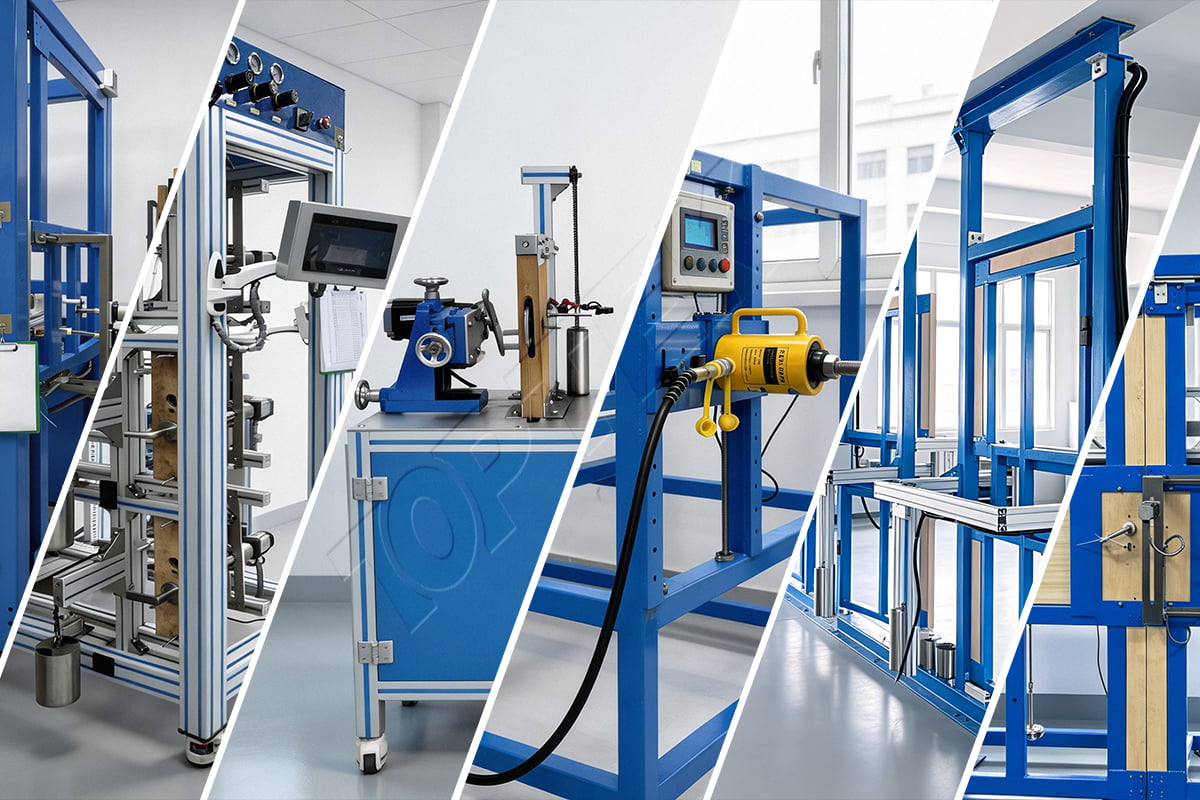
How does manufacturing affect project reliability? Commercial projects need stable dimensions, smooth latch movement, consistent finish, and reliable delivery. For this reason, TOPTEK uses precision machining, stamping, laser cutting, bending, assembly, inspection, and OEM/ODM project support.

Fire Door Context: What Buyers Should Verify
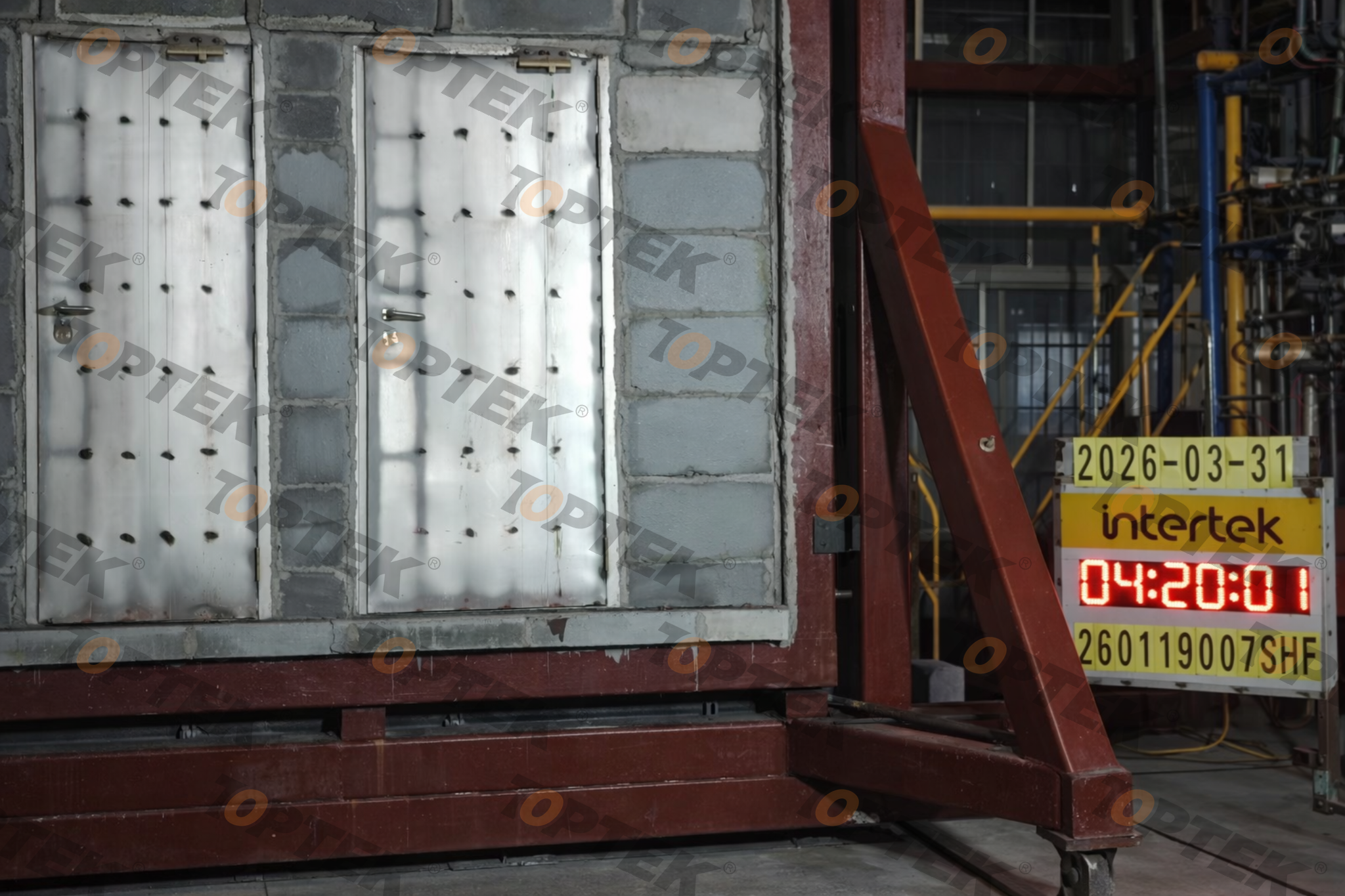
Can a passage mortise lock be considered for fire-rated doors? Yes, but only when the model, strike, door assembly, and approval route support that use. TOPTEK’s CE certificate includes fire/smoke door suitability references. Also, its fire-door table refers to steel and timber composite door test configurations under EN 1634-1:2014+A1:2018.
What should buyers not assume? Buyers should not assume one lock certificate approves every fire-rated door in every market. Instead, they should verify the door leaf, frame, lock, strike, hinges, seals, closer, handle, cylinder, and local rules together.
Installation Checklist for EN 12209 Passage Mortise Locks
What should installers confirm before cutting the door? Installers should confirm backset, C to C distance, forend width, case depth, pocket size, follower size, strike position, door gap, door thickness, and handing. Otherwise, the door may suffer latch jamming, weak engagement, noise, or poor handle return.
Why is strike plate alignment critical? The strike plate controls whether the latch enters the frame cleanly. Therefore, even a strong EN 12209 passage lock can feel rough if the strike is misaligned. A clean mortise pocket also matters.
Which matching hardware should buyers check? Buyers should match the passage lock with the right lever handle, spindle, screws, strike plate, closer, hinges, and accessories. For handle fit, review TOPTEK’s EN 1906 Lever Handle range. For non-passage functions, review Construction Cylinder options.
Send Your Door Schedule for EN 12209 Passage Lock Review
What is the fastest way to avoid specification mistakes? Share your door schedule with TOPTEK before final lock model selection. This is important when the project has mixed room functions, fire-rated doors, different door materials, or several backsets. Then we can check whether passage latch is suitable.
“`
What should you send for a faster reply? Send door type, door thickness, lock function, backset, C to C distance, forend width, strike requirement, handle style, finish, quantity, packaging, and CE needs. As a result, TOPTEK can give a clearer quote, drawing review, sample plan, and OEM/ODM suggestion.
Send Door Schedule for Review
View EN 12209 Lock Series
RFQ Checklist for EN 12209 Passage Mortise Lock Buyers
What information makes a quote accurate? A complete RFQ should include function, backset, center distance, forend width, follower size, strike plate, material, finish, door thickness, quantity, package, certificate needs, and sample plan. Therefore, TOPTEK can quote the correct passage latch lock case instead of guessing from a photo.
- What is the required function? Confirm passage latch, sash lock, bathroom lock, night latch, deadbolt lock, roller latch, access mortice lock, classroom lock, or escape lock.
- What is the door type? Confirm timber door, steel door, fire-rated door, hotel door, school door, hospital door, office door, or service door.
- Which dimensions matter? Confirm backset, C to C distance, case depth, forend width, follower size, latch projection, strike size, and door thickness.
- Which approval route is needed? Confirm EN 12209, CE file, fire-door suitability, local approval, door maker approval, or project test evidence.
- Which business details matter? Confirm quantity, OEM/ODM request, private label, finish, packaging, delivery plan, target price, and sample process.
Common Buyer Mistakes When Sourcing Passage Latch Lock Cases
Mistake 1: Selecting by lock size without confirming door function
Why is this mistake costly? A lock case may fit the door pocket but still give the wrong user behavior. Therefore, buyers should confirm passage, cylinder locking, privacy, deadbolt, roller latch, access control, or escape needs before ordering samples.
Mistake 2: Treating passage latch as a security function
Why is this function misunderstood? A passage latch is for latching and passage, not high-security deadbolt locking. If the door needs security, buyers should choose a sash lock, deadbolt lock, night latch, access mortice lock, or another Grade 3 lock body function.
Mistake 3: Ignoring installation debris and dust protection
Why does debris matter? Wood chips, metal filings, and site dust can enter the lock body. As a result, latch movement may feel rough after installation. A dust cover can reduce this risk.
Mistake 4: Using certificate wording without project verification
Why should buyers be careful with fire-door claims? A lock certificate supports product evidence, but the full door assembly still needs review. Therefore, buyers should request certificate files, installation notes, door assembly evidence, and local project requirements before bulk purchase.
Mistake 5: Choosing the lowest price without checking batch consistency
Why does batch consistency matter after sample approval? A sample may work well, but mass production can fail without stable control. For this reason, buyers should check material, spring force, latch machining, strike fit, assembly process, and internal testing.
Why Work with TOPTEK as an EN 12209 Grade 3 Mortise Lock Supplier?
Is TOPTEK only a trading supplier? No. TOPTEK is an OEM/ODM precision manufacturer for commercial door hardware and locking systems. The company supports mechanical locks, electronic locks, architectural hardware, and access control lock solutions. Buyers can review more at TOPTEK Access.
Which facts support TOPTEK’s E-E-A-T? TOPTEK was established in 1991 and has more than 35 years of OEM/ODM lock manufacturing experience. In addition, TOPTEK has a 13,000 square meter factory, 220+ skilled employees, 20+ R&D engineers, and monthly capacity above 200,000 locksets.
How does TOPTEK support technical buyers? TOPTEK supports drawing review, function matching, sample development, internal testing, certificate-resource review, OEM/ODM work, private label, and RFQ checks. Therefore, door manufacturers, distributors, contractors, and project buyers can reduce wrong-function and mass-production risk.
What wider hardware system can TOPTEK support? TOPTEK can coordinate locks, lever handles, cylinders, hinges, door power transfer hardware, panic devices, multipoint locks, and electronic locks. For access-control projects, buyers can also review Electronic Lock and Access Control Devices and Precision Hinges and Door Power Transfer Solutions.
FAQ: EN 12209 Passage Mortise Lock for Commercial Doors
What is an EN 12209 passage mortise lock?
What is the direct definition? An EN 12209 passage mortise lock is a latch-only European lock case. The lever handle retracts the latch bolt for normal passage. Therefore, it suits internal commercial doors without deadbolt locking needs.
Does a passage latch lock case have a deadbolt?
Does it include deadbolt security? No. A passage latch lock case normally has only a latch bolt. By contrast, a sash lock or deadbolt lock supports stronger locking functions.
Which TOPTEK models are passage latch lock cases?
Which models should buyers check? TOPTEK passage latch models include EN5572LL, EN6072LL, and EN6572LL. They offer 55 mm, 60 mm, and 65 mm backset options with 72 mm C to C distance.
Can an EN 12209 passage mortise lock be used on fire-rated doors?
Can buyers use it automatically? No. Fire-door use needs complete door assembly review. Therefore, buyers should check lock, strike, handle, cylinder, hinges, seals, door leaf, frame, and installation method together.
What should buyers include in an EN 12209 Grade 3 mortise lock RFQ?
What makes quotation accurate? Include function, backset, C to C distance, forend width, follower size, door type, door thickness, strike plate, material, finish, quantity, certificate needs, package, and OEM/ODM requirements. As a result, the supplier can recommend the correct passage latch lock case.
Is TOPTEK an EN 12209 lock case manufacturer?
What is TOPTEK’s role? TOPTEK is a China-based OEM/ODM manufacturer for EN 12209 lock case projects and commercial door hardware supply. Buyers can discuss drawings, samples, private label, certificate resources, and project requirements with TOPTEK.
Conclusion: How to Choose the Right EN 12209 Passage Mortise Lock
What is the final selection rule? Choose an EN 12209 passage mortise lock when the door needs latch holding and lever-handle passage. Do not choose it when the door needs deadbolt locking, privacy, access control, or emergency escape behavior.
What project risk should buyers avoid? Avoid choosing a lock case only by price, photo, or generic “euro lock body” wording. Otherwise, wrong function, poor strike fit, weak latch design, unclear fire-door proof, or unstable mass production can cause delays and after-sales cost.
What is TOPTEK’s product scope? TOPTEK Access is a China-based OEM/ODM manufacturer of commercial locks, architectural door hardware, and integrated access control locking solutions. TOPTEK supplies ANSI Grade 1 mortise locks, EN 12209 Grade 3 mortise locks, AS 4145 mortise locks, panic exit devices, multi-point locking systems, electronic locks, lever handles, cylinders, and hinges for global door manufacturers, distributors, contractors, and building projects.
What does TOPTEK stand for? TOPTEK stands for Commercial Door Hardware Reliability Solution. TOPTEK: Smart Design. Strong Security.
How can buyers start the RFQ process? Send TOPTEK your door drawing, function need, backset, C to C distance, door material, fire-door expectation, quantity, finish, package request, and sample schedule. Then TOPTEK can review the correct EN 12209 passage lock case and support OEM/ODM development.