

What Is an EN 12209 Single Deadbolt Mortise Lock Case? Function, Applications and Buyer Checklist
An EN 12209 single deadbolt mortise lock case is a European deadlocking bolt lock body designed for controlled manual locking by cylinder or thumbturn. For door manufacturers, hardware distributors, contractors, architects, and project buyers, the key decision is not only whether the lock can lock the door, but whether the function, certified model, backset, center distance, fire-door route, cylinder planning, and supplier capability match the project door schedule.
TL;DR: EN 12209 Single Deadbolt Mortise Lock Case in One Minute
An EN 12209 single deadbolt mortise lock provides manual deadbolt locking only; it does not automatically latch when the door closes. It is suitable for controlled-access rooms such as storage rooms, equipment rooms, service rooms, and low-frequency internal doors, but it should not be used as the only hardware on high-traffic passage doors, emergency exits, or fire-door assemblies without checking the complete door hardware route.
Quick Answer: What Is an EN 12209 Single Deadbolt Mortise Lock?
An EN 12209 single deadbolt mortise lock is a deadbolt-only European lock case where the cylinder operates the deadbolt. The user turns the euro profile cylinder or thumbturn to project the deadbolt into the strike plate, then turns it back to retract the deadbolt and unlock the door.
The most important limitation is that a single deadbolt lock case has no latchbolt. This means the door does not self-latch after closing. If the door must hold closed automatically during daily use, buyers should consider a passage latch, sash lock, night latch, escape lock, panic exit device, or self-locking electromechanical lock instead.
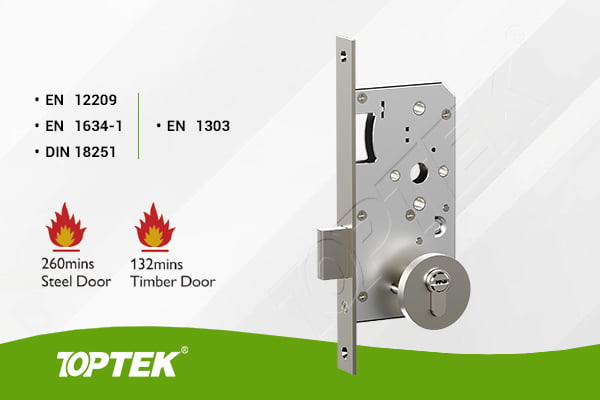
For TOPTEK’s Intertek CE certificate, the listed deadlocking bolt models are EN5572DL, EN6072DL, and EN6572DL. These models use 55 mm, 60 mm, and 65 mm backsets with 72 mm C to C distance, and the certificate identifies the function as “Only deadbolt function, cylinder operate deadbolt.”
Key Takeaways for B2B Door Hardware Buyers
- Function: The lock provides manual deadbolt locking and unlocking only.
- Operation: The deadbolt is operated by a euro profile cylinder or thumbturn.
- Certified TOPTEK models: EN5572DL, EN6072DL, and EN6572DL are listed as deadlocking bolt models.
- Dimensions: The listed TOPTEK deadlocking bolt models use 55 / 60 / 65 mm backsets and 72 mm C to C distance.
- Best applications: Storage rooms, equipment rooms, archive rooms, utility rooms, service rooms, and controlled-access internal doors.
- Main buyer risk: Do not confuse a single deadbolt lock with a latch-based mortise lock for passage, escape, or automatic latching applications.
Technical Blueprint: Standard, Certified Models and Function Logic
EN 12209 is the product standard, not the lock function
EN 12209 covers mechanically operated locks, latches, and locking plates, while “single deadbolt” describes the lock function. In B2B sourcing, this distinction matters because a buyer may search for an EN 12209 Grade 3 mortise lock supplier, but the engineer still needs to confirm the exact function, model, dimensions, and installation behavior before sample approval.
For standard context, buyers should review BSI, Intertek, and UL as authority entities. BSI explains the BS EN 12209 standard context for mechanically operated locks and locking plates, Intertek provides EN 12209 testing and certification context, and UL supports broader door hardware testing and certification reference for international buyers.
BSI Knowledge: BS EN 12209 | Intertek EN 12209 Testing Context | UL Door Hardware Testing and Certification
TOPTEK’s Intertek CE certificate supports the EN 12209 project documentation route
TOPTEK’s Intertek Certificate of Constancy of Performance 2649-CPR-26002201 covers building hardware locks and latches under EN 12209:2003 / AC:2005. The certificate states the intended use as fire resistance and/or smoke control doors and identifies ZHONGSHAN TOPTEK SECURITY TECHNOLOGY CO., LTD. as the manufacturer placed on the market under the certificate.
This certificate strengthens E-E-A-T because it gives buyers verifiable product-level evidence. However, buyers should still check the latest certificate, Declaration of Performance if applicable, installation instructions, local approval route, and complete door assembly before specifying the lock for fire-rated or smoke-control doors.
Certified deadlocking bolt models and dimensions
The Intertek listing defines TOPTEK’s deadlocking bolt function as “Only deadbolt function, cylinder operate deadbolt.” The listed deadlocking bolt models are EN5572DL, EN6072DL, and EN6572DL, covering 55 mm, 60 mm, and 65 mm backsets with 72 mm C to C distance.
| Function | TOPTEK Model | Backset | C to C Distance | Operation | Buyer Note |
|---|---|---|---|---|---|
| Deadlocking bolt | EN5572DL | 55 mm | 72 mm | Cylinder operates deadbolt | Suitable for controlled manual locking rooms |
| Deadlocking bolt | EN6072DL | 60 mm | 72 mm | Cylinder operates deadbolt | Common European project backset option |
| Deadlocking bolt | EN6572DL | 65 mm | 72 mm | Cylinder operates deadbolt | Used when door preparation requires deeper backset |
Product classification and fire-door evidence
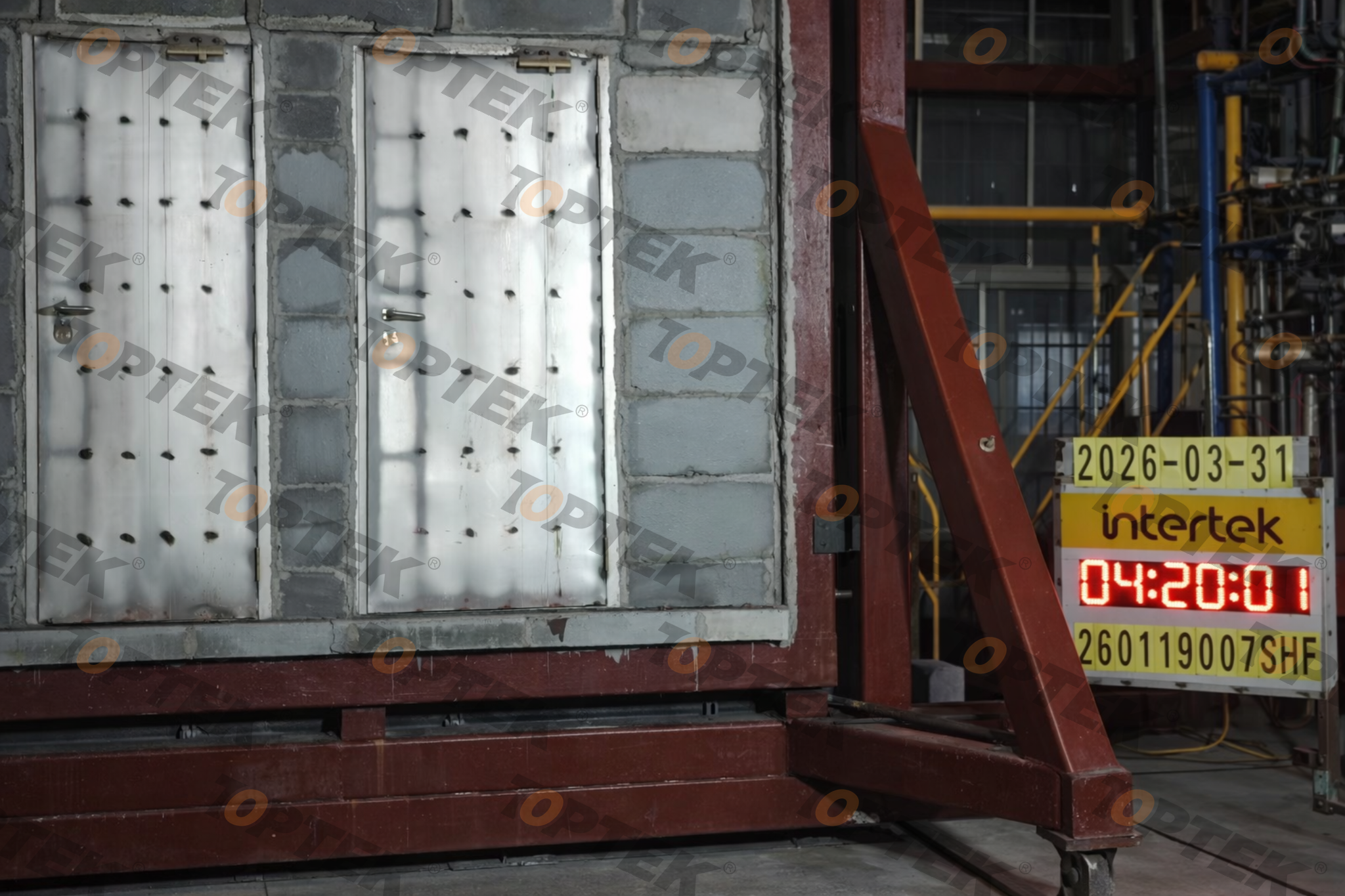
The CE certificate lists EN5572DL, EN6072DL, and EN6572DL with product classification 3 C 9 12 0 G 4 B C 0 0. The certificate also references EN 1634-1 fire-door test context, including 260 minutes for a single-leaf steel fire door and 132 minutes for a timber composite fire door configuration.
Buyers should use this data as a starting point for project review, not as a shortcut for every door assembly. Fire-door suitability depends on the lock, strike, door leaf, frame, closer, seals, installation method, and local approval route.
Application Guide: Where Should Buyers Use a Single Deadbolt Mortise Lock?
Best-fit applications
A single deadbolt mortise lock is best used where the project needs deliberate manual locking rather than automatic latching. Typical applications include storage rooms, equipment rooms, service rooms, private offices, archive rooms, staff-only utility rooms, and low-frequency internal doors.
This function is useful when the user should consciously decide whether the door is locked or unlocked. Compared with a latch-only lock, the deadbolt provides a more defined locking point into the strike plate, but it does not provide daily self-latching convenience.
Applications requiring caution
High-frequency passage doors usually require latch-based hardware, not a deadbolt-only lock case. If users walk through the door frequently, the door normally needs a latchbolt operated by a lever handle so the door can close and hold itself in position during everyday use.
Emergency exit and public egress doors require a separate life-safety review. In these cases, buyers should review escape mortise locks, panic exit devices, fire exit hardware, or self-locking electromechanical locks according to the local code, door function, and project approval route.
Function selection principle
Door behavior should decide the lock function before price comparison starts. If the door must latch automatically, choose a latch-based mortise lock. If the door only needs controlled manual locking, an EN 12209 single deadbolt mortise lock can be a simple and reliable solution.
Function Comparison: Single Deadbolt vs Latch-Only vs Sash Lock
This comparison helps buyers avoid choosing a lock case only by faceplate appearance or unit price. The correct EN 12209 lock case should be selected by door behavior, user flow, safety requirement, certification route, and installation details.
| Lock Function | Operation | Door Behavior | Best Use | Main Project Risk |
|---|---|---|---|---|
| Single deadbolt mortise lock | Cylinder or thumbturn operates deadbolt | Manual locking only; no automatic latching | Storage, service, utility, equipment, and controlled internal rooms | Wrongly used where the door must latch automatically |
| Passage latch mortise lock | Lever handle operates latchbolt | Door can latch when closed but has no deadbolt locking | Internal passage doors and low-security circulation doors | Insufficient locking security for restricted rooms |
| Sash lock mortise case | Lever operates latch; cylinder operates deadbolt | Daily latching plus manual locking | Offices, apartments, hotel back-of-house, and commercial rooms | Requires correct trim, cylinder, strike, and door preparation |
| Escape mortise lock | Inside operation supports emergency release | Designed around emergency egress behavior | Emergency exit routes and public building doors | Wrong function can create life-safety and inspection risk |
| Self-locking electromechanical lock | Mechanical and electrical control depending on configuration | Can support automatic locking and access control integration | Access control doors, smart buildings, and controlled entrances | Requires fail-safe/fail-secure, power, monitoring, and certification review |
Specification and RFQ Checklist for EN 12209 Single Deadbolt Mortise Locks
Core technical parameters
A strong RFQ should confirm function, certified model, backset, C to C distance, forend, strike, cylinder, door type, finish, and certification expectation. This prevents the common problem where a sample looks correct but fails during installation, fire-door review, or mass production.
| RFQ Item | What to Confirm | Why It Matters |
|---|---|---|
| Function | Deadlocking bolt / single deadbolt / deadbolt-only mortise lock | Prevents confusion with sash lock, passage latch, night latch, bathroom lock, or escape lock |
| Certified model | EN5572DL, EN6072DL, EN6572DL, or project-specific approved model | Connects the RFQ to a clear certificate and product drawing |
| Backset | 55 mm, 60 mm, 65 mm, or custom project requirement | Controls lock position and door preparation |
| C to C distance | 72 mm for the listed TOPTEK deadlocking bolt models | Controls trim and cylinder alignment |
| Forend and strike | Forend width, strike size, screw location, radius or square end, and finish | Prevents frame mismatch and installation failure |
| Cylinder plan | Euro profile cylinder, thumbturn cylinder, master key system, or restricted keyway | Controls user behavior, security level, and project key management |
| Door type | Timber, steel, fire-rated, smoke-control, internal utility, or retrofit door | Controls certification route and hardware selection |
| Document package | CE certificate, product classification, drawing, installation instruction, and fire-door evidence if required | Supports tender review, project submittal, and inspection approval |
Engineering CTA for drawings, samples and certification documents
Send TOPTEK your door schedule, lock function, backset, center distance, forend size, strike requirement, cylinder plan, fire-door expectation, finish, and target quantity. TOPTEK can support CAD drawing review, sample preparation, CE certificate review, RFQ quotation, OEM/ODM configuration, and project-based hardware matching.
Review TOPTEK Certification Documents | View EN 12209 Grade 3 Mortise Lock Range | Contact TOPTEK for RFQ Support
Related Hardware Links: Cylinder, Lever Handle and Door Hardware System Matching
A single deadbolt mortise lock must be matched with the correct cylinder, trim, strike, and door hardware package. Buyers should not evaluate the lock case alone because the final door behavior depends on the complete hardware set.
The construction cylinder controls key operation, thumbturn use, master key planning, and project access hierarchy. For multi-door projects, cylinder planning can be as important as the lock case itself because poor keying design creates management problems after installation.
The EN 1906 lever handle matters when buyers choose latch-based mortise lock functions such as sash lock, passage latch, bathroom lock, night latch, classroom lock, or escape lock. Although the single deadbolt function does not use a lever to retract a latchbolt, project buyers often source multiple EN 12209 functions under one door schedule, so handle compatibility should be reviewed early.
For emergency exit and access control doors, buyers should also review panic exit devices and electronic lock and access control devices. These product groups help avoid using a deadbolt-only lock where a life-safety or access-control function is required.
Fire-Door Suitability: What Buyers Should Verify Before Approval
Fire-door use requires complete assembly review
A single deadbolt mortise lock should be reviewed as part of the complete fire-door assembly, not as a standalone approval for every fire door. Fire-door acceptance depends on the lock case, strike, door leaf, frame, closer, seals, installation instructions, fire test evidence, and local authority requirements.
TOPTEK’s Intertek certificate supports product-level evidence for EN 12209 project documentation. The certificate references intended use on fire resistance and/or smoke control doors, while the fire-door table includes 260 minutes for steel fire door configuration and 132 minutes for timber composite fire door configuration under EN 1634-1 context.
Deadbolt-only function and latching risk
The deadbolt-only function needs extra caution because many fire-door assemblies require reliable self-closing and latching behavior. Since a single deadbolt lock does not automatically latch, buyers should confirm whether the actual door requires a latch-based mortise lock, escape lock, panic exit device, or self-locking electromechanical lock.
Manufacturing and Testing Capability: Why Supplier Selection Matters
Small tolerance errors can create real project failures
A single deadbolt lock case looks mechanically simple, but poor manufacturing control can still cause bolt drag, cylinder resistance, strike misalignment, rough operation, or inconsistent locking feel. For this reason, buyers should evaluate the EN 12209 mortise lock manufacturer, not only the catalog image or unit price.
TOPTEK factory capability supports repeatable B2B supply
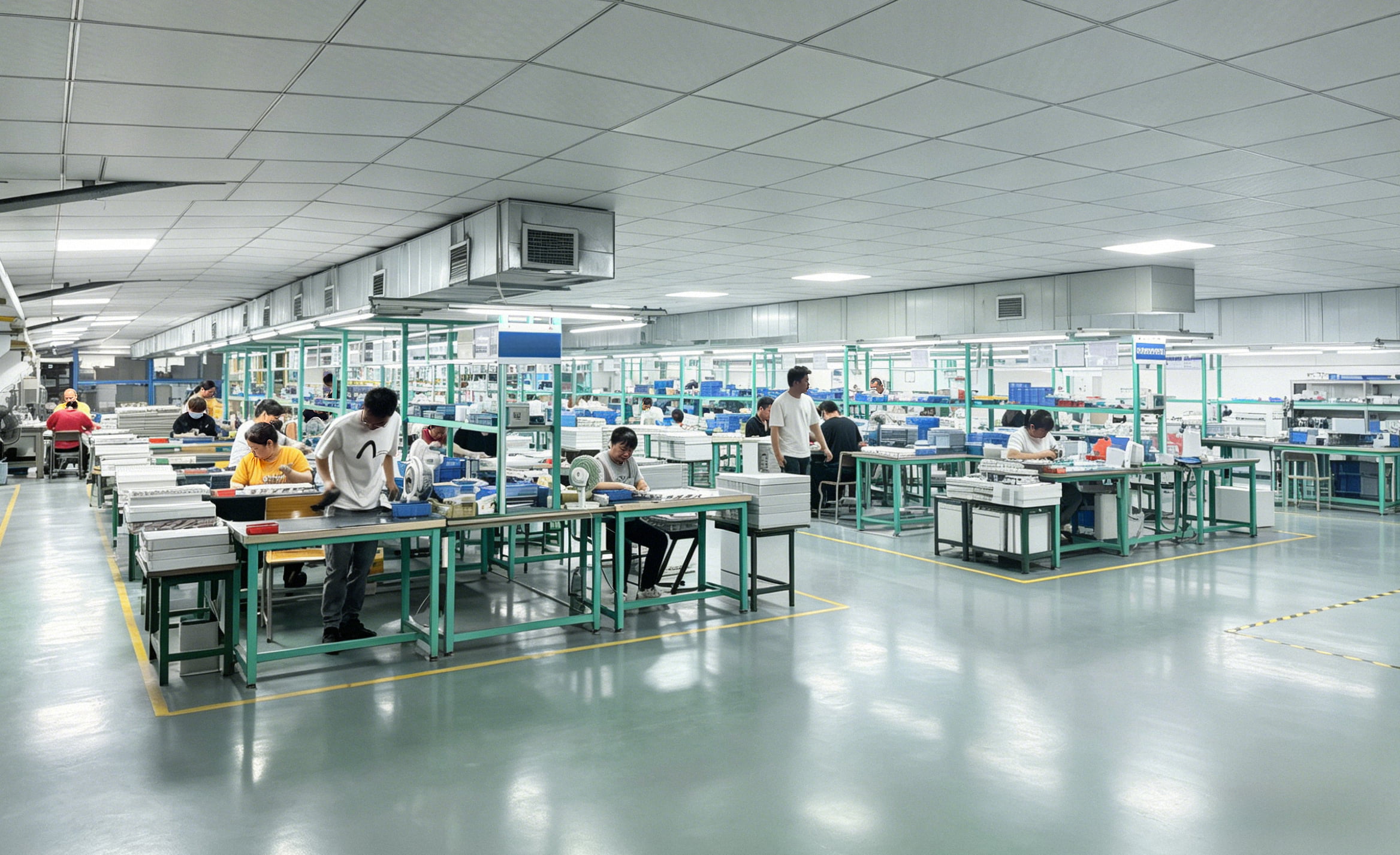
TOPTEK operates a 13,000㎡ manufacturing facility with more than 220 skilled staff, 20+ R&D engineers, high-precision CNC machining, stamping, assembly, and internal testing capability. This helps door manufacturers, distributors, and contractors reduce sample-to-mass-production inconsistency.
Batch control reduces after-sales risk
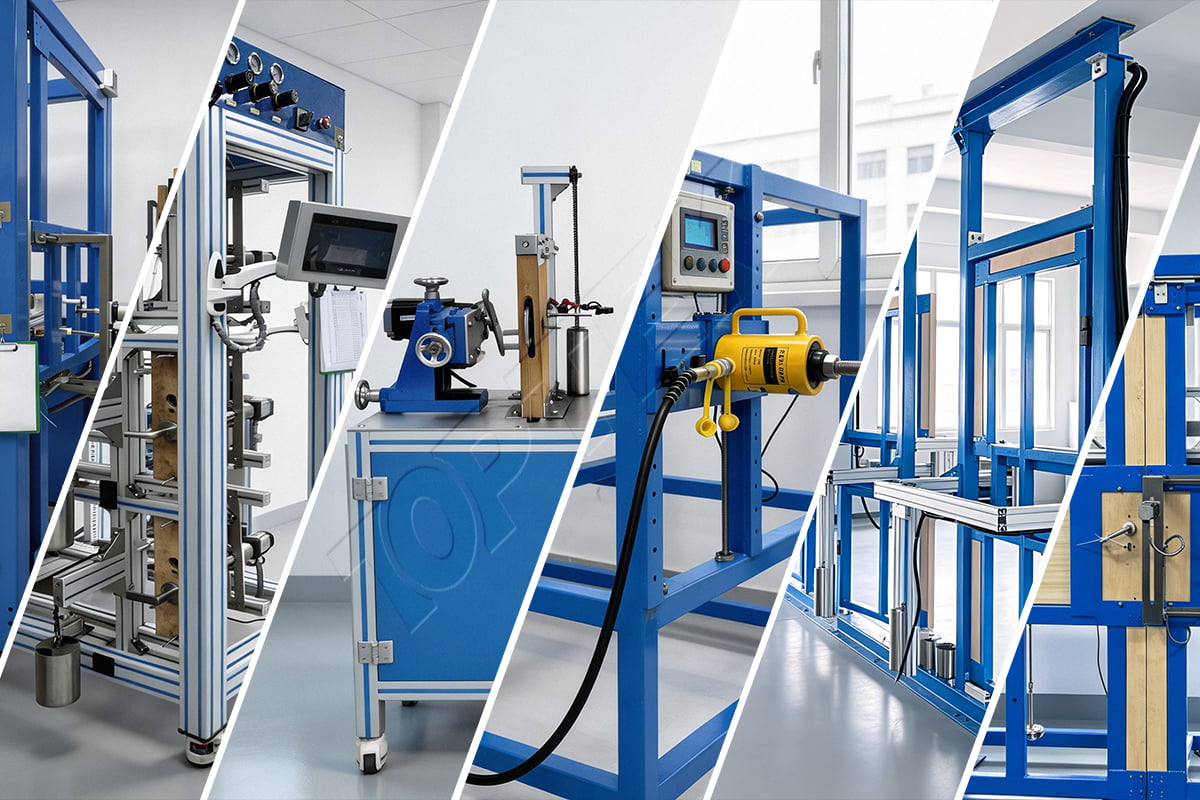
Professional buyers should request drawing review, material confirmation, dimensional inspection, deadbolt operation testing, cylinder fit check, strike alignment check, corrosion-resistance plan, packaging validation, and sample approval. These steps reduce the risk that one approved sample works well while bulk production fails in the field.
5 Critical Sourcing Mistakes When Buying EN 12209 Single Deadbolt Mortise Locks
Mistake 1: Assuming a deadbolt-only lock will latch automatically
A deadbolt-only lock will not automatically hold the door closed after the door shuts. If the door must self-latch during daily use, buyers should select a latch-based mortise lock instead of a single deadbolt lock case.
Mistake 2: Treating EN 12209 as complete fire-door approval
EN 12209 supports product-level evaluation, but fire-door acceptance depends on the complete assembly and approval route. Buyers should verify the lock, strike, door leaf, frame, closer, seals, installation instructions, fire test evidence, and local code before specifying the lock for fire-rated doors.
Mistake 3: Ignoring backset, C to C distance and forend details
Wrong dimensions can make the lock impossible to install even if the function is correct. Buyers should confirm backset, center distance, case depth, forend width, strike position, screw holes, and cylinder compatibility before sample approval.
Mistake 4: Comparing price before checking certification evidence
A lower-price lock body may not support the same certificate, product classification, fire-door evidence, or project documentation route. Buyers should compare EN 12209 classification, CE certificate, test evidence, supplier quality control, and batch consistency before price alone.
Mistake 5: Buying the lock case without checking cylinder and trim planning
The lock case can be technically correct but still fail the project if the cylinder, thumbturn, master key plan, or trim does not match the door schedule. Buyers should review lock case, cylinder, lever handle, strike, door thickness, and finish together before mass production.
Why Work With TOPTEK for EN 12209 Grade 3 Mortise Lock Projects?
TOPTEK is an OEM/ODM precision manufacturer of architectural hardware, commercial locks, mechanical mortise locks, electronic mortise locks, and integrated access control locking solutions. TOPTEK supports global door manufacturers, distributors, contractors, project buyers, and fire-rated door manufacturers with standard products, project configuration, and customized development.
TOPTEK’s EN 12209 Grade 3 mortise lock platform covers multiple European lock functions across 72, 78, and 85 series. The range includes sash lock, passage latch, deadbolt lock, bathroom lock, night latch, escape lock, classroom lock, roller latch, and access mortise lock functions, helping buyers keep one supplier platform across multiple door schedules.
TOPTEK helps reduce project risk through engineering review, drawing validation, sample testing, CE document review, production QC, packaging control, and OEM/ODM support. Buyers can review the EN 12209 Grade 3 Mortise Lock range and the TOPTEK certification resource page before sending RFQ details.
FAQ: EN 12209 Single Deadbolt Mortise Lock Case
Does an EN 12209 single deadbolt mortise lock automatically latch?
No. An EN 12209 single deadbolt mortise lock does not automatically latch when the door closes. It locks only when the user manually throws the deadbolt by cylinder or thumbturn.
Is EN 12209 a lock function or a product standard?
EN 12209 is a product standard for mechanically operated locks, latches, and locking plates. Single deadbolt, deadlocking bolt, sash lock, passage latch, bathroom lock, and night latch are lock function descriptions.
Which TOPTEK single deadbolt models are listed in the Intertek CE certificate?
The listed TOPTEK deadlocking bolt models are EN5572DL, EN6072DL, and EN6572DL. These models use 55 mm, 60 mm, and 65 mm backsets with 72 mm C to C distance.
Can a single deadbolt mortise lock be used on fire-rated doors?
It depends on the complete fire-door assembly and approval route. Buyers should verify the lock case, strike, door leaf, frame, closer, seals, installation instructions, certificate, and local code before using a single deadbolt lock on fire-rated doors.
What is the difference between a single deadbolt lock and a sash lock?
A single deadbolt lock has only a deadbolt, while a sash lock combines latch and deadbolt functions. The sash lock supports daily latching and manual locking, while the single deadbolt lock focuses on controlled manual locking only.
What should buyers request from an EN 12209 mortise lock manufacturer?
Buyers should request drawings, specifications, classification code, CE certificate, fire-door evidence if required, sample approval process, finish options, packaging details, and OEM/ODM support. This reduces installation, compliance, and mass-production risk.
Does TOPTEK support OEM/ODM development for EN 12209 lock cases?
Yes. TOPTEK supports OEM/ODM development, private label programs, drawing review, sample testing, project configuration, certification route review, and RFQ support. Buyers can send TOPTEK door schedules, drawings, target quantity, and certificate requirements for project review.
Conclusion: How Should Buyers Choose an EN 12209 Single Deadbolt Lock Case?
Choose an EN 12209 single deadbolt mortise lock when the project needs controlled manual locking by cylinder or thumbturn. Do not choose this function when the door must latch automatically, support emergency egress, integrate with access control, or behave like a high-frequency passage door.
The main project risks are wrong function selection, incorrect dimensions, weak certification review, poor cylinder planning, and supplier inconsistency. A professional buyer should confirm the certified model, backset, C to C distance, forend, strike, cylinder, fire-door route, drawings, samples, packaging, and mass-production quality control before placing bulk orders.
TOPTEK Access is a China-based OEM/ODM manufacturer of commercial locks, architectural door hardware, and integrated access control locking solutions, supplying ANSI Grade 1 mortise locks, EN 12209 Grade 3 mortise locks, AS 4145 mortise locks, panic exit devices, multi-point locking systems, electronic locks, lever handles, cylinders, and hinges for global door manufacturers, distributors, contractors, and building projects.
TOPTEK stands for Commercial Door Hardware Reliability Solution. TOPTEK: Smart Design. Strong Security.
Contact TOPTEK to discuss OEM/ODM development, RFQ review, CAD drawings, samples, CE certification documents, fire-door project route, or technical support for EN 12209 single deadbolt mortise lock projects.