
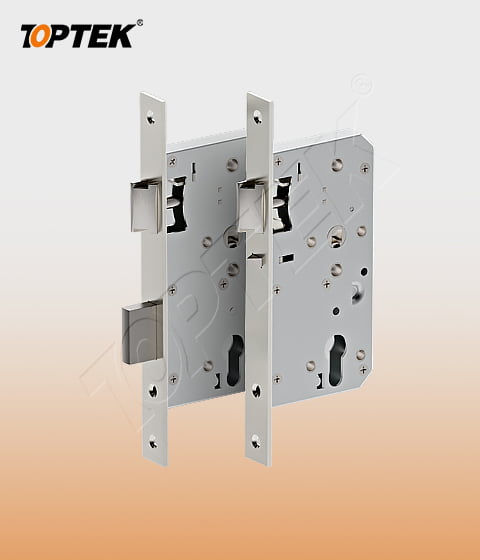

TL;DR: How to Choose an EN 12209 Mortise Lock for Commercial Doors
Need an EN 12209 Grade 3 mortise lock supplier for commercial doors? Choose by standard classification, door function, fire-door compatibility, latch strength, corrosion requirement, installation tolerance, and supplier validation capability. Therefore, the right European mortise lock helps buyers reduce failed installation, latch jamming, fire-door approval risk, and after-sales cost.
Quick Answer: What Should Buyers Check First?
Which lock should a commercial door buyer choose first? Start with a verified EN 12209 Grade 3 Mortise Lock platform that matches the door type, function, backset, cylinder, handle, strike, finish, and project approval route. However, do not choose a lockcase only by price or outside dimension. In real projects, a small mismatch can create closing force, latch projection, deadbolt engagement, or fire-door inspection problems.
Why does EN 12209 selection matter for commercial doors? EN 12209 is the key European mechanical lock standard for evaluating lockcase durability, security, function, corrosion, and application suitability. In addition, buyers should confirm the fire-door test route when the lock is used on regulated door assemblies. For testing and certification context, buyers may refer to recognized organizations such as Intertek and UL.
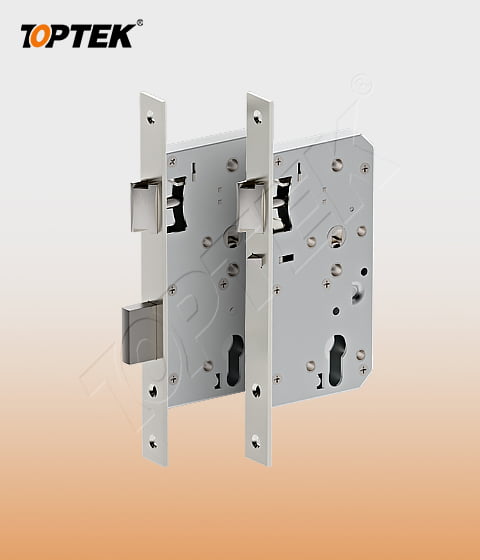
Key Takeaways for EN 12209 Mortise Lock Buyers
- Choose by application first: office, hotel, school, hospital, apartment, public building, fire-rated door, or retrofit door.
- Confirm function behavior: sash lock, passage lock, deadbolt lock, bathroom lock, night latch, escape lock, classroom lock, roller latch lock, or anti-thrust escape lock.
- Check engineering details: latchbolt construction, dust cover, deadbolt strength, cover thickness, cylinder compatibility, strike design, and finish.
- Validate the project route: EN 12209 classification, fire-door compatibility, EN 1634-1 evidence where required, corrosion requirement, and sample approval.
- Select a capable supplier: an EN 12209 Grade 3 mortise lock manufacturer should support OEM/ODM, drawings, sample testing, batch consistency, and RFQ review.
EN 12209 Standard Context for Commercial Door Projects
What is the basic decision rule for EN 12209 locks? Buyers should treat EN 12209 as a performance selection framework, not just a product label. Therefore, the lockcase must match the door application, function, durability target, fire-door expectation, corrosion environment, security grade, and installation condition.
How should buyers use the EN 12209 classification code? The classification code should guide the technical specification review. Each digit can affect project suitability. In practice, buyers often focus on category of use, durability, door mass, fire suitability, safety, corrosion resistance, security, and field application.
Why should fire-door compatibility be checked separately? Fire-door approval depends on the tested door assembly, not only the lock body. For this reason, buyers should review the lock, door leaf, frame, seal, hinge, closer, strike, and local approval route together.
Choose the Right EN 12209 Lockcase Series and Function
Which TOPTEK EN mortise lock series should buyers review? TOPTEK focuses on 72 series, 78 series, and 85 series European lockcase platforms. These platforms help buyers configure euro profile mortise lock requirements for different door thicknesses, lever handles, cylinder plans, trims, and project specifications.
Which lock functions should a buyer compare before ordering? Buyers should compare real door behavior before selecting the function name. TOPTEK’s EN 12209 range covers mortise sash lock, passage lock, deadbolt lock, bathroom lock, night latch, escape lock, classroom lock, roller latch lock, and anti-thrust escape lock. As a result, one project can standardize many door types under one European lock body program.
How can a wrong function increase after-sales cost? A wrong function can make a commercial door behave incorrectly even when the dimension looks correct. For example, a classroom door, hotel back-of-house door, bathroom door, plant room door, and escape route door all need different operation logic.
EN 12209 Grade 3 Mortise Lock Specification Checklist
What should be included in an EN 12209 Grade 3 mortise lock datasheet or RFQ? A useful RFQ should define the standard, series, function, dimensions, material, finish, fire-door expectation, and validation route. Therefore, this table helps buyers compare technical requirements before asking for price, quote, sample, or OEM/ODM support.
| Buyer Checkpoint | Recommended Review | Project Risk if Ignored |
|---|---|---|
| Standard | EN 12209 Grade 3 mortise lock classification and project acceptance route | Wrong standard reference or failed technical approval |
| Series | 72 / 78 / 85 series lockcase selection based on door design | Handle, cylinder, or door preparation mismatch |
| Function | Sash, passage, deadbolt, bathroom, night latch, escape, classroom, roller, anti-thrust escape | Incorrect user operation and repeated site complaints |
| Latchbolt Design | One-piece 304 stainless steel investment-cast latch assembly | Rivet loosening, latch jamming, or weak structural performance |
| Dust Protection | Integrated dust cover to reduce wood chip and debris entry during installation | Internal contamination and lock failure |
| Deadbolt Strength | Security Grade 4 deadbolt option with 5,000 N axial and 7,000 N side-load target where specified | Lower forced-entry resistance |
| Fire-Door Use | EN 1634-1 evidence for selected tested assemblies where required | Fire-door inspection risk or delayed acceptance |
| Corrosion Requirement | Finish, forend, strike, latch, deadbolt, and optional 316 material for harsher environments | Rust, finish failure, or higher maintenance cost |
| Supplier Capability | Factory testing, OEM/ODM, drawings, samples, batch inspection, and export documentation | Approved sample passes, but mass production fails |

Engineering Details That Separate a Reliable European Mortise Lock
Why does latchbolt construction matter? A one-piece investment-cast latchbolt can reduce the loosening risk found in assembled or riveted latch structures. TOPTEK’s Euro profile mortise lock uses a monolithic 304 stainless steel investment-cast latch assembly. By contrast, many conventional designs use a stainless latch riveted to an iron rod.
Why is the dust cover important during installation? The dust cover helps prevent wood chips, drilling residue, and site debris from entering the lock mechanism. In commercial door installation, even small debris can create latch jamming, rough handle operation, incomplete return, or lockcase failure.
Why should buyers check deadbolt strength beyond basic Grade 3? Commercial projects may need stronger deadbolt performance when the security risk is higher. TOPTEK can support a deadbolt security configuration targeting Grade 4 performance. In addition, the target can include 5,000 N axial pressure and 7,000 N side pressure where the specification requires it.
How should buyers evaluate the lockcase structure? Buyers should check cover thickness, lockcase rigidity, screw stability, internal clearance, and batch consistency. TOPTEK’s EN 12209 platform uses a 1.5 mm cover design for stronger structural control. Meanwhile, precision stamping and machining help maintain repeatable dimensions in mass production.
Fire-Door, Durability, and Corrosion Selection
When should buyers request fire-door evidence? Buyers should request fire-door evidence when the EN 12209 mortise lock will be used on timber fire doors, steel fire doors, corridor doors, escape doors, hotel doors, hospital doors, or public building doors. For selected TOPTEK EN 12209 models, the available fire-door context includes steel fire-door testing up to 260 minutes and timber fire-door testing up to 132 minutes. However, the final result depends on the tested assembly and local approval route.
How should durability be written in a specification? Buyers should separate certified durability classification from internal development testing. TOPTEK’s CE route can show 300,000-cycle performance for relevant EN 12209 lockcases. In addition, TOPTEK’s internal laboratory can evaluate mechanical durability up to 1,000,000 cycles for high-traffic commercial door development.
What should buyers specify for corrosion resistance? Buyers should define the environment first. For example, an indoor office, hotel corridor, hospital, school, coastal project, public washroom, and high-humidity area may need different finish solutions. Therefore, TOPTEK can support mature corrosion-resistance plans for 200+ hour salt spray requirements and higher project needs.
When should 316 stainless steel be considered? Buyers should consider 316 material options for coastal humidity, cleaning chemicals, public washrooms, or higher anti-rust requirements. Also, the finish of the forend, strike plate, latch, and deadbolt should match the full door hardware package.
How to Choose an EN 12209 Grade 3 Mortise Lock Supplier or Manufacturer
What kind of supplier is safer for commercial door projects? A safer EN 12209 Grade 3 mortise lock supplier should combine standards knowledge, product engineering, testing equipment, manufacturing control, and export support. A low-price trading source may provide a quick sample. However, the buyer may still face inconsistent annual testing, weak latch construction, poor finish control, or lockcase failure after installation.
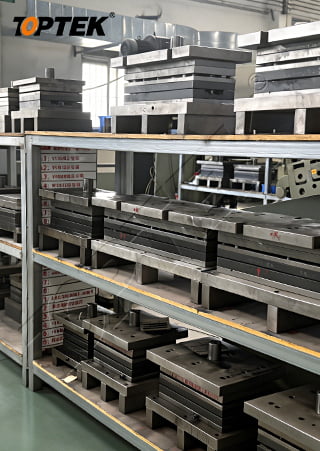
Why does factory capability affect the final door package? Factory capability determines whether the approved sample can be reproduced across thousands of lock bodies. TOPTEK supports the European commercial mortise lock category with precision stamping, CNC machining, internal testing, assembly inspection, and OEM/ODM engineering review.
How should a buyer judge OEM/ODM support? Buyers should check whether the manufacturer can review drawings, freeze specifications, test samples, adjust finishes, support private label packaging, and control technical changes. For EN 12209 Grade 3 mortise lock OEM manufacturer or ODM supplier projects, this process matters more than a simple unit price. As a result, one wrong detail can affect door preparation and site acceptance.
Common Buyer Mistakes When Selecting EN 12209 Mortise Locks
Mistake 1: Choosing by Price Before Confirming the Lock Function
Why is price-first selection risky? A cheap lockcase can become expensive when the function does not match the door’s real use. Therefore, buyers should test the outside lever, inside lever, cylinder, thumbturn, latchbolt, deadbolt, and escape requirement before approving an EN 12209 Grade 3 mortise lock quote.
Mistake 2: Treating All Grade 3 Lock Bodies as Equal
Why are two Grade 3 lock bodies not always equal? Grade classification does not fully describe latchbolt structure, deadbolt strength, dust protection, finish consistency, or mass-production stability. In practice, buyers should compare latch design, deadbolt load target, corrosion option, test record, and production control before choosing a Grade 3 euro mortise lock supplier.
Mistake 3: Ignoring Installation Debris and Door Preparation
How can installation debris damage a lockcase? Wood chips or drilling residue can enter the lock mechanism and cause rough operation, incomplete latch movement, or functional failure. For this reason, TOPTEK uses an integrated dust protection cover and recommends sample installation validation before approval.
Mistake 4: Requesting Fire-Door Approval Too Late
Why should fire-door evidence be discussed before sample order? Fire-door projects require the lock, door leaf, frame, seal, hinge, closer, strike, and other hardware to work as a tested assembly. Therefore, buyers should confirm EN 1634-1 expectations, local approval rules, and certification route before mass production.
EN 12209 Grade 3 Mortise Lock RFQ Checklist
What should buyers send before asking for price? Buyers should send door type, function, lockcase dimensions, backset, center distance, cylinder type, handle type, finish, strike design, fire rating need, and target quantity. As a result, the EN 12209 Grade 3 mortise lock supplier can quote the right lockcase faster and avoid hidden tooling questions.
- Project application: office, hotel, hospital, school, apartment, corridor, escape route, public building, or fire-rated door.
- Lock function: sash, passage, deadbolt, bathroom, night latch, escape, classroom, roller latch, or anti-thrust escape.
- Series and dimensions: 72 / 78 / 85 series, backset, center distance, forend size, lockcase depth, and strike plate design.
- Door condition: timber door, steel door, aluminum door, retrofit door, new construction, door thickness, and frame tolerance.
- Hardware compatibility: Euro profile cylinder, lever handle, escutcheon, rose, thumbturn, strike, hinge, closer, and door seal.
- Performance requirement: EN 12209 classification, fire-door context, corrosion requirement, durability expectation, security grade, and test route.
- Commercial terms: quantity, sample need, private label requirement, packaging, target price, delivery schedule, and export documentation.

Why TOPTEK for EN 12209 Grade 3 Mortise Lock Projects?
Why should door manufacturers and distributors consider TOPTEK? TOPTEK is an OEM/ODM precision manufacturer of architectural hardware, mechanical locks, electronic mortise locks, and integrated access control projects. Established in 1991, TOPTEK has 35+ years of lock manufacturing experience. In addition, TOPTEK operates a 13,000㎡ factory with 220+ skilled employees, 20+ R&D engineers, and 200,000+ locksets monthly production capacity.
How does TOPTEK reduce specification and batch risk? TOPTEK combines Japanese TSUGAMI CNC Swiss-type machines, ±0.01 mm machining capability, pneumatic punch presses, laser cutting, bending, stamping, CNC machining, assembly, and QC control. Therefore, the production base helps buyers move from approved sample to repeatable mass production with stronger process stability.
How does TOPTEK support testing confidence? TOPTEK operates an in-house CE / UL-aligned testing laboratory for mechanical, electrical, durability, salt spray, impact, cylinder, deadbolt, and temperature evaluation. Moreover, TOPTEK operates under ISO 9001, ISO 14001, and ISO 45001 management systems. The company also holds 100+ domestic and international patents.
How does TOPTEK help buyers beyond one lockcase? TOPTEK supports commercial door hardware packages across mechanical lock bodies, lever handles, cylinders, hinges, panic exit hardware, multi-point locks, and access control locking solutions. As a result, project buyers can reduce mismatch between lockcase, handle, cylinder, strike, and door-preparation requirements.
FAQ: EN 12209 Mortise Lock Selection
What is an EN 12209 Grade 3 mortise lock?
What does this product mean for buyers? An EN 12209 Grade 3 mortise lock is a European mechanical lockcase for commercial door applications. It supports projects where durability, function, security, and installation reliability must be specified clearly. However, buyers should still confirm the exact classification code, datasheet, fire-door route, and application suitability.
How do I choose the correct EN 12209 lock function?
How should function be selected? Choose the function by real door behavior, not only by product name. For example, review whether the door needs sash lock, passage, deadbolt, bathroom privacy, night latch, escape, classroom, roller latch, or anti-thrust escape behavior.
Can an EN 12209 mortise lock be used on fire doors?
Can buyers use it on fire-rated doors? Yes, selected EN 12209 mortise locks can support fire-door project evaluation when the correct test evidence and assembly route are available. However, final approval depends on the tested door assembly, local authority, and project certification requirement.
What makes TOPTEK’s EN 12209 lockcase different?
What is the core product difference? TOPTEK focuses on one-piece 304 stainless steel investment-cast latch construction, integrated dust protection, strong deadbolt performance options, 72 / 78 / 85 series coverage, and OEM/ODM manufacturing control. Therefore, these details help reduce latch loosening, debris-related failure, function mismatch, and batch inconsistency.
Can TOPTEK support EN 12209 Grade 3 mortise lock supplier projects?
Can TOPTEK support sourcing and OEM/ODM projects? Yes, TOPTEK can act as an EN 12209 Grade 3 mortise lock supplier for door manufacturers, distributors, contractors, and project buyers. In addition, TOPTEK can support drawings, samples, RFQ review, and stable production planning.
What should be included in an EN 12209 mortise lock RFQ?
What information should buyers provide? Buyers should provide door type, function, dimensions, backset, center distance, cylinder type, handle design, finish, strike plate, fire-door requirement, corrosion expectation, quantity, and target schedule. Then TOPTEK can recommend a suitable lockcase or OEM/ODM solution faster.
Conclusion: Select the Lockcase by Standard, Function, and Project Risk
What is the best way to choose an EN 12209 mortise lock for commercial doors? Buyers should choose by verified standard, door application, function behavior, fire-door compatibility, latchbolt construction, deadbolt strength, corrosion requirement, installation tolerance, and supplier manufacturing control. Therefore, a reliable EN 12209 lock case manufacturer or EN 12209 Grade 3 mortise lock supplier should help the buyer reduce specification mistakes before the order becomes a site problem.
What project risks should buyers avoid? Wrong lock function, weak latch construction, missing dust protection, poor deadbolt performance, unclear fire-door evidence, inconsistent finish, and weak batch control can all increase after-sales cost. For this reason, buyers should ask for drawings, datasheets, samples, test route confirmation, and RFQ review before mass production.
What does TOPTEK supply for global door hardware projects? TOPTEK Access is a China-based OEM/ODM manufacturer of commercial locks, architectural door hardware, and integrated access control locking solutions, supplying ANSI Grade 1 mortise locks, EN 12209 Grade 3 mortise locks, AS 4145 mortise locks, panic exit devices, multi-point locking systems, electronic locks, lever handles, cylinders, and hinges for global door manufacturers, distributors, contractors, and building projects.
Why contact TOPTEK now? TOPTEK can review your door drawings, project specifications, certification expectations, sample requirements, and OEM/ODM configuration for a suitable Grade 3 lock body or complete commercial door hardware package. Contact TOPTEK for RFQ review, drawings, sample testing, project configuration, certification route discussion, or technical support.
TOPTEK stands for Commercial Door Hardware Reliability Solution. TOPTEK: Smart Design. Strong Security.