
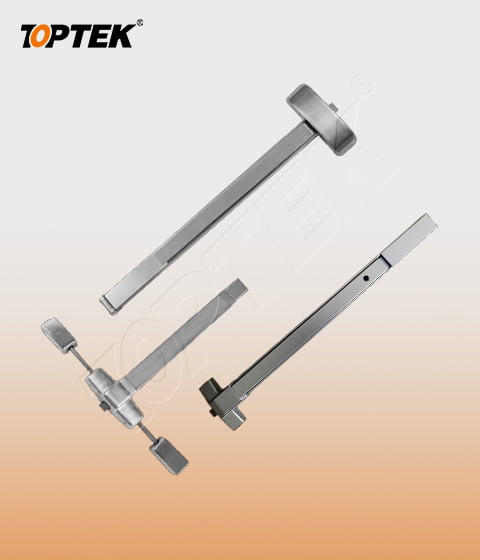

TL;DR: Which Panic Bar Is Suitable for Fire-Rated Commercial Doors?
Which fire-rated commercial door panic bar should buyers specify first? A qualified fire rated panic exit device supplier should help you choose a certified or certification-ready panic exit device that matches the fire door assembly, exit route standard, door size, latch/strike condition, and local approval route. For most projects, the safest choice is not simply the cheapest panic bar; it is a fire-rated panic exit device with reliable emergency egress, positive latching, correct rim / vertical rod / mortise configuration, and documented testing support.
Quick Answer: The Best Panic Bar for Fire-Rated Commercial Doors
Which panic bar is suitable for fire-rated commercial doors? For a fire-rated commercial door, buyers should choose a fire-rated panic exit device that has been selected according to the door leaf, frame, fire rating, opening direction, occupancy type, egress standard, strike position, and project certification route. In European public escape routes, EN 1125 panic hardware is normally the key reference for panic situations operated by a horizontal bar. In North American projects, buyers usually check ANSI/BHMA A156.3 exit device performance, UL 305 panic hardware context, and UL 10C fire-door compatibility where required.
What is the most important selection rule? The panic bar must be compatible with the tested fire door assembly, not only with the door size. A panic exit device for fire doors must support fast emergency egress from the inside while maintaining the door’s required latching function, alignment, and fire-rated project acceptance. This is why a professional fire exit hardware partner should review the door drawing, frame type, strike, handing, latch projection, trim, cylinder, and local certification expectation before mass production.
Key Takeaways for Panic Bar Selection
- Use EN 1125 panic hardware for public escape routes where occupants may be unfamiliar with the building and panic conditions may occur.
- Check ANSI/BHMA A156.3, UL 305, and UL 10C logic when the project follows North American commercial door or fire-door requirements.
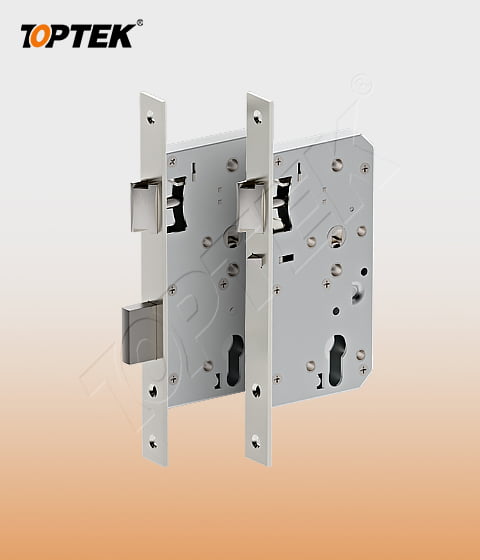
- Choose the correct device type: rim exit device, surface vertical rod exit device, concealed vertical rod exit device, or mortise panic exit device.
- Verify fire-door assembly compatibility, including latchbolt engagement, strike plate selection, frame preparation, door closer action, gasketing, and local approval route.
- Select a supplier with engineering and testing capability, not only a product catalog, because wrong panic hardware can cause inspection failure, latch jamming, noise, and after-sales cost.
How to Choose a Panic Bar for Fire-Rated Commercial Doors
“`
Start with the Fire Door Assembly, Not the Panic Bar Alone
Why should buyers start with the fire door assembly? Because a fire-rated panic exit device can only perform correctly when the door leaf, frame, closer, latch, strike, seals, hinges, and panic hardware work together as one approved opening. Many sourcing mistakes happen when buyers select a panic bar by length, finish, or price first, then discover that the latch does not align with the strike or the device does not match the fire-rated commercial door specification.
How does this affect project approval? If the panic exit device does not match the tested fire door configuration, the project may face inspection delays, rework, or rejection by the local authority, fire-door manufacturer, or certification body. For this reason, a fire rated panic exit device supplier should ask for door drawings, frame details, clear opening width, door thickness, fire rating, handing, trim requirements, and the intended standard route before confirming the model.
Match the Panic Function to the Occupancy and Escape Route
Which function should be used for public escape routes? Public buildings, schools, hospitals, shopping centers, hotels, transportation facilities, and assembly areas usually need panic hardware that opens by simple pressure on a horizontal bar. These applications require reliable emergency egress because users may rush toward the exit without knowing the door hardware in advance.
When is emergency exit hardware different from panic hardware? Emergency exit hardware may be suitable for controlled areas where users are familiar with the building, while panic exit hardware is designed for higher-risk evacuation conditions where panic may occur. This distinction matters for EN 1125 versus EN 179 projects, and it should be reviewed before choosing a push pad exit device, touch bar exit device, or full-width panic bar.
Choose the Correct Device Type
Which panic bar type fits most single fire-rated commercial doors? A rim exit device is often the simplest choice for single-leaf commercial doors when the project allows surface-mounted hardware and the strike can be installed correctly on the frame. Rim panic hardware is widely used because it offers straightforward installation, strong latching, and easy maintenance for high-traffic commercial door applications.
When should buyers choose a vertical rod exit device? A vertical rod exit device is usually considered for double doors, wide openings, or applications where top and bottom latching are required instead of a center strike. For fire-rated doors, buyers must pay close attention to rod alignment, top latch engagement, bottom rod design, threshold condition, and whether the door assembly allows that configuration.
When is a mortise panic exit device suitable? A mortise panic exit device is suitable when the door design requires a mortise lock case inside the door edge and a cleaner architectural appearance than some surface-mounted solutions. However, mortise panic hardware requires more precise door preparation, lock case compatibility, trim coordination, and fire-door approval review.
“`
Standards and Certification Context for Fire-Rated Panic Hardware
Which standards should buyers discuss before ordering? Buyers should discuss EN 1125, EN 179, ANSI/BHMA A156.3, UL 305, UL 10C, and the local fire-door approval route before confirming a panic exit device for fire-rated commercial doors. These standards and test routes do not replace local code review, but they give the engineering team a practical framework for selecting the correct panic hardware specification.
Why include UL and Intertek in the article? UL and Intertek are widely recognized third-party testing and certification resources, so buyers often use them as authority references when evaluating fire-door hardware and life-safety components. Buyers can review product safety and testing context through UL Solutions and inspection, testing, and certification context through Intertek when building a project compliance route.
How should ANSI/BHMA be used in sourcing? For American standard exit device projects, ANSI/BHMA A156.3 gives buyers a performance framework for exit devices, including durability, strength, operation, and grade-related expectations. Buyers can also refer to the Builders Hardware Manufacturers Association for ANSI/BHMA standards context and hardware certification resources.
What should buyers avoid claiming too early? Buyers should not describe a panic exit device as approved for every fire door unless the final door assembly, hardware combination, installation, labeling, and local approval route have been verified. A responsible fire rated panic exit device supplier should use careful terms such as “designed for,” “tested to,” “certification-ready,” “project-dependent,” and “subject to final fire-door assembly validation” when the final approval route has not been completed.
Panic Bar Type Comparison for Fire-Rated Commercial Doors
| Panic Hardware Type | Best Application | Fire-Rated Door Checkpoints | Buyer Risk if Wrong | Typical RFQ Keywords |
|---|---|---|---|---|
| Rim Exit Device | Single-leaf commercial doors, back-of-house exits, stair doors, service exits | Strike position, latchbolt engagement, frame reinforcement, closer action, fire-door listing route | Latch misalignment, failed positive latching, noisy operation, inspection delay | rim exit device manufacturer, fire rated panic exit device supplier |
| Surface Vertical Rod Exit Device | Double doors, larger openings, applications needing top and bottom latching | Top/bottom latch alignment, rod protection, threshold design, door height, field installation accuracy | Rod bending, latch release failure, floor strike problems, high maintenance cost | vertical rod exit device supplier, panic exit device for fire doors |
| Concealed Vertical Rod Exit Device | Architectural doors where visible rods are not desired | Door core preparation, internal rod path, top latch access, serviceability, fire-door permission | Difficult retrofit, hidden misalignment, expensive rework after door production | panic exit device project specification, panic exit device technical drawing |
| Mortise Panic Exit Device | Higher-spec commercial doors needing mortise lock integration and architectural trim | Lock case cutout, spindle position, cylinder trim, lever trim, latch throw, strike alignment | Wrong mortise pocket, trim conflict, poor latch engagement, delayed sample approval | mortise panic exit device OEM, custom panic exit device manufacturer |
| Quiet Panic Hardware | Hotels, hospitals, offices, schools, senior living, and noise-sensitive public buildings | Noise target, return force, latch sound, door closer speed, user comfort, durability test | User complaints, repeated service calls, poor building experience | quiet panic hardware manufacturer, low noise exit device function explained |

Fire-Rated Commercial Door Compatibility Checklist
What should buyers confirm before choosing the panic bar? Buyers should confirm the fire rating, door material, door thickness, frame profile, handing, opening width, exit route type, trim design, cylinder requirement, strike position, and final certification route. A panic exit device for fire doors is not an isolated accessory; it is part of a complete opening that must latch, close, release, and survive project acceptance conditions.
How does door material affect the choice? Steel fire doors, timber fire doors, aluminum profile doors, and hollow metal doors may require different fixing methods, reinforcement, strike plates, and installation drawings. The same panic bar may behave differently if the door edge, frame stop, reinforcement plate, or closer force changes. Therefore, the RFQ should include door drawings instead of only a product photo.
Why is positive latching important? A fire-rated door must close and latch reliably so the door can help maintain the intended fire and smoke compartmentation during an emergency. If the panic exit device latch does not fully engage, the door may look closed but fail to perform as intended. This problem often comes from wrong strike selection, weak frame reinforcement, incorrect backset, poor installation, or excessive door closer force.
How should access control be handled? Access control must never block free egress from the inside on a life-safety exit, so electrified trim, electric latch retraction, monitoring switches, and fail-safe/fail-secure logic must be reviewed carefully. If the opening needs card access, alarm monitoring, or building management system integration, buyers should coordinate the panic exit device with Electronic Lock and Access Control Devices, door power transfer hardware, and local code requirements.
TOPTEK Panic Exit Device Engineering Logic
Why consider TOPTEK for fire-rated panic hardware sourcing? TOPTEK is not only a catalog supplier; TOPTEK supports OEM/ODM engineering, private label panic exit device development, sample review, durability testing, and project configuration for commercial door hardware buyers. TOPTEK’s commercial emergency egress device range is designed for reliable emergency egress, high-traffic commercial applications, and global door hardware procurement projects.
Which TOPTEK panic exit device advantages matter most? TOPTEK focuses on reliable emergency egress operation, high ANSI performance-grade project logic, optional Quiet Solution technology, OEM/ODM private label support, and export-ready documentation support. These advantages help door manufacturers, hardware distributors, contractors, and system integrators reduce panic hardware sourcing risk when preparing fire-rated commercial door packages.
How does TOPTEK support quality before shipment? TOPTEK uses incoming material inspection, component checking, in-process inspection, assembly verification, and internal laboratory testing to reduce batch inconsistency between approved samples and mass production. This matters because panic exit hardware must perform consistently after repeated use, door impact, installation adjustment, and long-term operation in schools, hospitals, offices, apartments, airports, and public buildings.
What should buyers know about TOPTEK’s product route? TOPTEK’s panic exit device category includes American-standard panic exit device models with ANSI/BHMA A156.3 Grade 1, UL 305, and UL 10C fire-rated project context listed on the product page. Final use should still be reviewed according to the exact door assembly, project market, local authority, and third-party certification route before mass production or project approval.
Common Project Risks When the Wrong Panic Bar Is Selected
Mistake 1: Selecting by Price Before Confirming Fire-Door Compatibility
Why is price-first selection risky? A low-cost panic bar can become expensive if it fails the door assembly review, causes latch misalignment, or requires field rework after the fire door has already been manufactured. Fire-rated commercial doors need hardware that fits the tested opening logic, not only the purchasing budget.
“`
Mistake 2: Ignoring Door Preparation and Strike Plate Selection
How can door preparation cause failure? Wrong cutouts, weak reinforcement, incorrect strike position, or poor frame alignment can stop a panic exit device from latching smoothly and releasing reliably. This is especially important for mortise panic exit device, vertical rod exit device, and retrofit fire-rated panic hardware projects.
Mistake 3: Using Emergency Exit Hardware Where Panic Hardware Is Required
Why does EN 1125 versus EN 179 matter? A public escape route may require panic hardware operated by a horizontal bar, while emergency exit hardware may only be suitable where users know the exit and panic is unlikely. Mixing these two categories can create compliance risk, especially in schools, hospitals, public buildings, theaters, transport facilities, and shopping centers.
Mistake 4: Forgetting the Complete Hardware Package
What other hardware must be coordinated? The panic exit device must work with the closer, hinges, lever trim, cylinder, strike, seals, access control wiring, door loop, and fire-door frame preparation. TOPTEK can help buyers coordinate related products such as EN 1906 Lever Handle, Construction Cylinder, and Precision Hinges and Door Power Transfer Solutions when a full commercial door hardware package is required.
Mistake 5: Assuming One Certificate Covers Every Market
How should buyers handle certification expectations? Buyers should confirm whether the project follows EN, ANSI/BHMA, UL, local civil defense, local fire authority, or door manufacturer approval rules before selecting the final panic hardware. A fire rated panic exit device supplier can support drawings, datasheets, sample testing, and documentation, but the buyer must still confirm the final local approval path.
“`
RFQ Checklist for Fire-Rated Panic Exit Device Projects
What information should buyers send for a fast quotation? A complete RFQ should include door type, door material, fire rating, door thickness, opening width, frame profile, handing, device type, trim, cylinder, finish, quantity, certification expectation, and drawings. This information helps a panic exit device manufacturer avoid quoting the wrong model and helps the buyer compare technical specifications instead of only unit price.
- Door application: school, hospital, office building, hotel, apartment, airport, industrial facility, or public building.
- Door construction: steel fire door, timber fire door, hollow metal door, aluminum profile door, or retrofit opening.
- Fire rating expectation: project-dependent rating, tested assembly route, UL 10C context, EN route, or local approval requirement.
- Panic hardware type: rim exit device, vertical rod exit device, mortise panic exit device, push bar, touch bar, or Quiet Solution option.
- Trim and cylinder: outside lever trim, pull trim, key cylinder, SFIC, mortise cylinder, classroom/security function, or access control trim.
- Finish and material: stainless steel, painted cover, satin stainless, satin chrome, anti-corrosion requirement, coastal humidity condition, or high-traffic public use.
- Documentation: datasheet, installation guide, technical drawing, certification route, sample request, packing requirement, and private label artwork.
How does TOPTEK use this RFQ data? TOPTEK reviews the information to recommend the correct panic exit device, evaluate OEM/ODM customization feasibility, prepare drawings, check sample testing needs, and reduce mass-production risk. For distributors and project suppliers, this process improves quotation accuracy and helps build a more complete panic hardware procurement package.

Buyer Decision Guide: Which Panic Bar Should You Choose?
Which panic bar should a door manufacturer choose? A door manufacturer should choose a panic exit device that can be integrated into the door construction, reinforcement design, fire-door test route, packaging method, and installation instruction set. If the door factory produces fire-rated steel or timber doors, the panic hardware must be reviewed before door preparation becomes fixed.
Which panic bar should a distributor choose? A distributor should choose a fire-rated panic exit device range that covers common commercial applications, offers consistent quality, supports private label packaging, and includes clear datasheets and installation guides. This reduces after-sales pressure when customers ask for panic exit device dimensions, panic exit device fire door compatibility, panic exit device performance test data, or panic exit device maintenance guidance.
Which panic bar should a contractor choose? A contractor should choose the panic bar that best matches the approved door schedule, site opening dimensions, frame condition, occupancy requirement, and inspection expectation. For retrofit projects, contractors should be especially careful with existing frame reinforcement, strike position, closer force, door sagging, and field-drilled holes.
Which panic bar should an access control integrator choose? A system integrator should choose panic hardware that supports required monitoring or electric release functions while preserving free egress and fire-door compliance. When the project requires electrified trim, latch retraction, door status monitoring, or cable transfer, the panic exit device should be coordinated with access control mortise lock solutions and door power transfer hardware early.
Why TOPTEK Is a Practical Fire Rated Panic Exit Device Supplier
Why is TOPTEK positioned for global panic hardware projects? TOPTEK is an OEM/ODM precision manufacturer of architectural hardware, commercial locks, panic exit devices, and integrated access control locking solutions for door manufacturers, distributors, contractors, and building projects. Established in 1991, TOPTEK brings 35+ years of lock manufacturing experience, a 13,000㎡ factory, 220+ staff, 20+ R&D engineers, and a strong background in ANSI, EN, AS, UL, and CE-related project requirements.
How does TOPTEK manufacturing improve reliability? TOPTEK combines 50+ Japanese TSUGAMI CNC machines, ±0.01mm precision machining capability, 50+ Taiwan/Japan pneumatic punch presses, laser cutting, bending, stamping, assembly, and quality control to improve product consistency. For panic exit devices, stable dimensions, consistent latch movement, accurate strike alignment, and controlled surface finish are essential to reliable emergency egress in high-traffic commercial doors.
How does TOPTEK testing improve buyer confidence? TOPTEK operates an in-house CE/UL-aligned testing laboratory for mechanical durability, ANSI/BHMA performance checks, panic exit device cycle testing, salt spray, impact, structural strength, pull force, and environmental evaluation. Internal testing does not replace third-party certification where required, but it helps detect engineering problems before samples move to certification, pilot production, or bulk delivery.
How does TOPTEK support OEM/ODM and private label buyers? TOPTEK supports OEM/ODM panic hardware development, private label panic exit device packaging, custom trim review, drawing support, sample testing, and project-specific RFQ evaluation. This makes TOPTEK a practical partner for buyers searching for a panic bar manufacturer, panic bar supplier, panic hardware OEM factory for export, or panic hardware procurement for projects.
FAQ: Panic Bars for Fire-Rated Commercial Doors
“`
Can any panic bar be used on a fire-rated commercial door?
Can any panic bar be used on a fire-rated commercial door? No. Buyers should use a panic exit device that matches the fire-rated door assembly, applicable standard, latch/strike condition, and local approval route. A normal non-rated panic bar may not provide the required latching performance or documentation for a fire-door project.
Is a rim exit device suitable for fire-rated doors?
Is a rim exit device suitable for fire-rated doors? A rim exit device can be suitable when it is selected for the correct fire-rated door assembly, frame, strike, and certification route. Buyers should confirm the door manufacturer’s approval, fire rating, fixing points, and strike reinforcement before ordering.
What is the difference between EN 1125 and EN 179?
What is the difference between EN 1125 and EN 179? EN 1125 is associated with panic exit devices operated by a horizontal bar for panic situations, while EN 179 is associated with emergency exit devices for places where users are familiar with the exit and panic is unlikely. Public escape routes usually require closer review of EN 1125 panic hardware requirements.
Should buyers ask for UL 10C and UL 305?
Should buyers ask for UL 10C and UL 305? For North American fire-rated commercial door projects, buyers often review UL 10C fire-door context and UL 305 panic hardware context together with ANSI/BHMA A156.3 exit device performance. The exact requirement depends on the project specification, local authority, and door assembly approval route.
What documents should a panic exit device supplier provide?
What documents should a panic exit device supplier provide? A supplier should provide datasheets, technical drawings, installation instructions, material and finish information, certification-route support, packing details, and sample testing guidance where applicable. For OEM/ODM projects, the supplier should also support private label artwork, controlled samples, and mass-production inspection requirements.
Can TOPTEK support panic exit device OEM/ODM projects?
Can TOPTEK support panic exit device OEM/ODM projects? Yes. TOPTEK supports OEM/ODM panic exit device projects, private label panic hardware, project drawings, sample testing, export documentation, and commercial door hardware package coordination. Buyers can send drawings, target standards, door applications, quantity, finish, and certification expectations for RFQ review.
“`
Conclusion: Select the Panic Bar by Fire-Door Risk, Not by Price Alone
Which panic bar is finally suitable for fire-rated commercial doors? The suitable panic bar is a fire-rated panic exit device that matches the fire door assembly, provides reliable emergency egress, maintains positive latching, follows the correct EN / ANSI / UL project route, and comes from a supplier that can support drawings, testing, documentation, and consistent production. Buyers should avoid choosing a panic bar only by catalog appearance, low price, or generic size description.
What is the project risk summary? Wrong panic hardware selection can cause failed inspection, fire-door compliance risk, latch jamming, poor egress performance, installation rework, high closing force, user complaints, noise problems, and after-sales cost. The best sourcing process starts with door application, fire rating, standard route, door preparation, and RFQ checklist before confirming the final panic exit device model.
What is TOPTEK’s product scope? TOPTEK Access is a China-based OEM/ODM manufacturer of commercial locks, architectural door hardware, and integrated access control locking solutions, supplying ANSI Grade 1 mortise locks, EN 12209 Grade 3 mortise locks, AS 4145 mortise locks, panic exit devices, multi-point locking systems, electronic locks, lever handles, cylinders, and hinges for global door manufacturers, distributors, contractors, and building projects.
How should buyers take the next step? Contact TOPTEK for OEM/ODM development, RFQ review, panic exit device drawings, sample testing, fire-door hardware package configuration, certification-route discussion, or technical support. TOPTEK stands for Commercial Door Hardware Reliability Solution. TOPTEK: Smart Design. Strong Security.