

ANSI Grade 1 Mortise Lock Manufacturer: What Buyers Should Check Before Sourcing from China
Choosing an ANSI Grade 1 mortise lock manufacturer in China is not only a price decision; it is a standards, engineering, fire-door, installation, material, testing, and batch-consistency decision. Buyers should verify ANSI/BHMA A156.13 Grade 1 context, UL 10C fire-door suitability, internal material structure, function behavior, test evidence, OEM/ODM process control, and RFQ documentation before approving samples or mass production.
TL;DR: ANSI Mortise Lock China Sourcing in One Minute
Before sourcing ANSI mortise locks from China, buyers should check whether the supplier can prove real Grade 1 commercial performance, fire-door compatibility, stable internal structure, low closing force, reliable function behavior, and repeatable mass production quality. A qualified ANSI Grade 1 mortise lock supplier should provide datasheets, installation drawings, function confirmation, testing support, material transparency, and OEM/ODM project control—not only a low unit price.
Quick Answer: What should buyers verify first?
Buyers should first verify three things: the standard, the function, and the factory’s engineering control. ANSI/BHMA A156.13 is the key performance context for American mortise locks. For fire-rated door projects, buyers should also confirm whether UL 10C fire-door assembly expectations apply to the final door opening.
The second priority is real door behavior. A lock can look correct in a catalog but still fail in the field if the latch does not retract smoothly, the deadbolt cannot fully withdraw under pressure, the lever return spring weakens, the cylinder override does not work correctly, or the selected function code does not match the project door usage.
Key Takeaways for ANSI Grade 1 Mortise Lock Buyers
- Check standard evidence first: Confirm ANSI/BHMA A156.13 Grade 1 context before comparing price.
- Separate product testing from project approval: Fire-door hardware selection must match the final door assembly and local inspection route.
- Audit the internal parts: The latchbolt, deadbolt, auxiliary latch, lever spring, spindle hub, and cylinder override matter more than the outside finish.
- Ask for real installation data: Door thickness, backset, faceplate, strike, trim, handing, and cylinder type must match the project door preparation.
- Watch for hidden low-bid risks: Some cheap locks may use attractive visible stainless parts while hiding lower-grade zinc alloy or weak powder metallurgy parts inside critical mechanisms.
- Choose a manufacturer, not only a seller: A true ANSI Grade 1 mortise lock factory should support drawings, testing, FAI, pilot production, batch traceability, and OEM/ODM development.
Why does ANSI mortise lock sourcing from China need a stricter checklist?
Because most sourcing failures do not come from the product photo; they come from hidden structure, wrong function selection, weak testing, and uncontrolled production changes. Many ANSI mortise locks look similar from the outside. However, a commercial building project depends on latch strength, deadbolt operation, lever return force, cylinder compatibility, fire-door suitability, corrosion resistance, installation accuracy, and long-term durability.
For door manufacturers, hardware distributors, contractors, project buyers, and OEM lock brands, a sourcing checklist protects both project approval and after-sales cost. The right ANSI Grade 1 mortise lock manufacturer should help buyers review specifications, standards, function codes, material options, sample tests, certification routes, packaging, and mass production consistency before the first purchase order.
Check 1: Does the lock match ANSI/BHMA A156.13 Grade 1 project expectations?
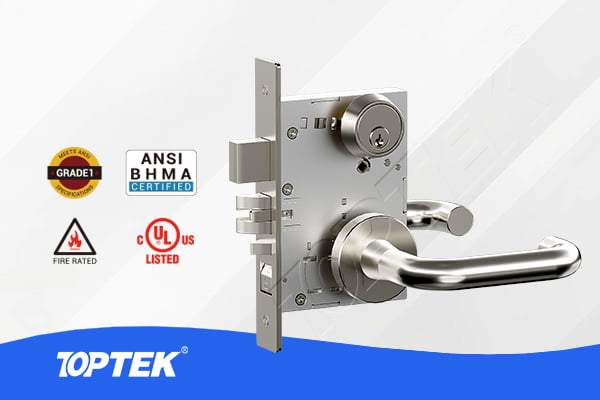
Buyers should confirm whether the ANSI mortise lock is designed and validated around ANSI/BHMA A156.13 Grade 1 commercial-door expectations. The official BHMA A156.13 mortise lock page explains that the standard covers mortise locks and latches with operational, strength, security, cycle, finish, and dimensional criteria. Buyers can reference BHMA A156.13 Mortise Locks when discussing the standard context with a supplier.
A reliable ANSI Grade 1 mortise lock supplier should be able to discuss the standard, not only print “Grade 1” in a catalog. In a serious RFQ, buyers should ask for the ANSI Grade 1 mortise lock datasheet, test plan, installation guide, material specification, function list, and sample validation method.
TOPTEK’s ANSI Grade 1 Mortise Lock series is positioned for commercial door hardware projects where Grade 1 performance, function accuracy, and project reliability matter. Buyers can use this category as the main internal reference point when reviewing TOPTEK’s American standard mortise lock platform.
Check 2: Is UL 10C fire-door suitability clearly supported?
Buyers should confirm whether the lock is suitable for the project’s fire-rated door assembly and local inspection route. UL 10C is an important fire-door standard context because it addresses positive pressure fire tests of door assemblies. Buyers can reference the official UL 10C standard page and the broader UL Solutions safety and certification context when discussing fire-rated door hardware requirements.
The key point is that fire-door compliance is assembly-based, not only product-image-based. A mortise lock may be part of a tested fire-door configuration, but the final approval can depend on the lock, latch, trim, door leaf, frame, strike, installation method, label, and local authority requirement.
TOPTEK recommends using cautious technical language for fire-rated applications. Instead of saying one lock is automatically acceptable for every fire door, buyers should confirm the door rating, market, test evidence, project requirement, and inspection expectation.
Check 3: Does the selected function match the real door behavior?
Buyers should not approve an ANSI mortise lock function only from a model number; they should simulate the complete door operation. Office, classroom, storeroom, apartment entrance, corridor, privacy, hotel, and F20-type functions can behave differently. The outside lever, inside lever, key, thumbturn, latchbolt, deadbolt, auxiliary latch, and emergency override must be checked before sample approval.
A wrong function code can create a serious project problem even when the lock fits the door cutout. For example, a classroom door may require different outside lever behavior from a storeroom door. An apartment entrance door may need secure exterior control while still allowing safe interior egress.
TOPTEK’s TKAM9200 platform supports multiple function options for commercial projects. Buyers can discuss a TKAM9200 mortise lock configuration according to door application, user behavior, cylinder plan, trim style, and fire-door expectation.
Check 4: Are the installation dimensions and door preparation confirmed?
Buyers should verify every installation dimension before approving samples or ordering bulk quantities. Door thickness, backset, center distance, faceplate size, case depth, latchbolt throw, deadbolt throw, strike plate, trim fixing, handing, cylinder length, and spindle interface can affect installation.
The ANSI Grade 1 mortise lock installation guide should be part of the RFQ package. Buyers should ask for dimensional drawings, door preparation templates, trim drawings, cylinder compatibility information, strike details, and screw fixing details. If the supplier cannot provide technical drawings clearly, the buyer should treat the project as higher risk.
Installation data buyers should confirm
| Installation Check | Buyer Risk if Ignored | What to Request |
|---|---|---|
| Door thickness | Trim, spindle, cylinder, and screw fixing may not fit correctly. | Door thickness range and compatible trim set. |
| Backset and case depth | Lock body may conflict with door stile or preparation. | Case drawing and backset confirmation. |
| Faceplate and strike | Latch may not align or close smoothly. | Faceplate drawing, strike drawing, and installation template. |
| Function behavior | Door may not meet office, classroom, storeroom, or apartment operation needs. | Function chart and sample operation video. |
| Cylinder compatibility | Key override, master key planning, or emergency access may fail. | Mortise cylinder interface and keyway plan. |
“`
Check 6: Can the latchbolt and deadbolt operate under real pressure?
Buyers should test whether the latchbolt retracts smoothly when it contacts the strike and whether the deadbolt can fully retract when pressure exists on the door. In real buildings, doors are not always perfectly aligned. Heavy doors, frame movement, door closers, weather seals, and installation tolerance can create side pressure on the lock mechanism.
A hidden risk appears when the deadbolt cannot fully withdraw under pressure. In some market products, the deadbolt may leave several millimeters outside the lock case when the lever is pressed under load. This creates a serious safety and service risk because the door may not open smoothly in high-stress conditions.
TOPTEK pays special attention to full latch and deadbolt retraction during design validation. This detail improves user experience, reduces service calls, and supports heavy-duty commercial door applications such as schools, hospitals, apartments, offices, hotels, and public buildings.
Check 7: Is the closing force suitable for high-traffic commercial doors?
Low closing force is not only a comfort detail; it is a reliability and maintenance issue. If the latch does not retract smoothly when contacting the strike plate, users may slam the door harder. This can increase noise, damage the frame, loosen hardware, and create repeated after-sales complaints.
Buyers should test closing force with the actual door, closer, strike, seal, and frame condition. Desk testing is not enough. A sample should be installed on a real door or test door so the buyer can evaluate closing smoothness, latch engagement, lever return, and door alignment sensitivity.
TOPTEK’s ANSI Grade 1 mortise lock design focuses on smooth latch movement and around 10 N closing force in internal evaluation. This helps commercial projects reduce noise and improve daily user experience in high-traffic environments.
Check 8: Does the supplier have real testing and validation capability?
A qualified ANSI Grade 1 mortise lock manufacturer should have internal testing capability before third-party certification or customer project approval. Internal testing should cover durability, latch strength, deadbolt operation, lever return, corrosion resistance, impact resistance, dimensional inspection, cylinder compatibility, and packaging protection.
Internal testing does not replace third-party certification, but it reduces the chance of sending weak products to a customer or lab. Buyers should ask how the factory validates prototypes, post-tooling samples, pilot production, and mass production batches.
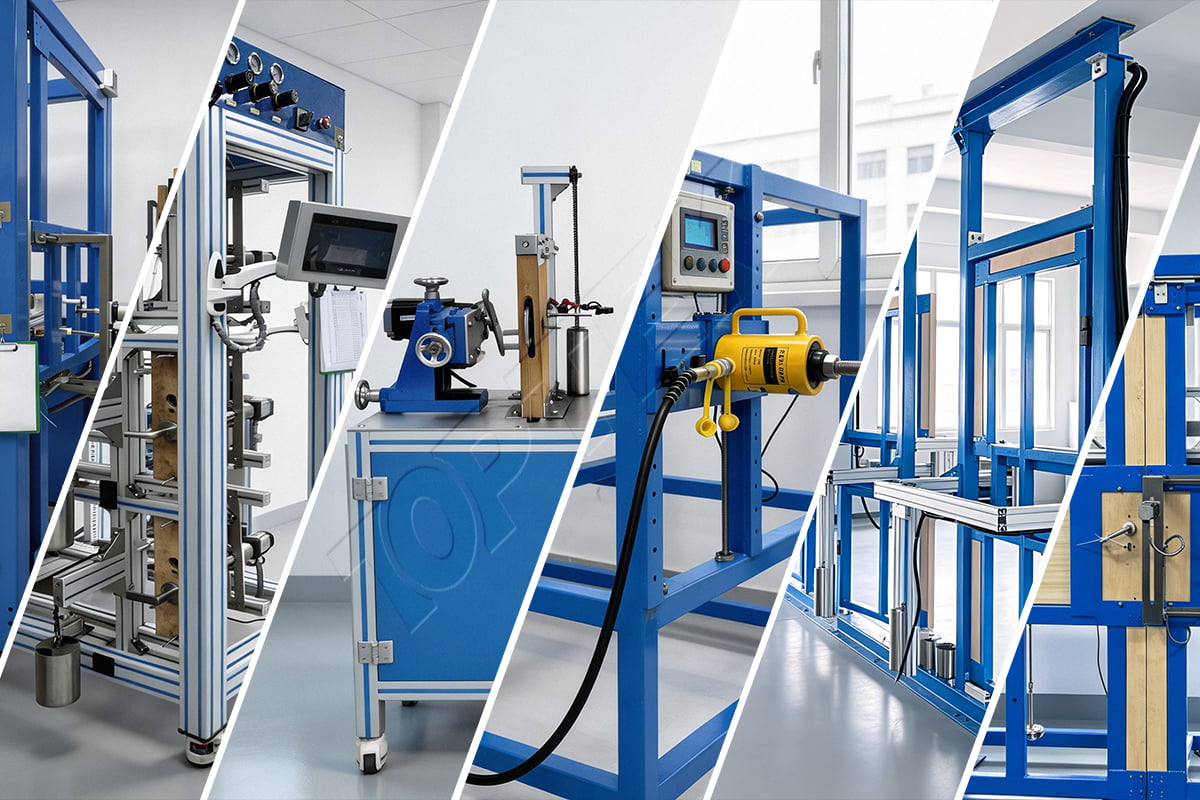
For third-party testing discussions, buyers can also reference Intertek door hardware testing, which covers locks, hinges, latches, closers, and exit devices. This helps buyers understand that door hardware performance is a tested engineering topic, not only a catalog description.
Check 9: Can the factory control tooling, stamping, machining, and assembly?
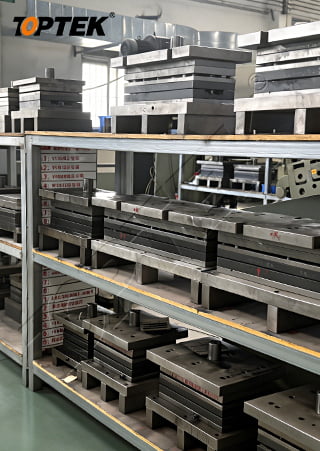
ANSI Grade 1 mortise lock quality depends on repeatable manufacturing control, not only one good sample. Buyers should ask whether the supplier controls tooling, stamping, CNC machining, assembly, inspection, surface finishing, approved sample retention, and packaging.
TOPTEK operates as an OEM/ODM precision manufacturer of commercial locks and architectural hardware. The company was established in 1991, has more than 35 years of OEM/ODM lock manufacturing experience, a 13,000㎡ factory, 220+ skilled employees, 20+ R&D engineers, 50+ Japanese TSUGAMI CNC machines, high-precision stamping capability, ISO 9001 / ISO 14001 / ISO 45001 systems, and an in-house CE / UL-aligned testing laboratory.
Check 10: Does the RFQ include enough data for an accurate ANSI Grade 1 mortise lock quote?
An accurate ANSI Grade 1 mortise lock quote requires complete technical information, not only quantity and finish. Buyers should include project country, target standard, door type, door thickness, function code, trim style, cylinder type, finish, fire-door expectation, packaging, logo requirement, sample quantity, annual volume, and target lead time.
For OEM/ODM buyers, the RFQ should also include modification scope and confidentiality expectations. If the buyer needs private label, exclusive design, special function, changed trim, special keyway, or modified internal structure, the supplier should evaluate tooling, testing, certification route, MOQ, development time, and engineering risk before quoting.
RFQ information buyers should send to the supplier
| RFQ Item | Why Buyers Should Include It | Supplier Response Expected |
|---|---|---|
| Function code | Defines door behavior and user operation. | Function chart, operation logic, and sample confirmation. |
| Door drawings | Prevents installation mismatch. | Technical drawing review and installation advice. |
| Fire-door requirement | Controls certification and approval route. | UL 10C / project-dependent fire-door compatibility discussion. |
| Material requirement | Prevents hidden zinc alloy or weak powder metallurgy risks. | Material declaration and critical part explanation. |
| OEM/ODM scope | Defines development cost and timeline. | Engineering feasibility, tooling estimate, sample schedule, and MOQ. |
5 Critical Sourcing Mistakes Buyers Must Avoid When Purchasing ANSI Grade 1 Mortise Locks from China
Mistake 1: Starting with price before checking the standard
Buyers should not compare ANSI Grade 1 mortise lock price before confirming standard context, function, fire-door expectation, and internal structure. A low price can hide weak parts, incomplete documentation, and unstable production control.
The most dangerous sourcing mistake is judging the product by visible stainless steel parts only. Buyers should open the lock body or request a component-level explanation to confirm whether the critical internal parts use suitable materials and processes.
Mistake 3: Approving a sample without testing deadbolt retraction under pressure
Buyers should test whether the deadbolt fully retracts when side pressure exists on the door. If part of the deadbolt remains outside the case, the lock may create serious service risk in heavy-door or misaligned-frame conditions.
Mistake 4: Treating fire-door language as a universal guarantee
Buyers should confirm the actual door assembly and local inspection route before relying on fire-door claims. Fire-rated door hardware must match the door, frame, installation, and project approval requirement.
Mistake 5: Accepting “factory” claims without process evidence
Buyers should ask for manufacturing evidence, test lab capability, inspection process, and approved sample control. A true ANSI Grade 1 mortise lock factory should support FAI, in-process inspection, final inspection, batch traceability, and packaging validation.
ANSI Grade 1 Mortise Lock Sourcing Checklist
Use this checklist before approving samples, issuing a purchase order, or starting OEM/ODM development. It helps buyers reduce installation risk, compliance risk, and batch inconsistency risk.
- Standard: Confirm ANSI/BHMA A156.13 Grade 1 performance context.
- Fire-door route: Confirm whether UL 10C or another fire-door assembly requirement applies.
- Function: Confirm office, classroom, storeroom, apartment, corridor, privacy, F20, or custom function behavior.
- Door preparation: Confirm door thickness, backset, faceplate, strike, handing, and case dimensions.
- Trim: Confirm round rose, square rose, escutcheon trim, lever style, thumbturn, ring, and finish.
- Cylinder: Confirm mortise cylinder type, cam, keyway, master key plan, and emergency override requirement.
- Internal parts: Confirm latchbolt, deadbolt, auxiliary latch, spring plate, spindle hub, and lock body material.
- Testing: Confirm durability, latch strength, deadbolt operation, closing force, salt spray, and real door installation testing.
- Production: Confirm FAI, in-process inspection, final inspection, approved sample retention, and batch traceability.
- Packaging: Confirm lock case protection, trim protection, label, carton strength, spare parts, and installation instructions.
- Documentation: Request datasheet, technical drawing, installation guide, test record, certification support documents, and RFQ confirmation.
Why TOPTEK for ANSI Grade 1 Mortise Lock OEM/ODM Projects?
TOPTEK is not a simple trading supplier; TOPTEK is an OEM/ODM precision manufacturer of architectural hardware, commercial locks, and integrated access control locking solutions. Since 1991, TOPTEK has supported global buyers with product engineering, sample validation, certification-route discussion, quality control, and project manufacturing capability.
For ANSI Grade 1 mortise lock projects, TOPTEK supports the TKAM9200 platform with sectional trim, escutcheon trim, lever designs, thumbturns, rings, and multiple function options. Buyers can use TOPTEK as an ANSI Grade 1 Mortise Lock manufacturer for commercial door projects, private label programs, project RFQs, and OEM/ODM development.
TOPTEK also supports related door opening hardware for complete project coordination. Buyers can review Electronic Lock and Access Control Devices for motorized and solenoid lock integration, and Construction Cylinder solutions for project key control and master key planning.

FAQ: ANSI Grade 1 Mortise Lock Manufacturer, Supplier, and China Sourcing Questions
What is an ANSI Grade 1 mortise lock?
An ANSI Grade 1 mortise lock is a heavy-duty commercial mortise lock designed for high-traffic doors and demanding building applications. Buyers should confirm ANSI/BHMA A156.13 context, function behavior, installation dimensions, material structure, and project certification requirements before sourcing.
How do I choose an ANSI Grade 1 mortise lock manufacturer in China?
Choose a manufacturer that can prove engineering capability, testing capability, documentation support, OEM/ODM process control, and stable batch production. The supplier should provide datasheets, drawings, installation guides, function charts, sample validation, and quality inspection records.
Why is UL 10C important for mortise locks?
UL 10C matters when the mortise lock is used as part of a fire-rated door assembly that requires positive pressure fire-door evaluation. Buyers should confirm the project’s fire-door requirement and assembly route before relying on any fire-rated claim.
Buyers should check whether critical internal parts use suitable materials instead of hidden low-grade zinc alloy, weak powder metallurgy, or thin spring structures. The lock body finish may look good, but latchbolt, deadbolt, auxiliary latch, spring plate, and hub structure determine long-term performance.
Can TOPTEK support private label ANSI mortise lock projects?
Yes, TOPTEK supports OEM/ODM development, private label projects, drawing review, sample testing, project configuration, and certification-route discussion. Buyers can send RFQ details, drawings, target functions, standards, quantity, and market requirements for review.
What should buyers include in an ANSI Grade 1 mortise lock RFQ?
Buyers should include function code, door thickness, backset, trim style, cylinder type, finish, fire-door requirement, quantity, logo requirement, packaging requirement, sample plan, and target lead time. Complete RFQ information helps the supplier quote accurately and reduce project risk.
Conclusion: Source ANSI Mortise Locks by Engineering Evidence, Not Appearance
The safest way to source ANSI mortise locks from China is to choose a manufacturer that can prove standard knowledge, internal material transparency, real testing, fire-door route awareness, installation support, and repeatable production control. Buyers should check ANSI/BHMA A156.13 Grade 1 context, UL 10C suitability, function behavior, installation dimensions, hidden internal materials, closing force, deadbolt retraction, sample testing, and RFQ documentation before approving bulk orders.
Project Risk Summary: Wrong function selection, weak hidden parts, high closing force, poor deadbolt retraction, incorrect door preparation, unsupported fire-door claims, cylinder mismatch, and batch inconsistency can cause installation failure, inspection delay, after-sales claims, and brand damage. A clear sourcing checklist reduces these risks before the first shipment.
TOPTEK Product Scope: TOPTEK Access is a China-based OEM/ODM manufacturer of commercial locks, architectural door hardware, and integrated access control locking solutions, supplying ANSI Grade 1 mortise locks, EN 12209 Grade 3 mortise locks, AS 4145 mortise locks, panic exit devices, multi-point locking systems, electronic locks, lever handles, cylinders, and hinges for global door manufacturers, distributors, contractors, and building projects.
TOPTEK stands for Commercial Door Hardware Reliability Solution.
TOPTEK: Smart Design. Strong Security.
Contact TOPTEK to discuss ANSI Grade 1 mortise lock RFQ review, OEM/ODM development, drawings, samples, project configuration, certification route, or technical support. Send your function requirement, door drawings, target standard, fire-door expectation, finish, cylinder plan, and quantity so TOPTEK can recommend the correct commercial mortise lock Grade 1 solution.