

TL;DR: F22 Privacy Mortise Lock Function in One Minute
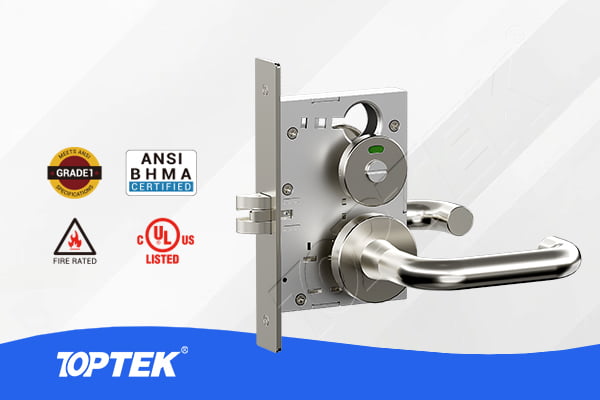
What should a buyer know first? The F22 Privacy Mortise Lock Function gives ANSI bedroom and bath doors inside privacy, outside emergency release, and free inside egress. Therefore, buyers should confirm the F22 function logic, trim design, emergency release, backset, door thickness, finish, and approval route before ordering.
Quick Answer: What Is the F22 Privacy Mortise Lock Function?
What does the F22 Privacy Mortise Lock Function do? F22 lets the inside user lock the outside lever for privacy, while the inside lever still opens the door immediately. In addition, the outside side supports emergency release by tool or coin turn, depending on the trim design.
Why does this function matter in ANSI projects? F22 helps buyers avoid using an entrance, storeroom, or deadbolt privacy function on the wrong interior privacy door. As a result, door manufacturers, distributors, and contractors can reduce function mistakes, installation complaints, and after-sales cost.
Key Takeaways for F22 Privacy Mortise Lock Buyers
- F22 is a privacy function: it fits interior privacy doors, not exterior entrance security doors.
- Inside egress stays free: the inside lever must always open the door.
- Emergency release matters: the outside trim should allow emergency opening.
- Function codes need accuracy: F22 differs from F19, F07, F04, and F21.
- Project details decide success: confirm backset, door thickness, trim, handing, finish, strike, latchbolt, and fire-door expectations.
F22 Privacy Function Definition for ANSI Mortise Lock Projects
What is the correct F22 definition? The F22 Privacy Mortise Lock Function controls the outside lever from the inside for temporary privacy. When the user does not engage privacy control, the lever from either side retracts the latchbolt.
How does the inside user lock the door? The inside user turns the thumbturn, presses the privacy button, or operates the privacy turn to lock the outside lever. Therefore, F22 works well for bathrooms, bedrooms, staff rooms, dressing rooms, dormitory rooms, and consultation rooms.
How does emergency access work? A manager or maintenance person can release the outside trim with an emergency tool or coin turn. However, this emergency release does not replace a regular keyed entrance cylinder.
Why should buyers avoid the generic term “privacy lock”? Buyers should write “ANSI F22 Privacy Mortise Lock Function” because different privacy functions use different operating logic. By contrast, F19 commonly refers to privacy with deadbolt behavior.
ANSI Grade 1 Mortise Lock Context and Standards
Which product platform does F22 belong to? This F22 Privacy Mortise Lock Function guide belongs to the ANSI Grade 1 Mortise Lock product series. Therefore, buyers should review the lock body, trim, latchbolt, strike, finish, and function chart together.
Why does ANSI/BHMA context matter? ANSI/BHMA A156.13 gives commercial mortise lock buyers a clear performance language for Grade 1 door hardware. In addition, it helps project teams align function codes, durability expectations, and hardware schedules.
How should buyers handle fire-rated doors? For fire-rated doors, buyers should review the full door assembly instead of judging the lock function alone. Therefore, the door leaf, frame, lock case, latchbolt, strike, trim, hinges, seals, and local approval route all matter. Buyers can reference UL and Intertek for testing, inspection, and certification context.
What wording should a hardware schedule use? A clear schedule should say “ANSI F22 Privacy / Bedroom or Bath Mortise Lock Function.” Moreover, the schedule should list trim type, emergency release, backset, door thickness, finish, handing, strike, and fire-door expectations.
Where Should Buyers Use the F22 Privacy Mortise Lock Function?
Which doors fit F22 best? F22 fits interior privacy doors where users need temporary privacy and fast inside exit. Common locations include bathrooms, bedrooms, hotel interior doors, dormitory rooms, staff rooms, clinic rooms, and dressing rooms.
Which buildings often need F22? Commercial offices, hotels, apartments, schools, clinics, hospitals, and student housing projects often use F22 privacy mortise lock hardware. In addition, these projects need consistent ANSI mortise lock dimensions and stable architectural finishes.
When should buyers avoid F22? Buyers should avoid F22 when the door needs regular keyed entry, storeroom security, classroom control, apartment entrance control, or privacy with a projected deadbolt. By contrast, those openings may need F04, F07, F19, F21, or another ANSI function.
How the F22 Privacy Mortise Lock Function Operates
What happens during normal passage? When the inside user does not engage privacy control, either lever retracts the latchbolt. Therefore, the door works like a normal passage opening during daily use.
What happens after the user locks privacy from inside? The outside lever locks, and normal outside entry stops. However, the inside lever still retracts the latchbolt and lets the user leave immediately.
What does the auxiliary deadlatch do? When the lock includes an auxiliary deadlatch, it helps secure the latchbolt after the door closes. For this reason, buyers should test latch engagement, strike alignment, and door closing force during sample approval.
Why does free inside egress matter? Free inside egress protects user safety and reduces project risk. Therefore, buyers should reject any privacy configuration that needs a key, tool, or confusing step from the inside.
F22 vs F19, F07, F04, and F21 ANSI Mortise Lock Functions
Why compare ANSI function codes before ordering? Function numbers describe real door behavior, not only product names. Therefore, buyers should test the outside lever, inside lever, privacy turn, emergency release, latchbolt, deadbolt, and auxiliary deadlatch before approval.
| ANSI Function | Common Name | Main Door Behavior | Typical Application | Buyer Risk If Misused |
|---|---|---|---|---|
| F22 | Privacy / Bedroom or Bath | Inside privacy control locks the outside lever. The inside lever stays free. Outside emergency release remains available. | Bathroom, bedroom, staff room, clinic room, dressing room. | Wrong trim or release design may cause privacy failure. |
| F19 | Privacy with Deadbolt | Inside thumbturn controls deadbolt privacy logic. Inside lever action depends on lock design. | Interior rooms that need stronger privacy behavior. | Wrong deadbolt logic may create unsafe operation. |
| F07 | Storeroom | Outside lever usually stays locked. Key controls outside entry. Inside lever stays free. | Storage, utility, and back-of-house rooms. | Users may face lockout risk on privacy doors. |
| F04 | Office / Entry | Office or entry doors use key and inside control logic. | Office and controlled entry doors. | The function may exceed bathroom or bedroom needs. |
| F21 | Dormitory / Bedroom | Dormitory or bedroom entry logic varies by function chart. | Dormitory rooms and managed living spaces. | Buyers may confuse it with F22 or F19. |
What is the safest purchasing rule? Buyers should order by ANSI function number, operation description, trim drawing, and approved sample. In addition, buyers sourcing a commercial mortise lock Grade 1 platform should match the function with each door type.
F22 ANSI Bedroom and Bath Lock Specification Checklist
What should a buyer confirm before asking for a quote? A strong F22 privacy mortise lock RFQ should include function number, application, backset, door thickness, trim, finish, strike, handing, emergency release, and fire-door expectation. As a result, the ANSI Grade 1 mortise lock supplier can quote the correct configuration.
| Specification Item | Recommended Confirmation | Why It Matters |
|---|---|---|
| Function | ANSI F22 Privacy / Bedroom or Bath Mortise Lock Function | Prevents confusion with F19, F07, F04, or F21. |
| Backset | 2-3/4 in. / 70 mm where the project requires it | Must match the door preparation and lock case. |
| Door Thickness | 1-3/4 in. / 44.5 mm for common ANSI commercial doors | Controls spindle, trim, screws, and fit. |
| Trim | Round rose lever trim or escutcheon lever trim | Affects appearance, release design, and door coverage. |
| Emergency Release | Coin turn, tool release, or trim-specific release | Supports management access during emergencies. |
| Finish | 626 / US26D satin chrome, 630 / US32D satin stainless steel, or project finish | Keeps locks, levers, hinges, and cylinders visually consistent. |
| Fire-Rated Door | Confirm project authority and assembly approval route | Fire-door approval depends on the full opening. |
Engineering Risks When Buyers Specify F22 Incorrectly
Function Confusion Creates Door Behavior Problems
What is the biggest F22 selection mistake? The biggest mistake is using the generic term “privacy lock” without confirming ANSI F22 operation. Consequently, the final door may receive the wrong outside lever behavior or the wrong emergency release design.
Door Preparation Affects Lock Performance
Which installation problem affects F22 most often? Wrong door preparation, strike alignment, or backset selection can make the latchbolt rub, jam, or miss the strike. Therefore, buyers should review drawings, latch throw, strike lip, armor faceplate, door thickness, and frame condition.
Closing Force Changes User Experience
Why does closing force matter for privacy doors? High closing force creates noise, wear, user complaints, and service calls. For this reason, privacy doors in hotels, clinics, offices, and staff areas need smooth latch engagement.
Internal Materials Decide Service Life
Why should buyers check internal parts? Weak springs, unstable latch parts, poor casting, or zinc alloy aging can cause handle sagging and privacy failure. Moreover, humidity and frequent use can make weak internal structures fail faster.
Why TOPTEK Supports F22 Privacy Mortise Lock Projects
OEM/ODM Precision Manufacturing
Why choose TOPTEK for F22 privacy mortise lock supply? TOPTEK supports ANSI Grade 1 mortise lock function matching, drawing review, sample testing, private-label development, and scalable production. Therefore, buyers searching for an ANSI Grade 1 mortise lock OEM manufacturer can reduce both sourcing risk and engineering risk.
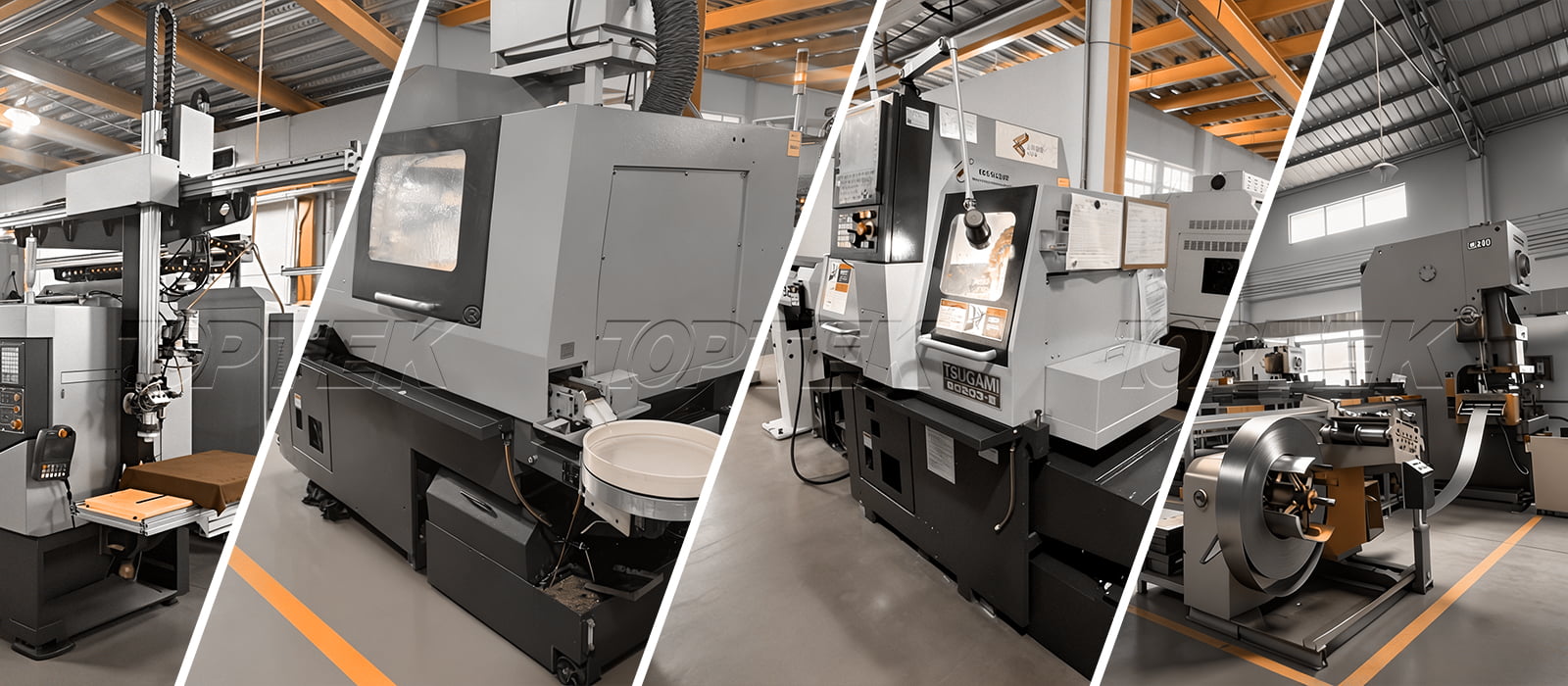
What manufacturing scale supports stable supply? TOPTEK operates a 13,000 m² factory with 220+ skilled employees, 20+ R&D engineers, and monthly capacity above 200,000 commercial locksets. In addition, TOPTEK uses 50+ Japanese TSUGAMI CNC Swiss-type machines and 50+ Taiwan/Japan pneumatic punch presses for precision production.
Testing and Quality Control
How does TOPTEK check reliability? TOPTEK uses an in-house CE / UL-aligned laboratory for durability, ANSI Grade 1 / Grade 2 evaluation, salt spray testing, impact testing, torque testing, cylinder testing, and temperature testing. As a result, buyers can approve samples with better confidence before mass production.
What ANSI platform advantages support F22? TOPTEK’s ANSI platform supports multiple functions, round rose trim, escutcheon trim, reversible logic, 2-3/4 in. / 70 mm backset, and common ANSI commercial door preparation. Moreover, buyers can review F22, F19, F07, F04, F21, and other functions on the same mortise lock ANSI A156.13 platform.
F22 Privacy Locks, Cylinders, and Project Key Planning
Does every F22 privacy lock need a keyed cylinder? No. Many F22 privacy doors use emergency release instead of daily keyed entry. However, buyers should still confirm whether the trim needs emergency release, mortise cylinder preparation, SFIC cylinder planning, or master key coordination.
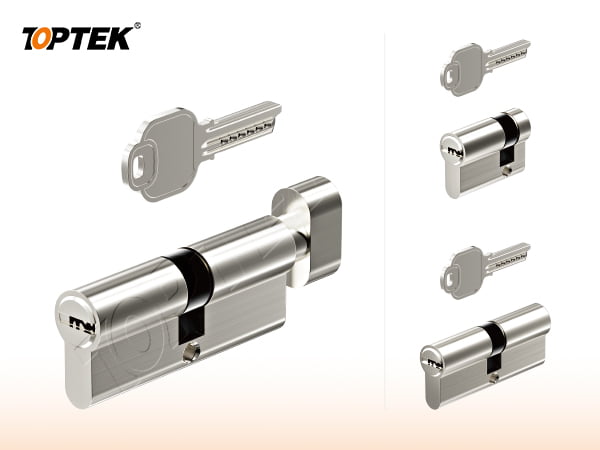
Why discuss cylinders in an F22 article? One building may use F22 privacy doors, F07 storeroom doors, F04 office doors, F21 dormitory doors, entrance locks, exit devices, and access control openings together. Therefore, TOPTEK can coordinate the SFIC cylinder, AM mortise cylinder, Euro profile cylinder, and master key plan with the lock schedule.
How can buyers reduce key-control confusion? Buyers should separate privacy doors from security doors before they define the cylinder system. In addition, TOPTEK can review the project master key cylinder requirement with the ANSI mortise lock schedule and the high-security commercial cylinder options.
OEM/ODM Support for F22 Privacy Mortise Lock Projects
What should OEM/ODM buyers ask first? OEM/ODM buyers should confirm whether the F22 function matches their local ANSI door preparation, trim style, lever design, release method, finish range, packaging standard, and private-label plan. Therefore, an ANSI Grade 1 mortise lock ODM supplier should provide drawings, samples, testing, packaging review, and batch consistency control.
How does TOPTEK manage customized lock projects? TOPTEK manages OEM/ODM projects through requirement definition, engineering review, compliance matrix planning, sample development, pilot production, mass production control, and after-sales feedback. As a result, buyers can avoid late redesign, wrong function selection, trim mismatch, and approval delays.

Common Buyer Mistakes in F22 Privacy Mortise Lock Selection
Mistake 1: Ordering by “Privacy Lock” Instead of ANSI F22
Why is this risky? The term “privacy lock” is too broad. Therefore, buyers should write “F22 Privacy Mortise Lock Function” and add a short operation description in the RFQ.
Mistake 2: Ignoring Emergency Release Design
Why confirm emergency release early? The emergency release must match the trim, safety requirement, and building management expectation. For this reason, buyers should test the release before they approve samples.
Mistake 3: Copying One Function Across Many Door Types
Why does this create trouble? A building may contain privacy doors, storeroom doors, office doors, classroom doors, apartment doors, and fire-rated openings. Therefore, every door type needs its own function review.
Mistake 4: Treating Fire Rating as a Lock-Only Issue
Why is this wrong? Fire-door acceptance depends on the complete opening, not only the lock function name. In addition, buyers should confirm the tested assembly, local authority, and required documentation route.
Mistake 5: Forgetting Installation and Finish Details
Why do small details matter? Wrong backset, door thickness, strike lip, finish color, or packaging can create site complaints. Consequently, a clear RFQ reduces rework and service cost.
RFQ Checklist for F22 Privacy Mortise Lock Function
What should buyers send to TOPTEK for an accurate quote? Buyers should send the ANSI function number, door type, door thickness, backset, trim, finish, emergency release, strike, fire-door expectation, quantity, target market, and OEM/ODM requirement. As a result, TOPTEK can quote the correct F22 privacy mortise lock configuration.
- Confirm function: ANSI F22 Privacy / Bedroom or Bath Mortise Lock Function.
- Confirm application: bathroom, bedroom, staff room, clinic room, dormitory room, or hotel privacy door.
- Confirm trim: round rose lever trim, square rose trim, or escutcheon lever trim.
- Confirm backset: 2-3/4 in. / 70 mm or project-specific requirement.
- Confirm door thickness: 1-3/4 in. / 44.5 mm or thicker door requirement.
- Confirm finish: 626 / US26D satin chrome, 630 / US32D satin stainless steel, or custom finish.
- Confirm emergency release: coin turn, tool release, or trim-specific release.
- Confirm fire-rated door expectation: UL 10C route, Intertek route, local approval route, or project requirement.
- Confirm documentation: datasheet, installation guide, dimension drawing, function chart, and sample approval report.
What should buyers ask from a supplier? Buyers should ask for the F22 function chart, operation description, specification sheet, installation drawing, fire-rated door note, available finishes, MOQ, sample time, and production lead time. Moreover, they should ask whether the supplier supports private label, OEM, ODM, and project hardware packages.
FAQ: F22 Privacy Mortise Lock Function
What is the F22 Privacy Mortise Lock Function?
What is the simple definition? F22 is an ANSI privacy mortise lock function that lets the inside user lock the outside lever while the inside lever stays free. In addition, the outside side supports emergency release by trim-specific tool or coin turn.
Is F22 the same as F19 Privacy with Deadbolt?
What is the main difference? No. F22 focuses on locking the outside lever, while F19 commonly adds deadbolt privacy behavior. Therefore, buyers should confirm the function chart before they approve samples.
Can F22 work for bathrooms and bedrooms?
Where does F22 fit best? Yes. F22 fits bathrooms, bedrooms, dressing rooms, staff rooms, dormitory rooms, consultation rooms, and other interior privacy doors. However, it does not replace an entrance lock.
Does F22 need emergency release?
Why does emergency release matter? Yes. Emergency release lets authorized staff open the door from outside during urgent situations. Therefore, buyers should test the release with the selected trim.
Can TOPTEK supply F22 as an OEM/ODM project?
How does TOPTEK support buyers? Yes. TOPTEK supports F22 privacy mortise lock projects with ANSI Grade 1 mortise lock manufacturing, OEM/ODM customization, drawing review, sample testing, finish matching, and RFQ support. In addition, TOPTEK can support related cylinders and commercial door hardware packages.
Conclusion: How to Select the Right F22 Privacy Mortise Lock Function
What is the final buying recommendation? Buyers should choose the F22 Privacy Mortise Lock Function when the door needs interior privacy, outside entry restriction, outside emergency release, and free inside egress. Therefore, the specification should clearly state ANSI F22 Privacy / Bedroom or Bath Mortise Lock Function.
What project risk should buyers avoid? Wrong function selection, weak latch engagement, high closing force, poor emergency release, wrong door preparation, fire-door mismatch, and batch inconsistency can create costly after-sales problems. For this reason, TOPTEK supports function matching, engineering review, testing, OEM/ODM customization, and controlled production.
What does TOPTEK supply beyond F22? TOPTEK Access is a China-based OEM/ODM manufacturer of commercial locks, architectural door hardware, and integrated access control locking solutions, supplying ANSI Grade 1 mortise locks, EN 12209 Grade 3 mortise locks, AS 4145 mortise locks, panic exit devices, multi-point locking systems, electronic locks, lever handles, cylinders, and hinges for global door manufacturers, distributors, contractors, and building projects.
What should buyers do next? Contact TOPTEK to discuss F22 privacy mortise lock OEM/ODM development, ANSI Grade 1 mortise lock quote, RFQ review, drawings, samples, project configuration, fire-door approval route, and technical support. TOPTEK stands for Commercial Door Hardware Reliability Solution. TOPTEK: Smart Design. Strong Security.