
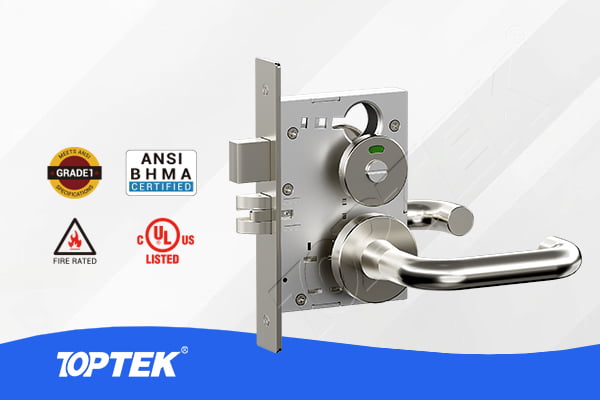

TL;DR: F19 Mortise Lock Function in One Minute
What is the F19 Mortise Lock Function? F19 is an ANSI privacy with deadbolt mortise lock function designed for commercial privacy doors where the inside user needs privacy control and immediate free egress. For buyers sourcing from an ANSI Grade 1 mortise lock manufacturer, the key is not only the F19 function name; it is the complete specification, including ANSI/BHMA A156.13 performance, trim type, thumbturn, emergency release, door preparation, fire-door compatibility, cylinder planning, finish, and OEM/ODM project validation.
Quick Answer: What Is the F19 Mortise Lock Function?
What does F19 mean in an ANSI mortise lock? F19 usually refers to a privacy with deadbolt function for bedroom, bath, dormitory, clinic, staff-room, and commercial privacy doors. The latchbolt is operated by the lever from either side when the deadbolt is not projected. The deadbolt is projected or retracted by the inside thumbturn and can be released from the outside by an emergency release tool or coin turn, depending on the trim design.
Why does F19 matter for commercial projects? F19 protects privacy while maintaining free egress from the inside. When the inside thumbturn projects the deadbolt, the outside lever becomes locked. However, the inside lever can retract both the latchbolt and deadbolt at the same time, allowing the inside user to exit quickly without a key or special operation.
| F19 Function Area | Typical Operation | Buyer Checkpoint |
|---|---|---|
| Outside lever | Operates latchbolt when deadbolt is not projected; becomes locked when deadbolt is projected | Confirm outside trim design and emergency release style |
| Inside lever | Always allows free egress and can retract latchbolt and deadbolt together | Test single-action egress before sample approval |
| Deadbolt | Operated by inside thumbturn; released outside by emergency release | Confirm thumbturn, escutcheon, rose, and privacy indicator requirements |
| Auxiliary deadlatch | Helps deadlock the latchbolt when the door is closed, where included | Check strike alignment and door preparation |
Key Takeaways for Buyers
- F19 is a privacy function, not a high-security entrance function. It is suitable when privacy and inside free egress are the main requirements.
- F19 must be checked together with ANSI/BHMA A156.13, not only by function name. Function behavior, durability, strength, finish, and dimensional fit all affect project approval.
- Fire-rated door use is project-dependent. Buyers should verify the tested door assembly, lock listing, local approval route, and hardware schedule before mass production.
- OEM/ODM buyers should confirm drawings before ordering. Backset, door thickness, handing, trim, emergency release, strike, finish, cylinder, and packaging all influence installation success.
- TOPTEK supports F19-style ANSI Grade 1 mortise lock project configuration. Our TKAM9200 platform, in-house testing, precision manufacturing, and OEM/ODM workflow help buyers reduce specification risk.
F19 Privacy with Deadbolt Function Explained
What is the practical door behavior of F19? The F19 Privacy with Deadbolt function is designed for rooms where users need privacy from the outside while still keeping a safe exit path from the inside. Typical applications include bathrooms, bedrooms, dormitory rooms, clinic rooms, consultation rooms, staff rooms, nursing spaces, apartment privacy rooms, and other commercial privacy doors.
How does the latchbolt work in F19? The latchbolt is normally operated by the lever from either side when the deadbolt is not projected. This means the door can function like a normal passage door until the inside user turns the thumbturn to project the deadbolt.
How does the deadbolt work in F19? The deadbolt is projected or retracted by the inside thumbturn. When the deadbolt is projected, the outside lever becomes locked, which gives the inside user privacy control. Depending on the trim design, the outside side may include an emergency release tool slot, coin turn, or similar privacy-release structure.
How does F19 support emergency egress? The inside lever can retract both the latchbolt and the deadbolt at the same time. This single-action inside egress behavior is the reason buyers should not treat F19 as a simple bathroom lock. In commercial buildings, the lock function must match real user behavior, accessibility expectations, and project safety logic.
ANSI/BHMA A156.13 Context for F19 Mortise Locks
Does F19 automatically mean ANSI Grade 1? No, F19 only describes the lock function; ANSI Grade 1 describes the performance grade of the mortise lock. A buyer should confirm whether the lock body is evaluated under ANSI/BHMA A156.13, which covers mortise locks and latches with operational tests, strength tests, security tests, cycle tests, finish tests, and dimensional criteria. For public reference, buyers can review the BHMA ANSI/BHMA A156.13 Mortise Locks overview.
Why should Grade 1 matter for F19 privacy doors? Grade 1 is commonly selected for high-traffic commercial openings where long-term durability and stable operation are required. BHMA’s public Hardware Highlights explain that Grade 1 mortise locks must pass a 1,000,000-cycle test. TOPTEK’s ANSI Grade 1 mortise lock platform is internally tested beyond this baseline for demanding project applications.
What should buyers check beyond the function number? Buyers should confirm the complete ANSI Grade 1 mortise lock specification guide before approving samples. Function code, latch retraction force, deadbolt projection, lever torque, trim style, strike alignment, finish performance, door thickness, backset, fire-door route, and cylinder compatibility all affect whether the final installation works smoothly.
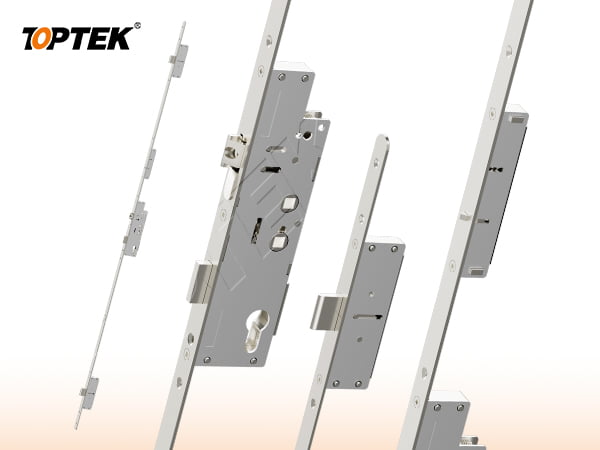
Product and Manufacturing References
Where Should Buyers Use the F19 Mortise Lock Function?
Which doors are suitable for F19? F19 is suitable for commercial privacy doors where users need privacy but not full entrance-lock security. Good application examples include restroom privacy doors, staff changing rooms, clinic consultation rooms, dormitory bedrooms, apartment internal privacy rooms, and hotel back-of-house privacy areas.
Which doors should not use F19? F19 is not the first choice for main entrances, storerooms, classrooms, access-control openings, or high-security perimeter doors. These applications usually need other ANSI mortise lock functions, such as office, classroom, storeroom, corridor, apartment entrance, or electrified access-control-ready functions.
Why do buyers often choose the wrong function? Buyers sometimes specify a function number without simulating real door behavior. A correct sample review should test the outside lever, inside lever, thumbturn, emergency release, latchbolt, deadbolt, auxiliary deadlatch, door closer force, strike alignment, and user exit path.
F19 vs Other ANSI Mortise Lock Functions
How is F19 different from other common ANSI mortise lock functions? F19 is mainly a privacy with deadbolt function, while classroom, storeroom, and office functions control outside access differently. This is important because wrong function selection can cause privacy failure, access-control confusion, or unsafe user behavior.
| Function Type | Typical Use | Outside Operation | Inside Operation | Project Risk if Misused |
|---|---|---|---|---|
| F19 Privacy with Deadbolt | Bathroom, bedroom, dormitory, clinic, staff room | Outside lever locked when deadbolt is projected; emergency release available | Inside lever retracts latchbolt and deadbolt for free egress | Wrong use on entrance doors may reduce security control |
| Classroom Function | Classrooms and training rooms | Outside lever controlled by key | Inside lever always retracts latchbolt | Wrong use may prevent proper classroom access management |
| Storeroom Function | Storage, service, mechanical rooms | Outside lever normally fixed or locked; key required | Inside lever allows egress | Wrong use may leave restricted rooms too easy to access |
| Office / Entry Function | Offices, admin rooms, commercial rooms | Outside lever can be locked or unlocked by key or inside control | Inside lever allows egress | Wrong use may create poor daily traffic control |
Fire-Door Compatibility and UL 10C Checks
Can F19 be used on fire-rated doors? F19 can be considered for fire-rated privacy doors only when the lock, trim, door, frame, and hardware assembly follow the tested and approved project route. Buyers should never assume that a function number alone proves fire-door compliance.
What does UL 10C mean for buyers? UL 10C is a positive-pressure fire test standard for swinging door assemblies, and the test includes fire endurance and hose-stream evaluation. Door and frame hardware can be relevant to the tested assembly, so buyers should confirm the complete fire-door schedule before order approval. For reference, buyers may review Intertek’s UL 10C fire door testing explanation and UL product safety and certification resources.
What should the RFQ say for a fire-door project? The RFQ should state whether the F19 privacy mortise lock is intended for a labeled fire door, the required rating time, door material, frame type, lock trim, cylinder or emergency release, closer type, and local approval expectation. This allows the ANSI Grade 1 mortise lock supplier to review risk before quoting mass production.
TOPTEK ANSI Grade 1 Mortise Lock Platform for F19 Projects
Why should buyers choose a professional ANSI Grade 1 mortise lock manufacturer for F19? F19 appears simple, but the real project result depends on precision, material strength, function consistency, and installation control. TOPTEK supports ANSI mortise lock project configuration through the TKAM9200 platform, sectional trim options, escutcheon trim options, lever designs, thumbturns, rings, and multiple function options.
What makes TOPTEK’s ANSI lock body suitable for heavy commercial use? TOPTEK’s ANSI mortise lock platform is designed for high durability, smooth latch operation, and stronger structural parts. According to TOPTEK internal product insight, the platform has passed internal lifecycle testing beyond 2,000,000 cycles, supports smooth closing force around 10N in the described design condition, and uses a latchbolt structure designed to withstand high side pressure.
Where should buyers review the product category? Buyers can start from TOPTEK’s ANSI Grade 1 Mortise Lock category page when comparing Grade 1 commercial mortise lock options. This helps door manufacturers, distributors, contractors, and project buyers connect function-code decisions with actual product platforms.
How does TOPTEK reduce material and durability risk? TOPTEK uses stronger material and process choices for critical ANSI mortise lock components. The latchbolt, deadbolt, and auxiliary bolt use precision investment casting in the TOPTEK platform description, while the lever return spring structure is designed to reduce aging and failure risks commonly associated with weaker zinc alloy structures.
Which internal link should buyers use for project sourcing? Buyers looking for a commercial mortise lock Grade 1 can review TOPTEK’s product category and then send drawings, function requirements, backset, trim style, finish, fire-door requirements, and RFQ quantity. This makes the quotation more accurate and reduces repeated technical clarification.
Cylinder, Thumbturn, and Emergency Release Planning
Does F19 need a normal keyed cylinder? Many F19 privacy configurations use an emergency release instead of a normal keyed entrance cylinder, depending on the trim design and project requirement. Buyers should confirm whether the outside release uses a tool, coin turn, privacy indicator, emergency slot, or another privacy-release format.
Why does cylinder planning still matter? Privacy doors still need correct cylinder, thumbturn, emergency-release, and key-management planning when they belong to larger commercial projects. For apartment, dormitory, clinic, or staff-room projects, the buyer may also need master key coordination, SFIC cylinder compatibility, or a separate commercial cylinder system for other door types.
Where can buyers review TOPTEK cylinder capability? Buyers can review TOPTEK’s Construction Cylinder category when a project requires SFIC, AM mortise cylinder, Euro profile cylinder, bored lock cylinder, Australian oval cylinder, or project master key cylinder planning. Even when F19 itself uses privacy release, the full building schedule may require coordinated cylinders across multiple door functions.
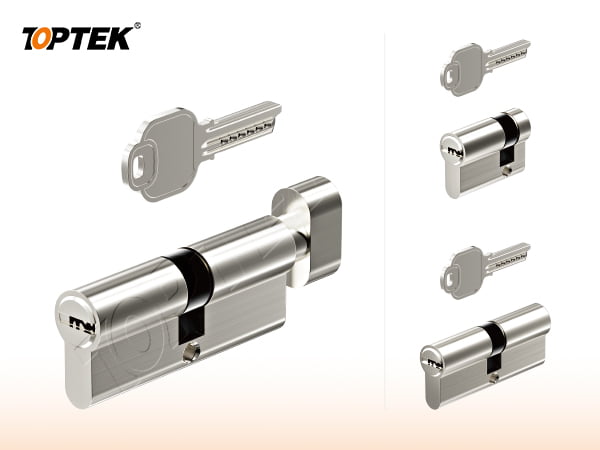
What should an OEM/ODM buyer send for cylinder review? Buyers should send cylinder type, keyway, length, cam, finish, master key level, SFIC or mortise cylinder requirement, and emergency release preference. A well-defined project master key cylinder plan reduces key-control confusion and improves long-term building management.
How does TOPTEK support customized cylinder projects? TOPTEK can support high-precision commercial cylinder customization, including SFIC, AM mortise cylinder, Euro profile cylinder, and special project pinning requirements. For buyers sourcing a high-security commercial cylinder together with ANSI mortise locks, early technical alignment helps avoid mismatch between trim, cylinder, door preparation, and key control.
RFQ Checklist for F19 ANSI Grade 1 Mortise Lock Projects
What should buyers confirm before requesting a quote? Buyers should define the real door behavior first, then confirm the ANSI Grade 1 mortise lock specification, trim, fire-door expectation, and project quantity. This helps the ANSI Grade 1 mortise lock supplier quote the correct configuration instead of offering a generic lock body.
- Confirm function: F19 Privacy with Deadbolt Function.
- Confirm application: bathroom, bedroom, dormitory, clinic room, staff room, apartment privacy room, or other commercial privacy door.
- Confirm standard expectation: ANSI/BHMA A156.13 mortise lock and Grade 1 project requirement.
- Confirm fire-door requirement: UL 10C route, tested assembly expectation, rating time, door material, frame type, and local approval method.
- Confirm backset: typical ANSI mortise lock backset such as 2-3/4 inch / 70 mm, subject to drawing verification.
- Confirm door thickness: typical commercial door thickness such as 1-3/4 inch / 44.5 mm, subject to project drawing.
- Confirm trim style: sectional rose, round rose, square rose, or full escutcheon trim.
- Confirm outside release: emergency release tool, coin turn, privacy indicator, or project-specific design.
- Confirm inside operation: thumbturn projection and inside lever simultaneous retraction of latchbolt and deadbolt.
- Confirm finish: 626 satin chrome, 630 satin stainless steel, or other project finish.
- Confirm handing: reversible or pre-handed requirement.
- Confirm strike, faceplate, latchbolt, deadbolt, auxiliary deadlatch, and door preparation drawings.
- Confirm sample testing route: hand sample, installation test, pilot batch, and mass production approval.
- Confirm commercial terms: ANSI Grade 1 mortise lock RFQ quantity, target price range, packaging, private label, and delivery schedule.
Common Buyer Mistakes When Specifying F19
Mistake 1: Choosing F19 without checking real user behavior
Why is this risky? A function code is only useful when it matches how the door is used every day. Before approving F19, buyers should simulate privacy locking, outside emergency release, inside lever egress, door closer action, and repeated daily operation.
Mistake 2: Treating privacy function as security function
Why is this risky? F19 is designed for privacy, not for high-security entrance control. If the door protects assets, restricted rooms, or exterior access, buyers should review storeroom, office, entry, classroom, corridor, apartment entrance, or electronic access-control functions instead.
Mistake 3: Ignoring fire-door compatibility
Why is this risky? Fire-rated door approval depends on the complete door assembly, not only the lock body. Buyers should confirm UL 10C or local fire-door approval logic before ordering an F19 privacy mortise lock for fire-rated applications.
Mistake 4: Using sample approval without mass-production control
Why is this risky? A sample can work well, but inconsistent production can still cause latch jamming, high closing force, handle sagging, finish variation, or strike misalignment. TOPTEK uses drawing control, FAI, in-process inspection, assembly inspection, and internal validation to support batch consistency.
Why TOPTEK for ANSI Grade 1 Mortise Lock OEM/ODM Projects?
Why is TOPTEK suitable for F19 privacy mortise lock development? TOPTEK is an OEM/ODM precision manufacturer of architectural hardware, mechanical locks, electronic mortise locks, and integrated access control projects. Established in 1991, TOPTEK has 35+ years of OEM/ODM lock manufacturing experience, a 13,000㎡ modern factory, 220+ skilled employees, 20+ R&D engineers, and more than 200,000 sets per month production capacity for architectural and commercial locksets.
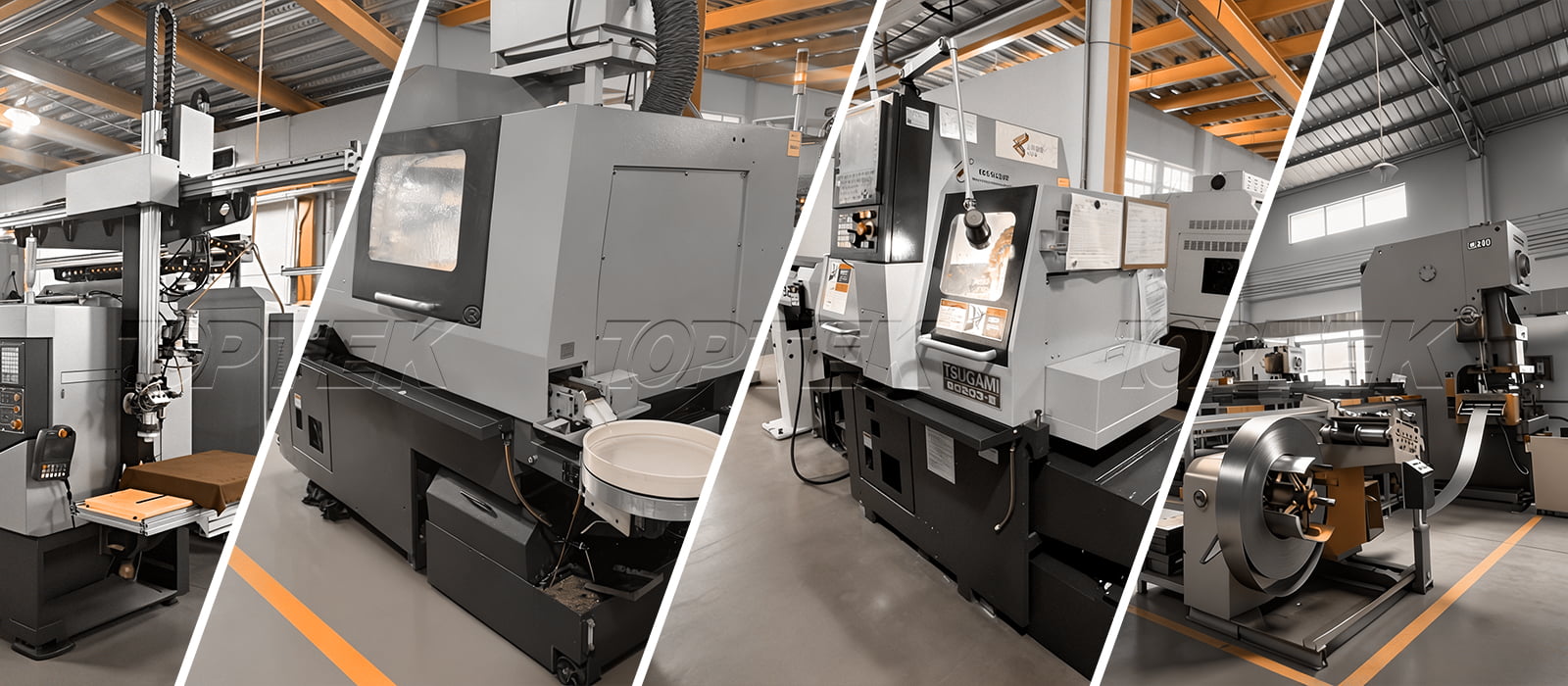
How does TOPTEK support precision and consistency? TOPTEK operates 50+ Japanese TSUGAMI CNC Swiss-type machines with ±0.01mm machining tolerance for relevant precision components. The factory also uses 50+ Taiwan/Japan high-precision pneumatic punch presses, laser cutting, CNC bending, stamping, CNC machining, assembly, and QC systems to support scalable commercial door hardware production.
How does TOPTEK support standards and testing? TOPTEK operates an in-house CE/UL-aligned testing laboratory covering mechanical durability, ANSI Grade 1 and Grade 2 performance, salt spray corrosion testing, handle torque, impact resistance, structural strength, pull force, cylinder anti-drilling, deadbolt anti-sawing, and high/low temperature evaluation. TOPTEK also works under ISO 9001, ISO 14001, and ISO 45001 management systems to support global OEM/ODM partnerships.
Where should buyers start if they need a quotation? Buyers can review TOPTEK’s mortise lock ANSI A156.13 category and then send a complete RFQ package. For F19 projects, include door drawings, function description, trim style, thumbturn and emergency release preference, finish, fire-door expectation, sample quantity, and annual forecast.

FAQ: F19 Mortise Lock Function and ANSI Grade 1 Privacy Locks
What is the F19 Mortise Lock Function?
F19 is an ANSI privacy with deadbolt mortise lock function. The latchbolt operates by lever, the deadbolt operates by inside thumbturn, the outside side can be released by emergency release, and the inside lever can retract both latchbolt and deadbolt for free egress.
Is F19 the same as an ANSI Grade 1 mortise lock?
No, F19 is a function code, while ANSI Grade 1 is a performance grade. Buyers should confirm both the F19 door behavior and the ANSI/BHMA A156.13 Grade 1 performance requirement.
Can F19 be used for commercial bathroom doors?
Yes, F19 is suitable for many commercial bathroom, bedroom, dormitory, clinic, and staff-room privacy doors. Buyers should still confirm door thickness, backset, trim, emergency release, finish, and project compliance requirements.
Can F19 be used on fire-rated doors?
Possibly, but only when the lock and full door assembly follow the required tested and approved route. Fire-door use should be verified through the door manufacturer, local authority, certification route, and hardware schedule before mass production.
What should I send TOPTEK for an F19 RFQ?
Please send function requirement, door drawings, backset, door thickness, trim style, finish, fire-door expectation, emergency release design, quantity, target market, and sample schedule. This helps TOPTEK review the correct ANSI Grade 1 mortise lock configuration.
Does TOPTEK support OEM/ODM for F19 privacy mortise locks?
Yes, TOPTEK supports OEM/ODM configuration and project development for ANSI Grade 1 mortise lock platforms. The final configuration should be confirmed through drawings, sample testing, installation verification, and project-specific compliance review.
Conclusion: Choose F19 by Function Behavior, Not by Function Number Alone
What should buyers remember about F19? F19 is a privacy with deadbolt mortise lock function for commercial privacy doors, and its value comes from correct inside privacy control, outside emergency release, and immediate free egress from the inside. Buyers should not select F19 only because a hardware schedule lists the function number. They should verify real door behavior, ANSI/BHMA A156.13 expectation, fire-door compatibility, trim, thumbturn, cylinder or emergency release, installation drawings, and sample validation.
What is the main project risk? Wrong function selection can cause privacy failure, unsafe egress assumptions, installation rework, fire-door compliance risk, latch jamming, high closing force, user complaints, and after-sales cost. A professional ANSI Grade 1 mortise lock manufacturer should help buyers review the function, drawings, standard route, material selection, finish, packaging, and batch consistency before mass production.
How can TOPTEK support your project? TOPTEK Access is a China-based OEM/ODM manufacturer of commercial locks, architectural door hardware, and integrated access control locking solutions, supplying ANSI Grade 1 mortise locks, EN 12209 Grade 3 mortise locks, AS 4145 mortise locks, panic exit devices, multi-point locking systems, electronic locks, lever handles, cylinders, and hinges for global door manufacturers, distributors, contractors, and building projects.
TOPTEK stands for Commercial Door Hardware Reliability Solution.
TOPTEK: Smart Design. Strong Security.
Need an F19 ANSI Grade 1 privacy mortise lock configuration? Contact TOPTEK for OEM/ODM development, RFQ review, drawings, samples, project configuration, certification route, or technical support. Send your door schedule, function list, backset, door thickness, trim design, finish, fire-door requirement, and target quantity to help our engineering team review the correct solution.