


TL;DR: How to Choose a Multi Point Locking System Manufacturer
A reliable multi point locking system manufacturer should prove three things: correct lock function design, stable long-faceplate manufacturing control, and real project validation before mass production. For door manufacturers, distributors, contractors, and project buyers, the best supplier is not only the cheapest factory; it is the partner that can prevent hook projection failure, trigger timing errors, faceplate bending, installation jamming, packaging deformation, and costly after-sales claims.
Quick Answer: What Should Buyers Check First?
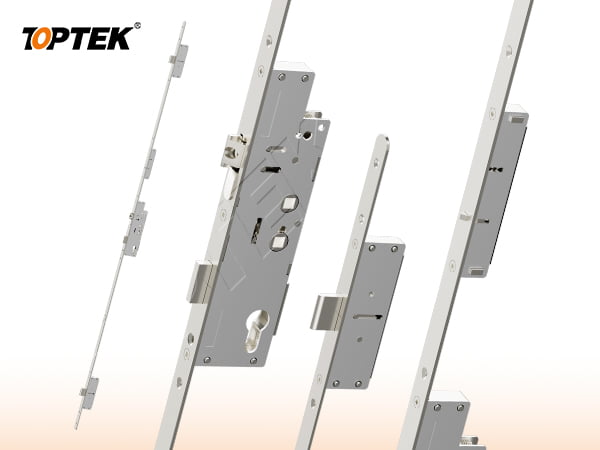
Buyers should first check whether the manufacturer understands the actual door project, not only the lock drawing. A multi point locking system connects the main lock case, long faceplate, rods, hooks, deadbolts, latch, strikes, cylinder, handle, and sometimes access control devices, so one small dimensional mistake can stop the whole door from locking smoothly.
For commercial door projects, choose a supplier that can explain the operation mode, the applicable standard route, the material strategy, the installation tolerance, the packaging method, and the sample-to-mass-production control plan. TOPTEK supports Multi-point Locking Systems such as Auto Lock and PD1000, and its product pages show project-oriented configurations including locking points, faceplate dimensions, corrosion standard references, and EN standard routes.
Key Takeaways for Door Project Buyers
- Choose function logic before price. Automatic locking, lift-lever locking, and cylinder-operated multipoint locks solve different door-use problems.
- Check the long faceplate carefully. A 1.7 m+ faceplate can bend during installation or transportation if material, thickness, packaging, and straightness control are weak.
- Verify hook projection and trigger timing. Hooks that fail to project, or project before the door closes, create installation failure and service complaints.
- Ask for a real multi point locking system specification guide. The guide should include dimensions, backset, handle centres, locking points, latch type, strike design, cylinder compatibility, finish, corrosion target, and testing route.
- Do not treat fire-door compatibility as automatic. The multipoint lock, door leaf, frame, seals, hinges, panic hardware, cylinder, and test evidence must match the local approval route.
- Use the RFQ process to test the supplier. A professional multi point locking system supplier should ask for drawings, door material, door thickness, profile section, handle system, cylinder type, standard expectation, packaging requirement, and sample validation plan.
TOPTEK Product and Manufacturing Proof Links
Buyers can use TOPTEK’s website pages to verify product scope before starting an RFQ. The TOPTEK homepage positions the company as an OEM/ODM precision manufacturer of commercial locks, access control solutions, multipoint locks, panic exit devices, construction cylinders, and architectural hardware, while the multi point locking system category lists TOPTEK multipoint locking solutions for project evaluation.
Product-level pages help buyers confirm whether the discussion is technical enough for real project sourcing. TOPTEK’s Auto Lock multipoint lock page and PD1000 multipoint locking system page help buyers start model comparison, specification review, and RFQ communication.
How to Choose a Multi Point Locking System Manufacturer for Door Projects
1. Confirm the Door Application Before Discussing Price
What problem does the door project need the multipoint lock to solve? The correct answer should come from the door material, user behavior, security level, sealing requirement, and project approval route. A multipoint locking system for timber entrance doors is not the same as a multipoint lock for aluminium sliding doors, PVC doors, commercial public buildings, apartment entrances, or retrofit replacement projects.
Why does this matter for procurement? A low price becomes expensive when the lock does not match the door profile, handle position, backset, strike layout, or installation tolerance. A serious multi point locking system manufacturer should ask for door drawings, profile sections, door thickness, lock stile width, frame details, traffic level, and target market before confirming a quote.
2. Select the Right Multipoint Lock Function Type
Which operation mode is suitable for your project? Most mechanical multipoint locks can be grouped into three practical types: automatic projection, lift-lever locking, and cylinder-operated locking. This classification helps door brands and project contractors avoid ordering a lock that behaves differently from user expectations.
| Function Type | How It Works | Typical Door Project Use | Main Buyer Risk |
|---|---|---|---|
| Automatic multipoint lock | When the door closes and the trigger or latch is activated, the deadbolt and secondary hooks or bolts project automatically. | Entrance doors, apartment doors, residential projects, and doors where users may forget to lock. | Trigger timing must be accurate; otherwise hooks may project before the door is fully closed or fail to project. |
| Lift-lever multipoint lock | The user lifts the handle to drive hooks or deadbolts, then uses the cylinder for secondary deadlocking if required. | Timber, composite, PVC, or aluminium doors where mechanical operation is acceptable. | Handle compatibility, follower strength, user force, and cylinder deadlocking logic must be checked. |
| Cylinder-operated multipoint lock | The user turns the cylinder to project the main deadbolt and secondary hook bolts, without automatic projection. | Projects requiring simple mechanical control or replacement of existing cylinder-operated systems. | Cylinder torque, key-control planning, and smooth bolt projection must be validated under real door load. |
3. Check Applicable Standards and Certification Routes
Which standard should guide a multipoint lock project? Buyers should check EN 15685 for mechanically operated multipoint locks and locking plates, then confirm whether other standards apply to the full door set, access control function, corrosion resistance, or emergency escape requirement. For reference, BS EN 15685 describes product characteristics and test methods for mechanically operated multipoint locks and locking plates.
How should buyers handle fire-rated and safety projects? Fire-door suitability must be confirmed through the complete door assembly and local approval route, not assumed from the lock body alone. Use authority bodies such as UL for product safety and fire-testing context and Intertek for testing, inspection, and certification context; then align the final route with the door manufacturer, test laboratory, and local authority.
4. Evaluate Engineering Risks That Ordinary Suppliers Often Miss
What are the most common multipoint lock failures in real projects? Common failures include hooks not projecting, trigger timing releasing too early, latch jamming, long faceplate bending, zinc alloy wear, strike misalignment, and packaging deformation during export shipment. These risks usually appear after sample approval when mass production, installation, or transport control is weak.
Why should buyers discuss these problems before mass production? Because a multipoint lock works as a full mechanical system, not a single component. If the hook bolt has a small dimensional deviation, if the frame strike is not positioned correctly, or if the 1.7 m+ faceplate bends by only a few millimeters, the door may not lock smoothly on site.
5. Inspect Materials, Faceplate Strength, and Wear Design
What material details should buyers confirm in a multi point locking system RFQ? Buyers should confirm faceplate material, faceplate thickness, lock case material, hook bolt material, deadbolt material, latch material, strike material, surface finish, corrosion requirement, and salt-spray target. For coastal markets, high-humidity buildings, public entrances, and cleaning-chemical exposure, corrosion resistance can become a long-term service-cost issue.
Which design mistake should professional buyers avoid? Avoid designs where soft zinc alloy parts repeatedly rub against stronger steel components without proper clearance or reinforcement. In real product review, this type of friction can accelerate wear, create rough operation, and eventually cause lock failure.
6. Verify Precision Manufacturing and Quality Control
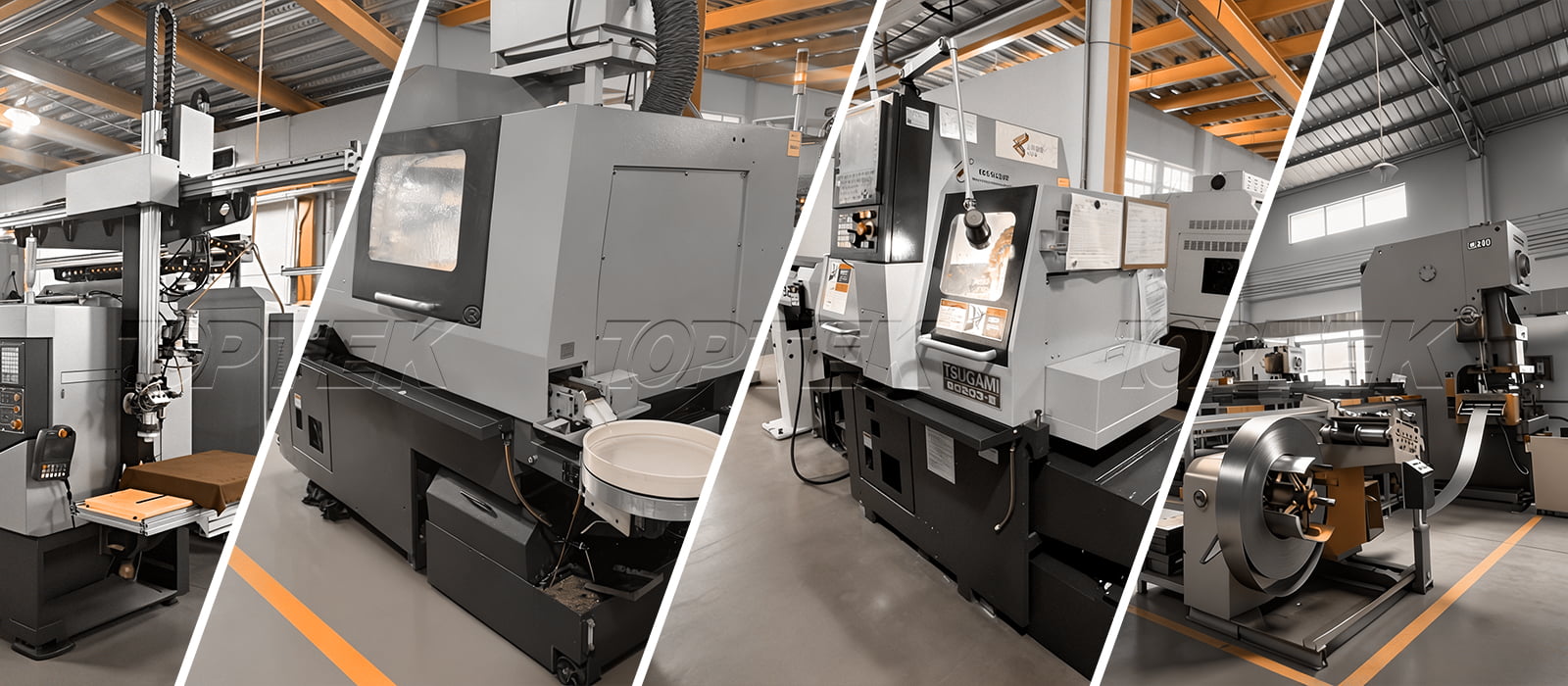
How does precision manufacturing affect multipoint lock reliability? Precision directly affects hook projection, latch timing, backset accuracy, handle centre alignment, cylinder movement, strike engagement, and smooth operation after installation. TOPTEK uses Japanese TSUGAMI CNC Swiss-type machines, high-precision stamping, laser cutting, bending, and controlled assembly processes to reduce cumulative tolerance deviation in commercial lock projects.
Why should buyers ask for process control instead of only a sample? A perfect sample does not guarantee stable mass production unless the factory controls incoming material inspection, first article inspection, in-process inspection, assembly inspection, plating inspection, and final functional testing. This is especially important for a custom multi point locking system manufacturer because long hardware assemblies need repeatable dimensional control across every batch.
Multi Point Locking System Specification Guide for RFQ
What information should buyers send before asking for price? A complete RFQ should include door drawings, lock function, operation mode, backset, faceplate length, faceplate width, handle centre, cylinder type, locking points, strikes, material, finish, standard requirement, packaging requirement, annual quantity, and sample schedule. Without these details, a multi point locking system quote can only be a rough estimate.
| RFQ Item | What to Confirm | Why It Matters |
|---|---|---|
| Door type | Timber, composite, aluminium, PVC, steel, sliding patio, entrance, public building, apartment, or retrofit door. | Door material and profile affect lock case size, faceplate length, strikes, and installation tolerance. |
| Operation mode | Automatic locking, lift-lever locking, cylinder-operated locking, or access-control-linked operation. | Wrong function creates user complaints and after-sales service calls. |
| Dimensions | Backset, centre-to-centre distance, faceplate length, faceplate width, spindle size, lock case depth, rod length, and strike position. | Small dimensional errors can stop hooks or deadbolts from projecting correctly. |
| Locking points | Steel hooks, deadbolts, latchbolt, roller latch, mushroom bolts, or combined locking points. | Security, sealing, and door compression depend on locking-point design. |
| Standards and testing | EN 15685, EN 12209, EN 14846, EN 179, EN 1125, BS EN 1670, local fire-door route, or project-specific requirement. | Standards define project acceptance logic and reduce approval risk. |
| Corrosion requirement | Indoor, coastal, humid, public entrance, salt spray target, and finish requirement. | Incorrect corrosion planning causes rust, poor appearance, and warranty claims. |
| Packaging | Wooden crate, individual protection, faceplate support, export carton, pallet protection, and drop or shipping risk. | Long faceplates and rods can deform during transport if packaging is weak. |
Access Control, Cylinders, and Door Hardware Compatibility
Does every multipoint lock work with access control? No; buyers should confirm whether the project needs mechanical-only operation, electric release, monitoring signal, motorized movement, fail-safe or fail-secure logic, or integration with a building management system. When access control is required, the lock, cable routing, power transfer, reader, credential, cylinder override, and emergency egress requirement must be reviewed together.
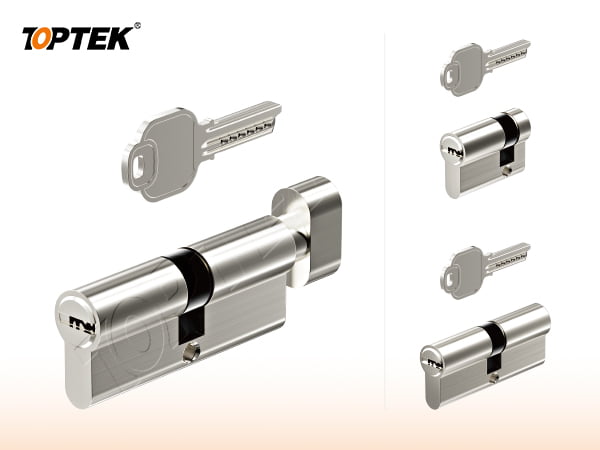
Why is cylinder planning part of multipoint lock selection? The cylinder affects deadlocking, emergency override, key management, torque, and long-term user reliability. TOPTEK also supplies Construction Cylinder solutions including Euro profile cylinders, SFIC, AM mortise cylinders, bored lock cylinders, Australian oval cylinders, and Scandinavian oval cylinders for project key-control planning.
Why Choose TOPTEK as a Multi Point Locking System Manufacturer?
What makes TOPTEK different from a simple trading supplier? TOPTEK is an OEM/ODM precision manufacturer of architectural hardware, mechanical locks, electronic mortise locks, and integrated access control projects, not only a product reseller. The company was established in 1991 and supports global door manufacturers, distributors, contractors, and project buyers with engineering review, sample development, testing, mass production, and project communication.
How does TOPTEK support manufacturing reliability? TOPTEK operates a 13,000㎡ modern factory with 220+ skilled employees, 20+ R&D engineers, 50+ Japanese TSUGAMI CNC machines, ±0.01 mm precision capability for relevant components, 50+ Taiwan/Japan pneumatic punch presses, laser cutting, CNC bending, assembly workshops, and a monthly capacity above 200,000 commercial locksets. This manufacturing base helps TOPTEK control precision hardware, long lock bodies, lock cases, cylinders, and project hardware consistency.
How does TOPTEK reduce project risk before mass production? TOPTEK uses requirement definition, drawing review, prototype testing, post-tooling sample validation, pilot production, assembly inspection, packaging validation, and after-sales feedback loops. For multipoint lock projects, this process helps reduce risks such as hook misalignment, poor latch timing, faceplate bending, weak corrosion resistance, and sample-to-batch inconsistency.
How does TOPTEK support OEM/ODM partners? TOPTEK supports OEM/ODM multipoint lock development, private-label product range extension, standard route discussion, material selection, finish planning, sample testing, packaging protection, and RFQ review. Buyers searching for a multi point locking system OEM manufacturer or multipoint lock OEM factory for export should focus on this project-management capability, not only unit price.

Common Buyer Mistakes When Choosing a Multipoint Lock Supplier
Mistake 1: Choosing Price Before Function
Why is this mistake costly? A cheap lock can become expensive when the operation mode does not match the door user scenario. For example, an automatic multipoint lock may be suitable for doors where users often forget to lock, while a lift-lever lock may be better where users expect manual mechanical control.
Mistake 2: Ignoring Door Preparation and Strike Alignment
Why do installation problems happen after sample approval? The sample may operate well on a bench, but the door site adds frame tolerance, gasket pressure, hinge sag, strike position error, and closing-force variation. A serious multi point locking system factory should discuss door preparation and strike plate selection early.
Mistake 3: Treating Fire-Door Use as a Simple Lock Choice
Why is fire-door compatibility more complex? Fire-door projects depend on the complete door assembly and test evidence, not a single lock claim. Buyers should verify the door manufacturer’s approval route, test laboratory requirement, local code expectation, and hardware package before using any fire rated multi point locking system supplier claim.
Mistake 4: Underestimating Packaging for Long Faceplates
Why does packaging affect lock quality? Multipoint locks often use long faceplates, rods, and connected hardware that can bend if a supplier uses weak cartons without proper internal support. TOPTEK uses protected packing and wooden-crate logic for long multipoint lock bodies when project shipment requires higher protection.
Mistake 5: Forgetting Sample-to-Mass-Production Consistency
Why should buyers ask for pilot production? Pilot production helps verify whether the approved sample can be repeated under real production conditions. For B2B projects, batch consistency protects the door brand from installation complaints, warranty disputes, and delayed project acceptance.
Multi Point Locking System Buyer Checklist
What should buyers confirm before choosing a manufacturer? Use the checklist below before sample development, quotation approval, tooling discussion, or mass production. This checklist helps door manufacturers, hardware distributors, and contractors compare a multi point locking system export supplier fairly.
- Confirm the door material, door thickness, profile section, lock stile width, and frame structure.
- Confirm whether the lock should be automatic, lift-lever, cylinder-operated, or access-control-linked.
- Confirm backset, handle centre, spindle size, faceplate width, faceplate length, lock case depth, and strike layout.
- Confirm the number and type of locking points, including hooks, deadbolts, latchbolt, roller, or other points.
- Confirm cylinder type, keyway, master key requirement, thumbturn requirement, and emergency override logic.
- Confirm handle compatibility, lever return force, escutcheon or rose trim, and user operation force.
- Confirm EN 15685, EN 12209, EN 14846, EN 179, EN 1125, BS EN 1670, local fire-door, or project-specific certification route.
- Confirm corrosion target, finish sample, salt-spray expectation, coastal environment, and cleaning-chemical exposure.
- Confirm sample test plan, pilot production quantity, inspection standard, and approval sample retention.
- Confirm packaging method for long faceplates, export shipment protection, and spare-parts policy.
How to Send TOPTEK a Better RFQ
How can buyers get a more accurate multi point locking system price? Send a clear RFQ package instead of only asking for a general price list. Include drawings, photos of the current lock or door profile, target market, expected annual volume, sample quantity, required standard, preferred material, finish, packaging requirement, and problem history from your current supplier.
What should buyers request from TOPTEK during early evaluation? Ask for model recommendation, drawing review, specification comparison, sample schedule, OEM/ODM feasibility, testing route, packaging suggestion, and quotation basis. For custom projects, this conversation can prevent wrong tooling investment, wrong installation design, and unnecessary after-sales cost.
FAQ: Choosing a Multi Point Locking System Manufacturer
What is the best focus when choosing a multipoint lock manufacturer?
The best focus is project reliability, not only unit price. Buyers should evaluate function logic, material selection, standard route, dimensional control, installation support, sample testing, packaging, and after-sales risk.
Can TOPTEK support OEM/ODM multipoint lock development?
Yes, TOPTEK supports OEM/ODM multipoint lock development for door manufacturers, hardware brands, distributors, and project suppliers. The process can include requirement definition, drawing review, prototype testing, tooling sample validation, pilot production, and mass production control.
Which standard is important for multipoint locks?
EN 15685 is an important reference for mechanically operated multipoint locks and locking plates. Depending on the application, buyers may also need to review EN 12209, EN 14846, EN 179, EN 1125, BS EN 1670, local fire-door approval routes, and complete door-set requirements.
Why do multipoint locks fail during installation?
Installation failure usually comes from dimensional mismatch, strike misalignment, faceplate bending, poor trigger timing, incorrect door preparation, or excessive door/frame tolerance. A professional supplier should review these risks before mass production.
Is a fire rated multi point locking system suitable for every fire door?
No, fire-door suitability is project-dependent and must be verified through the complete door assembly and local approval process. Buyers should not rely only on a lock-body claim without confirming door leaf, frame, seals, hinges, panic hardware, cylinder, and test evidence.
What should be included in a multi point locking system datasheet?
A useful datasheet should include model, operation mode, standard route, backset, handle centre, faceplate size, lock case size, locking points, latch type, material, finish, corrosion target, cylinder compatibility, handle compatibility, strikes, and installation notes.
Conclusion: Choose the Manufacturer That Can Control the Whole Door Locking System
How should buyers make the final decision? Choose a multi point locking system manufacturer that can understand the door project, define the correct function, control long-faceplate accuracy, validate hook and deadbolt operation, support standards discussion, protect the product during shipment, and keep mass production consistent with the approved sample. This selection logic helps door manufacturers and project buyers reduce installation failure, after-sales claims, and project delay.
Project Risk Summary
What happens when buyers choose the wrong multipoint lock supplier? The project may face hook projection failure, trigger timing errors, latch jamming, long faceplate bending, corrosion complaints, fire-door compatibility risk, access control integration problems, packaging deformation, and batch inconsistency. These problems create service cost and can damage the buyer’s local market reputation.
TOPTEK Product Scope
What does TOPTEK supply for global door projects? TOPTEK Access is a China-based OEM/ODM manufacturer of commercial locks, architectural door hardware, and integrated access control locking solutions, supplying ANSI Grade 1 mortise locks, EN 12209 Grade 3 mortise locks, AS 4145 mortise locks, panic exit devices, multi-point locking systems, electronic locks, lever handles, cylinders, and hinges for global door manufacturers, distributors, contractors, and building projects.
What should buyers do next? Contact TOPTEK for OEM/ODM development, RFQ review, drawings, samples, project configuration, certification route discussion, or technical support. Send your door drawings, current lock photos, profile section, target market, annual quantity, standard requirement, and project pain points so TOPTEK can recommend the right multipoint locking solution.
TOPTEK stands for Commercial Door Hardware Reliability Solution.
TOPTEK: Smart Design. Strong Security.