


TL;DR: EN 12209 Grade 3 Mortise Lock vs ANSI Mortise Lock in One Minute
What is the practical difference in an EN 12209 Grade 3 mortise lock vs ANSI mortise lock comparison? ANSI mortise locks are mainly selected for North American Grade 1 commercial door projects, while EN 12209 mortise locks are selected for European-style lock case projects that need CE, EN, DIN, and fire-door compatibility logic. For door manufacturers, distributors, contractors, and project buyers, the correct choice depends on the project standard, door preparation, function requirement, cylinder system, fire-door approval route, and long-term maintenance risk.
Quick Answer: What Is the Difference Between EN 12209 and ANSI Mortise Locks?
Which lock should buyers choose first in an EN 12209 Grade 3 mortise lock vs ANSI mortise lock project? Choose the lock standard that matches the project specification before comparing price. An ANSI Grade 1 Mortise Lock is normally specified around ANSI/BHMA A156.13, heavy-duty commercial traffic, UL fire-door project logic, and North American door preparation. An EN 12209 Grade 3 Mortise Lock is normally specified around EN 12209 classification, European lock case dimensions, Euro profile cylinders, EN fire-door requirements, and CE-related documentation.
Why does this matter for RFQ and OEM/ODM sourcing? The wrong standard can create installation failure, failed project approval, wrong lock function, latch jamming, or fire-door compliance risk. A buyer should not only ask for a mortise lock quotation. The RFQ should clearly state whether the project requires ANSI Grade 1, EN 12209 Grade 3, UL 10C fire-door evaluation, EN 1634-1 fire-door evidence, cylinder compatibility, door thickness, backset or centres, handing, trim style, and finish requirements.
Key Takeaways for Door Hardware Buyers
- What is the core difference? ANSI mortise locks and EN 12209 mortise locks are built around different regional standards, test logic, door preparation, cylinder formats, and function naming systems.
- Where is ANSI stronger for specification? ANSI Grade 1 mortise locks are usually preferred for North American commercial buildings, heavy-duty institutional doors, and projects that require ANSI/BHMA A156.13 logic.
- Where is EN 12209 stronger for specification? EN 12209 Grade 3 mortise locks are usually preferred for European-style doors, Euro profile cylinder systems, CE-related project documentation, and DIN-style lock case applications.
- What should buyers verify before ordering? Buyers should confirm standard, door preparation, function, fire-door approval route, cylinder type, handle compatibility, strike plate, finish, packaging, and batch consistency.
- How can TOPTEK help? TOPTEK supports both ANSI and EN mortise lock platforms, allowing global partners to source cross-standard commercial door hardware from one OEM/ODM manufacturer.
Product and Manufacturing Proof for ANSI and EN Mortise Lock Projects
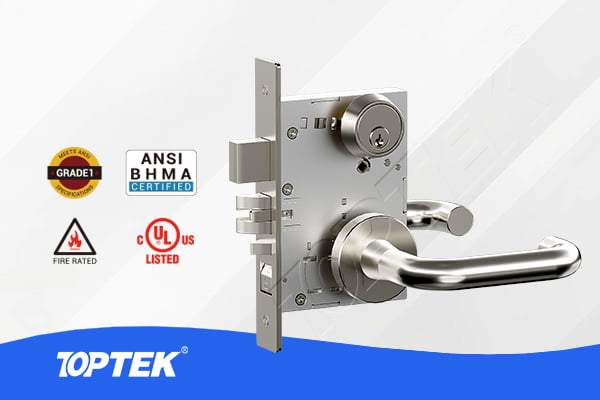
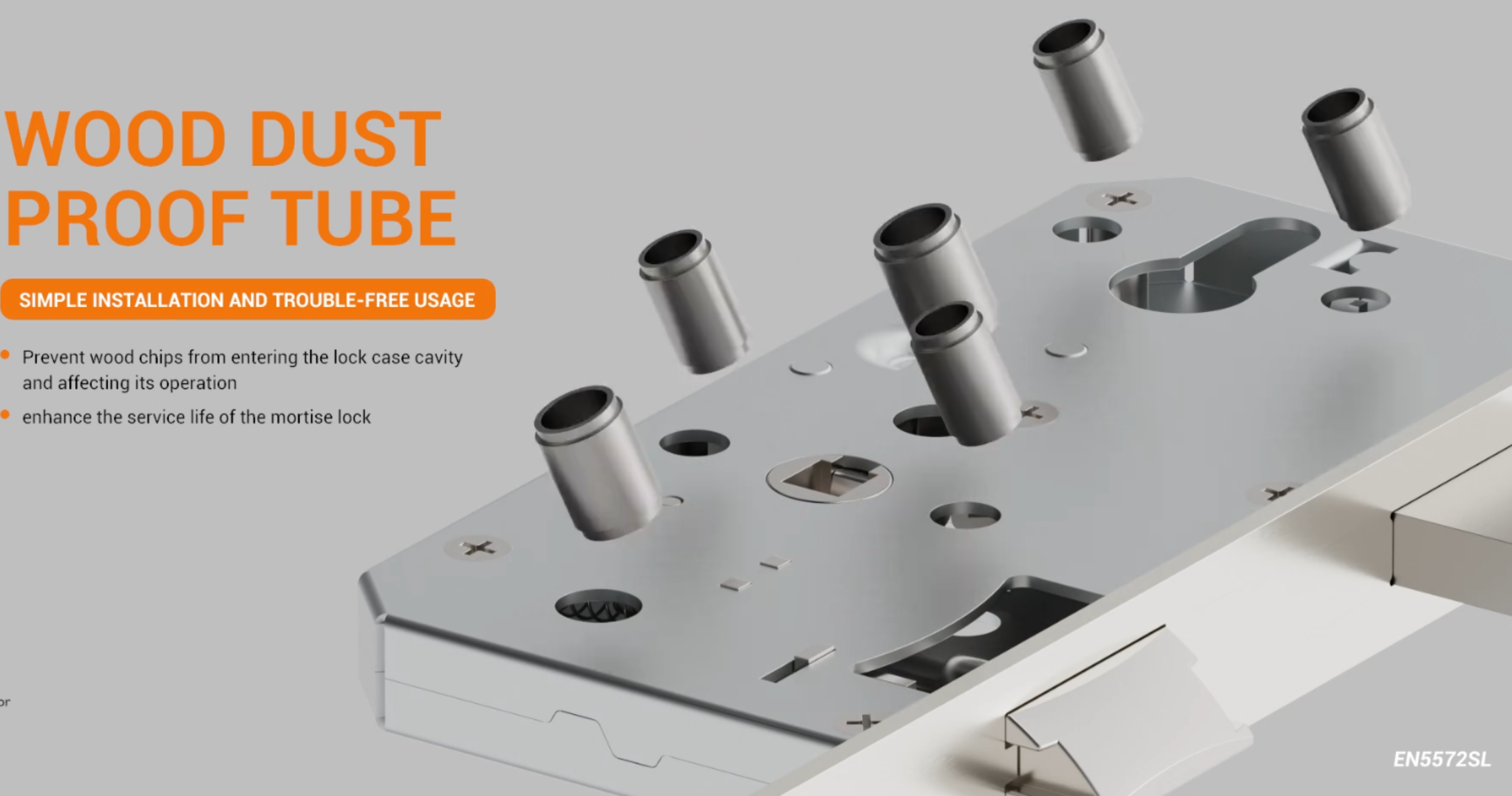
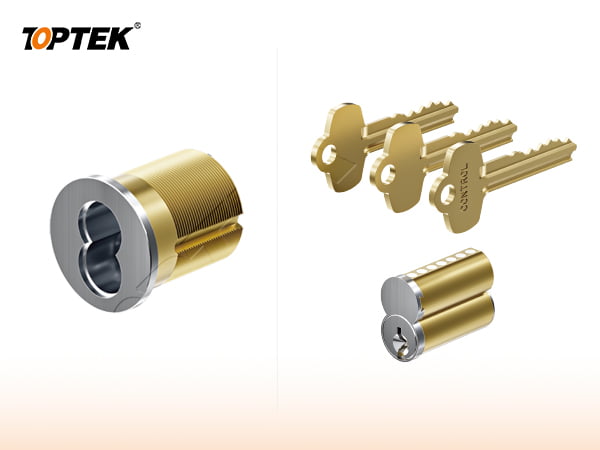
Why should product images be included in this article? Images help buyers connect the standard comparison with real product platforms and manufacturing capability. The following images support product understanding, cylinder compatibility, precision machining, and assembly capacity for commercial door hardware projects.
Standard Context: ANSI/BHMA A156.13 vs EN 12209
What does ANSI/BHMA A156.13 mean for mortise locks? ANSI/BHMA A156.13 defines performance expectations for mortise locks and latches, including operational tests, strength tests, security tests, cycle tests, finish tests, and dimensional criteria. Buyers can use the BHMA A156.13 mortise lock reference to understand the standard context before issuing an ANSI mortise lock RFQ.
What does EN 12209 mean for European lock cases? EN 12209 covers mechanically operated locks and locking plates, with requirements and test methods for durability, strength, security, and function. Buyers can review the Intertek EN 12209 building hardware reference and the BSI EN 12209 reference when preparing European commercial mortise lock specifications.
How should buyers think about fire-door approval? Fire performance is project-dependent because the lock, door leaf, frame, seals, latch engagement, and tested assembly route all matter. For North American fire-door projects, buyers often review UL 10C positive-pressure fire-door logic through UL fire-rated door guidance. For EN projects, buyers normally evaluate EN 12209 together with fire-door evidence such as EN 1634-1 documentation, local approval, and door manufacturer listing requirements.
What is the most important sourcing rule? Do not treat ANSI and EN mortise locks as interchangeable just because both are installed inside the door edge. A mortise lock ANSI A156.13 platform and a European commercial mortise lock platform solve different project requirements, so the buyer should confirm the standard before confirming the price.
EN 12209 vs ANSI Mortise Locks: Technical Comparison Table
What is the fastest way to compare these two systems? This EN 12209 Grade 3 mortise lock vs ANSI mortise lock table uses standard, door preparation, function, cylinder, fire-door route, and RFQ data as the comparison base. The table below gives buyers a practical sourcing view for project selection.
| Comparison Point | ANSI Mortise Lock | EN 12209 Mortise Lock | Buyer Risk if Ignored |
|---|---|---|---|
| Typical standard logic | ANSI/BHMA A156.13, Grade 1 project logic, UL fire-door evaluation route where required. | EN 12209 classification, CE-related documentation, EN 1634-1 fire-door evidence where required. | Wrong standard may lead to specification rejection or repeated sample revision. |
| Typical market application | North America, U.S.-style commercial buildings, institutional doors, office projects, schools, hospitals, hotels, and apartments. | Europe, Middle East, Southeast Asia, and projects using DIN-style or Euro profile lock case architecture. | Market mismatch can create installation and compliance problems. |
| Door preparation | ANSI-style mortise pocket, trim preparation, backset, strike, and function-specific preparation. | European lock case preparation, centres, forend, strike, Euro cylinder, lever handle, and function-specific case type. | Incorrect door cutout may cause latch misalignment and failed latching. |
| Function system | Function codes such as office, entry, classroom, storeroom, passage, hotel/privacy, and apartment entrance. | Functions such as sash lock, passage lock, deadbolt lock, bathroom lock, night latch, escape lock, classroom lock, roller latch, and anti-thrust escape lock. | Wrong function can make the door behave incorrectly in daily use. |
| Cylinder compatibility | Mortise cylinder, SFIC, Schlage C keyway, IC core, or project-specific American cylinder requirements. | Euro profile cylinder and project master key cylinder planning. | Poor cylinder planning creates key-control problems after installation. |
| Fire-door logic | UL 10C positive-pressure fire-door project route where required by specification and assembly approval. | EN 1634-1 fire-door evidence and local approval route where required. | Hardware may pass mechanical testing but fail door assembly approval. |
| OEM/ODM focus | Trim style, function set, cylinder format, finish, latch/deadbolt strength, fire-door configuration, and private label support. | 72/78/85 series, Euro cylinder, dust cover, one-piece latch, forend and strike finish, deadbolt security grade, and fire-door documentation. | Unclear RFQ data increases quotation errors and sample delays. |
ANSI Grade 1 Mortise Lock: When Should Buyers Choose It?
Which projects normally need an ANSI mortise lock? ANSI mortise locks are usually selected when the door schedule, architect specification, or hardware set follows North American commercial door hardware logic. TOPTEK’s TKAM9200 mortise lock platform supports sectional and escutcheon trim options, lever designs, thumbturns, rings, and multiple commercial function requirements.
What performance points matter most for ANSI Grade 1 sourcing? Buyers should look beyond the catalog and evaluate cycle life, latch strength, closing force, deadbolt retraction, spring structure, fire-door route, and batch consistency. In our in-house testing laboratory, our ANSI mortise lock platform has passed more than 2,000,000 operating cycles under internal validation, which is designed to support heavy-duty commercial door projects. Our engineering team also designs the latch structure for up to 10,000N side-pressure resistance, helping the lock body perform more reliably on large, heavy, or high-frequency doors. These performance claims should always be aligned with the final project specification and third-party certification route where required.
Why does closing force matter on heavy commercial doors? A lock that needs high force to latch can create noise, user complaints, poor door closing, and repeated after-sales service. Our engineering team focuses on smooth latch operation, stable lock case structure, and approximately 10N closing-force design logic in internal evaluation, helping buyers reduce field complaints in high-traffic applications.
How does material choice affect the ANSI lock service life? Stronger stainless steel and precision-cast structures reduce the risk of deformation, zinc alloy fatigue, and spring failure in humid or high-use environments. Our ANSI mortise lock design uses higher-strength material logic for critical components such as latchbolt, deadbolt, auxiliary bolt, and lever spring structure, compared with conventional powder metallurgy or zinc alloy approaches used in many standard market products.
Which ANSI buyer keywords should this page support? The article naturally covers ANSI Grade 1 mortise lock manufacturer, ANSI Grade 1 mortise lock supplier, ANSI Grade 1 mortise lock OEM manufacturer, ANSI Grade 1 mortise lock RFQ, and ANSI Grade 1 mortise lock project specification. These terms match buyers who need a factory partner for commercial door projects, not only a general product definition.
EN 12209 Grade 3 Mortise Lock: When Should Buyers Choose It?
Which projects normally need an EN 12209 mortise lock? EN 12209 mortise locks are normally selected for European-style door projects that use Euro profile cylinders, EN classification, CE-related documentation, and DIN-style lock case preparation. TOPTEK’s EN platform includes 72, 78, and 85 series lock cases for common commercial applications.
Which functions are important in an EN 12209 lock case family? A complete EN lock case range should support real project door types, not only one sash lock model. Our EN 12209 platform covers mortise sash lock, passage lock, deadbolt lock, bathroom lock, night latch, escape lock, classroom lock, roller latch lock, and anti-thrust escape lock for hotels, schools, healthcare facilities, commercial buildings, and public projects.
Why is the latch structure important for EN lock bodies? The latch is one of the most frequently stressed components during door closing, misalignment, and daily impact. TOPTEK’s Grade 3 lock body uses a one-piece 304 stainless steel investment-cast latch design rather than a conventional riveted latch assembly, helping reduce loosening risk during long-term use.
How does the dust cover reduce project risk? Wood chips, installation dust, and door-preparation residue can enter the lock case and cause jamming or functional failure. Our engineering team adds an integrated dust-protection cover to the EN lock body platform to protect the internal mechanism during installation and reduce after-sales risk in wooden door and fire-door projects.
Why should buyers ask about deadbolt security grade? Deadbolt strength directly affects forced-entry resistance and long-term structural reliability. Our EN 12209 Grade 3 platform is designed with Grade 4 deadbolt security performance targets, including 5,000N axial force and 7,000N side force capability in the relevant evaluation logic. Buyers should confirm the final standard code and certification document required by their market.
Which EN buyer keywords should this page support? The article naturally covers EN 12209 Grade 3 mortise lock manufacturer, EN 12209 Grade 3 mortise lock export supplier, euro mortise lock OEM factory for export, EN 12209 Grade 3 mortise lock specification guide, and EN 12209 Grade 3 mortise lock RFQ checklist. These terms help Google and AI search systems understand that TOPTEK is both a technical manufacturer and a project sourcing partner.
Fire-Door and Certification Route: Do Not Compare Only the Lock Body
Can buyers use ANSI and EN locks on the same fire-door project? Only when the door assembly, standard route, local approval, and hardware schedule support that choice. A lock body alone does not decide fire-door approval. The tested door leaf, frame, seals, latch engagement, strike, hardware set, and local authority requirements also influence acceptance.
What should buyers check for ANSI fire-rated projects? Buyers should check whether the project requires UL 10C positive-pressure fire-door evaluation, listing route, door manufacturer approval, and local building code acceptance. TOPTEK’s ANSI platform can support UL 10C fire-rated project evaluation, but buyers should confirm the tested assembly route before mass production and project delivery.
What should buyers check for EN fire-rated projects? Buyers should check EN 12209 classification, EN 1634-1 fire-door evidence, CE-related documentation, and the specific door manufacturer listing or approval route. TOPTEK’s EN lock case platform includes fire-door project support data, including steel door and timber door fire-test references where applicable, but final acceptance remains project-dependent.
Function and Door Behavior: The Hidden Difference Buyers Often Miss
Why are lock functions more important than many buyers think? The same door can fail user expectations if the outside lever, inside lever, key, thumbturn, latchbolt, or deadbolt behavior is wrong. ANSI and EN systems use different function terminology, so buyers should explain the real door scenario rather than only sending a model photo.
How should buyers describe an ANSI function? Buyers should specify office, entry, classroom, storeroom, passage, hotel/privacy, apartment entrance, or access-control-ready function behavior. For example, a storeroom function normally keeps the outside locked and requires a key, while the inside lever allows exit. If a project uses an electrified ANSI mortise lock, buyers should also confirm fail-safe, fail-secure, monitoring, and mechanical override requirements.
How should buyers describe an EN function? Buyers should specify sash lock, passage lock, deadbolt lock, bathroom lock, night latch, escape lock, classroom lock, roller latch, or anti-thrust escape lock behavior. For European commercial projects, the cylinder, lever handle, escape requirement, and fire-door requirement must be checked together because one wrong function can affect safety, convenience, and inspection.
Cylinder and Access Control Compatibility
Why should cylinder compatibility be discussed before quotation? The lock body and cylinder system must work together for key control, master key planning, emergency access, and field maintenance. ANSI mortise lock projects may require mortise cylinders, SFIC cores, Schlage C keyway, or IC core formats, while EN projects normally use Euro profile cylinders.
What access control details should buyers add to the RFQ? Buyers should state whether the project needs mechanical-only operation, motorized operation, solenoid release, monitoring signals, fail-safe mode, fail-secure mode, or building management system integration. This is especially important when ANSI mortise locks or EN lock cases are part of an integrated access control locking solution.
Manufacturing Quality: Why the Same Standard Can Still Produce Different Results
Can two locks with the same standard perform differently? Yes, because material, machining tolerance, stamping stability, latch geometry, spring design, assembly control, and batch inspection all affect real project performance. A standard tells buyers what must be evaluated, but manufacturing discipline determines whether every shipment stays close to the approved sample.
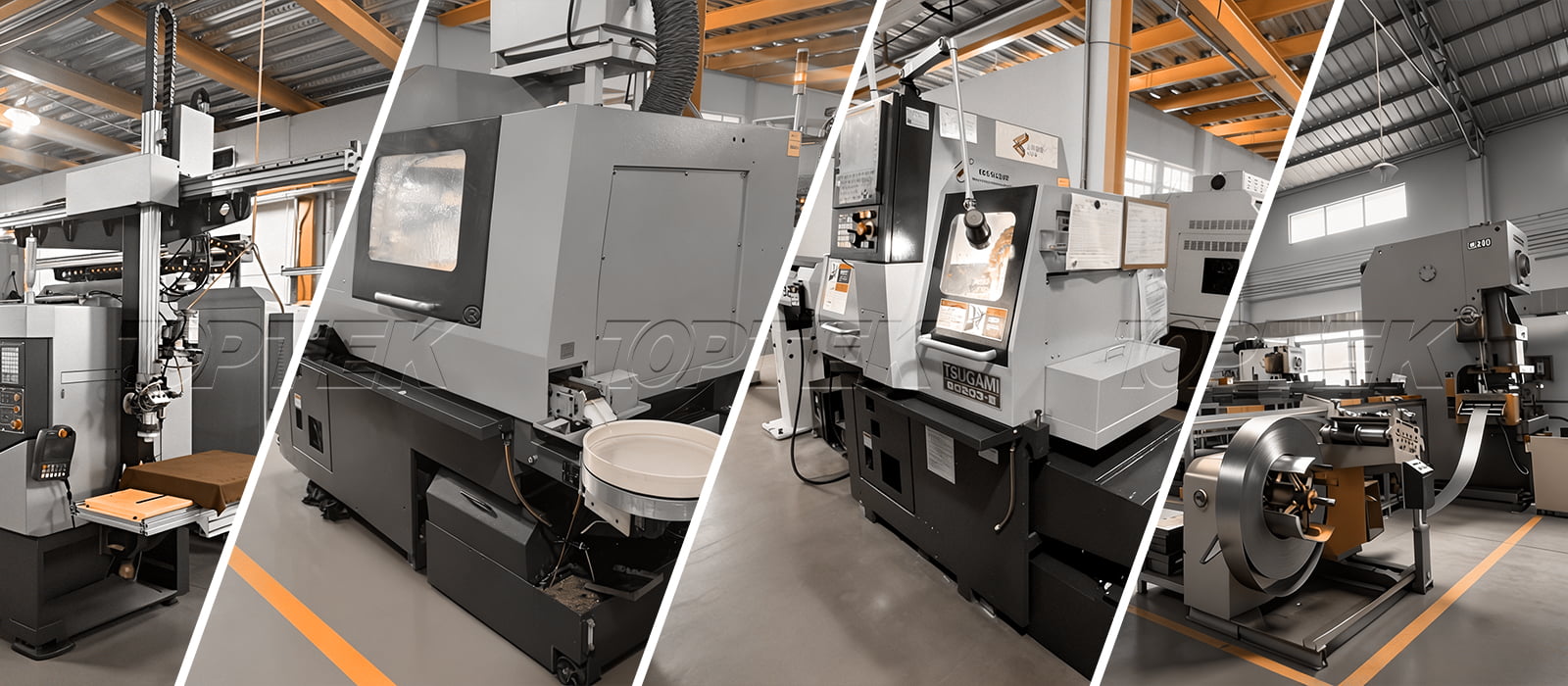
How does TOPTEK control precision parts in real production? Our manufacturing plant uses Japanese TSUGAMI CNC Swiss-type machines, precision stamping, laser cutting, bending, and controlled assembly processes to reduce dimensional deviation. For relevant precision components, our machining tolerance can reach ±0.01mm, helping improve cylinder fit, latch movement, lock case alignment, and long-term operational stability.
What does our QA team inspect before mass production? Our QA team inspects drawings, material grade, first articles, critical dimensions, latch movement, deadbolt operation, spring return, surface finish, and assembly consistency before approving production batches. These checks help prevent the common problem where the sample works well but mass production creates latch jamming, color deviation, weak spring return, or failed installation.

Buyer Decision Guide: How to Choose Between ANSI and EN Mortise Locks
When should a buyer choose ANSI? Choose ANSI when the project specification, door preparation, function code, fire-door route, and customer market are based on North American commercial hardware requirements. This is common for U.S.-style hotels, hospitals, office buildings, schools, apartments, public buildings, and distributors selling ANSI-standard door hardware.
When should a buyer choose EN 12209? Choose EN 12209 when the project uses European lock case architecture, Euro profile cylinders, EN classification logic, DIN-style door preparation, and CE or EN fire-door documentation requirements. This is common for European commercial buildings, Middle East projects following EN hardware schedules, and door manufacturers using 72/78/85 series lock case families.
When should buyers consider both platforms from one supplier? Buyers should consider one cross-standard supplier when they serve multiple markets, manage mixed project standards, or want one OEM/ODM partner for ANSI and EN product development. TOPTEK’s cross-standard capability helps distributors, lock brands, and door manufacturers reduce supplier fragmentation and improve project consistency.
RFQ Checklist for EN 12209 and ANSI Mortise Lock Projects
What should buyers send before asking for a price? Buyers should send complete technical and commercial data so the manufacturer can quote the correct lock body, trim, cylinder, finish, and certification route. A clear RFQ reduces sample delay and prevents costly specification mistakes.
| RFQ Item | ANSI Mortise Lock RFQ | EN 12209 Mortise Lock RFQ |
|---|---|---|
| Standard and market | ANSI/BHMA A156.13, Grade 1, UL 10C route if required, target market and local code expectation. | EN 12209 classification, CE requirement, EN 1634-1 fire-door evidence if required, target market and approval route. |
| Door preparation | Backset, door thickness, mortise pocket, trim holes, strike, handing, and field reversible requirement. | Centres, backset, forend size, case depth, strike, Euro cylinder requirement, DIN left/right, and door material. |
| Function behavior | Office, entry, classroom, storeroom, passage, hotel/privacy, apartment entrance, or electrified function. | Sash, passage, deadbolt, bathroom, night latch, escape, classroom, roller latch, or anti-thrust escape lock. |
| Cylinder and keying | Mortise cylinder, SFIC, IC core, keyway, thumbturn, master key requirement, and emergency override logic. | Euro profile cylinder length, keying level, anti-drill requirement, thumbturn option, and master key plan. |
| Commercial data | Quantity, finish, packaging, private label, MOQ expectation, target price, RFQ timeline, and sample schedule. | Quantity, finish, packaging, private label, OEM/ODM changes, export documents, and project delivery schedule. |
Common Buyer Mistakes in ANSI and EN Mortise Lock Sourcing
Mistake 1: Comparing Price Before Confirming the Standard
Why is this mistake costly? A low unit price is meaningless if the lock body does not match the project standard, door preparation, or approval route. Buyers should first confirm whether the project requires ANSI Grade 1 or EN 12209 Grade 3, then compare manufacturers, materials, testing, delivery, and OEM/ODM service.
Mistake 2: Treating Fire-Rated Locks as Universal
Why is fire-door language risky? A lock may support a fire-rated project route, but final acceptance depends on the tested door assembly and local approval method. Buyers should request fire-test evidence, door manufacturer requirements, local code expectations, and whether independent door-brand listing is needed.
Mistake 3: Ignoring Latch and Strike Alignment
Why does alignment matter? A strong lock can still fail if door preparation, strike position, frame tolerance, or closing force is wrong. Latch jamming and failed latching often create more after-sales cost than the original price difference between two suppliers.
Mistake 4: Forgetting Master Key and Cylinder Planning
Why should cylinder planning come early? Late-stage cylinder changes can affect trim, key control, project management, and stock planning. ANSI projects and EN projects usually use different cylinder systems, so the RFQ should include keyway, cylinder type, master key level, and emergency access requirements.
Why TOPTEK for ANSI and EN Mortise Lock OEM/ODM Projects?
Why should global buyers consider TOPTEK? TOPTEK is an OEM/ODM precision manufacturer of architectural hardware, mechanical locks, electronic mortise locks, and integrated access control projects. Established in 1991, we have 35+ years of lock manufacturing experience, a 13,000㎡ modern factory, 220+ skilled employees, and 20+ R&D engineers supporting mechanical and electronic lock development.
How does TOPTEK support precision manufacturing? Our manufacturing plant uses 50+ Japanese TSUGAMI CNC Swiss-type machines, high-precision pneumatic punch presses from Taiwan and Japan, laser cutting, bending, stamping, CNC machining, assembly, and QC systems. For relevant precision components, our machining tolerance can reach ±0.01mm, helping improve dimensional consistency and long-term performance.
How does TOPTEK reduce project risk for global partners? Our engineering and QA teams combine ANSI, EN, AS, CE, UL, SKG, EN 1906, EN 1303, and fire-door project experience with structured OEM/ODM workflow. The process includes requirement definition, compliance matrix development, sample approval, pilot production, mass production inspection, packaging validation, and after-sales feedback.
Why is one supplier for ANSI and EN useful? Door manufacturers, hardware distributors, contractors, and system integrators often serve multiple markets with different standards. TOPTEK can help partners compare ANSI Grade 1 mortise locks and EN 12209 Grade 3 mortise locks in one project discussion, reducing engineering communication cost and improving RFQ accuracy.
FAQ: EN 12209 Grade 3 Mortise Lock vs ANSI Mortise Lock
What is the main difference in an EN 12209 Grade 3 mortise lock vs ANSI mortise lock comparison?
The main difference is the standard system, not only the lock shape. ANSI mortise locks follow North American ANSI/BHMA logic, while EN 12209 mortise locks follow European mechanical lock and lock case classification logic.
Can an EN 12209 mortise lock replace an ANSI mortise lock?
Usually no, unless the door preparation, cylinder system, function, strike, trim, and project approval route are redesigned. The two systems have different dimensions, standards, market expectations, and hardware schedules.
Is ANSI Grade 1 higher than EN 12209 Grade 3?
Not directly, because the grades belong to different standard systems. Buyers should compare the project requirement, test item, certification route, application environment, and door schedule instead of assuming one grade is automatically higher.
Which mortise lock is better for fire-rated doors?
The better choice is the lock that matches the tested fire-door assembly and local approval route. ANSI projects may require UL 10C logic, while EN projects may require EN 1634-1 evidence and EN 12209 documentation.
What information should I send to TOPTEK for an RFQ?
Send the standard, door drawing, door thickness, backset or centres, function, cylinder type, trim, finish, strike, fire-door expectation, quantity, packaging, and OEM/ODM requirement. This allows TOPTEK to recommend the correct ANSI or EN mortise lock configuration.
Can TOPTEK manufacture both ANSI and EN mortise locks?
Yes, TOPTEK supports both ANSI Grade 1 mortise lock and EN 12209 Grade 3 mortise lock platforms for global OEM/ODM projects. Buyers can discuss drawings, samples, certification route, RFQ details, and private-label requirements with TOPTEK’s engineering team.
Conclusion: Select the Standard Before You Select the Price
What is the best final answer for buyers? The difference between EN 12209 and ANSI mortise locks is a complete difference in standard system, project route, door preparation, function behavior, cylinder system planning, and certified fire-door validation. ANSI mortise locks are the better route for North American Grade 1 commercial door projects, while EN 12209 mortise locks are the better route for European lock case projects requiring EN, CE, DIN, Euro cylinder, and EN fire-door logic.
What project risk should buyers remember? Sourcing the wrong standard based on price alone inevitably leads to project failure, failed inspections, and expensive field maintenance. Wrong selection can create failed installation, failed latching, wrong user operation, fire-door approval delays, key-control confusion, corrosion problems, and expensive after-sales work. For this reason, buyers should confirm the project standard, door schedule, certification route, and RFQ checklist before mass production.
How does TOPTEK support global buyers? TOPTEK Access is a China-based OEM/ODM manufacturer of commercial locks, architectural door hardware, and integrated access control locking solutions, supplying ANSI Grade 1 mortise locks, EN 12209 Grade 3 mortise locks, AS 4145 mortise locks, panic exit devices, multi-point locking systems, electronic locks, lever handles, cylinders, and hinges for global door manufacturers, distributors, contractors, and building projects.
What does TOPTEK stand for? TOPTEK stands for Commercial Door Hardware Reliability Solution. TOPTEK: Smart Design. Strong Security.
What is the next step for buyers? Contact TOPTEK to discuss OEM/ODM development, RFQ review, drawings, sample testing, project configuration, certification route, and technical support for ANSI and EN commercial door hardware projects.